Journaliste à Mediapart depuis novembre 2010. J'ai longtemps écrit sur la politique française, avant de me consacrer aux enquêtes sur les violences sexistes et sexuelles. Je suis responsable éditoriale aux questions de genre depuis 2020. Et, depuis le 1er octobre 2023, je suis codirectrice éditoriale aux côtés de Valentine Oberti.
Avant, j'ai passé plusieurs années à m'occuper d'économie (à l'AFP) et de social (à l'Huma). Coauteure de Tunis Connection, enquête sur les réseaux franco-tunisiens sous Ben Ali (Seuil, 2012). J'ai aussi dirigé l’ouvrage collectif #MeToo, le combat continue (Seuil, 2023).
Declaration of interest
In the interest of transparency towards its readers, Mediapart’s journalists fill out and make public since 2018 a declaration of interests on the model of the one filled out by members of parliament and senior civil servants with the High Authority for Transparency and Public Life (HATVP), a body created in 2014 after Mediapart’s revelations on the Cahuzac affair.
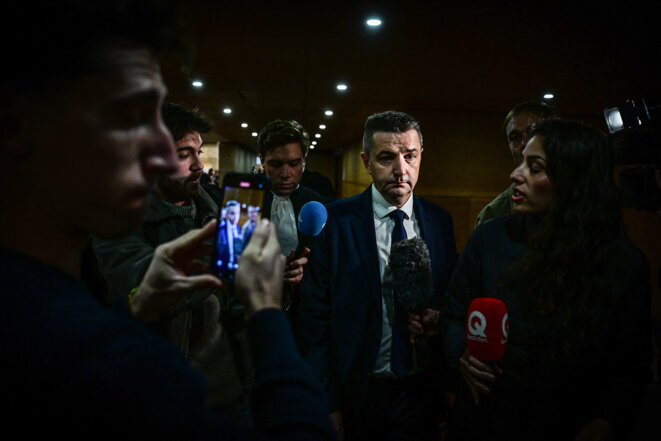
After cases involving far-right leader Marine Le Pen and ex-president Nicolas Sarkozy, now it is Gaël Perdriau, the mayor of Saint-Étienne, who has been handed a prison sentence and an immediate ban from holding office. This represents another victory for journalism, write Mediapart co-editor Lénaïg Bredoux and joint head of investigations Michaël Hajdenberg in this op-ed article. They argue that it also provides fresh hope for all those who believe that strong checks and counter-balances are needed against the rise of the far-right and its media backers.
On May 27th the French Parliament's lower chamber, the National Assembly, voted for a bill that gives the right to assisted dying. The Senate, the upper chamber, still has to vote on the law and that could be a long process. But for reasons of democracy, secularism and the new freedom it creates, we should welcome the MPs' backing for this new right in France, argues Mediapart's co-editor Lénaïg Bredoux in this op-ed article. However, she says that now more than ever we must battle to save our healthcare system, so that neoliberalism and capitalist cost-cutting can never exploit this right in order to choose who among us should exercise it.
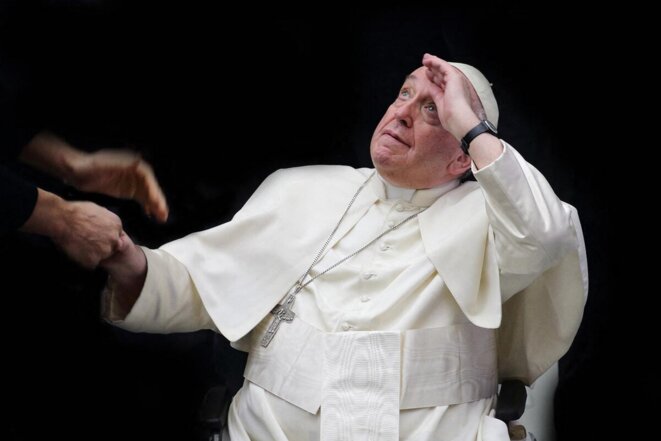
Pope Francis, the first ever South American pontiff who died on Monday aged 88, leaves behind him a mixed and contradictory legacy. He notably took up the cause of migrants, championed environmentalism and denounced the unfettered pursuit of wealth as the 'dung of the devil'. But he also fiercely opposed abortion, condemned homosexuality and leaves a controversial record on tackling sexual abuse by the clergy. Mediapart co-editor Lénaïg Bredoux looks back at the highs and lows of his 12 years as head of the Catholic Church.
Singer, songwriter and composer Flore Benguigui reveals the reasons behind her departure from the band L'Impératrice. And breaks a taboo: in an environment she describes as one of ordinary sexism and humiliation, she lost her voice.
The composition of the new French government of Prime Minister Michel Barnier was decided during all-male meetings between political representatives of the conservative and centre-right parties. And it shows, write Mediapart’s co-editor Lénaïg Bredoux and political correspondent Ellen Salvi in this op-ed article. There are no women in charge of the most powerful ministries, namely those of the interior, defence, justice, economy and foreign affairs, while some members of Barnier’s government have opposed the inclusion of women’s right to abortion into the French Constitution, and are hostile towards LGBTQI+ rights. Meanwhile, the cause of promoting equality between men and women has been demoted from full-time ministerial status to that of a government department.
By revealing details of an internal investigation implicating their celebrated founder Abbé Pierre in sexual assault, the high-profile charities Emmaüs and the Abbé Pierre Foundation are now doing an exemplary job, despite past denials of any problem, argues Mediapart's joint editor-in-chief Lénaïg Bredoux in this op-ed article. The world of sport - notably football and rugby - is also experiencing similarly turbulent times, she says, amid signs that sections of French society are beginning to face up to the issue.
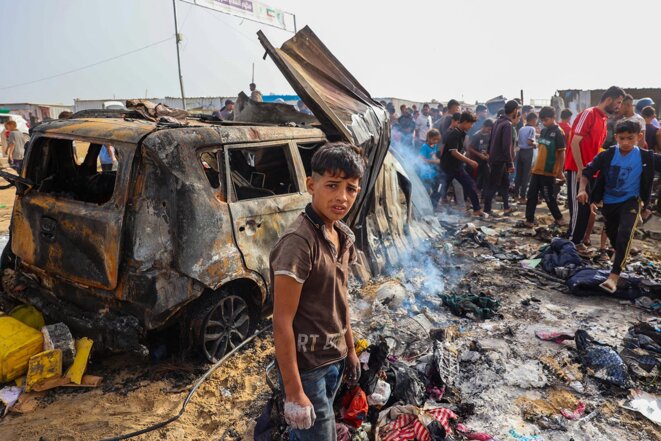
The deadly strike that hit a camp for displaced people at Rafah once again highlights the extreme violence that Israel has been carrying out for nearly eight months against the Gaza Strip. Western countries, including France, can no longer just be content with issuing superficial condemnations of such attacks, argue Rachida El Azzouzi and Mediapart's joint editor-in-chief Lénaïg Bredoux in this op-ed article.
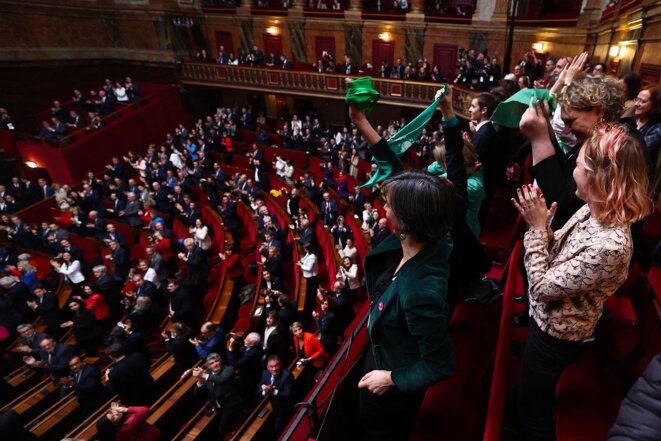
The vote by the French Parliament to enshrine the right to abortion in the French Constitution is a world first, and carries with it considerable symbolic importance. But this historic decision cannot hide the difficulties faced by women today in actually getting an abortion, nor can it disguise Emmanuel Macron's political exploitation of the issue for his own purposes, argues Mediapart's joint editor-in-chief Lénaïg Bredoux in this op-ed article.
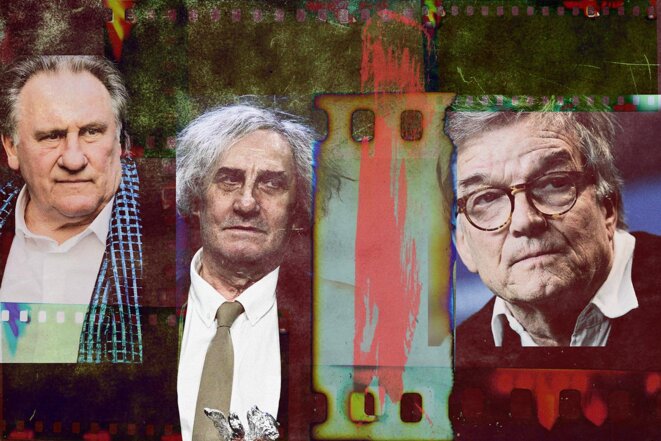
Over the last six years in France the story of the #MeToo movement – which highlights and denounces sexist and sexual violence - has been one of both advances and staunch resistance. But the latest developments, involving cases which yet again have emerged from the world of French cinema, could mark a turning point. Lénaïg Bredoux and Marine Turchi report on the current state of the #MeToo movement in the country.
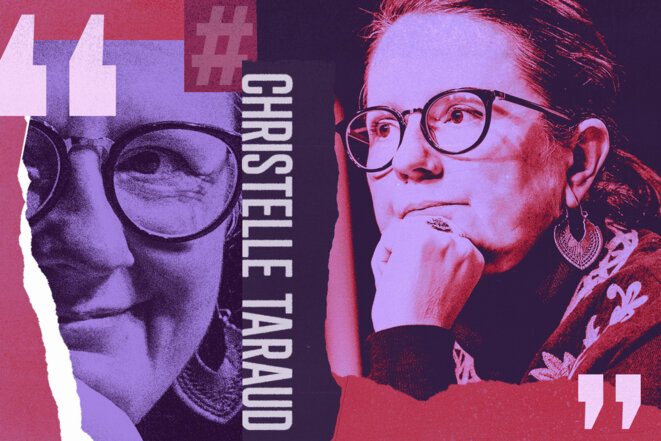
This week, the French justice minister announced provisional figures that suggest the number of femicides – the killing of a female because of her gender – had fallen year-on-year in 2023 by around 20 percent, a claim which is hotly contested by feminist associations. For the recorded numbers of femicides and crimes of domestic violence against women in France have remained on average largely stable over recent years, despite the increased attention given to the problem. In this interview with Mediapart, the historian Christelle Taraud gives her view on why femicides continue at an appalling level, and why women often suffer greater violence in the wake of high-profile feminist mobilisations.
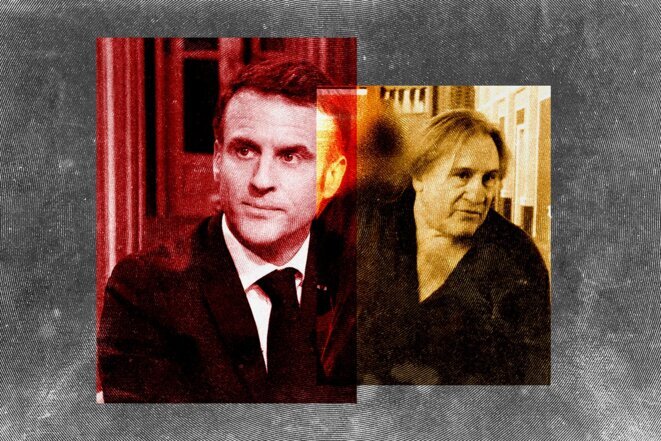
A total of 16 women have accused the actor Gérard Depardieu of sexual assault, including rape. While Depardieu has firmly denied the allegations, a French television documentary investigating the claims this month revealed hitherto unseen footage of his lewd behaviour. Amid the outrage sparked by the documentary, 56 showbiz stars this week signed an open letter denouncing the “lynching” of Depardieu. But the most notable of those who have leapt to the actor’s defence is Emmanuel Macron, who slammed what he called a “manhunt” against the actor, even wrongly suggesting the incriminating recording in the documentary had been doctored. In this op-ed article first published in French last week, Lénaïg Bredoux and Marine Turchi analyse the French president’s ill-judged intervention.
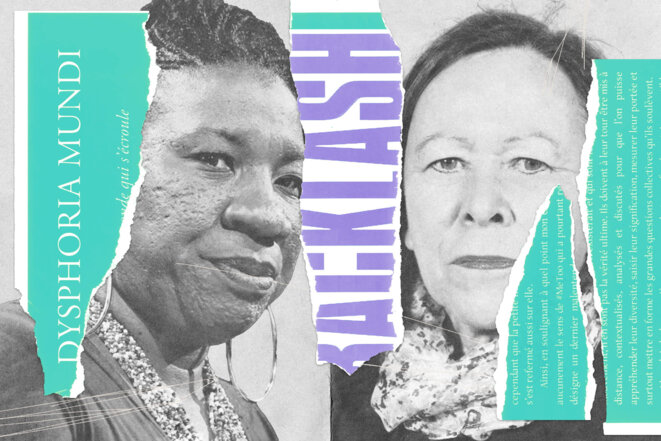
A “revolution”, a “jolt” an “emancipation” … however one wants to describe this contemporary feminist period, the fact remains that five years after it began #MeToo is at a crossroads; weakened for internal reasons and opposed by those whom it challenges. In this article, the first in a series, Lénaïg Bredoux and Joseph Confavreux assess the current status of the #MeToo movement.
All his blog posts
The Mediapart Club
Join the discussion
Mediapart’s journalists also use their blogs, and participate in their own name to this space of debates, by confiding behind the scenes of investigations or reports, doubts or personal reactions to the news.
L’essayiste publie un nouvel ouvrage consacré à #MeToo dans lequel elle met gravement en cause le travail de Mediapart sur les violences sexistes et sexuelles. Au mépris des faits, et sans nous avoir contactés au préalable.
Plusieurs journalistes ou militants des droits humains, tous critiques du régime marocain, ont été graciés par le roi du Maroc. Pour Omar Radi, Soulaimane Raissouni, Taoufik Bouachrine, Imad Stitou, Hicham Mansouri, Maâti Monjib et Saïda El Alami, notre soulagement est immense.
Dans un long entretien complaisant au Journal du dimanche, paru le 11 juin, la réalisatrice et comédienne s’en prend, sans point de vue contradictoire, au travail de notre journal sur les violences sexistes et sexuelles, et croit pouvoir justifier ainsi l’agression du président de Mediapart. Nous ne sommes pas dupes.
Le célèbre youtubeur a dénoncé dans une vidéo diffusée le 19 novembre l’enquête que nous avons publiée le 23 juin à propos des violences sexistes, sexuelles et psychologiques qu’il aurait commises. Explications sur nos méthodes d’enquête, qui ont permis la publication d’un nouveau volet.
« Cot cot cot codec. » C’est le caquètement d’un député de droite contre une élue écologiste qui a suscité la création de notre « Machoscope » en 2013. Depuis, Mediapart, recense le sexisme subi par les femmes en politique. Après une décennie de bons et loyaux services, la formule disparaît. Pour mieux s’imposer dans nos pages.