Journaliste à Mediapart depuis novembre 2010. J'ai longtemps écrit sur la politique française, avant de me consacrer aux enquêtes sur les violences sexistes et sexuelles. Je suis responsable éditoriale aux questions de genre depuis 2020. Et, depuis le 1er octobre 2023, je suis codirectrice éditoriale aux côtés de Valentine Oberti.
Avant, j'ai passé plusieurs années à m'occuper d'économie (à l'AFP) et de social (à l'Huma). Coauteure de Tunis Connection, enquête sur les réseaux franco-tunisiens sous Ben Ali (Seuil, 2012). J'ai aussi dirigé l’ouvrage collectif #MeToo, le combat continue (Seuil, 2023).
Declaration of interest
In the interest of transparency towards its readers, Mediapart’s journalists fill out and make public since 2018 a declaration of interests on the model of the one filled out by members of parliament and senior civil servants with the High Authority for Transparency and Public Life (HATVP), a body created in 2014 after Mediapart’s revelations on the Cahuzac affair.
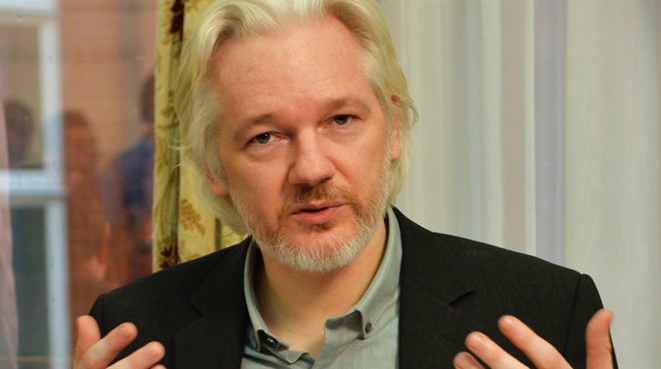
In an open letter to the French president on Friday the founder of WikiLeaks, Julain Assange, made an apparent appeal for political asylum in France. Assange, whose whistleblowing organisation was behind the recent revelations published by Mediapart and Libération about US spying on French heads of state, said that he faced “political persecution” and that his life was “in danger”. However, within an hour of the publication of the open letter President Hollande's office issued a brusque statement rejecting asylum for Assange, who has spent three years in the Ecuadorian embassy in London to escape extradition to Sweden. As Lénaïg Bredoux, Jérôme Hourdeaux and Mathieu Magnaudeix report, the episode quickly stirred up a row and will inevitably reignite the debate about how far France should be prepared to go in welcoming whistleblowers such as Assange and the former National Security Agency (NSA) employee Edward Snowden.
The United States is conducting widespread economic and industrial espionage against France, including eavesdropping on at least two economy ministers, Mediapart can reveal, as part of its investigation carried out with Libération and WikiLeaks. The ministers concerned were François Baroin, who served under President Nicolas Sarkozy, and his socialist successor Pierre Moscovici, who is now a European Commissioner. But the top secret documents also show that the US National Security Agency has routinely spied not just on politicians and government officials but also French businesses seeking to win contracts abroad. The aim seems to have been to undermine the effectiveness and competitiveness of French companies competing for business on the world market. Fabrice Arfi, Lénaïg Bredoux, Martine Orange, Jérôme Hourdeaux and Wikileaks founder Julian Assange report on the latest disclosures.
Within hours of the revelations by Mediapart and Libération, in conjunction with WikiLeaks, about US spying on three presidents, the French political world united in its condemnation of the actions. Even the Elysée, which had initially declined to comment when the story first broke, joined in the criticism of American espionage which it described bluntly as “unacceptable”. Meanwhile the American ambassador in Paris was called in by the foreign ministry to make clear France's unhappiness with the acts of espionage on presidents and other senior figures, while François Hollande chaired a defence committee meeting and met a delegation of Parliamentarians at the Elysée. The French president also had a telephone conversation with Barack Obama in which the American president promised the US was no longer spying on French heads of state. Lénaïg Bredoux, Mathieu Magnaudeix and Ellen Salvi report.
The revelations that the United States has been tapping the phones of presidents and others senior figures in the French state have provoked a major controversy. Politicians from all parties queued up on Wednesday morning to denounce the spying, revealed in leaked documents obtained by WikiLeaks and published by Mediapart and Libération. President François Hollande, himself revealed to be the target of phone taps in 2012, called a meeting of the government’s defence committee and met a delegation of 20 Parliamentarians at lunchtime to discuss the spying crisis. The Elysée meanwhile issued a statement describing the reported spying as “unacceptable”. But the spying will have come as no great surprise to the authorities in Paris who have known about or suspected such espionage for years. But France has never previously made a major public fuss about the issue for the simple reason that it, too, is part of a vast network involving exchanges of information between intelligence services around the world. And because it, too, cheerfully snoops on its friends. Moreover, the revelations came on the eve of the final vote on the government’s new and highly-controversial snooping legislation. Lénaïg Bredoux and Mathieu Magnaudeix report.
The leaked transcripts and reports on the phone taps carried out by the National Security Agency on three French presidents concern the current head of state, socialist François Hollande, and his right-wing predecessors Nicolas Sarkozy and Jacques Chirac. The documents obtained by WikiLeaks and revealed here by Mediapart reveal the different priorities at the time of the three French heads of state, as well as their different styles. Hollande and his then-prime minister, Jean-Marc Ayrault, were discussing the Greek crisis, Sarkozy hoped to save the world from the financial crisis and Jacques Chirac was handing out detailed orders to his foreign minister. Lénaïg Bredoux and Ellen Salvi from Mediapart and Julian Assange of WikiLeaks report on what the presidents said.
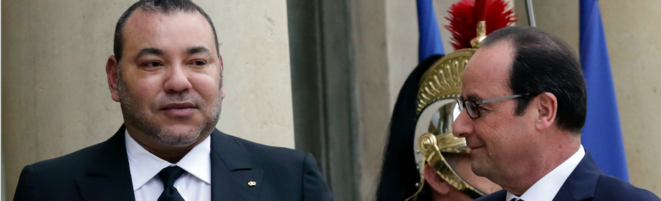
Last week French Members of Parliament took the first step towards approving a brief accord on judicial cooperation between France and Morocco. On the face of it, this seems a routine agreement; but behind this protocol lies more than a year of bitter discord between the two countries over attempts by a French judge to question the head of the Moroccan internal intelligence agency over allegations of complicity in torture. After lengthy and sometimes fruitless attempts to broker an end to the dispute, led by French president François Hollande in person, Paris hopes that the deal on judicial cooperation will put the seal on recently-improved bilateral relations. But the wording of the new text has been bitterly opposed by human rights groups who say it is deeply damaging to the independence of France's judges and courts, and who claim that the French authorities have capitulated to the demands of their Moroccan counterparts. Lénaïg Bredoux reports.
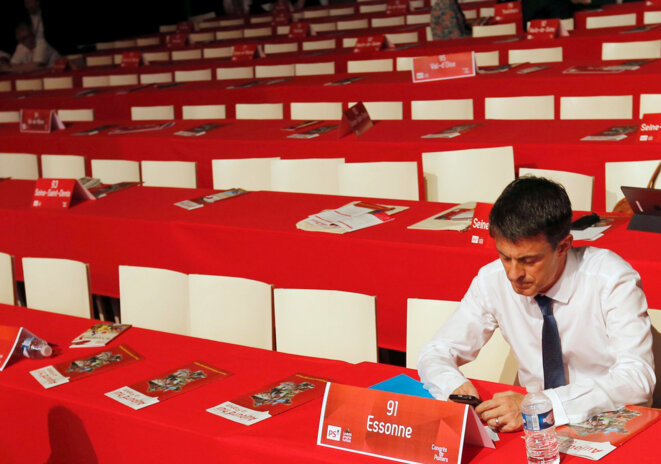
The ruling French Socialist Party held its national congress this weekend, called to define the party’s broad policy lines and to designate its leadership structures at local and national level. The three-day event, which ended on Sunday evening, also marks the third anniversary of François Hollande’s presidency. Against a backdrop of record and increasing unemployment, the party desperately needs new impetus as it faces an uphill struggle over the next two years to win back its disaffected electorate in presidential and parliamentary elections due in 2017. But while Prime Minister Manuel Valls was given a warm public display of support by party members, he offered no clear programme for the remainder of his government’s time in office during a skilfully crafted speech aimed at appeasing party divisions. Lénaïg Bredoux reports from the congress in the west-central town of Poitiers.
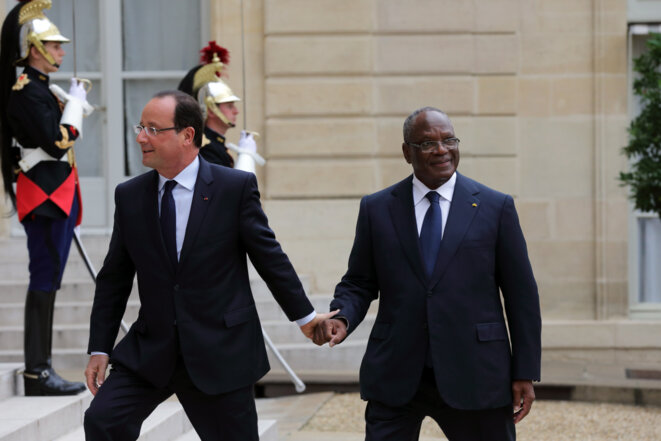
The conversations of two African heads of state have been eavesdropped by French police during a major investigation into alleged corruption by a French businessman. The transcripts of the phone-tapped conversations involving Mali's president Ibrahim Boubacar Keita, known as IBK, and Gabon's Ali Bongo reveal a vast system of gifts and favours apparently provided by controversial Corsican businessman Michel Tomi, who has been dubbed the “godfather to the godfathers”. As far as the judges investigating the case are concerned, the phone taps reveal corruption. And for French president François Hollande the content of the transcripts involving IBK will come as a devastating and embarrassing diplomatic blow. For much of Hollande's African policy has been based on the symbolic success of his old socialist friend IBK, who was voted in as president of Mali just months after Paris sent in troops to end an Islamic insurgency there. IBK's election was supposed to usher in a fresh start for Mali and a new era of French diplomacy in Africa. That narrative now looks to be in ruins. Fabrice Arfi, Ellen Salvi, Lénaïg Bredoux and Thomas Cantaloube report.
French President François Hollande on Monday became the first French head of state to make an official visit to Cuba, and the first in Europe to make the trip since the rapprochement announced last December between Washington and Havana. The one-day visit – Hollande will leave for Haiti on Tuesday, ending a six-island tour of the Caribbean – is another important step for Cuba’s new-found normalisation on the international stage, but also a key event in France’s efforts to strengthen its presence in Latin America. Lénaïg Bredoux analyses what is at stake and reports on the buildup to the thaw in relations with a regime French foreign minister Laurent Fabius once described as a "loathsome" dictatorship.
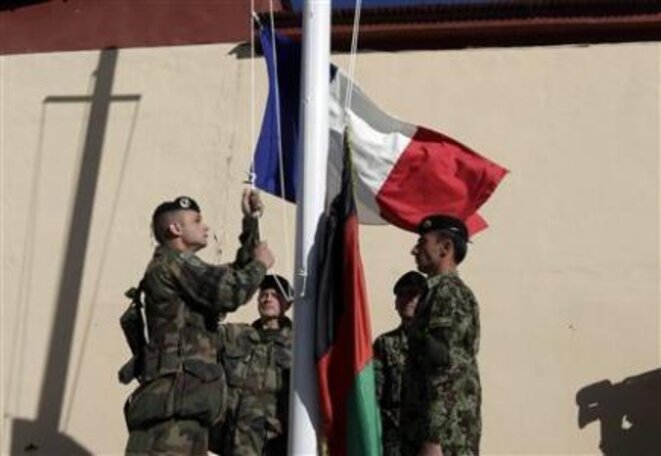
A total of 258 local civilians, mostly interpreters, who worked for the French army in Afghanistan applied to resettle in France before the last of its military left the country in 2014. Just 73 were granted permission. The remainder, considered as traitors by the Taliban, live in fear of their lives, and those of their families, amid a rapidly deteriorating security situation. After a protest demonstration by the interpreters in Kabul in March, a group of French lawyers, scandalised at their plight, launched a vigorous campaign to help the rejected candidates resettle in France, backed by pressure from Members of Parliament. The French foreign ministry has now finally agreed to reconsider relocation applications, but the outcome remains uncertain. Lénaïg Bredoux reports on the plight of the rejected interpreters, and speaks to one living in hiding in Kabul. “Why did the French friends leave us in danger?” he asks, “I don’t find the answer.”
Just like the Left in general, and indeed many political parties in France, the government is divided over the key issue of secularism and its precise scope in French society. An example of this confusion is the forthcoming Parliamentary bill on religious neutrality in privately-run crèches which will be considered by the National Assembly on May 13th. President François Hollande and most of his government are opposed to the measure, even if it appears prime minister Manuel Valls might be more favourable. Yet after a backroom deal with political allies, MPs from the ruling Socialist Party appear committed to voting through the measure despite their own divergent views on the subject. As Lénaïg Bredoux reports, the resulting lack of clarity is a prime example of François Hollande's style of government.
Faouzi Lamdaoui, an advisor at the Elysée and a close ally of President François Hollande, has been summoned to appear before a criminal court on charges of “misuse of company assets”, the “laundering of the proceeds of the misuse of company assets” and “forgery and the use of falsified documents”. The allegations relate to a complex network of companies with which Lamdaoui has been involved, as a manager, director or partner, as revealed by Mediapart earlier this year. His resignation, which follows the departures of other key Hollande allies, junior minister Kader Arif two weeks ago and special advisor Aquiluno Morelle in April, was announced in an Elysée press statement. Lénaïg Bredoux and Emmanuel Morisse report.
All his blog posts
The Mediapart Club
Join the discussion
Mediapart’s journalists also use their blogs, and participate in their own name to this space of debates, by confiding behind the scenes of investigations or reports, doubts or personal reactions to the news.
L’essayiste publie un nouvel ouvrage consacré à #MeToo dans lequel elle met gravement en cause le travail de Mediapart sur les violences sexistes et sexuelles. Au mépris des faits, et sans nous avoir contactés au préalable.
Plusieurs journalistes ou militants des droits humains, tous critiques du régime marocain, ont été graciés par le roi du Maroc. Pour Omar Radi, Soulaimane Raissouni, Taoufik Bouachrine, Imad Stitou, Hicham Mansouri, Maâti Monjib et Saïda El Alami, notre soulagement est immense.
Dans un long entretien complaisant au Journal du dimanche, paru le 11 juin, la réalisatrice et comédienne s’en prend, sans point de vue contradictoire, au travail de notre journal sur les violences sexistes et sexuelles, et croit pouvoir justifier ainsi l’agression du président de Mediapart. Nous ne sommes pas dupes.
Le célèbre youtubeur a dénoncé dans une vidéo diffusée le 19 novembre l’enquête que nous avons publiée le 23 juin à propos des violences sexistes, sexuelles et psychologiques qu’il aurait commises. Explications sur nos méthodes d’enquête, qui ont permis la publication d’un nouveau volet.
« Cot cot cot codec. » C’est le caquètement d’un député de droite contre une élue écologiste qui a suscité la création de notre « Machoscope » en 2013. Depuis, Mediapart, recense le sexisme subi par les femmes en politique. Après une décennie de bons et loyaux services, la formule disparaît. Pour mieux s’imposer dans nos pages.