


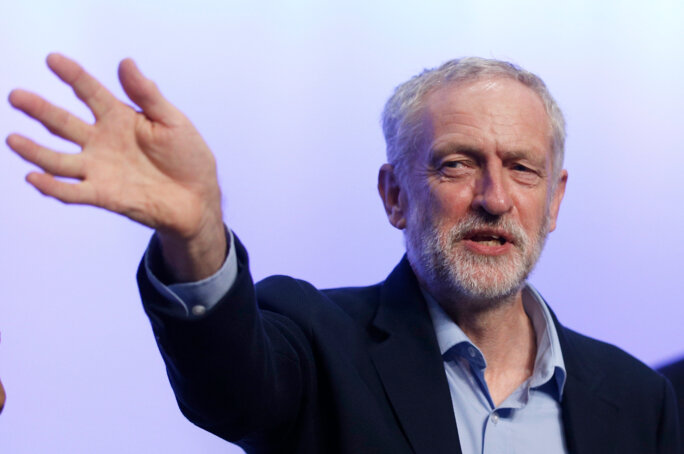
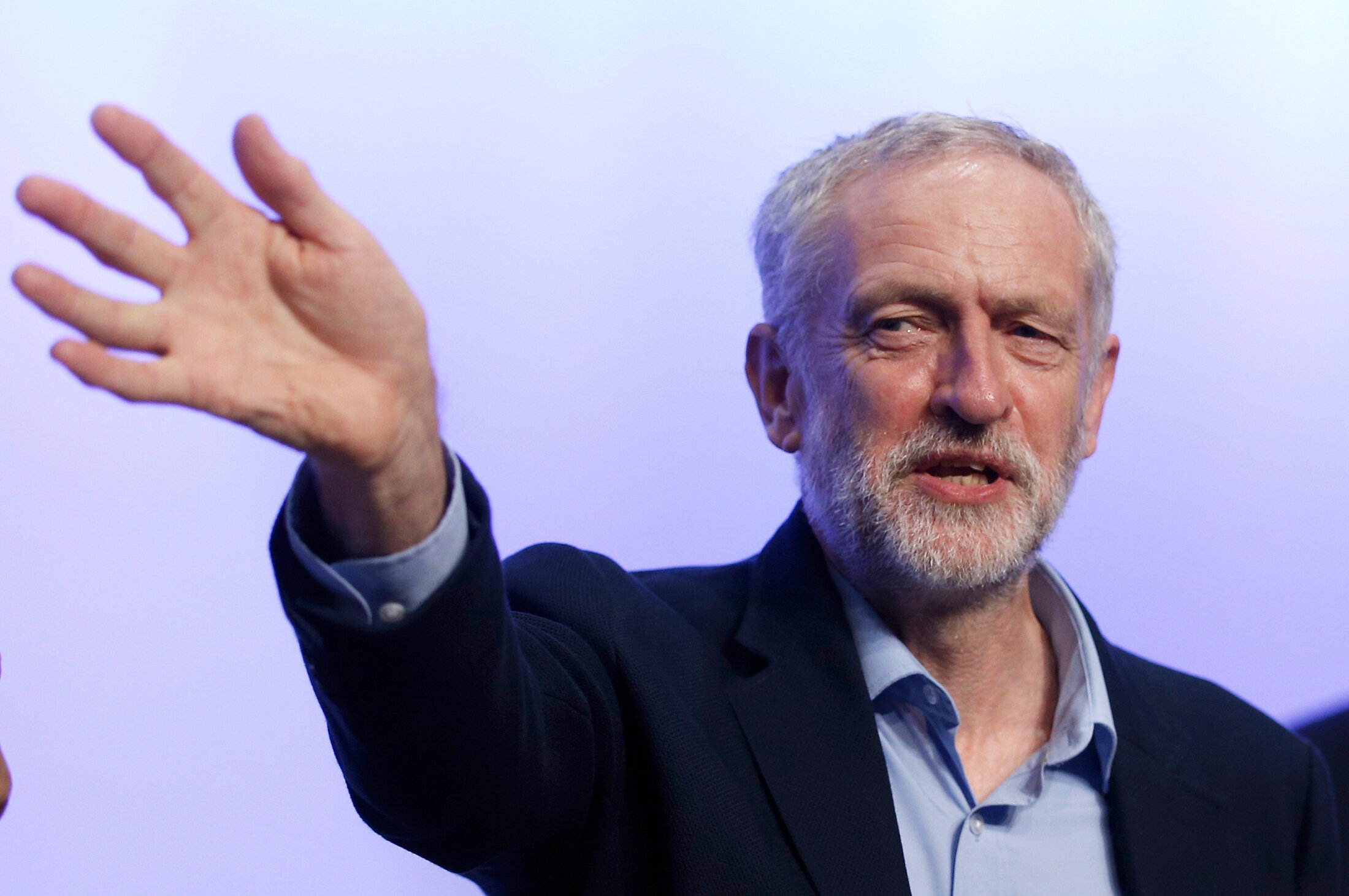
Jeremy Corbyn's election as leader of the British Labour Party, and as such leader of the opposition, has been met with wide and enthusiastic approval from the leftist rebels of the French Socialist Party, but also from the radical-left Front de Gauche coalition, and even among a number of Greens, many of whom were gathered at the yearly Fête de l’Humanité weekend festival when Corbyn was elected on September 12th. “The wheel of history has begun to turn,” announced Communist Party leader Pierre Laurent, speaking before huge crowds at the event in the Paris suburb of La Corneuve. Every time Corbyn’s name was mentioned it prompted enthusiastic clapping.
“You’re right to applaud Corbyn, each time a swallow turns up, you must believe it announces the spring,” said leading radical-left figure and MEP Jean-Luc Mélenchon, co-founder of the Parti de Gauche, addressing a lively audience for the presentation of ‘A plan B in Europe’. With him was the festival’s guest star, former Greek finance minister Yanis Varoufakis who, proclaimed: “Corbyn is a spark of hope, a small candle amid the obscurity of austerity.”
There was no great surprise in the reactions. Corbyn, the opposite of Tony Blair, is a champion of the Labour leftists, who is anti-austerity, a defender of public services who wants to up taxes on the rich, who is opposed to war and who wants to Britain to abandon nuclear weapons and leave NATO. He was elected Labour leader with 59.5% of the votes cast by 600,000 party members - compared to the 70,000 votes cast for the election earlier this year of the French Socialist Party leader, which saw the re-election of Jean-Christophe Cambadélis.
At the Socialist Party headquarters on the rue Solférino in central Paris on Monday, the victory of Corbyn, who was little-known among party members until now, was the last subject of discussion on the agenda of its national bureau. While the leftists in the party are overjoyed, the majority, who support Prime Minister Manuel Valls and President François Hollande, are either politely cautious or openly hostile to the British leftist.
The Socialist Party’s European affairs officer, Member of Parliament (MP) Philip Cordery, wrote the official statement of the party in reaction to Corbyn’s win. This spoke of an “exemplary democratic exercise” which Cordery said allowed “the Labour party to reconstruct itself and propose a clear Left alternative in Great Britain”.
“The French socialists have the wish that, with this new team, relations between Labour and the [French] Socialist Party, which were reinforced during the Ed Miliband era, continue to deepen in order to strengthen European social-democracy.”
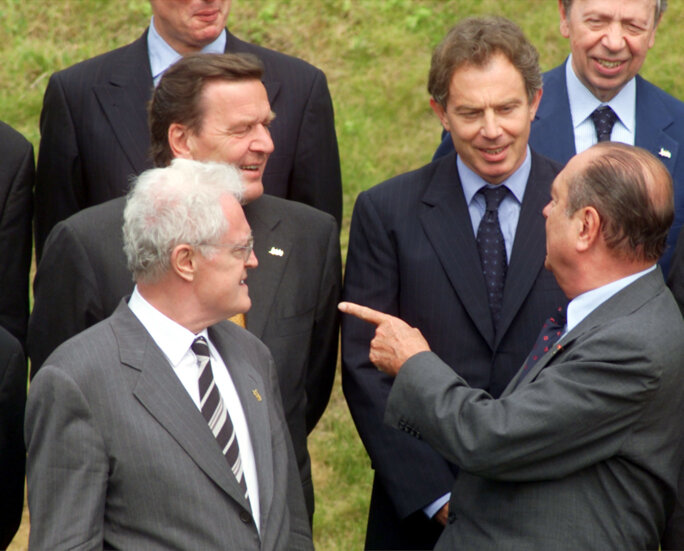
Corbyn’s surprise victory is a reversal of roles for the French Socialist Party. Prior to the election of Hollande and his parliamentary majority in 2012, the last time it was in government was between 1997 and 2002. Then-prime minister Lionel Jospin took on the role of guarantor of true socialism in face of the “third way” adopted by his British and German counterparts of the Left, Tony Blair and Gerhard Schröder. Now, back in power, the French socialists appear on a constant slide into policies that they earlier opposed.
Enlargement : Illustration 2
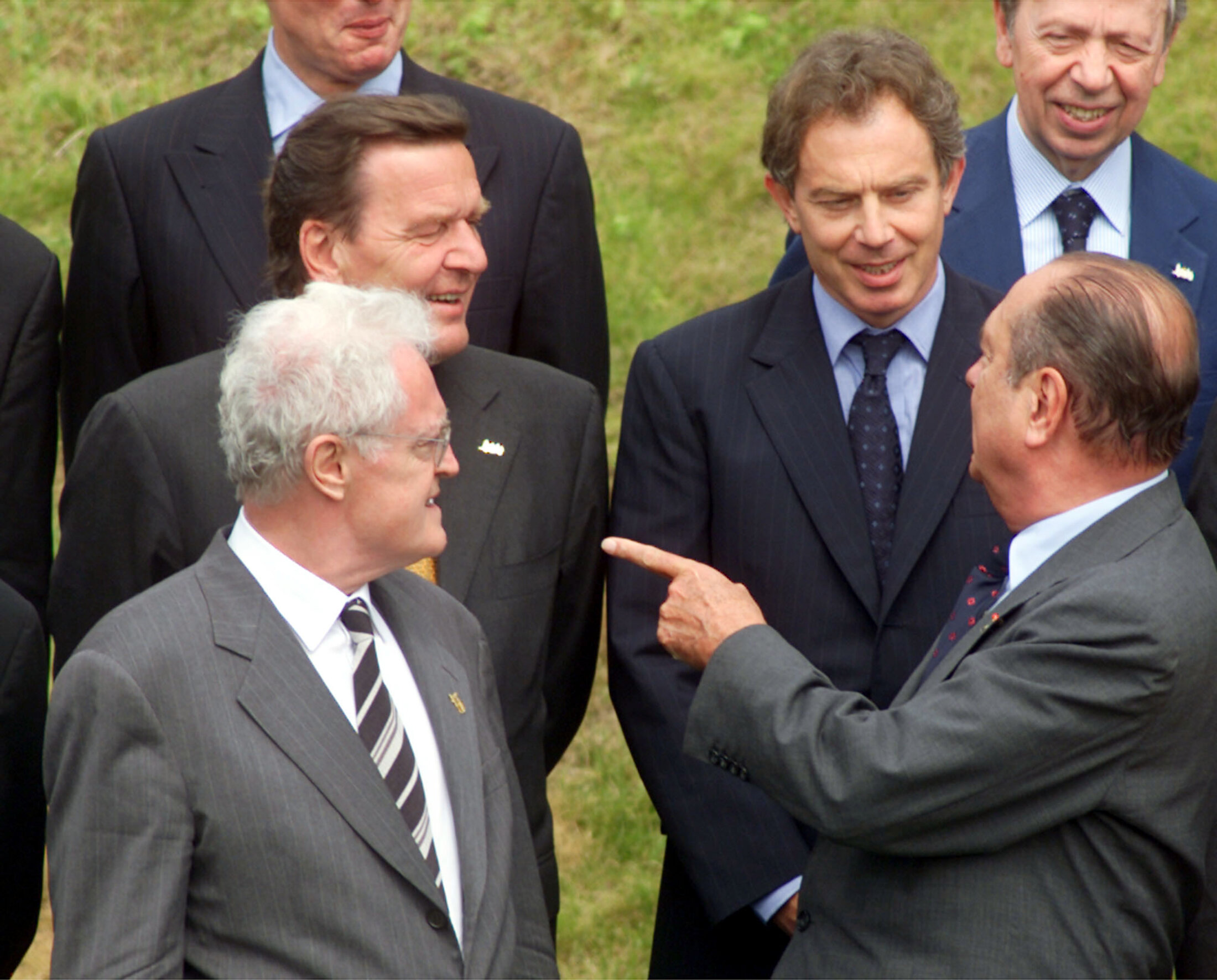
Since his election as president, Hollande has regularly paid tribute to Schröder, and has compared his ‘responsibility pact’ of tax breaks for business in return for job creations with Schröder’s social and economic reforms. The pact is in essence an affirmation that the cost of labour is the key factor for French economic competitiveness. Meanwhile, Prime Minister Manuel Valls has made clear his closeness to French business, regularly calling upon the socialists to break with the past in favour of “modernity”, and taking up the theory of ‘pre-distribution’ that found favour with Blair’s political heirs.
French socialist MP Laurent Baumel is an experienced observer of the Blair years, having served as an advisor to the European affairs ministry in Lionel Jospin’s 1997-2002 government. Today he is one of the Socialist Party’s leftist rebels, the so-called frondeurs.
“During the triumphant Blairist period, it was the French Socialist Party that took up the fight in face of the ‘third way’,” said Baumel. “Fifteen years later, it’s the French [socialist] government that appears to be [walking] in the steps of Blairism. Valls has adopted the same phraseology, and his positioning is close.”
“Corbyn’s victory should be a lesson for us. Today, Valls clearly takes his inspiration from Blair, both in the way of communicating by talking of ‘emancipation from dogmas’ or ‘breaking taboos’, and in the fundamentals. Like Blair, he has an authoritarian vision of society and calls for deregulation and flexibility.”
Fabien Escalona is a professor with the Grenoble School of political Sciences, specialised in European social democrat movements. “While under [former socialist prime minister and one-time party leader Lionel] Jospin the Socialist Party could have been taken for a village of Gaul, this time the Socialist Party is in the dominating group,” he said. “In Germany, in Sweden, in Austria, in Italy, the parties remain aligned to the austerity/Brussels’ structural reform approach. Today, among the social democrat family, Labour is quite alone.”
'Corbyn is an archaic dinosaur'
For the French Socialist party rebels, whose political advance appears largely obstructed, Corbyn’s election is a breath of fresh air. “In fact, it feels good to hear guys saying Leftist things,” said one of them, the MEP Emmanuel Maurel. “That’s the point we’ve reached! Our social democrat leaders are so much in the triangulation that they forget to say Leftist things. So Corbyn, that’s positive, and these days one hangs on to positive signs.”
Back at the Fête de l’Humanité last weekend, radical-left firebrand Jean-Luc Mélenchon talked to reporters about his last meeting with Corbyn, two years ago. “The last time that I met him, in 2013, he was completely depressed,” said Mélenchon. “He was saying ‘there’s no longer a Left, I don’t know where you find the energy’, ‘everything we’ve done has been for nothing’, ‘we’re old’. In short, honestly, he got up my nose. So I got a bit carried away and I told him ‘Our age and our lives are the guarantee of our liberty’. And now, he’s at the head of Labour.”
But Mélenchon then added a cautious note: “We can see very well that everyone is in danger, and that the places where there’s resistance are very few. People are less rigid today. Podemos discusses with [French economist Thomas] Piketty, I myself have exchanges with [former socialist industry minister Arnaud] Montebourg. Corbyn’s election is a new site of resistance, and of course it will be necessary to discuss with him. Well, we’ll wait until he comes back down to land.”
Henri Weber, a former MEP with a wide knowledge of the European Left, is now an advisor to the Socialist Party leader Jean-Christophe Cambadélis. He is in the camp of those who are in despair at Corbyn’s election, which he reckons bodes ill for Labour. “I understand this event,” he said. “Great Britain is suffering from the true politics of a political reaction against conservative [economic] liberalism that exasperates the young and the workforce. It is a healthy reaction of auto-defence […] In Great Britain, there’s a true austerity programme, on the opposite of France where what’s practiced is about being serious with the budget. They axed [in Britain] 500,000 public sector posts over four years. We’ve frozen the [public sector pay] index points, that’s all.”
But he says Corbyn’s election is something he deplores. “Corbyn proposes leaving Blairism, but through the wrong door, the back door. It is the political line of the 1970s, that which led Great Britain into a profound decline and the Labour Party into a 15-year opposition.”
For one French government minister, speaking on condition his name is withheld, “Corbyn is an archaic dinosaur”.
Enlargement : Illustration 3
But not all of those in the French Socialist Party who support François Hollande’s policies are as severe. Senator Hélène Conway-Mouret, who served for two years until 2014 as Hollande’s junior minister for French expatriates, said she understands Corbyn’s attraction. “I could have voted for Corbyn because he does a proper job in the field, because he’s been loyal to his ideas for 40 years, and because he represents the idea I have of the Left,” said the senator, who represents French expatriates living in northern Europe. “And also, it’s good that there’s a turn to the Left in face of the ultra-liberal [economic] policies of the Conservatives.”
From the early 1980s, Conway-Mouret spent more than 20 years living in Ireland, and she sees in Corbyn’s election a desire among Labour Party members to renew with the ways of “old” Labour. “Those who are nostalgic of the pre-Thatcher years have passed on this British reality that [then] existed, that could exist, with strong labour unions, quality public services which ensured a better quality of life for the lower-income classes.”
But she defended the French government’s policies. “The [French] Socialist Party is in power, that’s the whole difference with Corbyn. The Socialist Party has to take responsibility, with the coffers empty, and it tries to navigate so as not to apply the austerity policies imposed elsewhere in Europe. But for a social approach you need to have the means. When in power, you can’t necessarily do everything you want to.”
The French socialist elders let it be known that they have no fear of a leftist rebel revolution. “Because we didn’t apply the same liberal [economic] policies as in Spain, in Greece or in Great Britain, we should be spared,” said another minister, also speaking on condition his name was withheld. “And also France has a State structure which limits major movements in society.”
That appraisal is reinforced by the disunity of the French Left. The holding of primaries to decide the socialist candidate for presidential elections in 2017 appears highly unlikely, and even the support for the designation of a candidate of the alternative Left remains a minority one. “It’s the whole paradox of the period, which is explained by the institutions,” said socialist rebel MP Laurent Baumel.
“Corbyn’s victory necessarily makes the Socialist Party, which has cut itself off from its grass-roots and the young, think,” commented Fabien Escalona. “But it also addresses the alternative Left where no-one, or almost no-one, wants to set up primary elections for [the presidential elections of] 2017.”
-------------------------
- The French version of this article can be found here.
English version by Graham Tearse