


Earlier this year, the supervisors of a strawberry farm in Greece, in the village of Nea Manolada, in the southern Peloponnese region, opened fire on a group of some 200 immigrant workers who had demanded to be paid their salaries which had been withheld for six months.
The April 17th incident left 33 Bangladeshi workers wounded, with eight of them seriously hurt. It also revealed the dire conditions in which thousands of immigrant workers live in Greece, underpaid and often undeclared, with little or no possibility of escaping their slave-like exploitation in intensive farming businesses.

Enlargement : Illustration 1
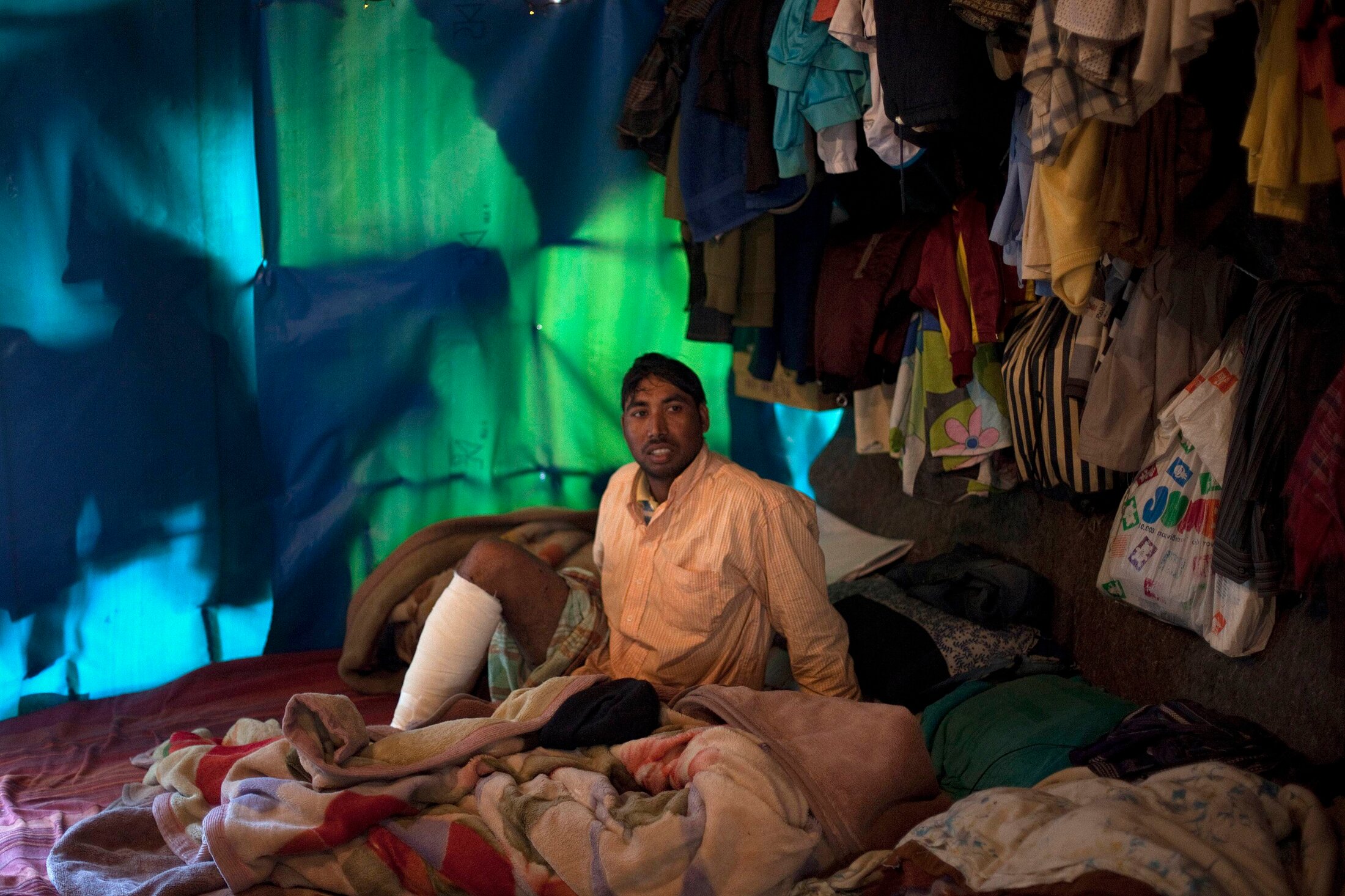
With no legal working papers, no official residency rights, and ignored by officialdom, their situation is increasingly precarious as the country grapples with a devastating economic crisis that has now seen unemployment rocket to 26.8% of the active population. With no alternative employment to turn to, they remain stuck in conditions described by a Greek director of human rights NGO Amnesty International as “unacceptable in 21st-century Europe.”
Charalambos Kassimis is a professor and research director of rural sociology with the Athens University of Agriculture, and he has spent the past 15 years focusing on the role of immigrant labour in the Greek agricultural sector. His studies of several rural areas include that of Manolada, situated about 260 kilometres south-west of Athens, a base for the intensive farming of strawberries, most of which are exported across Europe. In this interview with Amélie Poinssot, he explains the changes in Greek agriculture which created the need for foreign labour, and denounces how what he calls the “state of slavery” in which Asian and Central European immigrants live continues because of a “law of silence” on the part of politicians.
-------------------------
Mediapart: How significant is the contribution of immigrant labour to the Greek agricultural sector?
Charalambos Kassimis: It is very important. About 15% of immigrants in Greece are based in rural zones. They are involved in different types of employment, not just agricultural. But if you look closer at who works the land, you find in some regions and concerning some particularly tough types of cultivation, immigrant labour rates of 100%. For example, the picking of strawberries in Manolada, or grapes in Corinthia, is managed exclusively by immigrants. It is the same thing for greenhouse farming, of tomatoes, aubergines, peppers, cucumbers, in Crete. In fact, since some 20 years, immigrants fill a shortfall in the agricultural labour force in Greece. They allowed [Greece] to avoid a serious crisis.
Mediapart: Why is there such a need for this workforce?
C.K.: The structure of rural society has changed profoundly in Greece since the 1960s. There has been both an ageing of the population, and an exodus towards towns. On top of this, there has been a trend among the new generations to engage in more and more academic studies and to turn away from manual jobs. So although it could have been interesting from an economic point of view, working on the land no longer attracted farmers’ children. The Greek agricultural sector began to be characterized by great empty gaps, while in some regions it moved towards intensive farming with a need for extra workforce at certain times of the year. When the country’s borders opened up in 1989, the neighbouring Albanians appeared to be a godsend, who would not only answer the [labour] needs of farmers but who would also cost less than the Greek workforce.
Little by little, the division of labour in the countryside became modified, and the Greek farmers who had been working the land increasingly looked after its management and commerce [of produce]. As for the Albanians, as they became more integrated they moved towards more stable jobs, less seasonal, like the construction sector. Many succeeded in obtaining a legal [officially declared] status, thus costing their employers more. At the same time, a new group of immigrants began arriving. Over the past seven or eight years these come principally from Pakistan, India and Bangladesh, although the Albanian community remains the largest. Meanwhile, since the accession of Romania and Bulgaria to the European Union, in 2007, the presence of Romanians and Bulgarians has grown significantly. These are people who can hop easily between Greece and their own countries for seasonal work. Each wave of immigrants exerts a downward pressure on wages.
Mediapart: Is the important role of the foreign workforce in the agricultural sector something unique to Greece?
C.K.: No, you find this phenomenon in most cases of intensive farming, notably in Spain and Italy. But there, even if there are irregularities, as was revealed in the Italian region of Apulia, contracts are the rule and checks are carried out. Here [in Greece], above all in the south of the country, foreigners are paid with undeclared cash in hand, and the system works thanks to a huge traffic. Asian immigrants are recruited in their home countries. They arrive alone, without families, without official papers, with no other contract in Greece than that with their employer. They don’t speak Greek. Thus, to leave the business that employs them means great insecurity. These men have no possibility of finding work elsewhere. That could explain why the victims of the shootings in Manolada had continued to work for six months without being paid.
The living conditions are miserable. Those who are paid get only between 15 euros and 20 euros per day, and they most often live on the farm itself, in makeshift lodgings. What’s more, the employers exert a constant pressure upon them, either by regularly recruiting new migrants to who they can pay less, or by suspending their salary payments and threatening them. So even if they are not in chains, these men live in a de facto state of slavery. As for the Greek work inspection department, it exists only on paper and has never carried out controls of these farming units. Even though Greek law allows for the establishment of seasonal work contracts and the delivery of residency permits.
Mediapart: Is it the case that the authorities didn’t realise the existence of these problems until the shootings on April 17th?
C.K.: Absolutely not. This system of exploitation was known to everyone. It suffices to walk about the region. Even without carrying out an in-depth investigation, the working conditions are evident. It is no accident that these strawberry farms have developed so very rapidly these past few years. In hardly ten years, the province of Manolada has seen the surface of its strawberry-producing farms increase from 150 hectares to 1,200 hectares. The violence is nothing new either. The inhabitants of Manolada have been involved in violence against immigrants on several occasions since 2008. I myself have written numerous articles about the exploitation of immigrants in the agricultural sector. Politicians have been perfectly aware of the situation for a long time, but the law of silence rules. For example, during the conference that we organised on the subject in 2008, and which led to a jointly-written publication, several ministers and Members of Parliament were present. They never raised the problem at a political level. There is a vast hypocrisy surrounding this system.
Mediapart: Why?
C.K.: It is a system that suits everyone, the administration, the companies, the politicians. Because behind the exploitation of this workforce lie huge economic profits. 90% of Manolada’s strawberry production is exported. In these farms, salaries represent between 45% and 50% of the production costs. The employer has every interest in maintaining, even lowering, labour costs. The economic growth that marked Greece before the crisis owes a great deal therefore to this underpaid immigrant workforce. Legalising these people comes at a price. It is more difficult to pay cash in hand to someone who has a residency permit, or to make them sleep in makeshift huts. Adding to this is a racism that has always existed, but also, today, a hardening of the government’s policies. New Democracy, the [conservative] party in power, has excluded any legalisation of clandestine immigrants, a reform that today in fact appears more difficult to implement given the rise of the neo-Nazi Golden Dawn party.
To deal with the issue of immigration, the government prefers to build new detention centres. It is obviously not that which will resolve the problems, because about half of the 1 million to 1.2 million immigrants that are present in Greece today don’t have official papers. The proportion of clandestine immigrants has risen over the past three years because obtaining a residency permit in Greece is conditional upon having [an economic] activity. You must be able to prove that over one year you have [been engaged in] 200 hours of officially-declared work. Now, in the context of a recession, work has become rarer, and all the more so for declared work. Over recent years, nearly 100,000 immigrants lost their residency permit in this way, among who are Albanians who have been settled in Greece for some 20 years, and who have children born here.
Mediapart: But there is not only an economic element to what immigrants can provide.
C.K.: No, it is also social. In the countryside, the settling of Albanian families has rejuvenated the population, has contributed to schools remaining open and has supported other economic sectors of activity, like the construction industry and household services. For example, many women who come from central Europe care for elderly people in rural areas, thus filling the gaps of a faltering welfare state, one which is increasingly so as public spending diminishes step by step. Immigrants in rural zones therefore play a multi-functional role.
-------------------------
English version by Graham Tearse