


On October 3rd, a boat carrying African clandestine migrants seeking to enter Europe from Libya sank off the coast of the southern Italian island of Lampedusa, leaving more than 360 of its passengers dead. One week later, another 37 people drowned when their boat, carrying some 200 migrants, capsized between Lampedusa and nearby Malta.
Later that month, the issue of “migration flows” was one of the topics on the agenda of a meeting of the European Council (EC) in Brussels. In a report on the conclusions of the discussions on October 24th and 25th, the EC noted its “deep sadness at the recent and dramatic death of hundreds of people in the Mediterranean which shocked all Europeans”, adding that it “underlines the importance of addressing root causes of migration flows by enhancing cooperation with the countries of origin and transit, including through appropriate EU development support and an effective return policy”.
While the mounting death toll of migrants fleeing desperate poverty and conflict on the African continent continues to rise, in response to which the EC favours a tightening of controls in North Africa, notably Libya, to block migrants from embarking on a passage north, a number of European Union (EU) member states have launched programmes to actively entice migration of a quite different nature – the rich. This essentially involves selling residency rights, and even citizenship, to the wealthy who, in return for a sizeable investment in local economies.
Earlier this month, Malta became the latest EU member state to offer such a deal. Any foreign citizen, and notably from non-EU countries, above the age of 18 can become a Maltese citizen in return for investing funds of 650,000 euros on the islands. This in turn, under European law, would allow them to live and work anywhere in the EU - and, if ever they later fell on hard times, to claim benefits. Announcing the scheme, Maltese Prime Minister Joseph Muscat said his government forecast it would bring 30 million euros to the struggling local economy over the first year. The names of those who bought Maltese nationality would remain confidential.
Several other EU countries, and notably those of southern Europe, worst-hit by the debt crisis, apply similar schemes. In Portugal, what has been dubbed a ‘Golden Residence Permit’ (vistos dourados in Portuguese) - but which is officially called ‘a residence permit for investment activity’ - allows wealthy foreigners to obtain five years’ residency and automatic qualification for Portuguese nationality at the end of that period. To do this, they are required to either transfer 1 million euros or more to funds based in Portugal, or invest at least 500,000 euros in local property acquisitions, or invest in a business in Portugal that creates ten or more officially-declared jobs.
In the space of eight months, 318 foreign nationals have bought into the scheme, 80% of them through property investment. The majority are Chinese, followed by Brazilians, Angolans and South-Africans. It is estimated that they have brought 200 million euros to the Portuguese economy, although the wider economic benefits of mostly luxury property investment is a debatable issue.
Enlargement : Illustration 1
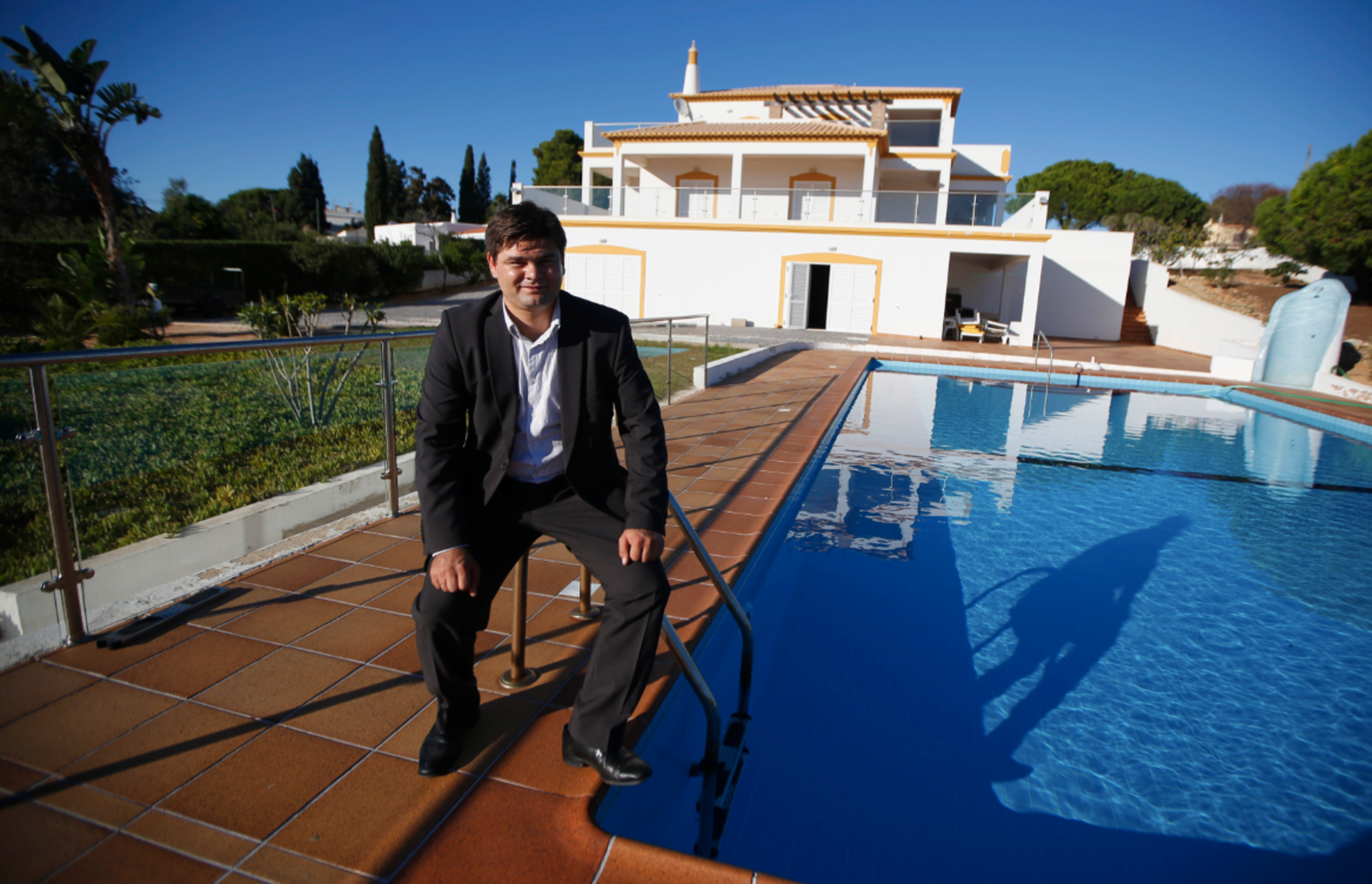
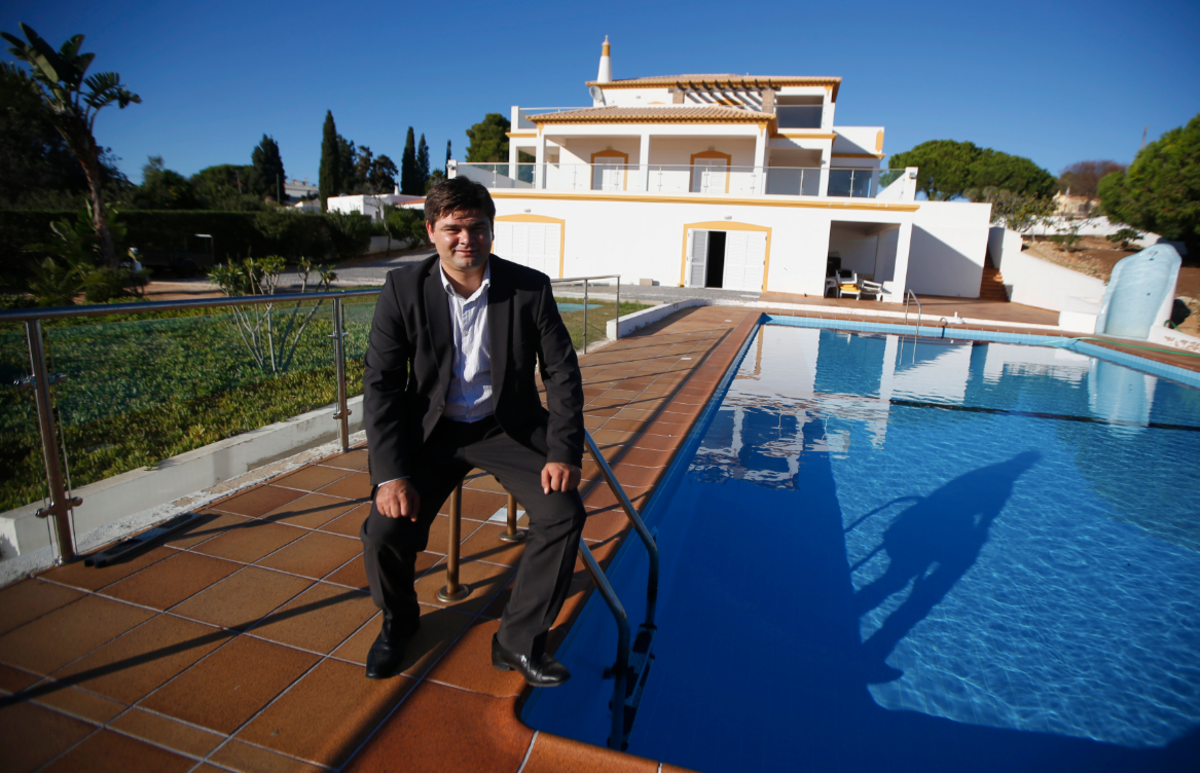
In one anecdotal example, Vyacheslav Eshanu, of property sales firm PortugalEstate, which has offices in three Russian cities and in the southern Algarve region of Portugal, told Reuters press agency that he has already struck five property deals based on the ‘golden visa’ incentive, and that demand from Russian buyers was not letting up.
An investigation by Portuguese magazine Visão concluded that the Portuguese scheme has been boosted by the financial crisis in Cyprus, which led to a 10 billion-euro bailout from the EU, European Central Bank and the International Monetary Fund in March. The collapse of the Cypriot banks left large numbers of Russian and Chinese fund-holders using the island as a tax haven exposed to significant losses. According to Visão, a number of these limited the damage by investing in the Portuguese ‘Golden Visa’ scheme.
Fears that the visa scheme might also offer new opportunities for money-laundering are heightened by the number of wealthy beneficiaries from Angola, a former Portuguese colony, one of Africa’s leading oil producers, where widespread corruption is prevalent.
The introduction of the passport-for-money programme in Malta raised a fierce debate, with the opposition centre-right Nationalist Party promising to strip buyers of their passports if it returned to power, and one of its MPs formally complaining to the European Commission that the scheme was "contrary to the spirit of what it means to be a citizen of Europe". But there has been little dissent to the similar scheme in Portugal, where the opposition Socialist party, contacted by Mediapart, had no criticism to offer. One of the few opposed to the ‘Golden Visa’ is Antonio Barreto, a former agriculture minister and now a social sciences researcher with Lisbon University, and who is otherwise viewed as a supporter of the centre-right government. “It is absolutely repugnant to carry out investments in Portugal through visas and passports of favour,” he commented in an interview published this August in the Portuguese daily Público.
Portugal’s neighbour Spain, one of the EU countries worst-hit by the debt crisis, has also joined the trend. In October, Madrid announced its own visa-purchase scheme for non-EU foreigners, also based on three options: a property investment of 500,000 euros or more, buyion,g a minimum 2 million euros-worth of the Spanish national debt, or the creation of an “innovating” business activity. In return, the Spanish scheme offers a 12-month residency permit, renewable every two years. Already, some reports cite estate agents as observing increased interest from wealthy property buyers from the Russia, China and the Middle East.
The Spanish Socialist Party has denounced a “mercantile” scheme, which associations defending migrants’ rights have dismissed as “discriminatory”. The government, meanwhile, argues it is simply competing for investment against other countries, notably Portugal. “It is no more and no less what other neighbouring countries are doing to favour foreign investment, in an organised, disciplined manner,” commented Spanish deputy Prime Minister Soraya Saenz de Santamaria, adding that such schemes were “generalized”.
Indeed, Greece also introduced a similar programme in April, offering visas in return for a property investment of 250,000 euros or more, while Cyprus offers fast-track citizenship for an investment of 300,000 euros. Further north, The Netherlands is preparing to launch such a scheme next year offering residency rights for non-EU foreigners who place 1.25 million euros or more in a Dutch-based bank account.
Reacting to questions tabled after Malta’s announcement that it was offering citizenship for sale, the European Commission said it had no say in the matter. At a press conference on November 13th, Michele Cercone, spokesman for home affairs commissioner Cecilia Malmström, said the European Court in Luxembourg had previously confirmed in "several" cases that "it is for each member state to lay down the conditions for granting citizenship."
"Member states have full sovereignty to decide to whom and how they grant their nationality," he said. While the EC has no intention of pursuing the matter, it appears that not a single Member of the European Parliament has taken up the issue either.
-------------------------
English version by Graham Tearse