


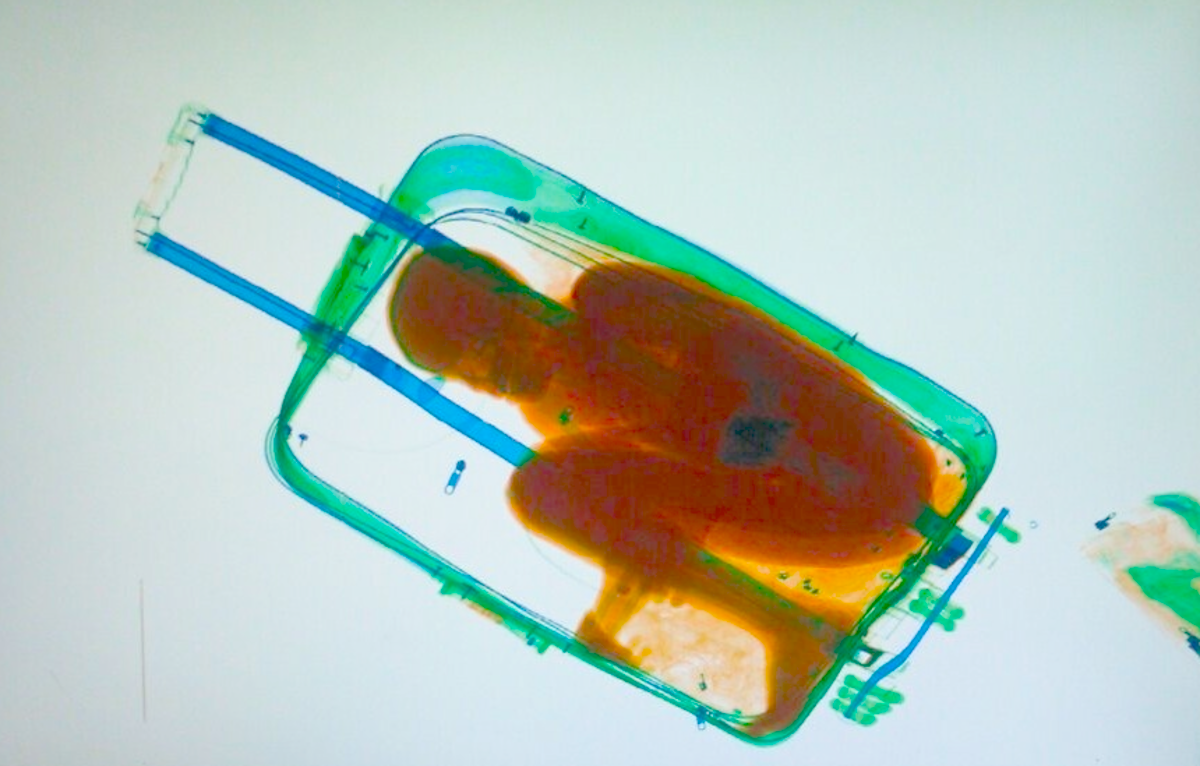
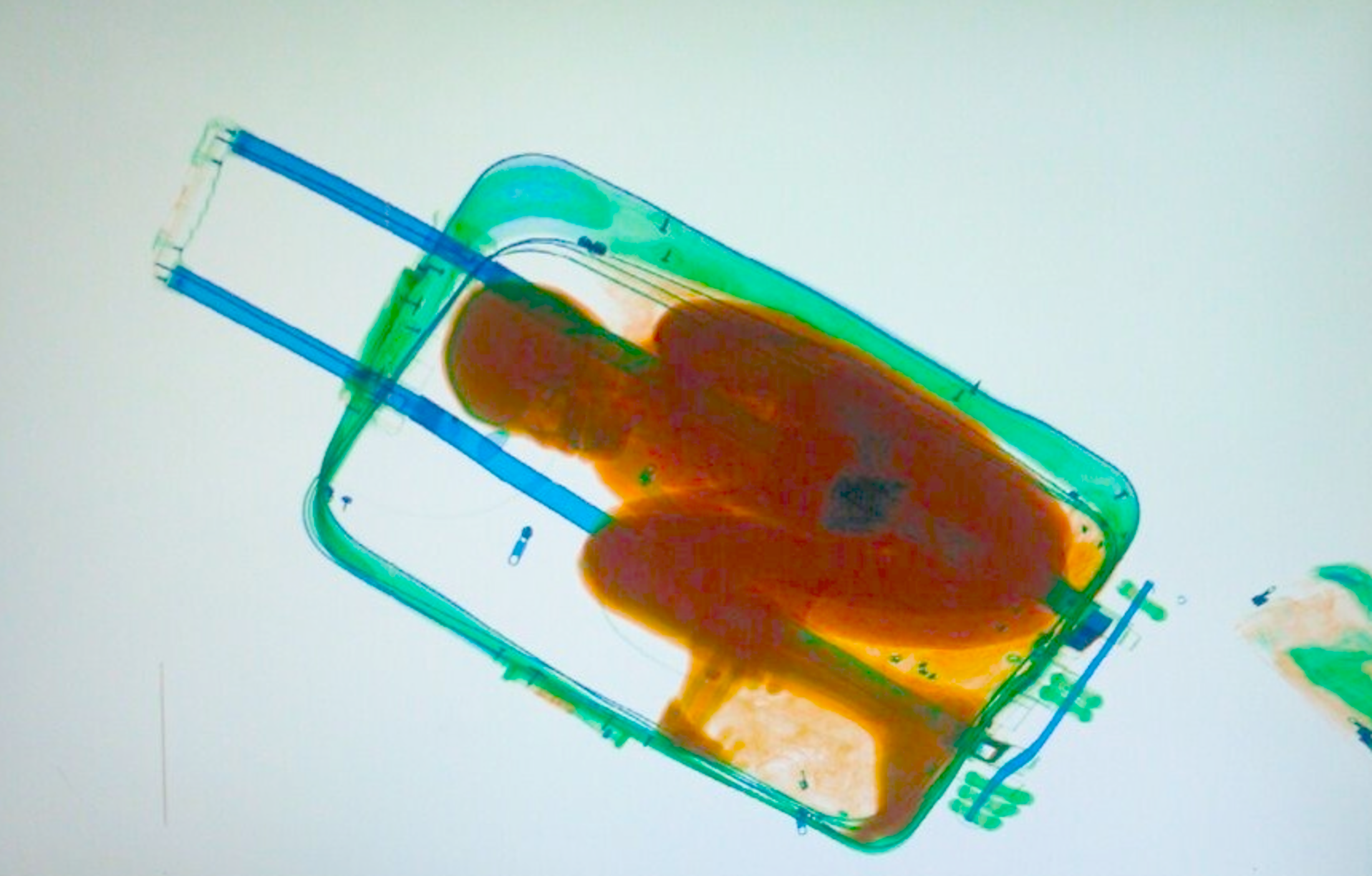
A shocking image was published across the internet on May 8th this year. It was an X-ray image, showing the body of an African child curled up in a suitcase. It is high time for a critical review of this propaganda operation by the Spanish interior ministry and the Guardia Civil, which was widely relayed by press agencies. Wasn’t it obvious that this medical-like image was degrading for the child? Was it really about contraband, as was written here and there? Why did the child end up in the suitcase?
Enlargement : Illustration 1
PROLOGUE
Have you ever seen this picture? When I first saw it, I wondered if he/she was dead or alive, and if the picture was taken at the departure or at the arrival. I thought: what would have happened if nobody had scanned the luggage and seen this child? Let me tell you the story of an african boy traveling in a suitcase - but not only.
THE STORY OF ADOU
Once upon a time there was a little boy, found in a suitcase.
He was alive and we were told that he came from Ivory Coast.
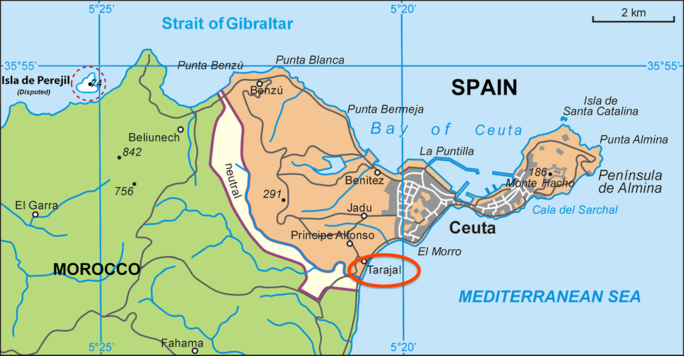
The customs officers had discovered him at the border of Ceuta, a tiny, tiny little Spanish enclave in the north of Morocco - just in front of the Strait of Gibraltar.
Silent in his hiding place
Floating in disoriented space
Suddenly appeared on the interface
A child in a suitcase
This image came on press monitors.
Briefly, violently, during one day, maybe two. Many newspapers published this artistic, pastel radiology of the misery of immigration. "It" had a name ("My name is Adou") and was eight-years-old. Television news programmes showed blurred pictures of Adou coming out of the suitcase, with commentary in a dramatic bass voice:
Silent in his hiding place
Floating in disoriented space
Suddenly appeared on the interface
A child in a suitcase!
An X-ray scan, a suitcase, a border, and a customs post: these elements, put together in the running flow of news, have strongly suggested to readers of the European press that this child was going to fly somewhere - Irresponsible Father! An African criminal! - in a baggage hold. Which is probably not the situation.
Enlargement : Illustration 2
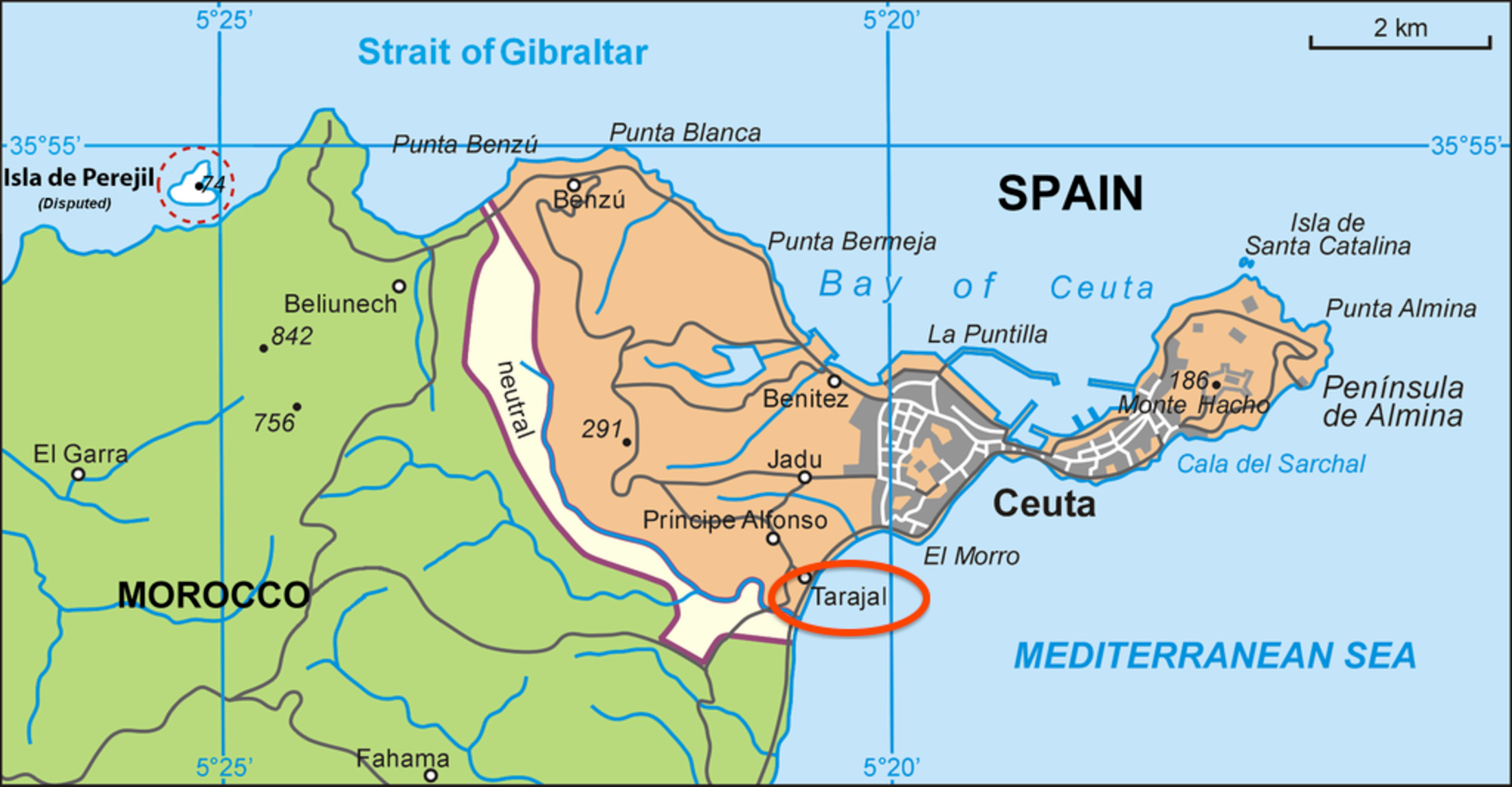
The frontier post of Tarajal is a pedestrian crossing, on the ground and near the Mediterranean Sea. On one side, Morocco, Africa, on the other side, Ceuta, Spain, Europe, both on the same piece of land. An hour-and-a-half after his son, the father walked to the frontier post. He showed his documents, but in response, the customs showed him a photograph.
Silent in his hiding place
Floating in disoriented space
Suddenly appeared on the interface
A child in a suitcase
He recognized this was his son.
The lawers explain (see here or there): he has been living for many years on Spanish territory, in the Canary Islands; he has a Spanish residency permit and works in a launderette; he has two children who are minors; he asked for reunification with his family and his wife joined him last year, with their 11-year-old daughter. But his eight-year-old son, Adou, could not cross the border legally because 41 euros were missing from the family income: according to the Grid, the father should have earned at least 1,331euros over the last 12 months in order to qualify as a four-member-family on Spanish territory - whereas he only could justify an income of around 1,290 euros.
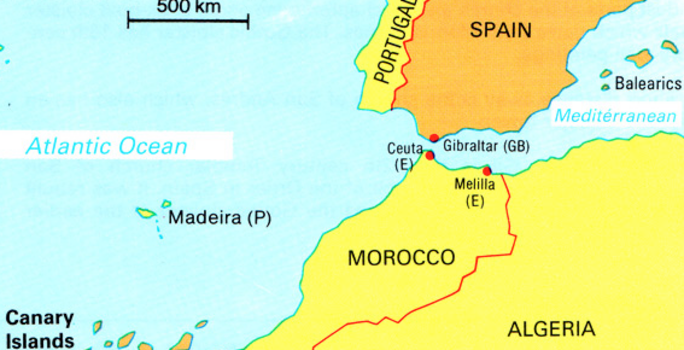
Adou was living in the Ivorian village of Assuefry, at his paternal grandmother’s home, together with another brother. But last year, his grandmother died. The father decided to pay 5,000 euros to a smuggler for the passeport and visa for Adou. The child was first supposed to travel by plane (not in the bagagge hold!) to Madrid, then plans changed and the father was asked to go to Ceuta. He was supposed to cross the border before his son and meet him on the other side, but something went wrong and when he arrived at the border, customs had already discovered his son.
– I live here with my wife and daughter. Can I live with my son ?
– Non, you can’t. You’re too poor.
It is not at all a solely Spanish problem: in France, grids and ceilings of income per family are very similar.
It means that with the income I earned when I was 28-years-old in Paris, I would not have been allowed to live with a child or even with my sexual partner. How can European populations accept such humiliating conditions for foreign citizens who live and work with them?
Adou is the mirror of our dehumanization. This image tells the story of a human being in a thing’s place.
Silent in his hiding place
Floating in disoriented space
Suddenly appeared on the interface
A child in a suitcase
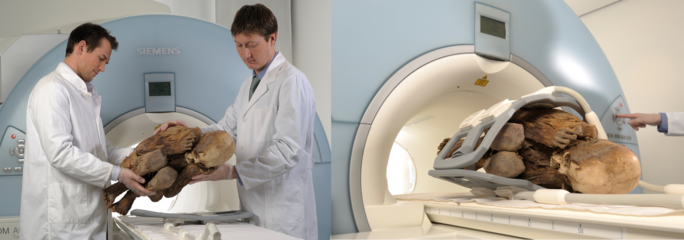
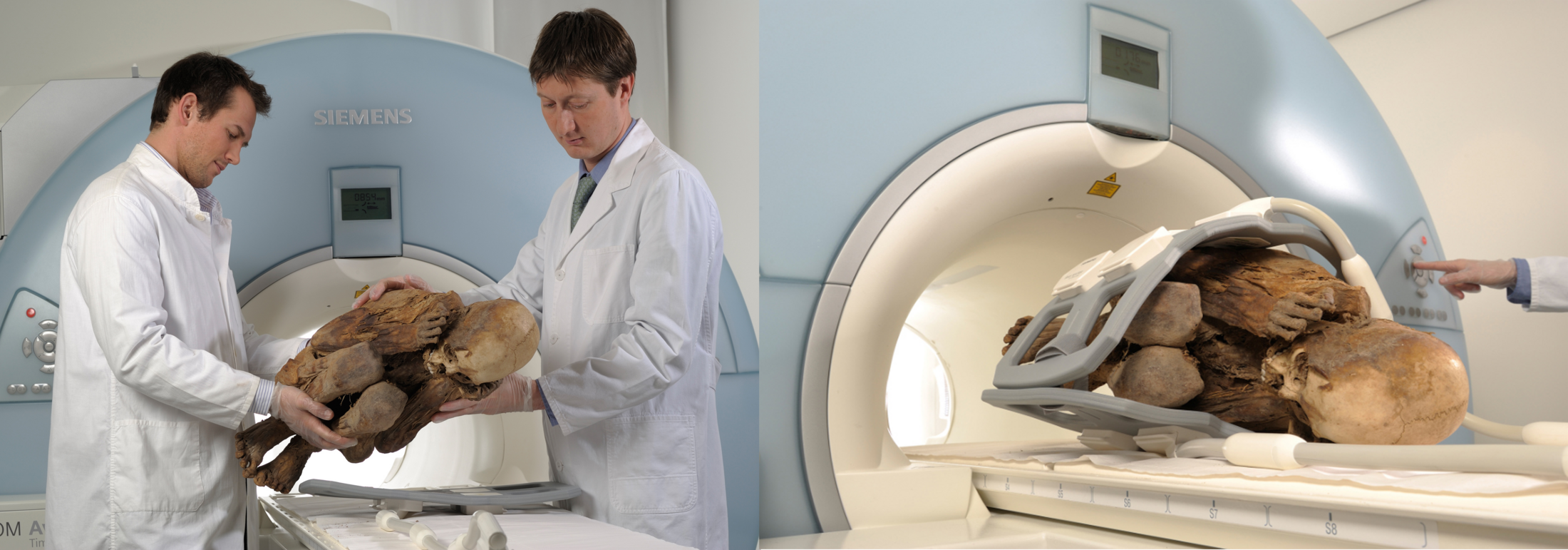
Did Adou's father agree to the publication of this image? In which conditions? He could legitimately press charges against the administration who spread this degrading representation of his son. We should never have seen this medical picture of a minor, his backbone, his skull, his eight-year-old body folded up like a Peruvian mummy.
Enlargement : Illustration 4
EPILOGUE
Adou’s father was arrested and placed in custody. Thanks to private donations (especially one of a "German family", who sent 12,000 euros) his wife was able to deposit a 5,000-euro bail bond which allowed him to temporarily leave the prison. He does not have the right to leave the Spanish territory and might be sent back to jail. He is accused of "delito contra el derecho de los ciudadanos extranjeros", an offence against the rights of foreign citizens. The foreign citizen being: his son.
The child gained special permission to live in Spain for one year. After participating in the media coverage of Europe's war against African immigration, after his exposure to high stress and an X-ray scan, Adou’s future depended on his DNA results. Fortunately, he succeeded and proved he was his mother’s son.
One month after the scan, son, mother and father were finally reunited and allowed to hug each other. This moving moment took place on the back seat of a lawyer’s car, in front of Sevilla’s prison. It was captured by the press, and constitutes the official happy ending of the Guardia Civil’s 'suitcase boy' fairy tale.
-------------------------
This original text in English by La Parisienne Libérée can be found in French, along with her critical accounts in words and music of other current issues, here.