


According to figures from the French Ministry of Women’s Rights, women make up 51.5% of France’s population, and represent 47.7% of its active population.
They have on average more academic qualifications than men – 48% of all French women have obtained higher education diplomas, against 35% of the male population. Yet women make up less than a third of all managerial posts in the French private sector, and represent less than a fifth of the number of heads of corporations. According to the French labour ministry's National Agency for the Improvement of Conditions at Work (ANACT), 50.6% of jobs performed by women in France are concentrated in just 12 out of the 87 categories of professional activity defined by the ministry.
There are five times as many women than men employed in part-time jobs in France, and women are three times more affected than men by underemployment - a term that covers both the inability of some to obtain full-time employment and the under-utilisation of the skills of others in the posts they occupy.
According to the independent French association l’Observatoire des inégalités, dedicated to recording and publicising incidents of all social inequalities, a study of the latest available relevant data from France’s Institute of Statistics and Economic Studies (INSEE), showed that in 2010 women in France earned on average 25% less than men for doing the same job.
The association underlines that to correctly interpret this global statistic demands the recognition of a number of factors that blur the black and white lines. These include the far higher number of women in part-time employment, that more women than men choose to prioritise child-rearing over work (a recent study among French women aged between 20-49 years found 36% modified their professional activities after giving birth to their first child), and that men work more overtime hours than women.
Nevertheless, in a global comparison of full-time salaries in France, the Observatoire des inégalités concluded that women earn on average 14% less than their male counterparts.
The gap was highest among managerial posts and heads of corporations, where women earned on average 29.1% less than men (the gap was 8.1% among non-managerial employees). “The higher one progresses through the salary scale, the greater is the gap between women and men,” the association notes in a report published on its website.
It concluded that on average, among the 10% lowest-paid employees in full time employment, women earn 91% of what men receive. However, among the 1% of the highest paid men and women, the latter receive on average just 64% of what their male colleagues earn.
“In this field, things evolve very slowly, you have to fight, to push a lot, to argue, again and again, to change mentalities and thus events,” says Mercedes Erra, an active and outspoken promoter of women’s rights who is Executive President of Havas Worldwide, one of the world's largest marketing and PR companies.
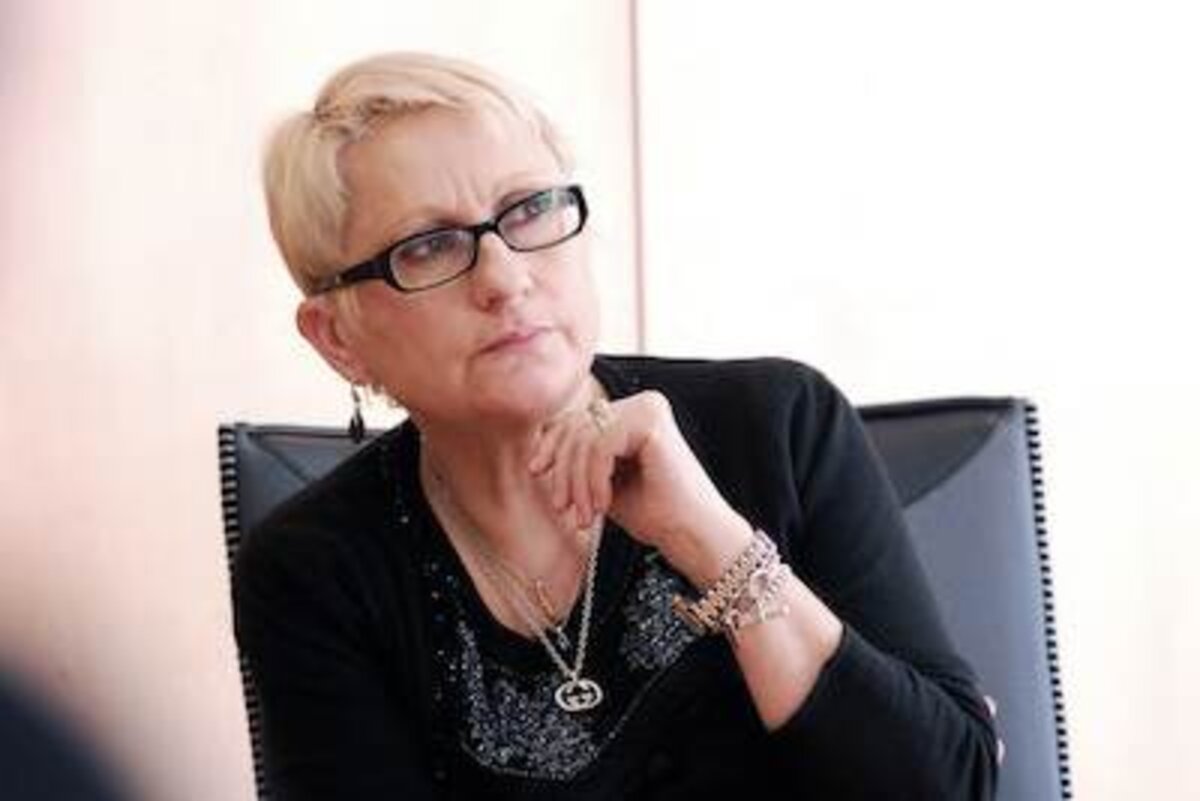
The 59 year-old Spanish-born mother of five, co-founder of leading French advertising agency BETC, sits on the board of the Elle Foundation, is a permanent member of the French commission on the image of women in the media (Commission sur l'image des femmes dans les médias), a watchdog committee created under the auspices of the French women’s rights ministry, and is a member of the French branch of Human Rights Watch. She is also the co-founder of the Women’s Forum for the Economy and Society, which earlier this month held its latest annual conference in Myanmar (Burma).
“When we created the Women’s Forum, you couldn’t talk about the place of women in corporations,” says Erra. “The subject was a taboo. Everyone was a hypocrite, we were told that there was no problem. Around me I used to hear, and also from women, that I’d be better off if I shut up because I was going to be marked out as a feminist and that this would damage my career.”
Even if she doesn’t hear the same comments today, she complains that she still often has “the impression of being an early-century suffragette” when talking of “absolutely banal things”. Erra is a campaigner for quotas to be imposed on companies for the number of women in managerial posts and who sit on the boards. “Lots of women have realized that if we let things carry on naturally, this won’t happen,” she says.
'Influencing behaviour is best way of changing the world'
Naturally then, she supports a law introduced in January 2011 that requires the largest French companies to include at least 40% of women board members by 2017. Last month, the European Parliament approved a draft Directive with the similar aim of imposing an EU-wide minimum quota of 40% women board members on stock exchange quoted companies by 2020 (it is currently estimated Europe’s largest companies currently have just 17.6% women board members).
“Today, on the boards of companies on the CAC 40 [French stock exchange] just 22% are women,” underlines Erra. “Even then, we remain very nice, hesitating to criticize decisions taken. Often, men choose us thinking that we’ll not make any noise. And it’s true that we have difficulty in believing in our power.” In answer to critics who suggest changing the parity of company board members is a minor issue, she replies: “If corporations move on, they’ll do so from the top, and the top [today] is masculine.”
“A recent study showed that when leaving the grandes écoles [elite French higher education institutions], the first salaries for the boys were already higher than that of the girls,” comments Erra. “They [the girls] don’t dare ask, consider themselves already lucky to be hired for a prestigious post, find it difficult to assert their ambition.”
“On the question of salaries, we’ve come a long way,” says Erra. “For a long time in France – and it’s still the case in numerous countries – women weren’t paid for their work. It is estimated that on average, around the world, women carry out 70% of work in the professional and domestic spheres, and that they receive just 10% of [the total worth of] salaries.”
Erra claims that women too often voluntarily place themselves on the professional touchline. "'I want to a job that I like, even if it's badly paid', or 'I choose this sector because it'll allow me to bring up my children' is not man's talk," she says. "To make things move on, women must admit that what is happening to them poses a problem, and that's the hardest thing. Myself, I still have a tendency to believe that I'm better than men at concrete things. When I was little, it was me who my mother asked to do the washing up, not my brother. That's called training, behavioural, cultural training that needs to be questioned."
She supports a bill of law under debate in the French parliament that proposes to extend the right to parenta leave from the current six months to 12 months and which stipulates that this is on condition that it is shared equally by both parents. The aim of the proposed legislation, which if approved will become law in July 2014, is in part to reduce the distancing of women from their professional activity that parenthood often entails. Currently, 97% of all aprental leave from work is taken up by women.
"It willl give a concrete role to both parents at the same time, and you will see that if it is paid [leave], the leave will be quickly taken up by the fathers," claims Erra. "To influence behaviour is the best way of changing the world."
-------------------------
English version by Graham Tearse