


During the night of March 26th 1996, seven French Cistercian Trappist monks1 were kidnapped from their monastery in Tibhirine, Algeria. Two other monks inside the Catholic monastery, sited close to the Atlas mountain range 90 kilometres south of the capital Algiers, managed to escape from the group of some 20 kidnappers who have never been formally identified.
Responsibility for the kidnappings was claimed by an Islamic terrorist organisation called the GIA (Armed Islamic Group)2, and which demanded the release of several of its members from Algerian prisons in exchange for the monks' freedom.
After a fruitless two months, during which French intelligence agents failed to track down the monks, a communiqué by the GIA announced they had been executed, detailing that their throats had been slit. One week later, on May 30th, their heads were found on a roadside in the same region, close to the town of Médéa, some hanging from trees in plastic bags. Their decapitated bodies have never been found.
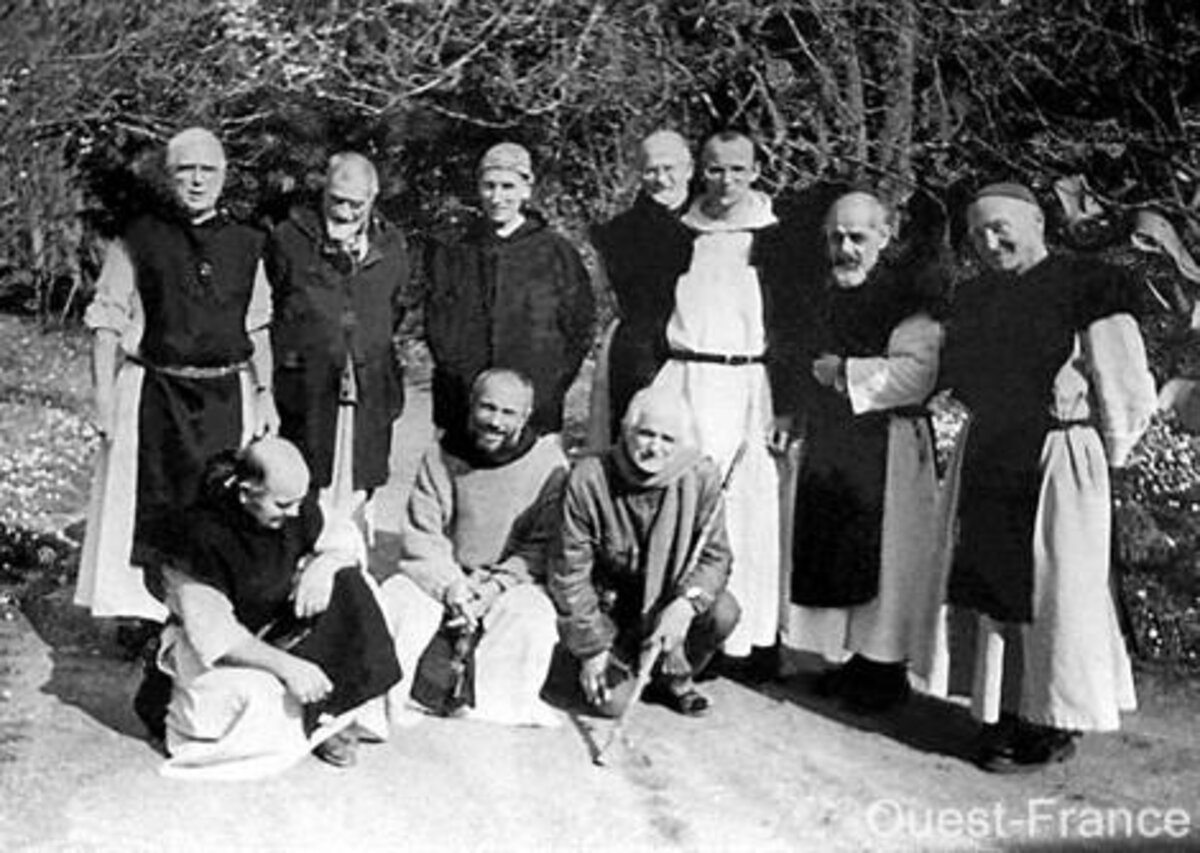
It was the start of a mystery that prevails to this day, and which is currently the object of a revived French judicial investigation into their murders. The background to the case is a confused one, involving rivalry between France's domestic and foreign intelligence services, suspicions about the real role of Algerian authorities and intelligence services, who have been accused by several of their own exiled former operatives of manipulating the GIA.
Above all, despite an official line maintained for 15 years by Paris and Algiers that the GIA was responsible for the killings, recently-emerging evidence, reported by Mediapart and summarized in previous articles here and here, suggests that was not the case.
The investigation into the murders of the monks is currently led by Paris-based investigating magistrate Marc Trévidic, a specialist in anti-terrorist enquiries. He is exploring the theory that the monks were mistakenly murdered by Algerian army helicopter gunships during an attack on a suspected GIA desert camp, and that their bodies were subsequently mutilated as part of an appalling cover-up.
The theory of a cover-up is highly embarrassing for both the French and the Algerian authorities, both implicated by the lead. It is given further credence, Mediapart can now reveal, by the recent apparent disappearance of several key documents that Judge Trévidic has demanded from the French government.
The first of the documents that have been described as untraceable is a report by the former military attaché to the French embassy in Algiers, General François Buchwalter, which he claims he drafted and passed on to his superiors after his own early investigation into the murders. As already revealed by Mediapart, during questioning by Trévidic on June 25th 2009, the general reiterated his belief that the seven monks had not been assassinated by the GIA, but were probably killed as the result of a blunder by the Algerian army.
General Buchwalter maintained that he had communicated his conclusions to the French authorities, who in turn asked him to keep his report confidential. He described this as implementing a "black-out requested by the [French] ambassador", Michel Lévêque.
-------------------------
1: Dom Christian de Chergé, Prior of the community, 59. Brother Luc Dochier, 82. Brother Bruno Lemarchand, 66. Father Célestin Ringeard, 62. Brother Paul Favre-Miville, 57. Brother Michel Fleury, 52. Father Christophe Lebreton, 45.
2: In elections in Algeria in 1991, the Islamic Salvation Front (FIS) won the first round of legislative elections. The army stepped in to prevent it winning the second ballot and the FIS was dissolved in January 1992. The GIA - the Armed Islamic Group - was created at that time to support the FIS. Ten years of civil unrest ensued.
Judge Trévidic, who officially requested a copy of Buchwalter's report from the Ministry of Defence on August 20th 2009, has now been told that it cannot be found. Other important documents requested have also been declared missing. These include faxes sent to the French defence ministry's former special operations intelligence adviser (CROS), General Philippe Rondot, one of France's most senior intelligence operatives, who was at the time assigned to the Direction du surveillance du territoire (DST)1, the domestic intelligence agency. These encrypted faxes were drafted by General Smaïn Lamari, head of the Algerian counter-espionage agency, the DCE, at the time of the monks' disappearance.
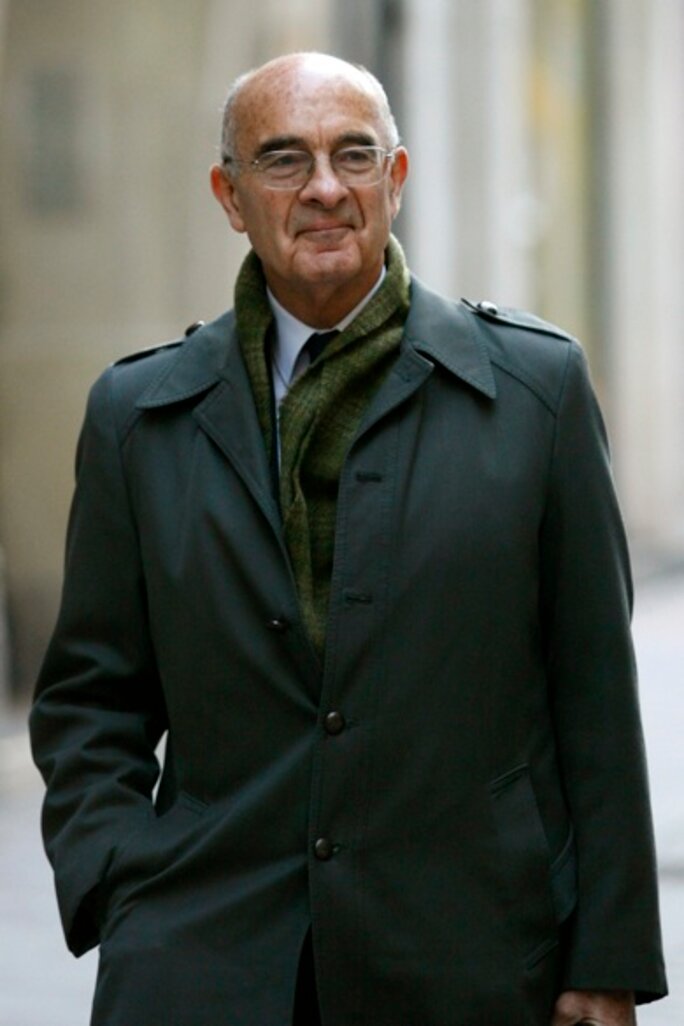
General Lamari was one of the best informed figures in the Algerian state apparatus, and one of Philippe Rondot's principal sources of information. During questioning by Judge Trévidic on September 27th 2010, Rondot cited the several confidential faxes that his Algerian counterpart had sent him, explaining that he had used them as the basis for the reports he had sent to the French interior ministry, to which the DST was directly accountable.
In his evidence, General Rondot stated that at 7.30 p.m. on May 21st 1996, shortly before the monks' remains were found, he had received an encrypted fax from Smaïn Lamari citing intelligence from a former terrorist-turned-informer that he believed would allow the Algerian authorities to trace the ecclesiastics. Other faxes, notably concerning GIA chief Djamel Zitouni, killed in July 1996 reportedly by a rival Islamic group and who is suspected of having been manipulated by the Algerian secret service, followed the same route during this period.
"Do you know what has become of these encrypted faxes?" Judge Trévidic asked Rondot during the questioning last September2. "I am not responsible for the archives at the DST so I really can't say," the general replied, adding that these documents were classified as "defence secrets" by the interior ministry.
Trévidic subsequently requested the interior ministry to forward the faxes to him, in a letter dated October 18th 2010. But on February 9th 2011, the director-general of the French national police service (DGPN), Frédéric Péchenard, replied to Trévidic: "I have no trace of the documents that General Rondot mentioned in his hearing and which you have requested." The fact that the documents had not been preserved by either the interior ministry or the Central Directorate of Interior Intelligence (DCRI, which replaced the DST) is, at the very least, a surprising lack of professionalism.
-------------------------
1: The Direction de la surveillance du territoire (DST) merged with the Direction centrale des Renseignements généraux (DCRG) in 2008 to become the Direction centrale du Renseignement intérieur (DCRI).
2: These quotes are translated from the official record of Rondot's testimony.
The investigators of the anti-terrorist division of the Police Judiciaire (police specialised in criminal investigations, very broadly equivalent to the UK police Criminal Investigation Department, the CID), mandated by Judge Trévidic to pursue his investigations, have been unable to retrieve other documents considered equally important. These concern all the biographical data relating to Mustapha Abdallah, a former chauffeur for the Agence française de développement (French Development Agency, the AFD), in Algiers.
On April 30th 1996, one month after the monks were kidnapped, Abdallah gave the French embassy proof that the monks were alive in the form of a recording of their voices, along with a message from the GIA's Djamel Zitouni. (Two years earlier, Abdallah's brother was killed by the the French gendarmerie elite special operations unit, the GIGN, during their assault at Marseille airport in December, 1994, on an Air France Airbus hijacked by a GIA commando on a flight from Algiers).
In a report dated October 12th 2010, French police officers investigating under Trévidic recorded that, on the strength of elements transmitted to them by the French embassy in Algiers: "Research undertaken in the safe of the Agence française de développement in Algiers as well as at its headquarters in Paris have not enabled us to find the file on this former agent [Editor's note: of the AFD]." In an e-mail dated October 1st 2010, the former head of the AFD in Algiers, Jean-Yves Clavel, told the current director, Claude Dorwling-Carter, that regarding Abdallah, "there is nothing in the files, except the letter advising him of his redundancy, the pay slips and the final redundancy letter of mid-August 1995."
The disappearance of the Abdallah file is all the more more intriguing given the fact that several witnesses questioned over recent weeks by Judge Trévidic have said his identity as a GIA emissary was well-known to both the French embassy in Algiers and to French intelligence services as of 1996.
--------------------------
English version: Alison Culliford
(Editing by Graham Tearse)