


Ratings agency Standard & Poor’s announced Friday that it had downgraded France’s triple-A credit rating to AA+. Mediapart editor François Bonnet argues here that the downgrade has stripped bare President Nicolas Sarkozy’s attempts, as he prepares to announce his candidature for re-election in April, to hide the amplitude of the economic crisis and his own failures in Europe and at home.
-------------------------
The downgrading of France’s AAA credit rating was no surprise. As Mediapart reported in November, the move was imminent given the evolution of the European debt crisis and unavoidable given the incapacity of France and Germany to halt it. It can even be seen as logical, and even welcome if one considers that, finally, it will allow the true political debate in France to begin.
On the sole pretext of keeping the markets and ratings agencies happy, there have been oh so many political gesticulations, mediocre compromises and a flouting of democracy, in which the world of finance and the EU member country heavyweights have imposed government changes on smaller nations.
At least the landscape is clearer now. The amplitude of this crisis, as Mediapart has never ceased warning, cannot be met with a disorganized management based on French and German electoral agendas. This loss of France’s triple-A credit rating is a singular, timely reminder of how Europe, bereft of political ambition over the past two years, has been incapable of forging agreements that would have allowed imposing upon banks and markets – and by consequence, the ratings agencies – policies that are based on regulation, solidarity and social ambition.
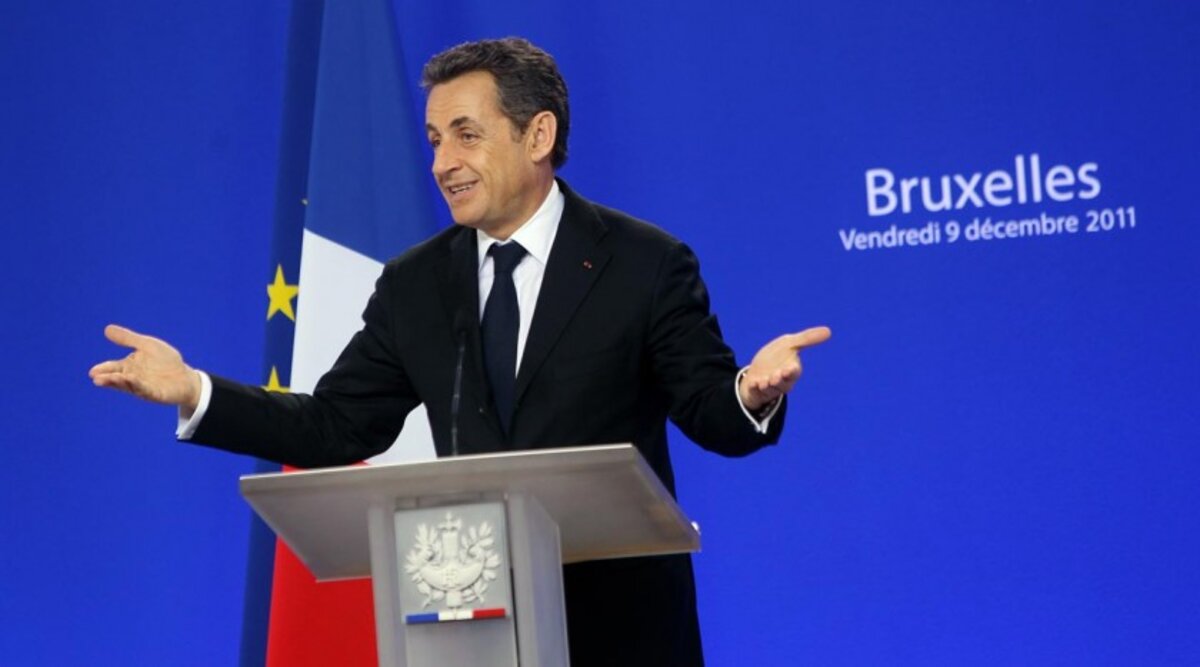
Enlargement : Illustration 1
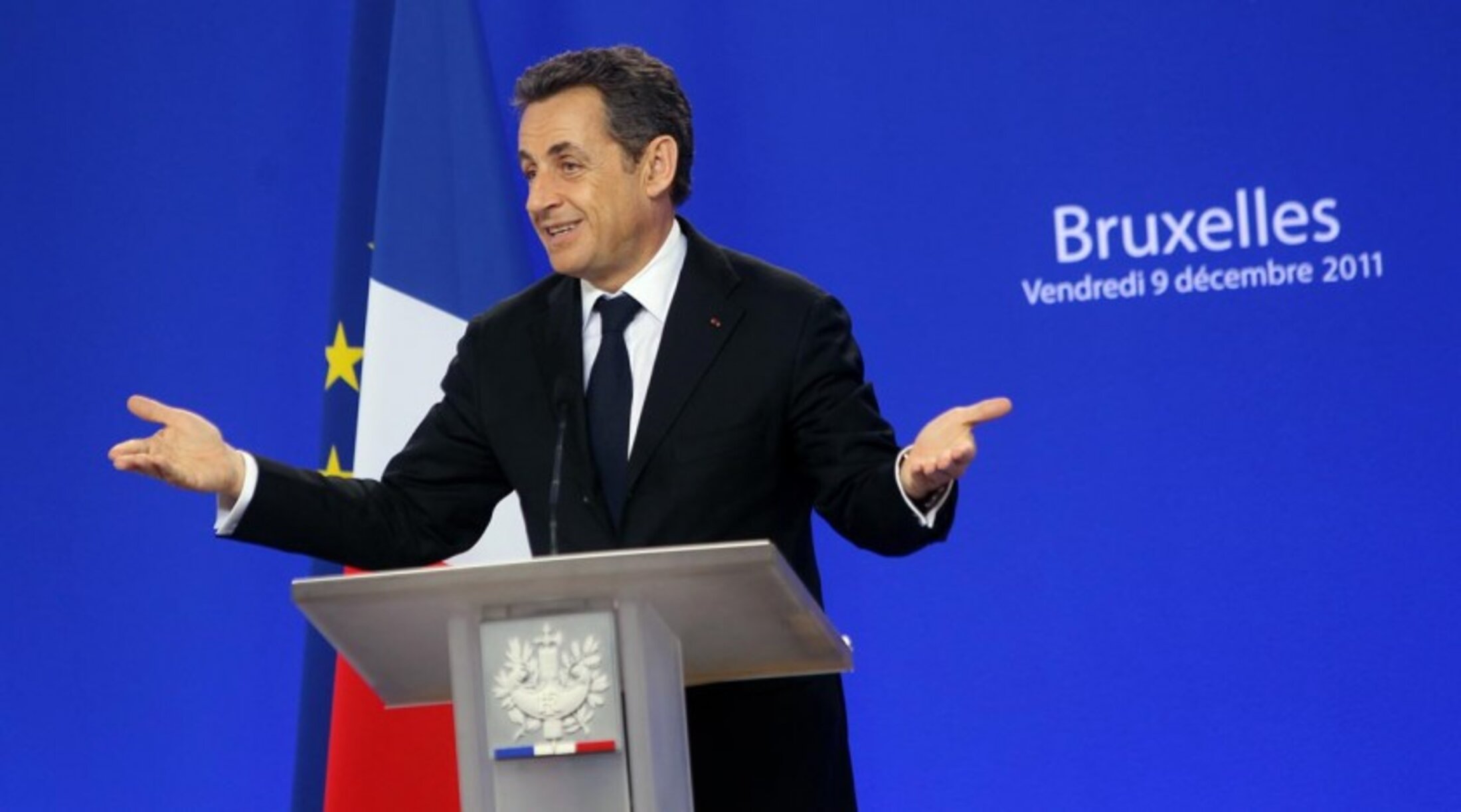
Also on Friday came the news that talks between the Greek government and representatives of lending banks, which was called to reach an agreement on a restructuring of the Greek debt, had been suspended. The events represent the crumbling of the Potemkin villages built by December’s so-called ‘last-chance’ European summit to solve the eurozone turmoil. As expected, nothing remains of that marathon December 9th gathering nor its agreements that was supposed to save the euro and put out the fire of the sovereign debt crisis.
Before Standard & Poor’s move on Friday, it was Europe itself that had skillfully unwound the new European treaty defining a new EU governance, crafted by Nicolas Sarkozy and Angela Merkel in December. As our Brussels correspondent Ludovic Lamant reported, the ratification of the new treaty, even if the heads of government pre-approved it as early as the end of January, could well take until 2013.
While no surprise, France’s loss of its triple-A rating, which President Nicolas Sarkozy’s advisor Alain Minc has previously described as “a national treasure”, is a significant event, and Nicolas Sarkozy is first in line to be hit by the shockwaves.
Beep! beep! There went Road Runner Sarkozy
Ever since his December 31st public address, he has engaged in a hair-raising, story-telling campaign, fired with a series of New Year speeches, the setting up of a rapid-reaction ‘riposte unit’ to answerback his political rivals, a whirlwind of agitation giving us a sort of virtual France which has a president (and undeclared presidential candidate) who is somehow not the one we know, and who came armed with a new set of policies.
It is almost as if one needed a slap in the face to remember that this is part of an electoral campaign and not the beginning of a new presidency. All of a sudden, Sarkozy has unveiled plans for a ‘social’ VAT, for a go-it-alone Tobin tax, for justice reforms and for the gradual insertion into the public sector of some in precarious employment situations. Not forgetting a major national summit he has called on employment issues, with a renewal of negotiations with trades unions, a plan to improve professional re-insertion of the unemployed, and further reforms to the education system. Whatever happened to the eurozone crisis?
All of this hypnotic activity was relayed over recent days by Prime Minister François Fillon, who met with Members of Parliament from his ruling UMP party to announce that parliament would continue sitting beyond the recess for the elections – and probably until the beginning of March – to push through a battery of bills in all urgency.
Amid this absurd, head-spinning rush of initiatives, let’s remember Sarkozy’s previously humble plans as he announced them during an interview with Le Figaro Magazine back in March 2010. “During the second half of 2011, the government will take a pause so that parliament will be able, if it wishes, to amend and complete all the reforms in order to improve them,” he said then.
The president’s advisors, who are always proud to produce warrior-like catchphrases, have now defined the strategy. After serving up the so-called ‘riposte unit’ (cellule riposte), a team ready to quickly counter attacks from his opponents, now we have what they call “the moving target”. As French daily Le Parisien reported last week, this is what one of his close entourage described as Sarkozy playing with “movement”, in contrast to the “immobility” of Socialist Party candidate François Hollande. “We’re going to give you a string of surprises”, the paper quoted one of his advisors as promising.
You think he’s here, but he’s already there, is the plan. Sarkozy as the Warner Bros cartoon character Road Runner, with Hollande playing the Coyote (click on screen title below for a fun reminder).
Road Runner Sarkozy thought he was going to dictate the agenda, create the news, return to his 2007-2008 former self, the editor-in-chief of France and its media who were reduced to chasing after the president’s every move and then asking his opponents for a reaction.
At least Standard & Poor’s has the merit of calling ‘The End’ on the cartoon show. Back to reality; bankrupt states, national egoism, populations crushed by austerity, mass unemployment and European failure. To understand what is now emerging, to anticipate what will be the next crises, we need to look back at the policies led over the past two years, to what was an avalanche of announcements with no follow-up, grand plans that became little more than petty measures.
'No cause for concern'
The government and the ruling UMP party will, of course, now embark on a strategy of telling the public that the loss of the triple-A rating ‘means nothing’. Finance minister François Baroin, speaking on Friday evening on TV channel France 2, described the loss as “no catastrophe”. Never mind that Sarkozy’s friend and advisor Alain Minc, interviewed last October 28th on Europe 1 radio station, proclaimed: “Nicolas Sarkozy is totally bound to France’s AAA rating. In a way, he is staking his future [on it]. It is a profound choice. He cannot allow himself [sic] a downgrade.”
Indeed, Minc was doing little more than relaying the government’s stance. On October 17th, Prime Minister Fillon had described the triple-A as “extremely precious”, and that “it must in no way be made fragile”. The following day, after ratings agency Moody’s had placed France’s triple-A rating on watch, with the threat of a negative outlook, finance minister Baroin, in stark contrast to his comments this weekend, described the triple-A rating as “a necessary condition to protect our social model”, promising it would be “conserved” by the government. “We will take every measure, so there is no cause for concern,” he added. “Everything has been put into place over the past three years to avoid being downgraded.”
Self-assured, and reassuring, Baroin even used the moment for a swipe at socialist presidential candidate François Hollande, warning that if ever the Socialist Party election programme was applied it would “cause France to see its rating downgraded within two minutes”.
But by the beginning of last December, time had come to put an end to the circus; by then it had become obvious that the developments in the eurozone crisis and the French debt would lead to a downgrade. That was when Fillon and Baroin began adopting the opposite approach, rejecting the “immediacy” of financial market reactions and the swings and turns of forecasts from the ratings agencies. Following the December EU summit, Fillon said of the ratings agencies: “What counts, is not their one-day judgment, it is the politically structured and rigorous budgetary route that Europe and France have decided to adopt”.
Thus Nicolas Sarkozy’s election campaign agenda has been thrown into disarray; but will he recognise it? Nothing is certain, given how, over the last quarter of 2011, he has shown that his approach to European issues was first and foremost determined by considerations of politics at home. But the probable acceleration of the crisis, along with the awakening of European institutions, notably its until-now marginalized parliament and Commission, and the actions demanded by other countries will no doubt force the French president to rethink his policy programme. The true presidential election campaign is at last underway, and so much the better.
- François Bonnet is editor of Mediapart.
-------------------------
The original French version of this editorial can be found by clicking here.
English version: Graham Tearse