


A Member of Parliament from President Nicolas Sarkozy’s ruling UMP party caused uproar across the political divide this week after denouncing homosexuals as over-represented “at the heart of power”, likening gay relationships to incest, dismissing the deportation of homosexuals from France during German occupation of the country in World War II as a “great legend”, and describing homosexuality as a state of “narcissism” built on “a stupid theory of genders”.
Christian Vanneste, MP for a constituency in the Nord département (county) of north-east France, has caused a major embarrassment for Sarkozy, caught in the controversy just as he officially announced he was standing for re-election and which coincided with a newspaper interview in which the French president came out firmly against the idea of extending the institution of marriage to homosexual couples.
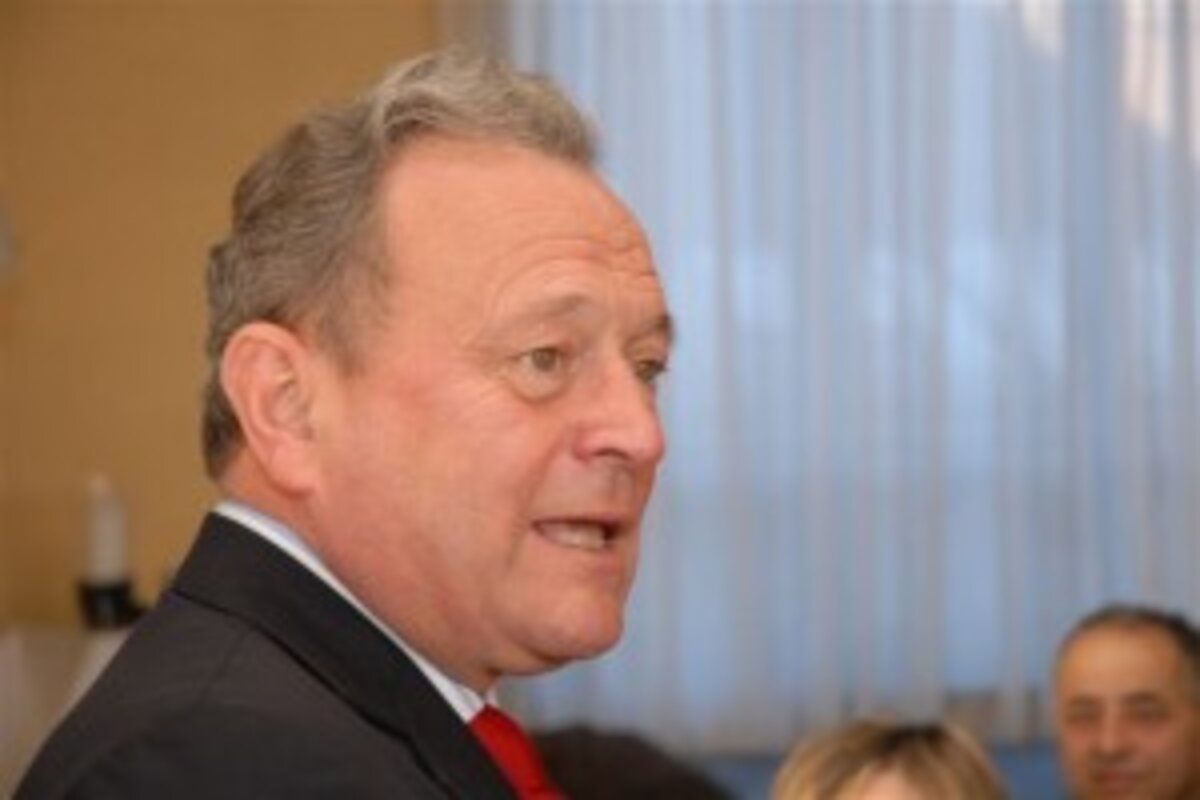
Vanneste was speaking in a lengthy video interview published on French website Libertépolitique.com, a right-wing Christian think tank, in which he described homosexuality as being a state of “narcissism”, bordering on “egoism” and built on “a stupid theory of genders”. He said marriage between homosexuals was “an anthropological aberration”, akin to incest.
“Forbidding incest is the forbidding of the same [sexual group],” he said. “The key to humanity is exchange, the act of looking for one’s partner in another group than that of oneself.”
The interview was widely reported during Wednesday, hours before Sarkozy finally announced his candidature in the two-round presidential elections that begin in April. It was originally put online on February 10th, the day before publication of an interview Sarkozy gave to Le Figaro Magazine.
Asked his position on extending the status of marriage to homosexual couples, the French president replied: “I am not in favour of it”, adding: “In these troubles times where our society needs points of reference, I don’t think we should blur the image of this essential institution that is marriage.”
Announcing his re-election bid on French TV channel TF1, Sarkozy was asked to comment on Vanneste’s interview. “I would so much like that, in political life, on the Left like the Right, we stop these injurious comments that lead nowhere,” he said. “I [feel] horror about anything that could, in one way or another, appear homophobic.”
While Vanneste’s interview rapidly began to overshadow Sarkozy’s programmed announcement that he was entering the presidential race, senior UMP members moved swiftly to condemn the MP’s comments. UMP secretary-general Jean-François Copé described Vanneste’s remarks as “profoundly shocking and intolerable”, and announced that the party would meet next week to decide on whether to expel the MP.
However, Vanneste, 64, a veteran member of the conservative UMP party and its Gaullist forerunner, the RPR, has regularly caused controversy with his outspoken attacks against homosexuals. A leading member of the UMP parliamentary group Droite populaire, which espouses hardline views on the issues of national identity, immigration and security, he has until now had the public support of the UMP, which he has argued should form a broad rightist alliance with the Far Right Front National party.
During the video interview with Liberté Politique, Vanneste said: “The media are in power. We are in a mediocratic society, a society where the media is the power. In the same way, there is a reversal regarding the situation of the [influential] weight of homosexuality in society. It is quite fascinating. It was a discreet, a marginal activity, sometimes the subject of jokes, and which did not have a significant role, even if one knew it existed. Today the situation is quite different, in as much as it lies at the heart of power, where it uses its numbers within power, it enjoys a role that has nothing in common with that which it has in the larger population.”
“In the larger population it continues to be extremely marginal, to the order of 2% or 4% at its most. At a media level, it is extremely present in events, and also [regarding an] image. Because when you have lots of people who live in a certain manner within a group, that group is naturally favourable towards them. Which is why you have great difficulty today in meeting someone who comes from the media and who is not favourable towards homosexuality,” he said.
Vanneste denounced “the great legend about the deportation of homosexuals”, referring to the deportation of French homosexuals to Nazi concentration camps. “In Germany, there was a repression of homosexuals and deportation which amounted to almost 30,000 deportees,” he said. “And there were none elsewhere. And notably, outside of the three annexed [French] départements [equivalent to counties]. In France there was no deportation of homosexuals.”
“One could even say, if one wanted to be wicked […] that when a certain number of French intellectuals were to present their respects to Monsieur Goebbels, there were all the same half of them who were homosexuals. And notably, leading them, [occupied France collaborationist leader Marshal] Pétain’s minister, Abel Bonnard, who everyone knew was homosexual and who the Resistance members called ‘La Gestapette’, in a way that one might, accordingly, find funny, or not.”
'I will not be excluded from the UMP'
Despite the very public furore and indignation he provoked this week among his UMP colleagues, Vanneste has for years created controversy and outrage by his anti-homosexual campaigning without drawing any political sanction from his party.
In an interview with regional daily La Voix du Nord, published in January 2005, Vanneste said: “I didn’t say that homosexuality was dangerous, I said it was inferior to heterosexuality. If it was made universal, it would be dangerous for humanity.” Following his comments, several gay groups, including Act Up, launched legal action against the MP who, in 2006, was tried and found guilty by a court in Lille for making “insults related to sexual orientation”, sentencing him to a 3,000-euro fine. But an appeals court overruled the sentence in 2008, finding that while his remarks “could have caused affront to the sensitivities of some homosexual people, their contents did not [exceed] the limits of freedom of speech”.
Months before the appeal court decision, the ruling UMP party gave its “full and total support” to Vanneste to stand for the party in local municipal elections, held in March 2008, while UMP deputy leader Dominique Paillé praised Vanneste’s “[personal] qualities”.
In a post published April 30th 2010 on his blog – which carries the slogan ‘The courage of common sense’ - Vanneste wrote: “The gay semantic workshop has invented the most effective conceptual judo hold: paedophilia is a crime. Homosexuality is a virtue.” He continued: “Ephebophilia, which is what pederasty was once called, meaning the attraction of men for pubescent adolescents of ambiguous features,neither begins nor ends at 15 years-old[…] Otherwise put, the link and even the confusion that prevails between homosexuality and ephebophilia is patent.” He concluded by insisting that “the outrageous opposition of paedophilia and homosexuality is unfounded because of the frequent ephebophile tendancies over history which ignore the judicial boundaries of age.”
In June 2011, during parliamentary debates on what was to be an unsuccessful Socialist Party-sponsored bill for the legalization of marriage between homosexuals, Vanneste spoke to reporters outside the debating chamber (see video below). “I don’t see why the National Assembly should concern itself with an anthropological aberration,” he commented; “There are only two sexes, men and women. And society must ensure its continuity by the marriage between men and women. The rest is a question of fashion, linked to a number of lobby groups who clearly have a lot of power. It’s not because a few people have, let’s say, curious behavior that society must be concerned with it.”
Interviewed the same day on French television about those comments, Jean-Vincent Placé, a senator for the EELV Green party, said: “This guy is vile, that’s the truth, he is known for his homophobic, racist and anti-Semite comments […] it is pitiful.” After a lengthy legal procedure launched against him by Vanneste, Placé was earlier this month fined 500 euros by a French court for slandering Vannesste, although the ruling did not apply to the senator’s accusation that the MP was “homophobic”, which it judged was based on “sufficient factual grounds”. Placé was also ordered to pay 1,500 euros in damages to Vanneste.
Interviewed this Wednesday by French radio station Europe 1 about his comments in the the Libertépolitique.com video, Vanneste said: “I did nothing other than cite the facts. Obviously, I firmly condemn the deportation of homosexuals."
“If [UMP MPs] are foolish enough to obey a lobby, which defends ideas that are not those of the French president, they are making a mistake."
“I’m beginning to have had enough of their manner of always talking about exclusion, without ever engaging in dialogue to try and understand what I said,” he complained. “I don’t like it when, in order to enjoy themselves with the media, people who have no true knowledge of my comments allow themselves to make judgments which damage me and which damage our movement. I will not be excluded. I do not have the intention of leaving the UMP.”
-------------------------
English version: Graham Tearse