


As the growing economic crisis heightened an already serious housing crisis in France in 2009, Mediapart published a report on how unscrupulous landlords were making a small fortune by carving up small houses in low-income suburbs of Paris into tiny separate lodgings, rented out for exorbitant sums to families living cheek by jowl in cheaply-converted spaces, including cellars.
Mediapart had travelled (see the report in French here) to the town of Pierrefitte-sur-Seine, in the Seine-Saint-Denis département (county) immediately north of the capital, where the over-demand for accommodation is particularly acute. In some cases, the suburban pavillons – traditionally modest, detached and semi-detached family homes – contained as many as seven separate lodgings.
For instead of renting a four-roomed house at what would in such areas be a typical 1,200 euros per month, numerous landlords were seizing the opportunity to make a killing by dividing the space into cheaper rents while at the same time multiplying their returns four- or five-fold.

Enlargement : Illustration 1
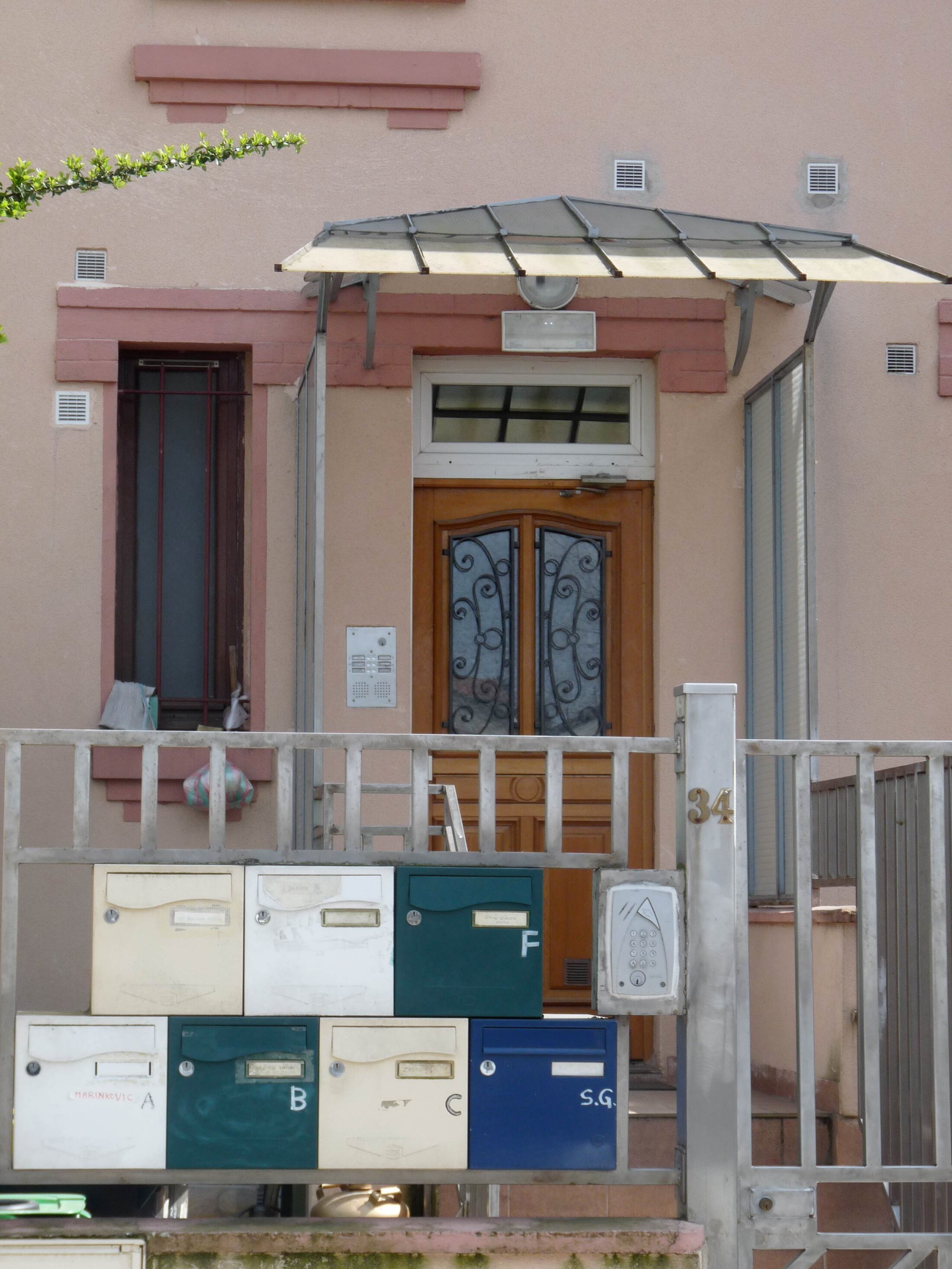
Mediapart found the example of one such house which was home to five different families, including a family of three which rented a poorly-converted living space of 34 square metres for 755 euros per month. Nearby, another family of three rented a cellar of 24 square metres for a monthly 570 euros.
Now, and for the first time, the problem has been the subject of an official study by the Greater Paris (Île-de-France) regional council’s institute of urban planning (the ‘Institut d’aménagement et d’urbanisme d’Ile-de-France), the IAU. Its report, authored by Anne-Claire Davy and published in October, found that an average total of 2,000 lodgings are created every year out of the divisions of 770 individual homes in the Paris region. These are mostly found in those suburbs – and notably in the Seint-Saint-Denis département - where property prices are relatively low, and where the demand from low-income families for rented homes is high.
The study found that most of those renting these cramped divided spaces are couples aged between 25 and 40, and in half of the referenced cases the total living area was less than 23 square metres.
As for the owners of the divided properties, while a small minority modified their homes for domestic reasons, the study reported that 80% do not live in the houses. The IAU denounced many of these as “dividers with few scruples, even quasi-professionals, who invest in certain [suburban ‘pavillon’] property areas and create the equivalent of incomes of no statute, making the most of every square metre with building work of questionable quality”. It described those who rent the spaces as socially “fragile” people who are “excluded from the regular housing market”.
In many cases, these divided properties sit in concentrated areas, resulting in a devaluation of the properties in neighbourhoods. But more importantly, the phenomena is placing an even greater strain on already stretched local public services, with an increase in the number of households entitled to various benefits, a surge in class numbers at local schools, along with numerous logistical problems like garbage collection and parking spaces.
In an interview with Mediapart in 2009, the former mayor of Pierrefitte-sur-Seine, Catherine Hanriot, observed that “six families in a house represents six more on the waiting list for publicly-subsidised housing and six more claiming the [minimum income benefit] RMI”.
“In the past, we took action in the cases of some houses that did not meet the required norms, in cases of ceilings that were too low or toilettes adjoining the kitchen,” Hanriot said. “But otherwise, there aren’t many means with which to resolve the problem.”
In its study, the IAU noted that there was evidence that some landlords did not declare the modifications carried out on their properties, nor subsequently the rents they received. “In the absence of building permit [application] procedures or authorizations for building work, the local authorities have neither the means to oversee the quality of what is done nor to plan ahead for the consequences of this undeclared [population] densification.”
-------------------------
English version by Graham Tearse