


French film director Jacques Audiard has met with widespread acclaim at this year’s Cannes Film Festival for his latest film, Rust and Bone (De rouille et d'os), an adaptation of Canadian author Craig Davidson's collection of short stories by the same name.
The film, starring Marion Cotillard and Matthias Schoenaerts, was described by The Guardian as "a passionate and moving love story which surges out of the screen like a flood tide". It was adapted by Audiard – a celebrated screenwriter as well as a director – and Thomas Bidegain from two of Davidson’s stories, ‘27 bones’ and ‘Rocket Ride’.
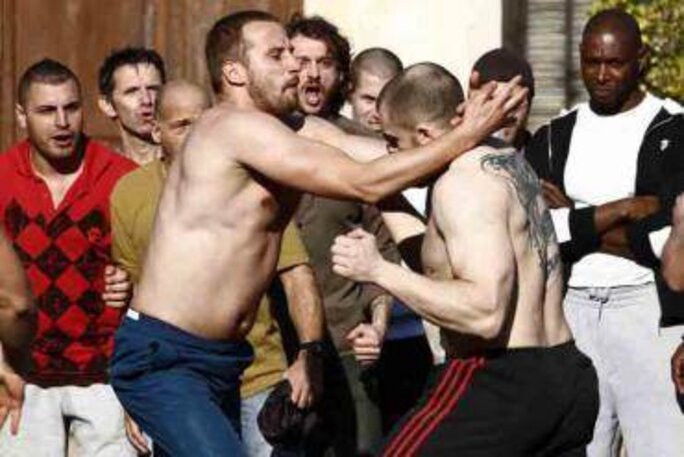
The first is about a talented amateur boxer whose once-bright future ends in bare-knuckle fighting, in which he suffers from his brittle hands, and the second is the tale of a trainer of killer whales, one of which bites his leg off.
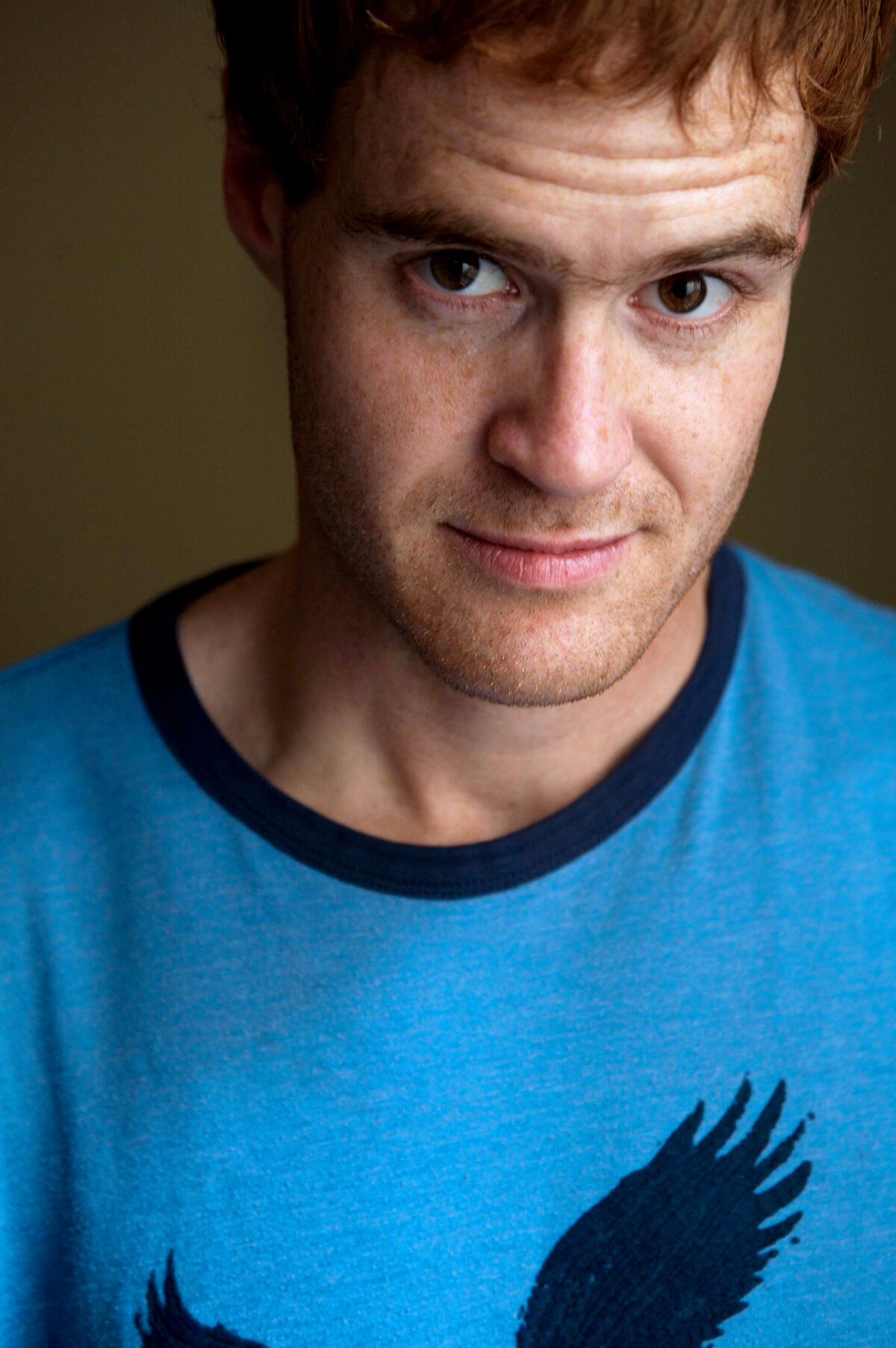
Enlargement : Illustration 1
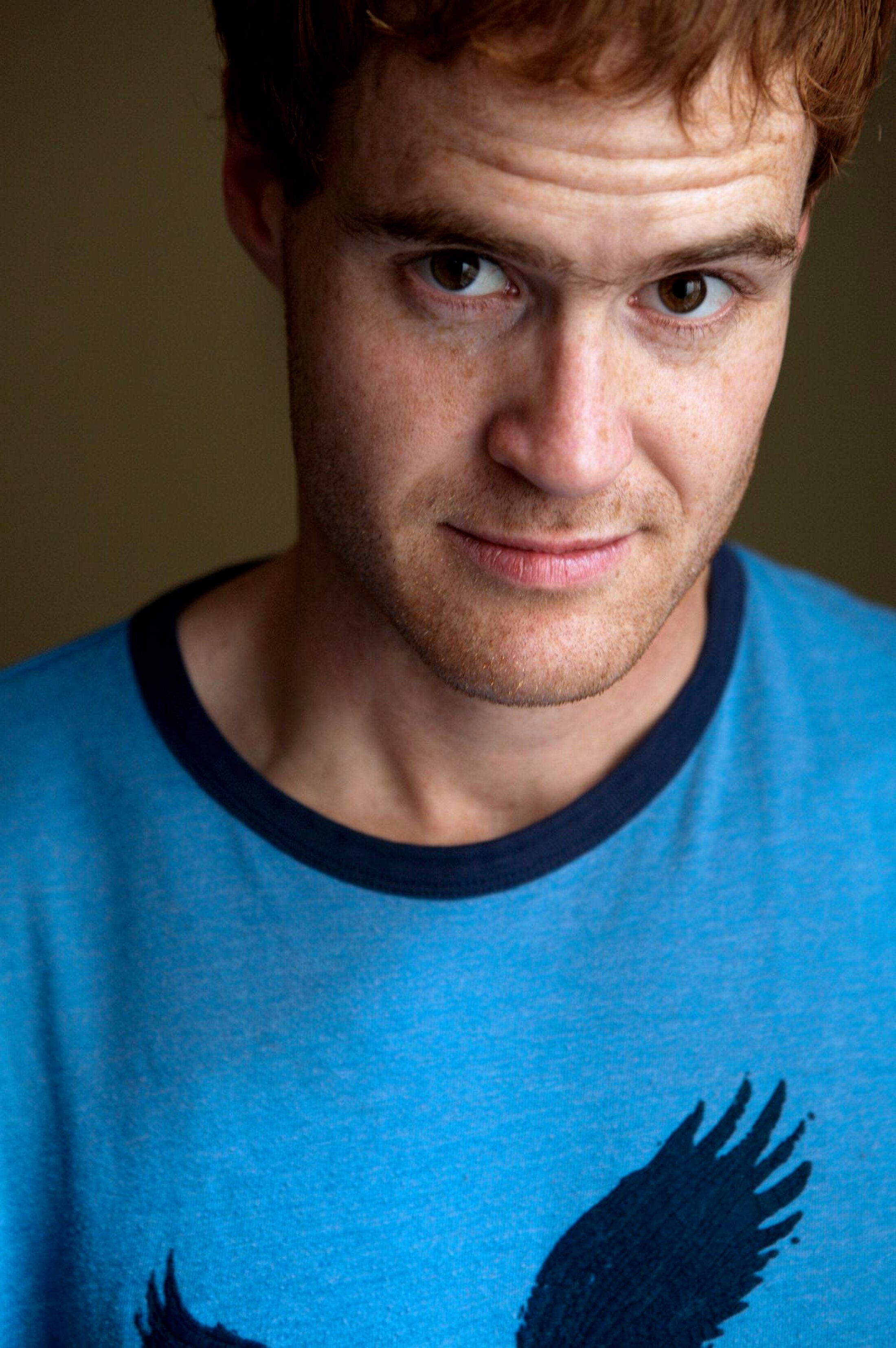
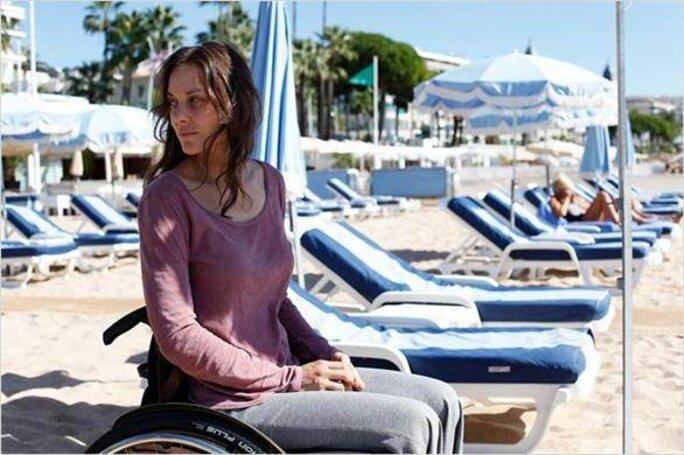
Audiard’s film uses both plots, blending them together in a gritty scenario set in southern France. Cotillard plays Stéphanie, who works at a Marineland park on the Mediterranean coast as a trainer of orcas. Schoenaerts plays Ali, a brash Belgian bare knuckle fighter hoping to become a champion kick-boxer, and who travels to the Riviera, where his sister, a supermarket check-out assistant, lives in a run-down apartment, looking for work. Ali has a young son from a past relationship, who he largely leaves to his sister and neighbours to look after.
Stéphanie and Ali first meet in a local night club where he has found employment as a bouncer. The relationship gets off to a cool start, a mix of dislike and attraction, but all that changes after her two legs are ripped off one day during training with the killer whales. It’s the start of a torrid and complex affair between the two, paralleled by Ali’s changing relationships with his son and sister, in which Stéphanie is liberated by his sexual indifference to her physical mutilation.
Davidson, whose eight-story series Rust and Bone was first published in 2005, has spoken with admiration of Audiard’s inspired inter-winding of his two plots, admitting that he himself had never seen the connection in the physical weaknesses of the main characters in each. The critics’ acclaim for the film promises it a rosy box office future, and a revival of interest in Davidson’s original work. After Rust and Bone premiered at Cannes earlier this month, Davidson commented on his blog that “it was almost as if, in some ways, the book was published again and I was going through all those emotions one goes through when a book comes out”.
In this interview with Mediapart’s Christine Marcandier, conducted by email, he explains how the project with Audiard began (in a meeting when he spilled water over the celebrated director’s “lovely” felt hat), his reactions to the film and the liberty of the adaptation, and his approach to writing - which he admits has seen him turn “a little crazy” in testing out the pains of his characters in real life.
-------------------------
Mediapart: Audiard's film focuses on ‘how to become a father’. Some of your stories are also based on this theme and which is also the reason for your absence at Cannes.
Craig Davidson: I think that is one of the most common themes I investigate - poor fathers, struggling fathers, overbearing fathers. For me it is strange, because my father was the most lovely and loving father I could wish for. But still, he felt guilt: he traveled a lot when I was a boy and to this day feels poorly that he was not more "present" when I was a child. Which I honestly never felt he was absent, I always felt his love - but often people feel guilt over things that have no basis in reality (which is still better than feeling no guilt at all ...). And yes, I had to miss Cannes this year because my girlfriend is set to give birth. And surely I will make mistakes in raising our son and feel the same guilt my father did - reasonable or not.
Mediapart: Tell us about the adaptation. Were you in contact with Audiard, were you informed of the progress of the project, and did the director ask you if you agreed with the changes?
C.D.: I was not heavily involved in the adaptation. Which I must emphasize that I was aware of, and totally cool with. Jacques is a, you could say, 'total control' director: he writes, he casts the leads, he directs. He wears all the hats and wears them well. So me, as a writer in my late-20s early-30s, was not expecting to be involved. This was a stroke of luck for me - to want to be involved, to be on the set, to have input ... no. The truth is, when someone options your book - when you agree to that, you agree to alterations. You must. It cannot always be literally translated from page to screen - and if it is, the film may be awful. Once I'd agreed to let Mr. Audiard option the book, I implicitly agreed to any changes he might desire. If he'd wanted to set the film on Mars, with Marion Cotillard as a whale-riding martian valkyrie, well, I'd have been: I trust you completely, Jacques. Go for it! He had no obligation to ask if I agreed with the changes ... as a matter of fact, I did agree (he did turn my male character into Marion Cotillard, which is the best magic trick I've ever heard of), but that was not his obligation. In the future, if I'm fortunate to have another book of mine optioned for a movie, would I like to be involved in the screenplay and filming? Yes, that would be great, if only because I love films and the energy of a film set and so selfishly, I'd love to be a part of that. But in this case I believe it worked out beautifully with my involvement being minimal.
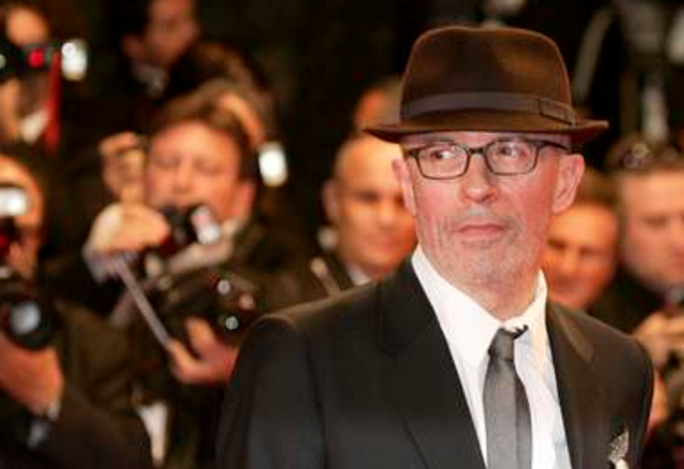
Mediapart: You recently wrote an article for The National Post about a meeting in Paris with Audiard and your French publishing editor, Francis Geffard, in which you said you were impressed by his trademark hat, what you called a “lovely chapeau”. Tell us more about thatmeeting.
C.D.: Yes, it was the only time I met Jacques. We met at, I believe, La Rotonde? Anyway, a very chic cafe not far from Albin Michel's offices. I believe Mr. Audiard had been given my book as a gift; he'd read it, enjoyed it, and saw cinematic potential in it. Now I cannot speak good French (I did grow up near Quebec in Canada, so my French was pretty good as a boy, but then I moved out to western Canada where French was taught very poorly and my language skills went to hell) - and Mr. Audiard's skills at English were better than mine at French, but maybe not by much. So my editor, Francis, did a lot of translating. But of course the ideas under discussion - the stories, how they could transfer to the screen (which were still in their infancy at that time; Mr. Audiard was only thinking about optioning the book) were difficult to talk about, given our inability to speak the same language. And so mainly, I drank. Well, not too much. A few beers? Then I clumsily knocked a glass of water all over Mr. Audiard's hat - oh! Big gaffe. But actually, Jacques was cool about it all. He may've thought: My god, this red-haired writer is an oaf! But still, he liked the stories. So he optioned them and things went from there.
Mediapart: Audiard said in a recent interview that a book is not a ‘subject’ but a ‘form’. You recently commented that the similarities between your book and his movie are “more tonal than textual”. Do you think that is linked to your writing or is it the secret to a successful adaptation?
C.D.: I think that, in reference to the screen adaptation, yes, it is perhaps more about the "world" of the book and that of the film sharing commonalities. Book-to-film translations are tricky, and the feat of adapting several short stories is trickier still: in my case, I wrote each story as a standalone, geographically isolated from each other, with no overlapping characters (or few). So the world of each story was a little bubble. Mr. Audiard and Mr. Bedegain pierced those bubbles and bled one into the other in a wonderful, smart way, then added to them to make something new entirely. But the world of the stories and of the film do seem similar: characters on the margins struggling against their fates, in gritty scenarios, but always open to the possibility of redemption and grace.
Mediapart: There’s a real violence, a wildness in your subjects as in your writing. But there is also humour. The reader is shocked but laughs as well. Is it something important to you, this alternation, a way to move the reader, to keep them awake, forcing reaction?
C.D.: Good question. As Rust and Bone was my first book, written in my mid- and late-twenties, it would be a lie to say I knew exactly what I was doing. If I provoked a reaction it was often purely accidental - I was simply writing about subjects that compelled me in the most honest, forthright way I knew how. There wasn't a lot of calculation to it. In fact, the book started as my Master's Thesis for an MA English degree; in the thesis defense (when all the professors sit around and ask questions) one professor said: "There are a a lot of clocks in your stories. Everyone is looking at their watches. Time is very important. This of course means the subtext is that life is fleeting, and time is of the essence - yes?" And I said: "I had no clue there were so many clocks in the stories." So basically, I was writing not to prove any overall thematic goal or subtext ... I just wrote about stuff that enthralled me.
Mediapart: This violence, it’s a subject, an aesthetic. Is this also a way of seeing and writing our world, our societies (I refer to the first storie of Rust and Bone, when you discribe the way the parents met, the 'American dream' of the mother, the “wet backs” swimming to fight and then returning to Mexico) and would you define yourself as an engaged writer?
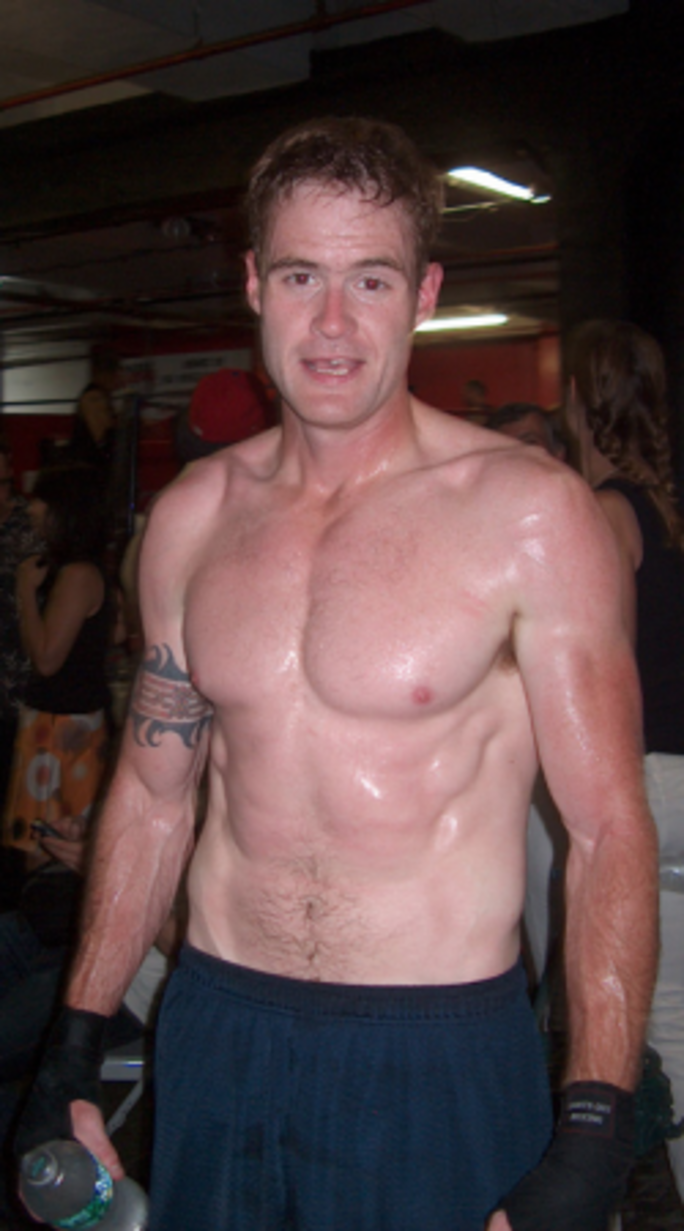
C.D.: Yes, I guess I would call myself a "participatory" writer. If I'm writing on a subject, I want to know as much as possible about it. That seems to me to be the best way to capture it. So I travel when I can. Eyes always open. Of course I research—which is basically just detailed, specific reading (about, say, dogfighting or car repossession or whatever I'm writing about). Now for The Fighter, the book after Rust and Bone, I went a little crazy. When the character took steroids, I took steroids (an experience recounted in a 2007 Esquire article); when the character trained as a boxer, I trained as a boxer. When the character got punched in the face a bunch of times ... you get the idea. Now with a child on the way, I don't think I can do those kinds of things - I'd feel pretty guilty, same as my own father did. But those early books were very engaged, yes.
Mediapart: There’s a central question in your texts, about redemption, how humanity or feelings suddenly take hold of characters, how they are revealed to themselves. Is this something important for you ?
C.D.: Yes, absolutely. I think a few of the main ideas I deal with are: guilt and redemption. The characters feel massive guilt for things, for outcomes, that they may not actually have any reason to feel guilty for (although sometimes, yes, they should). And so they shape their lives around that guilt, trying to atone for it. But it's impossible. A worsening spiral. But at their hearts, they realize they have done wrong and sacrifice for it. Their bodies, mainly. This is especially true in ‘Rocket Ride’ and ‘27 Bones’, the stories that form the basis for De Rouille et D'os. One character is guilt-stricken about letting his nephew fall though the ice and atones with the slow destruction of his body (though fights); the other character is guilty for the life he's led and gives himself over to the power of the whale that maimed him. So guilt and atonement ... although the atonement is never assured. How do you truly atone?
Mediapart: You said you are a character writer: everything, even the plot, results from the character. Tell us more about this.
C.D.: Only that if a story doesn't have a character I can get behind, I can't write it. The plot may be strong in my head, the settings etc, but if the character isn't there first I can't write it. I'm just that kind of writer, I guess.
Mediapart: Audiard's film ends with the opening page of Rust and Bone. Do you see a particular meaning in this?
C.D.: Hmm ... there are many ways to take it, of course. Let me share a Hemingway quote: "The world breaks everyone and afterward many are strong at the broken places." It’s a nice sentiment, poetic too, but I don’t believe it. Sometimes evil is visited upon you, breaks you, and leaves you weaker than you could ever imagine. You heal imperfectly. No part of you is the same. All you can do is drag your broken, ruined self forward - and we do. I mean, as humans. For better or worse we’re a survival species. We figure out a way. Play tricks on ourselves. We keep going on and on until time and circumstance breaks us down to our component atoms and the cycle starts all over again. And so that's my meaning.
And I don't mean that to sound dismal, either. Things happen in life. You get hurt. Your mind gets shocked, your body gets ruined. But you must struggle against the urge to just fold up and die. You have to figure out a way to go on. To find joy in the world and the people you share it with ... that may sound corny. Melodramatic. But a lot of life is that way. I remember when I was still working at Marineland in Niagara Falls ... I was seventeen. One night my friend and I broke in. We knew a way. We went up on the stage. The whales were swimming in the tank. The surface was black glass. Just their dorsal fins ripping through the water. My friend and I were grinning at each other like idiots. And it was wrong - those poor whales - but it was elating, too. So close to that wildness, although in such a strange setting. Those are the miraculous moments in life. And, as humans, we want to chase those. Even if our bodies and minds are changed and we've suffered huge misfortunes.
We want those things - what each of us want is individual to us - but we want them, and as long as we can still conceive of them for ourselves, as long as we can remake ourselves and just keep moving forward one step at a time, as the characters in De Rouille et D'os do, we find new happiness. Not as the same people we were before, perhaps even deeply altered, but still realizing that life still has the capacity to thrill us, to shake us. Cliché, maybe? I don't worry about that stuff now. Let my old professors worry about what's cliché and what's not. I'll just keep writing about life as I see it through my own eyes.
-------------------------
- Following the international success of Rust and Bone, which met with widespread praise from critics, Davidson has published The Fighter (2008) and Sarah Court (2010). His fourth book, Cataract City, is due out later this year. (Rust and Bone is now also translated into French, Un goût de rouille et d'os, published by Albin Michel priced 21 euros).
-------------------------
English version: Graham Tearse