


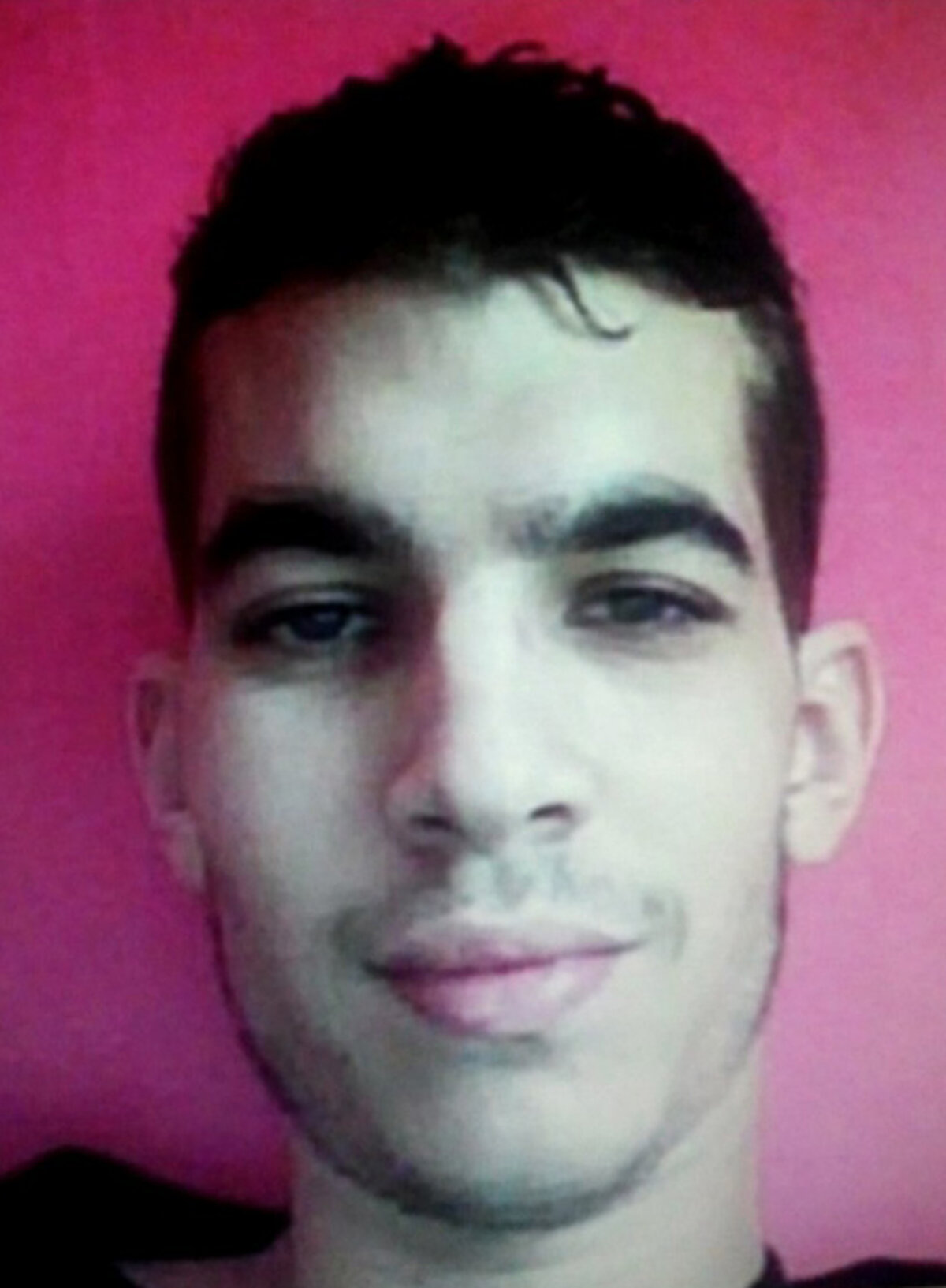
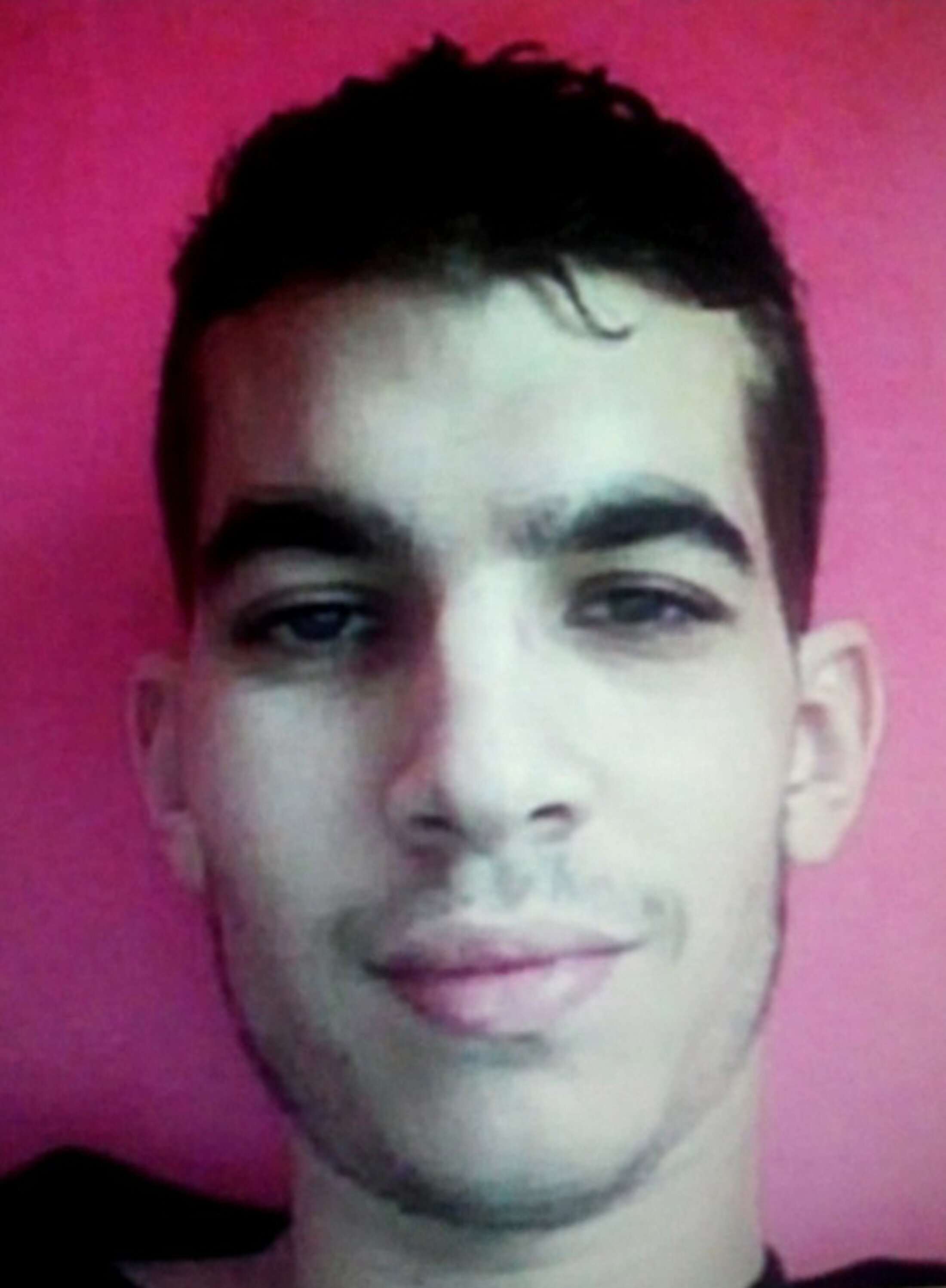
French secret services lost track of one of the Bataclan concert hall suicide bombers more than a year before the Paris attacks, according to an investigation by Mediapart. The intelligence services knew as far back as 2009 that Ismaël Omar Mostefaï, one of the three attackers who left 89 people dead in the music venue attack on Friday November 13th, had been been radicalised in a group in France led by a veteran jihadist called Abdelilah Ziyad, who has a history of planning terrorist attacks. Mostefaï himself was spotted with the group while it was under surveillance in April 2014, and the authorities were informed by Ankara in November 2014 that he had visited Turkey a year earlier, meaning he had very probably travelled to Syria.
Enlargement : Illustration 1
Moreover, according to Mediapart's information, the Turkish authorities also told Paris that a second young radical Islamist had entered Turkey on the same day as Mostefaï, Samy Amimour, another of the Bataclan bombers. Amimour was then placed under formal investigation for criminal conspiracy after a failed attempt to go to Yemen and was made the subject of an international arrest warrant. But there was no attempt to trace Mostefaï.
Indeed, though the radical group in Chartres, south west of Paris, of which he was a member was put under surveillance from the spring of 2014 until September 2015, Ismaël Omar Mostefaï himself was never individually watched by the French internal intelligence agency the Direction Générale de la Sécurité Intérieure (DGSI). He thus slipped off the radar in the course of 2014 – only to re-emerge as one of the three bombers who caused carnage at the Bataclan concert hall during coordinated attacks that left a total of 130 people dead.
On Tuesday November 17th, interior minister Bernard Cazeneuve insisted on France Info radio that there has been no intelligence failings in the run-up to the attacks on November 13th. However, the revelation that the secret services had lost track of one of the Paris suicide bombers will once again raise questions about the work of the French intelligence agencies, following on from question marks about their effectiveness before the Charlie Hebdo massacre in January 2015. Days after those attacks Mediapart revealed that surveillance of the two men behind the Charlie Hebdo shooting, brothers Saïd and Chérif Kouachi, had stopped in 2014. It was a similar story with the man who attacked a Jewish supermarket, Amedy Coulibaly, who appeared to have dropped off the radar of the secret services altogether in May 2014, two months after leaving prison.
Questioned by Mediapart, the French Ministry of the Interior insisted that there had been no intelligence failure in relation to Ismaël Omar Mostefaï. A spokesman said that Mostefaï had not been “lost” by the secret services because he had not been “under surveillance”, as there had been “absolutely no information to justify it”.
In fact, officials made no attempt to locate him in November 2014, even though the secret services had just been informed that he had probably been to Syria, and when they already knew that he had re-visited the radical group in Chartres earlier that year. The interior ministry accepts that this was the case. “He was either out of the country or in Chartres, without anything in his behaviour justifying such measures.”
Yet in his media comments on Tuesday interior minister Bernard Cazeneuve had declared: “For months now we have been carrying out investigations, we have been arresting those who have returned from Syria.”
One would certainly have expected the profile of Ismaël Omar Mostefaï to attract the attention of the security services; he was a former petty criminal radicalised inside a group with clear terrorist connections. According to Mediapart's information, he was drawn into jihadism under the tutelage of the group's leader Abdelilah Ziyad, who had already been convicted in France for masterminding a fatal bombing in Marrakesh in Morocco in 1994, and who was living in France clandestinely. The tightly-knit group of around ten, who included Mostefaï, had taken part in commando-style training and was initially watched by the intelligence services in 2009 and 2010.
Five years later, in April 2014, Mostefaï's presence was again flagged at a meeting of the group at Chartres presided over by Ziyad. Following this alert the DGSI carried out concerted physical and electronic surveillance of members of the network, though not Mostefaï individually. This surveillance operation was wound down through 2015, ending in September 2015, because it had not gleaned evidence of any terrorist plot that would justify a judicial investigation.
“No evidence was available to substantiate that a plan for violent action [was planned],” said a ministry spokesman who added that “surveillance measures have to be justified”.
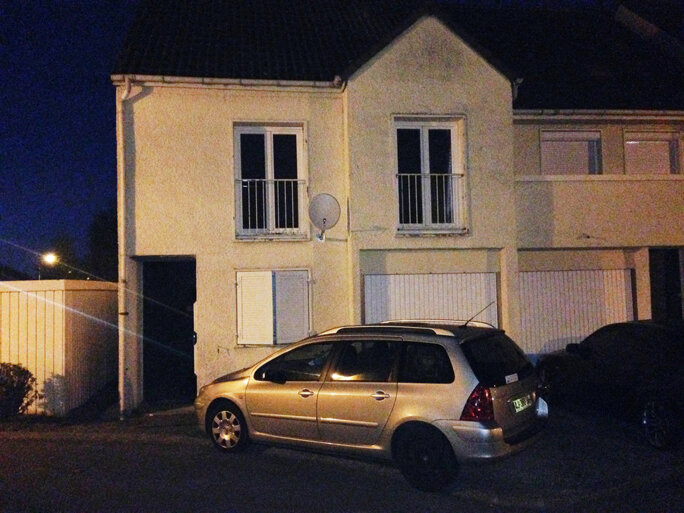
The radical group in Chartres is now being targeted by investigators. The ministry of interior says that “nothing at this stage” links the group to the November 13th attacks. The homes of relatives and friends of Ismaël Mostefaï have been searched both there and in Romilly-sur-Seine, south-east of Paris, where many members of the Mostefaï family moved in 2012. Seven relatives, his parents, two brothers, two sisters and a sister-in-law, were detained for questioning on Saturday night.
Officers are now also investigating to see if the veteran Islamist Abdelilah Ziyad had himself been involved in the planning of the attacks, though he told Mediapart he was not involved and that he condemned them. He is said to have spent time in Belgium in the early 2000s, prompting questions as to whether he had links with the Brussels connection to the Paris attacks, though he told Mediapart he did not live there. There is little doubting the 57-year-old's past commitment to the cause. During his 1996 trial in France for the Morocco attack which left two Spanish tourists dead and a French tourist seriously wounded, Abdelilah Ziyad stated: “Jihad commands you to respond to violence with violence.”
At the age of 18 Abdelilah Ziyad joined the Islamist movement Mouvement de la Jeunesse Islamique Marocaine (MJIM), whose aim was to spark an armed revolution to install an Islamic regime in his native Morocco. In the early 1980s he transported arms from Algeria into Morocco. After coming to the attention of the Moroccan police Ziyad managed to escape to France in 1982, and was sentenced to life imprisonment in Morocco in his absence. He later claimed that during the Moroccan investigation his mother “died in custody” and that his brother went mad “after being tortured”. He nurtured an immense hatred of the regime of King Hassan II, whose son Mohammed VI is now king.
Enlargement : Illustration 2
Ziyad was himself expelled from France in 1984 and lived first in Libya then in Algeria, Morocco's historic enemy. Here he was suspected of being helped by, or even used by, the Algerian secret services. In any case he was able to return to France in 1986 using Algerian identity papers. According to sources in the early 1990s he move to Mainvilliers, a suburb of Chartres, but worked in the Clignancourt district of Paris where he opened a bookshop.
During this period Abdelilah Ziyad was preparing a wave of attacks aimed at “destabilising” Morocco and recruited several young French volunteers from run-down housing estates at La Courneuve, next to Saint-Denis north of Paris, and Orléans, south of Paris. The recruits were sent to Afghanistan and Pakistan to finishing off their training and to learn how to use weapons.
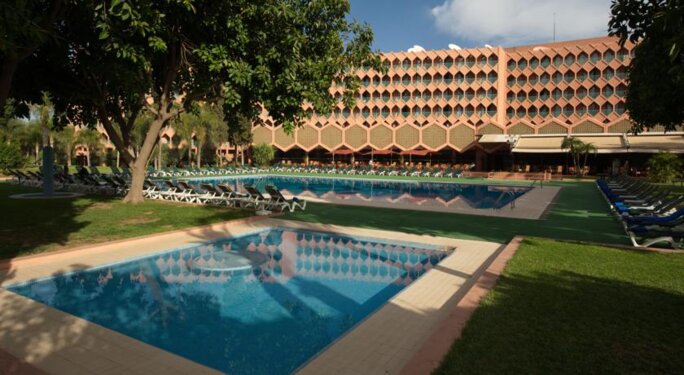
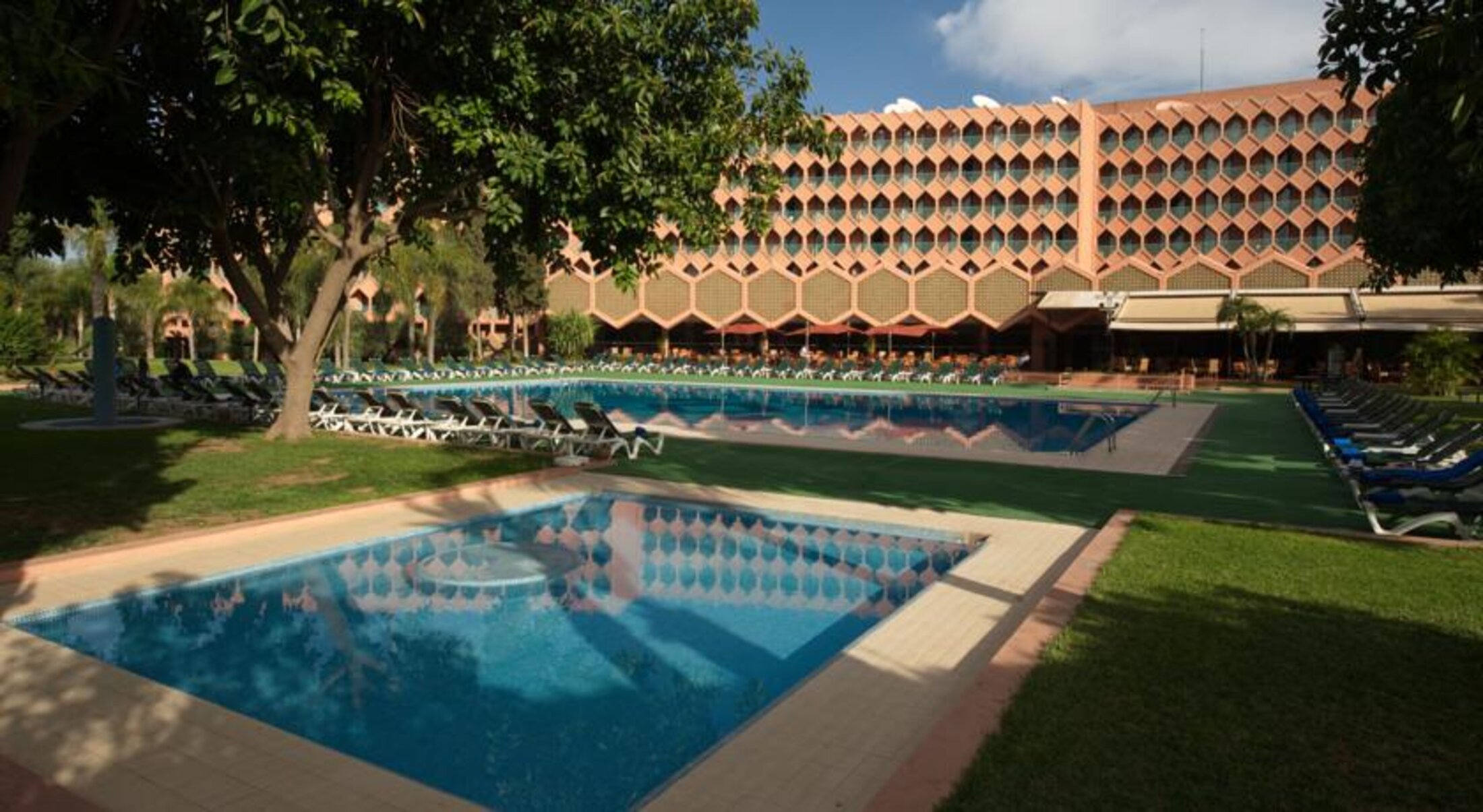
There are, in fact, some similarities between the form of attack planned by Abdelilah Ziyad for Morocco and the attacks in Paris and the Stade de France on Friday November 13th. In the planned Moroccan attacks four combatants were due to attack in a coordinated attack; to machine gun a beach at Tangier, kill a police officer and attack a synagogue. Fortunately only one attack was successful in the end. Even so, two Spanish tourists were killed and a female French tourist gravely wounded at the Atlas Asni Hotel in Marrakesh on August 24th, 1994, an assault carried out by three French attackers recruited by Ziyad.
Abdelilah Ziyad was arrested on the German-Austrian border in August 1996, and transferred to France where he stood trial in 1996. In January 1997 he was given an eight-year prison sentence for “conspiracy in connection with a terrorist enterprise” and banned from France for ten years. He was freed in 2001. According to a book on the Islamic movement published in 2003 - 'Du 11 septembre 2001 aux attentats de Casablanca du 16 mai 2003' ('From September 11th 2001 to the Casablanca attacks of May 16th, 2003' by Ahmed Chaarani) Ziyad initially lived in Belgium after his release, a claim he denies.
Then in 2008 the local branch of the state intelligence agency, then the DCRI now the DGSI, flagged the presence of a Salafist group in Chartres. Its leader turned out to be none other than Abdelilah Ziyad, who was now passing himself off as an imam called 'Rachid'. Agents also found out that Ziyad had been living for some years at Migennes, south-east of Paris, under one of his 20 or so aliases, in defiance of the ban on him living in France. Again, Ziyad denies the claim and told Mediapart: “I was not in any group.”
A 'shy and discreet' young man
Also in that Chartres group were Ismaël Mostefaï, often called 'Omar' which is his second given name, and who had grown up in Courcouronnes, a suburb south-west of Paris, and his father Mustapha, a devout Muslim. “I know them but no more than that. They are peaceful people,” Ziyad told Mediapart.
According to Le Parisien Ismaël Mostefaï was an “extremely difficult” pupil at secondary school - lycée – who failed in his studies and was badly behaved. As a teenager he drifted into petty crime and, according to the newspaper, six of the eight convictions he picked up between 2004 and 2010 – including driving without a licence, insulting behaviour, obstruction and drug possession – concerned events in the Courcouronnes area when Ismaël Mostefaï was a juvenile. All the offences were minor in nature and he was not given a custodial sentence.
The Mostefaï family moved to Chartres in 2005. At the time Ismaël Mostefaï was 19 and lived with his parents and four brothers and sisters in a quiet part of the town. The youngster regularly played football with local friends and trained as a baker, but struggled to find a permanent job and worked on short-term contracts interspersed with periods of unemployment.
Enlargement : Illustration 3

Though he is said to have kept some bad company, several people in the Chartres area say that Ismaël Mostefaï was a “good guy, a nice kid”. One of his neighbours in the town said: “I knew him when he was 19, he would say 'hello', he seemed to be very together, he played with my girls.” The neighbour continued: “As I'm a Muslim we spoke about religion, along the lines of 'Are you going to prayers on Friday?', but it stopped there. He wore jeans and trainers and had long hair swept back behind his head and didn't seem like a radical at all. I don't understand, someone must have put ideas into his head.”
It is clear that over the course of five years Ismaël Mostefaï turned to radicalism, in contact with Abdelilah Ziyad and probably under the influence of his father. By the end of the 2000s he had traded his jeans and trainers for a small beard and the traditional kameez outfit. According to several witnesses, who spoke to BFMTV and L'Écho républicain, Ismaël Mostefaï found a night job at a bakery and married a woman he met in Algeria with whom he had a daughter in 2010. He kept a low profile.
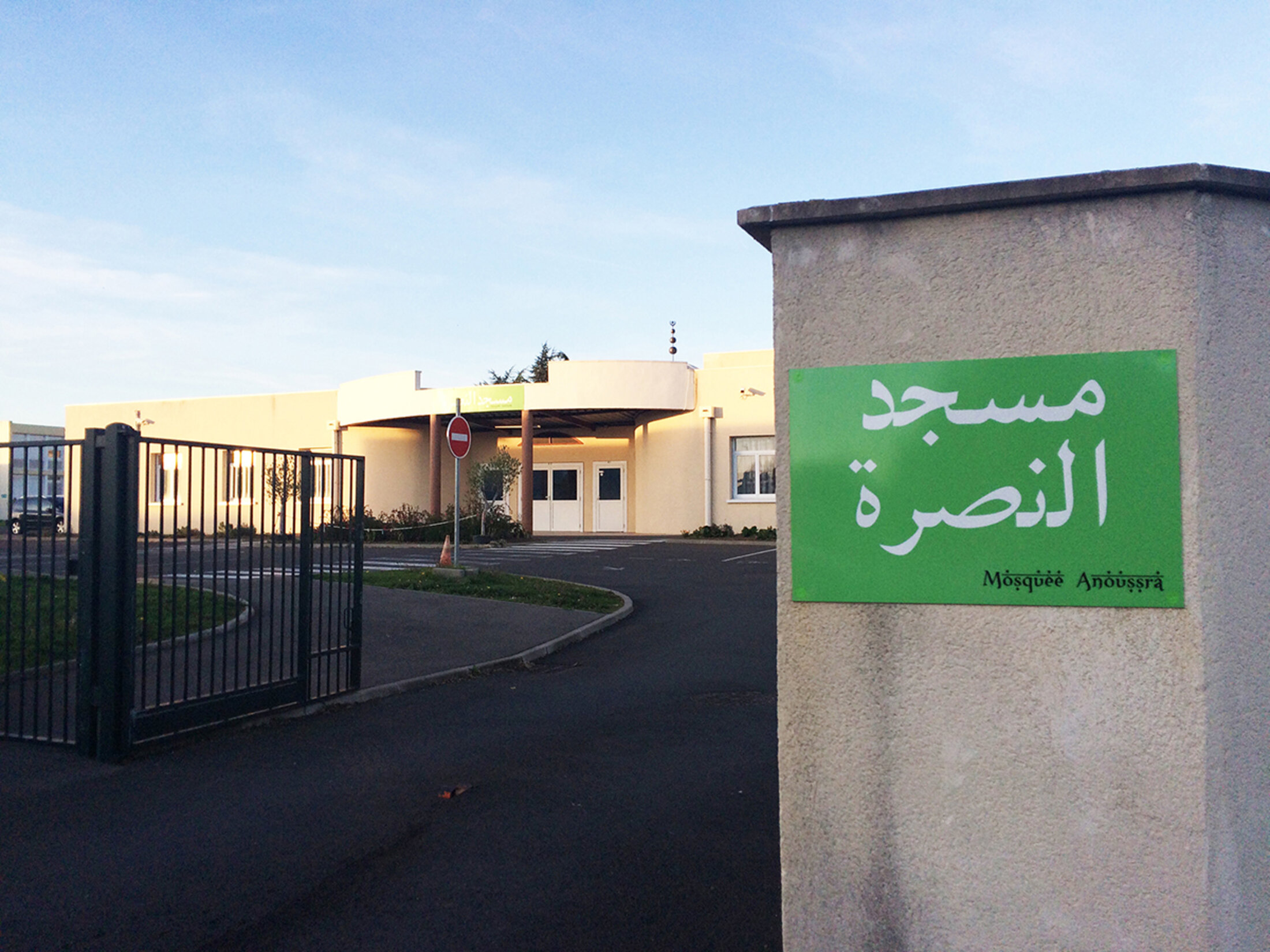
The young man regularly attended the Anoussra mosque in the Beaulieu area of Chartres, which is not a radical place of worship but was where Abdelilah Ziyad's group, to which Ismaël belonged, used to go. Senior figures at the Beaulieu mosque told Mediapart that they had not seen the young man for “two and a half, three years” and described him as “very shy...discreet...a little reserved”, someone who was a “good” person but who said little. “Everyone knew him. He was a normal person of faith who showed no signs of radicalisation,” said the mosque's president Hafid Ben Bammou.
However, the local branch of the state intelligence agency flagged both Ismaël Mostefaï and the radical group led by Abdelilah Ziyad in 2009. The DCRI officials reported that members of the group of around eight members met for tree climbing activities in the south of France and in particular for commando-style exercises at a paintballing club at Saint-Georges-sur-Eure, about ten kilometres from Chartres. There was, though, no sign that the group was preparing an attack. Ziyad insisted to Mediapart that he had done nothing “abnormal” after leaving prison.

Enlargement : Illustration 4
A year later, in 2010, Ismaël Mostefaï was made the subject of a 'S' security file – as were other members of the group - indicating that he was a potential risk to state security because of his “radicalisation”, but he was not put under direct surveillance. At the time the man who would become one of the suicide bombers at Bataclan seemed one of the less committed members of the group, a peripheral figure seen as a follower rather than a leader.
By coincidence, at the same time as the local DCRI was taking an interest in the Chartres group, its leader Abdelilah Ziyad was in the sights of the Paris-based judge Marc Trévidic, a specialist in terrorist cases. Trévidic suspected the veteran radical of involvement in the attack on the Port-Royal RER railway station in Paris in 1996 which killed four people. Mediapart understands that the judge took advantage of Ziyad's alleged involvement in another affair – a string of robberies to fund the 1994 Morocco attacks – to investigate the radical. He called in the DCRI who had little difficulty in locating Ziyad in Chartres. At the end of September 2010 Abdelilah Ziyad was arrested at Migennes, put under formal investigation over the robberies and placed in temporary custody.
However, some time later Ziyad was freed because there was a lack of evidence against him. Meanwhile in August 2012 the Mostefaï family moved to Romilly-sur-Seine, 75km north of Migennes, where their friend Ziyad lived.
Ismaël Mostefaï's mother thought he was still in Syria
Ismaël Mostefaï himself, meanwhile, had gone off the radar. People who knew him in Chartres recall not seeing him for two or three years. His elder brother and sister-in-law told the Grand Journal programme on Canal+ television (see video below in French) that they had no news of him in this period either. In September 2013, Ismaël Mostefaï travelled to Turkey, probably to enter Syria, though at the time the French intelligence services were unaware of this. His mother's comments to investigators in recent days, though, appear to confirm that he did indeed enter Syria at that time. Mediapart understands that during questioning she said that she thought her son had been in Syria for three years and that she did not know he had returned.
Ismaël Mostefaï resurfaced in the spring of 2014. In April 2014 the security services spotted Ismaël Mostefaï at a meeting of Abdelilah Ziyad's group in Chartres – something Ziyad denies. Why was Mostefaï not then located and placed under surveillance? “Because there was absolutely no information to justify it,” the interior ministry told Mediapart.
But seven months later the intelligence services did not try to locate the young man even though they had received important new information about him. In October 2014 the French authorities had made a formal request to their Turkish counterparts for information about certain suspected jihadists. A month later Ankara confirmed that those individuals had indeed been to Turkey, as well as another individual - Ismaël Mostefaï. He crossed the Turkish border on the same day as another future Bataclan bomber Samy Amimour.
An anonymous Turkish government source also told French news agency AFP that Turkey had informed their French counterparts for a second time about Mostefaï “in June 2015” and claimed “never to have had a response from France”. A spokesman for the Ministry of the Interior told Mediapart: “That's not true.”
Meanwhile two media reports suggest that France also received information about Mostefaï from the Algerian intelligence services the DRS. According to the El Watan Algerian daily newspaper the DRS located and watched him in the east of the country at the end of 2014. They identified him as a member of a cell recruiting terrorists for Syria, for which he was apparently in charge of “carrying messages, money and false documents”. Without going into more detail the newspaper says that the DRS sent a list of suspects to the French authorities. Meanwhile the specialist website Mondafrique says that the DRS sent information to the DGSE in October 2015. The French Ministry of the Interior told Mediapart they were not currently in a position to confirm or deny the information.
What is clear is that by November 2014 the French intelligence services had two strong warning signs in relation to Mostefaï; his links to a radical group in Chartres and the probability that he had been in Syria. “For months now we have been carrying out investigations, we have been arresting those who have returned from Syria,” interior minister Bernard Cazeneuve declared on Tuesday November 17th. Yet Mostefaï was not put under surveillance, nor were there attempts to locate him. Questioned on this point the ministry did not respond.
Instead the intelligence services had preferred to put several members of the radical group in Chartres under surveillance from the spring of 2014, though not Mostefaï. This surveillance was reduced from the start of 2015 and by the month of September – two months before the Paris attacks – even listening surveillance on Abdelilah Ziyad himself had stopped. After more than a year of surveillance the DGSI had thrown in the towel. The reason was that they had found no evidence of any planned attacks.
The investigation into the Paris attacks will now consider what role, if any, Abdelilah Ziyad played in the planning of the November attacks. For example, was he in touch with the Belgians from Brussels who had carried out the shootings in Paris? Had Ismaël Mostefaï been in contact with Abdelhamid Abaaoud, the Belgian suspected of masterminding the Paris attacks and who died in the shoot-out, as claimed by The New York Times? And as one of the other Bataclan bombers, Samy Amimour, had also apparently been in Syria at the same time as Ismaël Mostefaï, investigators will want to determine whether this where the members of the suicide bomb group first met.
Speaking to Mediapart, Abdelilah Ziyad strongly denied any prior knowledge of the Paris attacks. “I have Parkinson's disease, I can hardly move. The police know where I go, all my acquaintances, everyone sees me. I was not involved in the preparation of all those things.” Ziyad, who was behind the bloody Marrakesh attacks in 1994, even stated that he condemned the Paris attacks 21 years later. “I am against those attacks, I am against the massacre of crowds of people, it's 100% beyond me,” he told Mediapart. “That's not Islam, that's not tolerance.” He also tried to play down his role in the Marrakesh attacks. “It wasn't planning, I was involved in a case. And it was 20 years ago.”
-------------------------------------------------------------------
The French version of this story can be found here.
English version by Michael Streeter