


The death was announced this week of celebrated French theatre director and actor Jérôme Savary, who was aged 70. One of the most influential stage directors of post-war France, Savary, who was born in Argentina, is credited with having widened the popular appeal of theatre, notably with the colourful and hilarious performances of his Grand Magic Circus company. In his latter life, he headed the prestigious Théâtre national de Chaillot and the Opéra-Comique. Here, Mediapart’s cultural affairs writer Antoine Perraud pays his own tribute to a prolific icon of French theatre.
-------------------------
Jérôme Savary, the man who haunts the video below has died, aged 70, from cancer. He passed away during the night of March 4th, at the Hôpital Franco-Britannique in Levallois-Perret, near Paris.
Theatre was the passion of this classless dandy and casual subversive who understood how to share it with the world. Lunacy was his sweet love.
As World War II loomed in Europe, his father, a French writer who was never published but who had a flair for pacifism, left for Argentina. The honest wealth of his American mother, granddaughter of the Senator, and later Governor, of New York, Frank W. Higgins, facilitated the family’s bohemian existence.
At the end of his teens, the young Savary settled briefly in New York where he got to know Jack Kerouac and his peers, before arriving in Paris in his early 20s. There, in 1965, he created a theatre company under his own name which, with the contributions of Roland Topor, Fernando Arrabal and Alejandro Jodorowsky, was subsequently re-launched as ‘Le Grand Magic Circus’. In 1968, in collaboration with the wonderful Jacques Coutureau (who died in 2005), Savary again re-named his company, this time as ‘Le Grand Magic Circus et ses animaux tristes’ (The Grand Magic Circus and its sad animals).
His company’s performances, along with those of Ariane Mnouchkine’s troupe at the Théâtre du Soleil, will provide historians with an insight into the concerns of French society between the last years of Gaullist government, in the early 1970s under President Georges Pompidou, and the first years of the presidency of socialist François Mitterrand, beginning in 1981.
Enlargement : Illustration 2
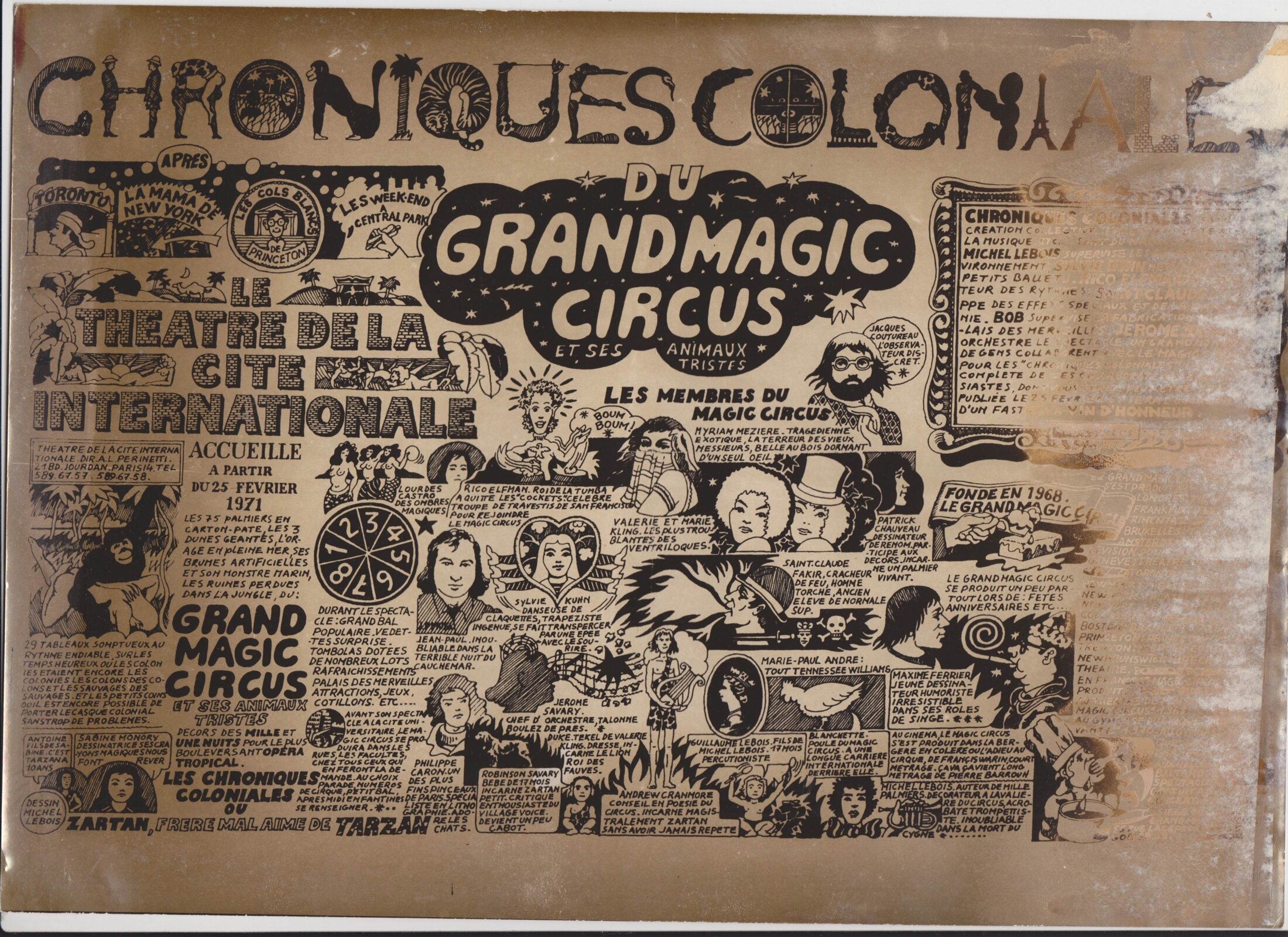
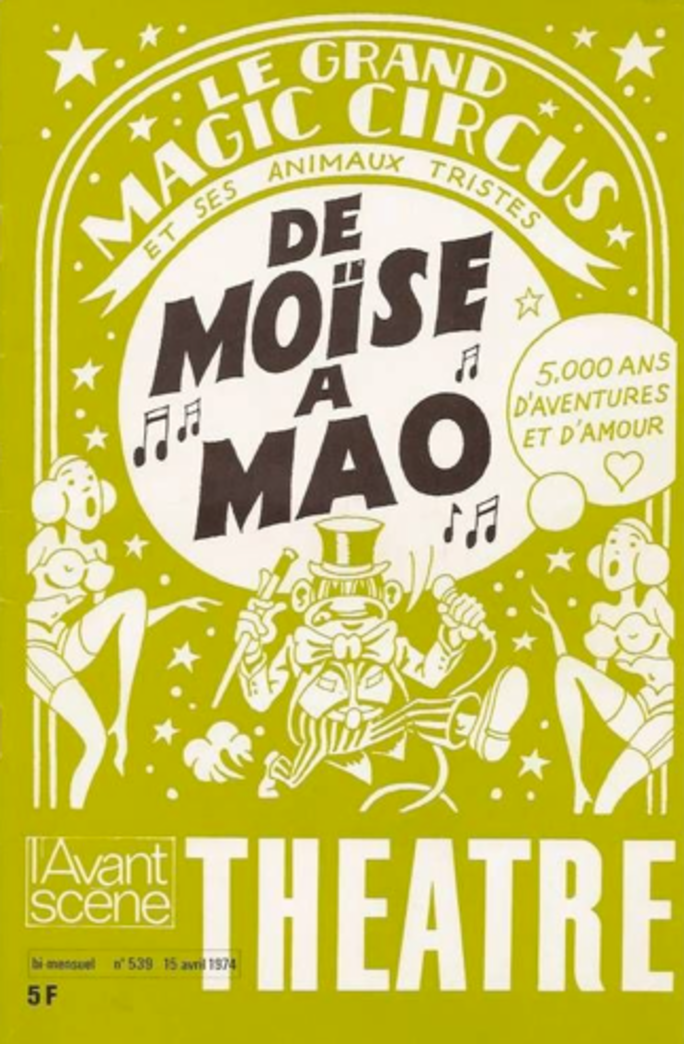
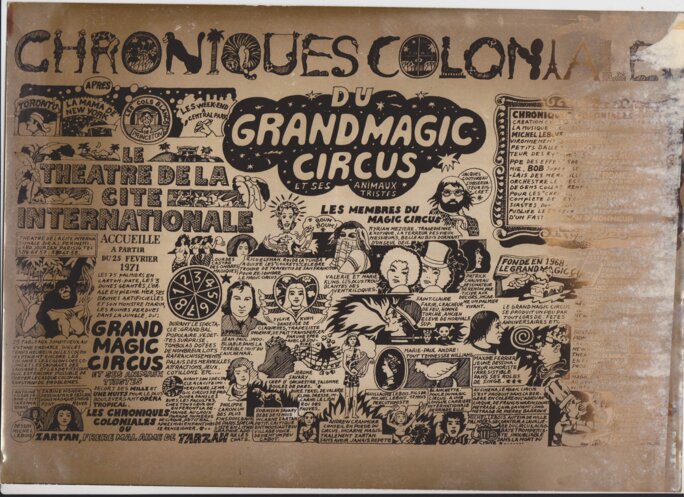
There can be no better antidote to the Pompidou era (1969-1974) than the plays ‘Colonial Chronicles or the adventures of Zartan, Tarzan’s unloved brother (Chroniques coloniales ou les aventures de Zartan, frère mal aimé de Tarzan) first staged in 1971, Robinson Crusoë (1972), Cinderella and the class war (Cendrillon et la lutte des classes) in 1973, From Moses to Mao (De Moïse à Mao) also in1973, and Goodbye Mr Freud.
It was a time when the Grand Magic Circus singer Guy Gaillardo, star of Robinson Crusoë, rang out such lyrics as “Argentina is a country populated by 18 million dopes…because all the others are abroad!”
After that, Savary went the way of Offenbach and Molière, all the while retaining his stunning wizardry. His Superdupont ze Show, staged in 1982 at the Paris Théâtre de l'Odéon and starring Alice Sapritch, presented the Berlusconi-like populism prompted by the election victory of the oh-so erudite François Mitterrand.
Savary was not interested in performances where everything is pre-arranged like a music score. “I work with actors, and singers and I increase or reduce the characters according to the talents of one and the other,” he once explained. “I hate actors who wait in the wings to appear on stage. I try to have everyone on stage at the same time, which sometimes makes the last days of rehearsals a little chaotic and irritated, because I get irritated, because the actors get irritated. It is important that they get irritated and that they become destabalised. Improvisation is very important for me, I work to measure. Theatre is a prototype form of art, a hand-crafted art, biodegradable. In my shows, I want to retain this aspect of ‘living art’, that surprises happen.”
The establishment was to reward Savary’s talent with his appointment to a number of high-ranking posts: as director of the Montpellier drama centre (1982-1986), then director of the Lyon drama centre (1986-1988), before returning to Paris to head the prestigious Théâtre national de Chaillot (1988-2000), followed by the Opéra-Comique (2000-2007). He was not forgotten, but he also didn’t forget others. I remember how, in the spring of 1995, he had helped the singer Mireille (1906-1996) for her ultimate and deeply moving appearance on stage, at the Théâtre National Populaire (TNP). My then five year-old son would for long pronounce the words “Vieille comme Mireille”.
Savary, whose name rhymes so well with féerie, always knew how to make much ado about hullabaloo.
-------------------------
English version: Graham Tearse
