


The atrocities unfolding in the war in Ukraine since the Russian invasion of February 24th are the latest in a long history of devastation and oppression to befall the country, regularly preyed upon by foreign powers. “During the years that both Stalin and Hitler were in power, more people were killed in Ukraine than anywhere else in the bloodlands, or in Europe, or in the world,” writes historian Timothy Snyder in Bloodlands, Europe Between Hitler and Stalin, his acclaimed 2010 bestselling account of the mass murders of millions of people in central and eastern Europe from the 1930s up to the end of the Second World War.
Snyder, a professor of history at Yale University, teaches modern east-European political history and the history of the Holocaust, and is a prolific author of books about both. In this interview with Mediapart’s Amélie Poinssot, he sketches the long history of Ukrainian resistance to foreign oppression, the forging of the country’s singularity, and the motivation behind Russian President Vladimir Putin’s invasion, and argues that the documented mass murders, rapes and deportations of civilians committed by the Russian military amount to a policy of genocide. “Russians can’t stop talking about their own genocidal intent,” he says. “They do it over and over and over again, as if it were a kind of challenge to the West.”
-------------------------
Mediapart: As a historian specialised on Ukraine and its neighbouring countries, how have you been affected by the war, and has it confirmed anything you may have observed in your past research?
Timothy Snyder: Many things. Very broadly, the war reminds us how important it is to know history, and not to suppress history. One can understand the entire Russian invasion as a natural consequence of Russia suppressing its own history, as a natural consequence of Russia substituting memory and myth of innocence for actual history.
Secondly, the war reminds me, and us, of how essential Ukraine has been to order, or disorder, in Europe for the last 100 years. Ukraine was central to Stalin’s projects for Europe, it was central to Hitler’s projects for Europe. It’s also central to Putin’s idea of empire, and I don’t think we will have a peaceful and stable Europe until Ukraine is fully integrated into Europe.
And finally, as a historian I cannot help but be troubled by the way Putin talks about Ukraine, as if there were no state, as if there were no nation. As we know very well, from 1939 – but not only – that is genocidal language, and unfortunately it’s been followed by genocidal practices.

Enlargement : Illustration 1

Mediapart: We will come back to the question of genocide just a little later. Does the history of Ukraine during the 1930s help to understand what’s happening today, which seems a sort of repetition of the resistance of a people against criminal colonial oppression? The 1930s were dominated by the Holodomor – the famine organised by the Soviet Union leadership, and which caused the death of an estimated 3.3 million people.
T.S.: First of all, I think the colonial framework is extremely useful not just with respect to Russia but also with respect to the whole history of Europe. What Putin is doing is applying colonial language, which Europeans applied throughout 500 years. When you deny that the political organisation you encounter is a state, and when you deny that the people you encounter are a nation, you’re carrying out traditional European colonial practices. In general, Europeans have learnt not to do this, and to recognise it as an error – but it’s exactly what Putin is doing.
Putin is basically inventing a new kind of Russian colonialism; there is of course the tradition of Russian empire, but his notion that there is no such thing as Ukraine and that the Ukrainians are actually just Russians is very extreme, even by the standards of Russian nationalism.
Mediapart: Even compared to Stalin’s viewpoint?
T.S.: Stalin had much more personal experience of Ukraine than Putin does, and Stalin knew very well from his personal experience that Ukraine was real.
Stalin characterised Ukraine, when he got into trouble with collectivisation, as a threat. But he never said that Ukraine didn’t exist. He said Ukraine was threat, that it was disloyal, that Ukraine had to be punished.
It is of course true that Ukrainian memory of the 1930s is very different to Russian memory of the 1930s. Ukrainians know from their families that there was in fact a campaign of famine in which millions of people died, whereas Russians have been educated to believe that everyone suffered equally and that if Ukrainians mentioned the Holodomor [editor’s note, also known as “the Great Famine”] they were simply complaining about nothing, or revealing that they’re nationalists and so on.
Mediapart: How do you explain the differences today between Ukrainian society – a bloc of resistance, combative and pro-European – that of Russia, passive, with only a small opposition and which voices relatively little criticism of the political leadership?
T.S.: I appreciate that question, because they are very different, and neighbouring countries can be very different, even countries that share a language. The United States and Canada are very different countries although we share a long border and a language.
So firstly, Ukraine has passed through all the major stages of European history, whereas Russia did not. So if you have the French, or west European, historical references of the medieval state, the Renaissance, the Reformation, the Baroque, all of those things were present in Ukraine, and none of those things were present in Russia.
Secondly, self-conscious Ukrainian political history began in the 17th century with the idea of rebellion. So the Cossack rebellion of the 17th century was very much a national, or at least a proto-national, movement because it involved elements of language, and religion, and economic oppression. There’s nothing like that in Russian history.
Thirdly, when the Ukrainian national movement began in the 19th century in the Russian empire, it was specifically about the people rather than the state. The Ukrainian national historian Mykhailo Hrushevsky wrote history in terms of the continuities of language, and culture and social practices rather than the state. Whereas in Russia, when history was invented, it was all about empire and all about the power of the state.
When we get to today, there’s an important difference, which really doesn’t get noticed, and which has to do with language. It’s important of course that Ukrainians have their own language, that matters, but what really gets missed is that Ukrainians have two languages and that they spend a lot of time switching between one and the other. And that makes them different to the French and the Americans and it also makes them different to the Russians. They [Ukrainians] have this way of jumping from one thing to another which gives them a kind of mental flexibility which I think other people don’t have.
Enlargement : Illustration 2
Mediapart: Is that bilingualism still practiced today, despite the war?
T.S.: Absolutely. There are Ukrainians who only use the Russian language […] and most Ukrainian soldiers most of the time are speaking Russian, and switching back and forth depending on who they’re talking to. Their language of command is Ukrainian, they use Ukrainian to try and trap Russian spies and infiltrators, but very often from day-to-day they are using Russian because it’s a bilingual country where people will use different languages for different purposes.
You’re right that during the war the general trend is toward Ukrainian and away from Russian, for understandable reasons. But I would guess that at the end of this war, it’ll be more like in Switzerland, where people use different languages – the fact that people speak French or German in Switzerland doesn’t make them French or German. I think that Ukraine is moving in that direction.
In addition to [the issue of] language, Ukraine is a highly decentralised country; institutionally, but also mentally. Ukrainians think that politics are local, and that if you’re going to get something done you have to do it with people you know locally. And in that you can see the very different way that this war is being carried out. For the Russians, it’s an idiotic decision taken by one person, in Moscow, and then there are verticals of power and everyone obeys orders. Whereas in Ukraine, you have a popular president who issues general guidelines which are then fulfilled largely by lower-ranking officers, distributed all around the country, with the help of local communities. So that’s a very different understanding of how the world is supposed to work.
Mediapart: Do these two societies also have a different relationship with history, with the Second World War?
T.S.: With the Second World War, the difference is subtle. The Ukrainians actually suffered considerably more from the Second World War than the Russians. What’s happened is that Russians are trying to monopolise that suffering, and Ukrainians disagree. And there’s disagreement about whether the Second World War means that Russia should invade Ukraine; Ukrainians find that grotesque and offensive.
And then there’s disagreement of course about the Soviet Union where, in Russian discourse, Stalin is largely presented as an efficient manager, whereas in Ukraine he’s more likely to be remembered as someone who carried out atrocities.
Having said all that, the 21st century is very important here. This goes back to your last question about difference. Ukrainians have managed, despite difficulties, to keep having democratic elections, and changing their own leaders, which the Russians have never really done. They’ve never really chosen their own leaders. That, over the course of 30 years, has an effect on how Ukrainians see themselves. You spoke of memory – there’s also the memory of Maidan [protests in 2013], there’s the memory of [the Orange Revolution in] 2004 and 2005, there’s the memory of Ukrainians actually being able to decide for themselves who their leaders are going to be. And that’s a memory Russians don’t have because they’ve never done it.
Mediapart: Ukraine was in the past of interest to foreign powers because of its highly fertile arable black soil, or “chernozem”. In your book Bloodlands you explain that was one of the reasons Nazi Germany invaded Ukraine. Do you thing it was also a reason behind Vladimir Putin’s decision to launch the invasion this year?
T.S.: You are certainly right that for Stalin and for Hitler the black earth of Ukraine was very important. The black earth of Ukraine was also very important for Poland in the 17th century, and it was also for the Greeks, for Athens, in the classical period. It’s been important for 2,500 years, and that’s one way that Ukraine has been part of our world for 2,500 years.
But I don’t think that for Putin it was a primary motivation. I think that now they [the Russians] are fighting the war, naturally they are going to steal what they can, and cause as much trouble as they can, but I don’t think it was a primary motivation because if the war was about economics I don’t think Putin would have started it. If you were calculating economically, there are so many other losses that are involved here that you wouldn’t really see this as a good move.
I think the war is largely an ideological one, based on his understanding that Ukraine doesn’t exist – based on his belief that he as the leader of Russia has a kind of destiny. I think economics is something they are exploiting along the way.
Mediapart: For Vladimir Putin, was there not the aim of blocking the development of Ukraine, and to prevent it exploiting its considerable natural resources that include gas and minerals?
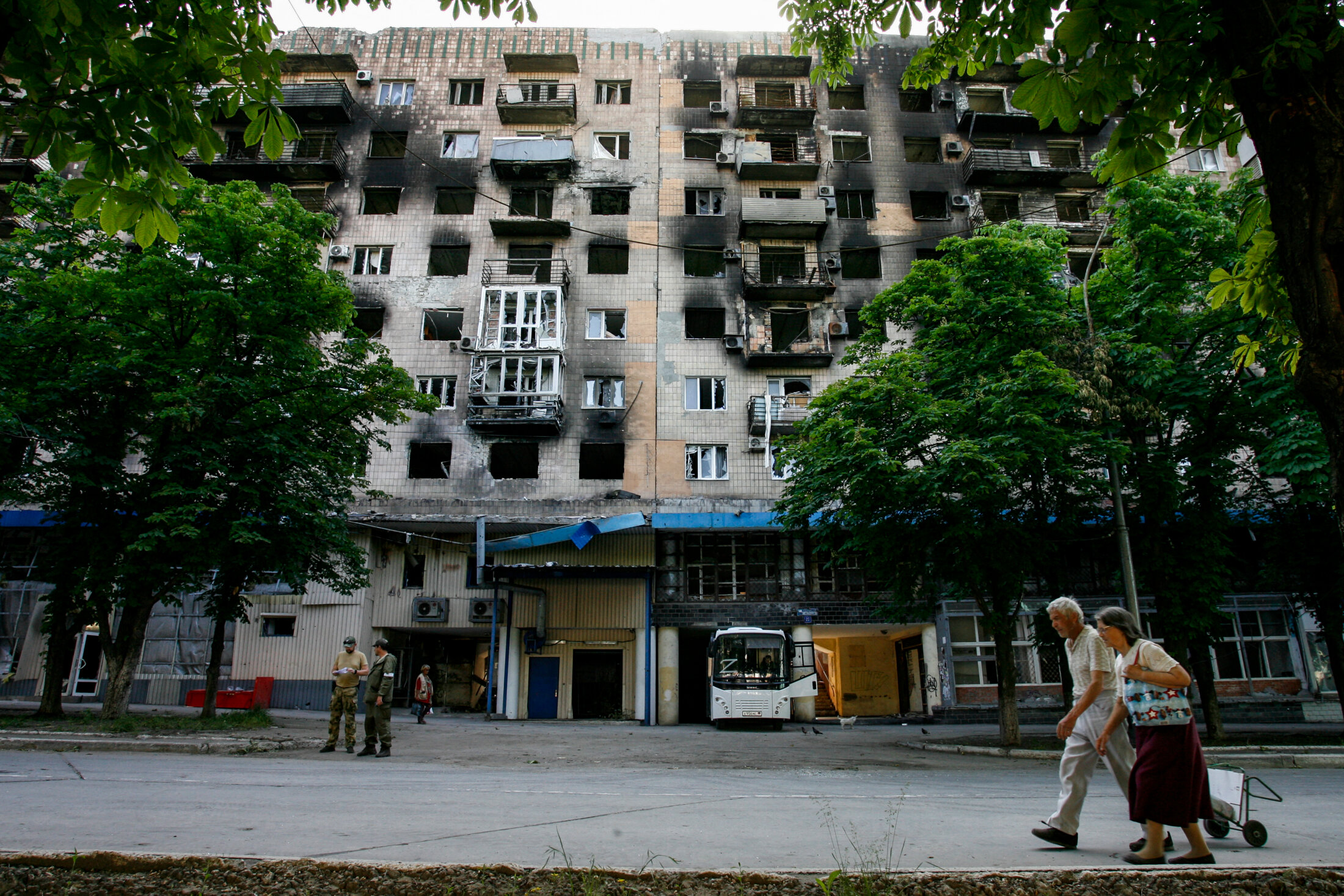
T.S.: It should be understood as part of the overall destruction of the Ukrainian state and of Ukrainian society. That is their announced war aim, to destroy the Ukrainian state and the Ukrainian nation, and I think that harming the Ukrainian economy is part of that. But deporting women and children, and killing men, is another part of that. Burning down libraries and archives is part of that. I think it’s reasonable to see it as part of an overall policy to eliminate the Ukrainian nation.
Enlargement : Illustration 3
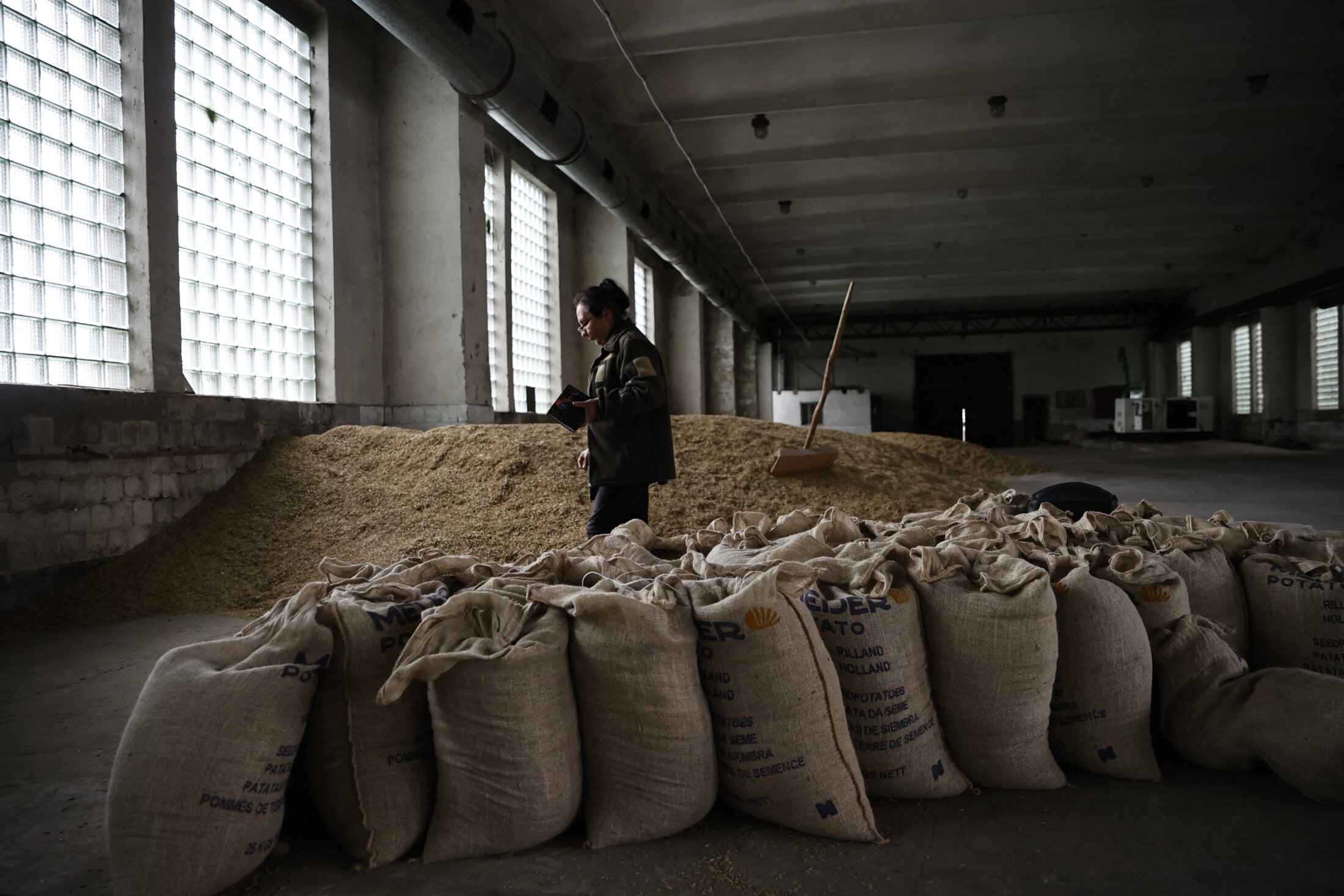
Mediapart: Was there no interest for Vladimir Putin in blocking, in the Black Sea ports, what Ukrainian President Volodymyr Zelensky recently estimated to be 22 million tonnes of cereals?
T.S.: I’m not saying that they don’t care, but it’s not the reason they started the war. Now that they’ve started the war, they’re happy to use food as a weapon, happy to watch millions of people starve around the world, because the Russians think that will be a source of leverage. Now that they’re there [in Ukraine], they’re happy to steal the grain, and give it to Syria, or try to sell it, and I think they are very happy to watch people in North Africa and so on starve, because that gives them leverage.
Mediapart: In an interview in March with the Polish weekly Polityka you already spoke of a genocide by the Russians. Were you using the term genocide it its strict legal sense?
T.S.: When I say ‘genocide’, I mean it precisely in the legal sense of the term. I don’t mean it in any other way. In the Genocide Convention of 1948 there are basically two elements; the first is intention and the second is action. Usually, it is the intention that is harder to prove. In this case [in Ukraine], the intention should not be hard to prove at all. Because unlike in any other genocide, the Russians can’t stop talking about their own genocidal intent. They do it over and over and over again, as if it were a kind of challenge to the West.
So when Putin says there is no Ukrainian nation, no Ukrainian state, scholars of genocide recognise that as genocidal language. When Putin says both that Ukraine doesn’t exist because the Communists made it up, that Ukraine doesn’t exist [that] it’s only Nazis – and meanwhile [Russian security council deputy chairman, Dmitry] Medvedev has said Ukraine doesn’t exist, it’s only Jews – all of that, although contradictory, just means ‘we are going in and we’re going to destroy what we regard as an artificial elite and when the artificial elite are gone there will be no Ukrainian nation anymore.
The declarations of intent have come from the top of the Russian state, and they’re repeated on Russian television over and over again. Russian television is owned by the state, and scarcely a day goes by when someone doesn’t talk about exterminating the Ukrainian nation. Also, from RIA Novosti, an official Russian news service, probably the most important one, there have been two very important texts. One of them was [issued] two days after the invasion, the other several weeks later, both of which made it very clear that the aim of the war was the elimination of the Ukrainian nation as such.
Mediapart: But the elimination of the nation does not mean the extermination of the people.
T.S.: If I kill every single French person of course that’s genocide. But that’s not the only way to commit genocide. If that were the standard, even the Holocaust would not be genocide because not every Jew was killed. Genocide means that you have the intention to destroy the nation in all or in part, and then that you carry out certain actions. What I’m saying is unusual is that the Russians themselves keep confessing to the intention. And that’s really important. It makes it different to the Holocaust, it makes it different to pretty much any [such] crime in the past. They keep saying that this is what they’re doing.
Then if you look at the practices, they are also quite clear. Their practice of deporting women and children to Russia to be assimilated is a violation of Article 2, section E, of the Genocide Convention which specifically says that destroying families, raising children in a different culture, is genocide.
The Russian practice of searching out local mayors, local activists, people of importance in the nation as a whole, and kidnapping and murdering them, is genocidal. It is part of an attempt to destroy the Ukrainian nation. In this context, bombing the archives, bombing libraries, and taking Ukrainian-language books out of libraries, things which might seem, and they are, less important than killing, are also part of this overall policy.
Rape is also an element of genocide. There are Russian soldiers talking about what they’re doing when they are raping women; they are punishing them but they are also discouraging them from having their own children later on. It’s a horrible process, I don’t even know how to talk about it, and that also has a genocidal character. All these things have been happening. The mass killings, the mass rapes, and the mass deportations, all these things are the actions. These actions are terrible, but what makes it genocide is that the Russians keep talking about their overall intent of preventing the Ukrainian nation from existing in the future.
Mediapart: What could the future be for Ukrainian territory occupied by Russia or pro-Russian separatists? Should the loss of those regions be recognised, and could Ukraine become a sort of buffer state like Lebanon?
T.S.: First of all, Crimea and the Donbass are illegally occupied by Russia. No country in the world, including France, recognises them as being part of Russia. I have to challenge the premise of the question. If we accept that countries just take territory by invading, we are giving up on the entire international order.
It’s very important to speak about Crimea, and for that matter about the Donetsk and Luhansk oblasts that have been under Russian occupation – because that is their legal status. It’s not for you, or for me, nor for Washington or for Paris, to decide what Ukraine will be like at the end of the war. It’s for the Ukrainians to decide. That might seem like a trivial point, but it is really quite fundamental. If they make some kind of deal, then it’s their deal, which they have made. The reason that this is so important is that it’s not for us to take part in colonial discussions on Ukraine. It’s very important that it’s not for us to talk about giving away Ukrainian territory. It’s our role, at this point in time, to stress that Ukraine is a sovereign country, and that decisions about territory will be made by Ukrainians themselves.
As for about what’s in our best interest, it would certainly be for Ukraine to win the war as quickly as possible because any other outcome weakens democracy, in France and around the world, it encourages aggression in Europe and around the world, the spread of nuclear weapons around the world because countries that don’t have them will think they have to build them. Basically, a Russian victory would be a nightmare in every security and moral dimension.
I am less concerned about the [form of a] final outcome than about Ukrainian victory. My concern about current French policy [of diplomacy] is that it is inappropriate for the moment. It will be appropriate later on to talk about what the deal will be, but it only become appropriate after Ukraine has won the war. For the time being, for those of us who care about democracy and the rule of law and so on, what we should be concerned about right now is to do everything we can to ensure Ukraine wins the war. And when Ukraine has won the war, then there can be a discussion about borders and concessions and so on. But not now – now is a terrible time to have that conversation.
Mediapart: Could it be that this is a war of independence that will put an end to Russian imperialism?
T.S.: One more reason that Ukraine needs to win is the future of Russia. Every European country, including France, has gone through this pattern where a state – a state of rule of law and prosperity – can only really consolidate itself when the imperial period is over. This war is about many things, but from the Russian point of view its [also] about whether Russia is an empire or not, and if Ukraine wins, Russia will have the chance of establishing itself as a normal country, rather than an empire whose domestic politics are dominated by militaristic propaganda and foreign adventures.
There should of course be many things we care about before we care about this, but this war is about the larger European arc of history in which traditional empires have to lose imperial wars. For me as a historian, to go back to one of your earlier questions, the overall question in modern European history is integration – states that integrate on the basis of equality or – empires. The Putin regime has a very clear answer, which is ‘empire’, and an empire which destroys integration, an empire which is opposed to the European Union, an empire which wants to break up Europe into little parts which it can deal with one at a time.
So while this war is obviously about Ukrainian independence, it’s also about whether Russia can become normal a post-imperial country, and whether integration in Europe itself has a future.
-------------------------
- The above interview was conducted in English. A translation into French can be found here.
Editing by Graham Tearse