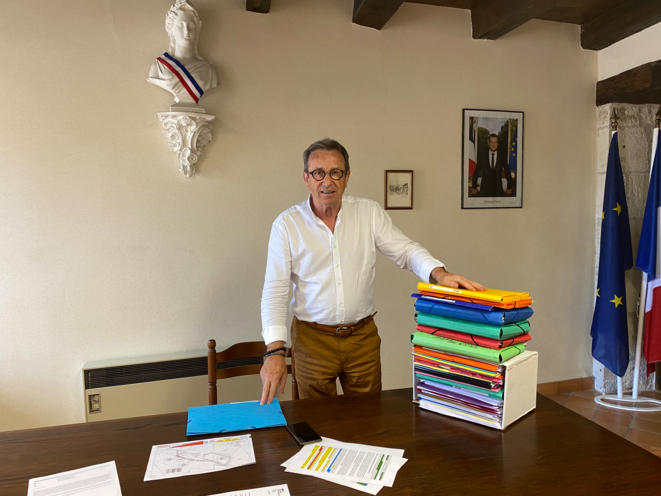
In the tiny medieval village of Montjoi, in south-west France, a dispute over the use of a rural public right of way, pitching a pig farmer against a British house owner and the local mayor, had been simmering for years. But since a far-right YouTuber took up the cause of the pig farmer, the quarrel has taken on a political and sinister dimension, and the mayor, who became the target of a vicious campaign of intimidation, including murder threats, is now placed under police protection. Christophe Gueugneau reports from Montjoi.
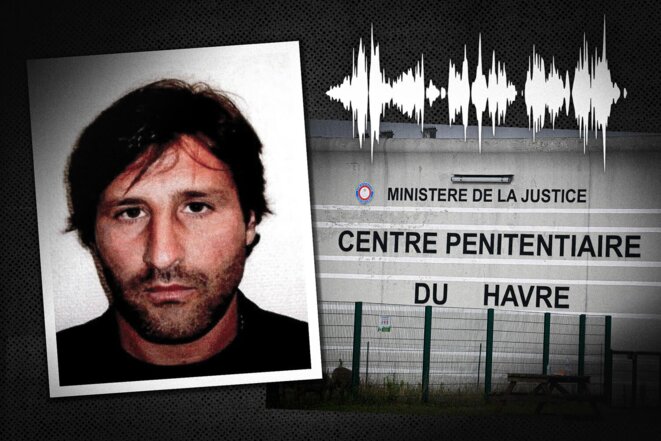
French detectives investigating three murders have been eavesdropping on jailed fraudster Arnaud Mimran, one of the brains behind the so-called 'crime of the century' carbon trading scam. As Mediapart has already reported, the listening devices revealed Mimran's prison cell musings about his ties to Israeli prime minister Netanyahu. But they have also revealed the crime boss's plans for revenge, including staging an ambush. One of his targets is Mediapart journalist Fabrice Arfi, the author of a book and numerous articles on the carbon trading affair. Mediapart has now referred the matter to the public prosecutor. Karl Laske reports.
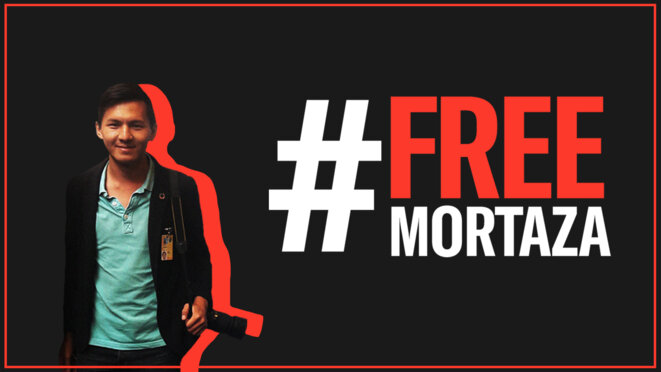
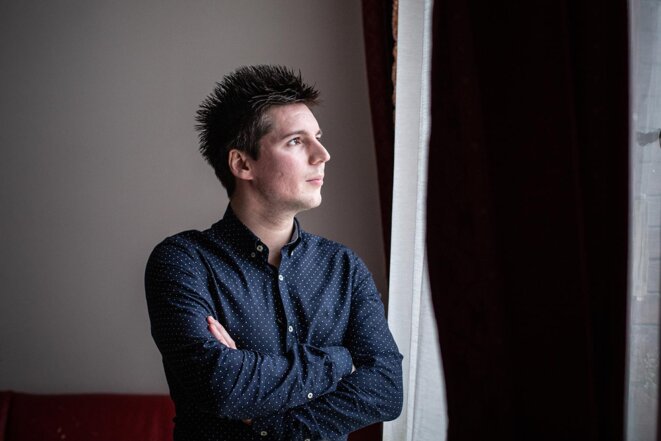
France-based journalist Mortaza Behboudi, who has worked for Mediapart and major French broadcasters, notably on reporting missions to Afghanistan, has been detained in Kabul by the Taliban authorities since January 7th this year. The reporter, who holds dual French and Afghan nationality, turned 29 in April, in his prison cell. We call on the Taliban authorities for his release and freedom, and we will continue to do so until he is safely back among us.
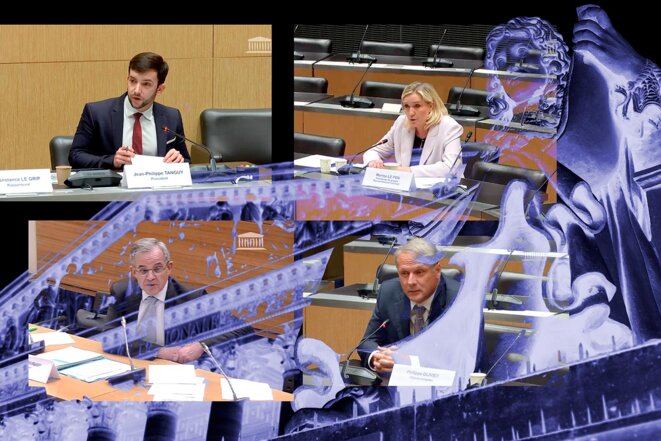
This week the publication of a Parliamentary inquiry into foreign interference in France will reveal the close ties between Marine Le Pen's far-right Rassemblement National (RN) and the Russian regime of Vladimir Putin. The party, formerly known as the Front National, was itself responsible for this investigation and chaired the inquiry; on the surface this looks like an attempt at transparency. In reality, it was simply a ploy to try to clear its name, though the party is still furious over the contents of the final report, parts of which have been leaked. Mediapart spent many hours following the hearings conducted by the committee. Here Matthieu Suc and Marine Turchi report on a process that became a charade.
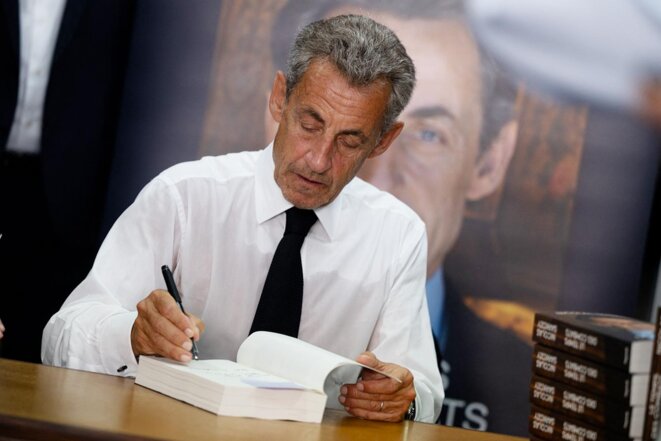
On June 13th and 14th former president Nicolas Sarkozy was questioned by judges as part of an ongoing investigation into the fake retraction by Ziad Takieddine, a key witness in a parallel probe into Libya's alleged funding of the ex-head of state's 2007 election campaign. Under questioning the former president acknowledged that a key figure in the fake retraction case, Noël Dubus, had visited him to receive signed copies of his book. In one copy of his book Nicolas Sarkozy wrote 'Thanks for everything'. Yet businesswoman and paparazzi agency boss Michèle Marchand, who has been placed under formal investigation in the case, had previously denied that this episode even took place. Fabrice Arfi, Karl Laske and Antton Rouget report.
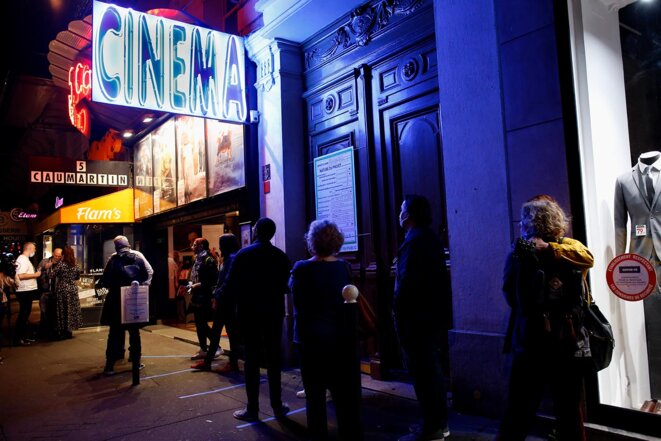
As she accepted the Palme d'Or award at the Cannes Film Festival for her movie 'Anatomie d'une Chute' last weekend, director Justine Triet warned about the growing threats to the cinema industry in France. She said the French government was too indulgent towards American streaming platforms, state support for the film sector was drying up, while cinema audiences are down. The government and its supporters quickly hit back, accusing her of 'ingratitude', as her own film received public grants. But in using her acceptance speech to attack what she sees as a neoliberal assault on France's cinematographic 'cultural exception', Justine Triet was aiming at the right target, says Mediapart's Mathias Thépot. Here he analyses the challenges facing one of France's cultural crown jewels.
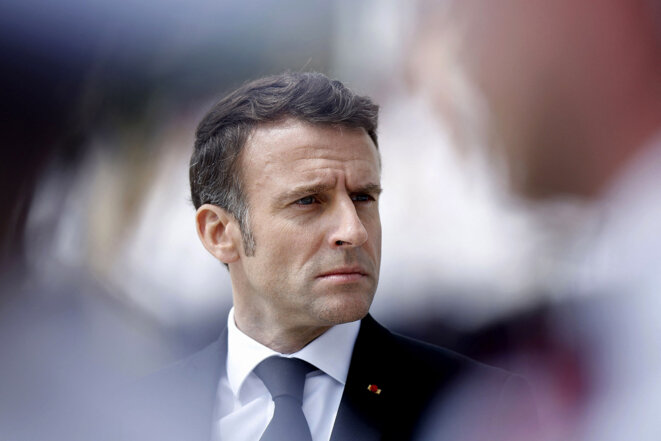
Last week, following a series of violent but unrelated incidents in the country, French president Emmanuel Macron told ministers that the government needed to “counter this process of decivilisation”. The expression immediately provoked controversy. In this analysis, Mediapart’s publishing editor Edwy Plenel says that despite what his supporters claim, the president's choice of the word “decivilisation” owes nothing to the late German sociologist Norbert Elias and instead owes everything to the normalisation of far-right ideas.
French academic Alexis Lycas has just published a book on mediaeval China which counters the popularly-held notion of a Chinese state with a linear, unbroken and united history stretching into the distant past. The historian says that following the creation of its empire more than 2,000 years ago, China has been “divided for longer than it's been than united”. This approach is more than simply fascinating scholarly history; it also provides a valuable insight into the myth-making historical narrative of the current Chinese regime. François Bougon spoke to Alexis Lycas, who has been taking part in the 'L’histoire à venir' festival in south-west France, an event in which Mediapart is a partner.
Rui Pinto, the whistleblower behind the “Football Leaks” revelations of corruption and fraud within the business side of football, has been given a four-year suspended prison sentence by a court in Portugal after he was found guilty of computer hacking charges and attempted extortion. Despite a heavier sentence demanded by prosecutors, Pinto, 34, escaped returning to prison after the court in Lisbon recognised the “public interest” of the information he gained through the hacking, and took into account the regrets he expressed during the three-year trial. Yann Philippin reports.
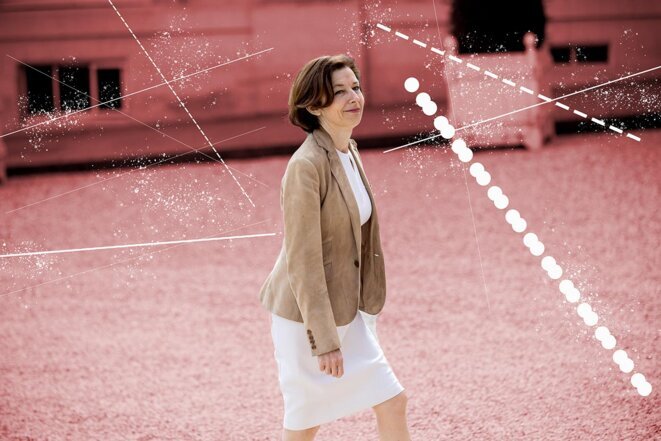
France’s former armed forces minister Florence Parly was unknowingly targeted while in office by the secret Pegasus spyware, sold to governments by Israeli surveillance technology firm NSO Group, bringing the total number of French ministers whose phones were infected with the eavesdropping tool – along with that of President Emmanuel Macron – to seven, Mediapart has learnt. A judicial investigation has established that at least 23 people in France, including journalists as well as politicians, fell victim to the spyware between 2019 and 2020. Fabrice Arfi and Ellen Salvi report.