


Among the values represented by the Paris Olympic and Paralympic Games are inclusion, openness towards others and tolerance. That, at least, is the view of the two leading figures behind the event; France's triple Olympic canoeing champion Tony Estanguet, who is head of the Paris 2024 Organising Committee, and the socialist mayor of Paris Anne Hidalgo.
Yet lurking behind this welcoming message there appears to be a more brutal reality. According to Mediapart's information, one of the key bodies in charge of delivering the Games in the French capital has for months been hampered by serious internal issues, amid claims of racism, sexism and homophobia.
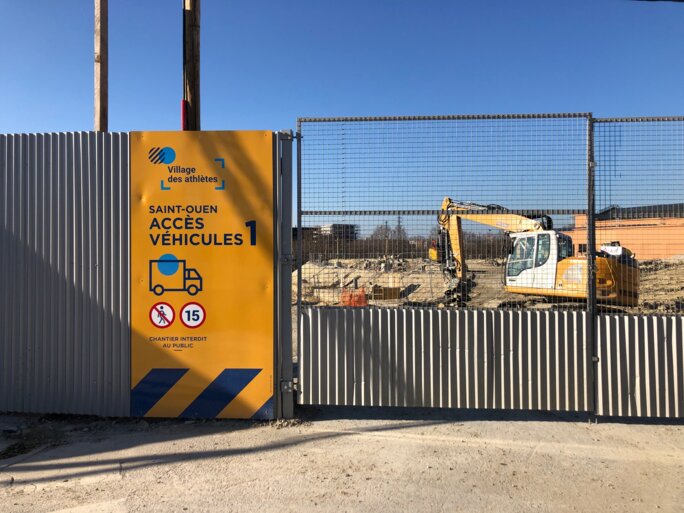
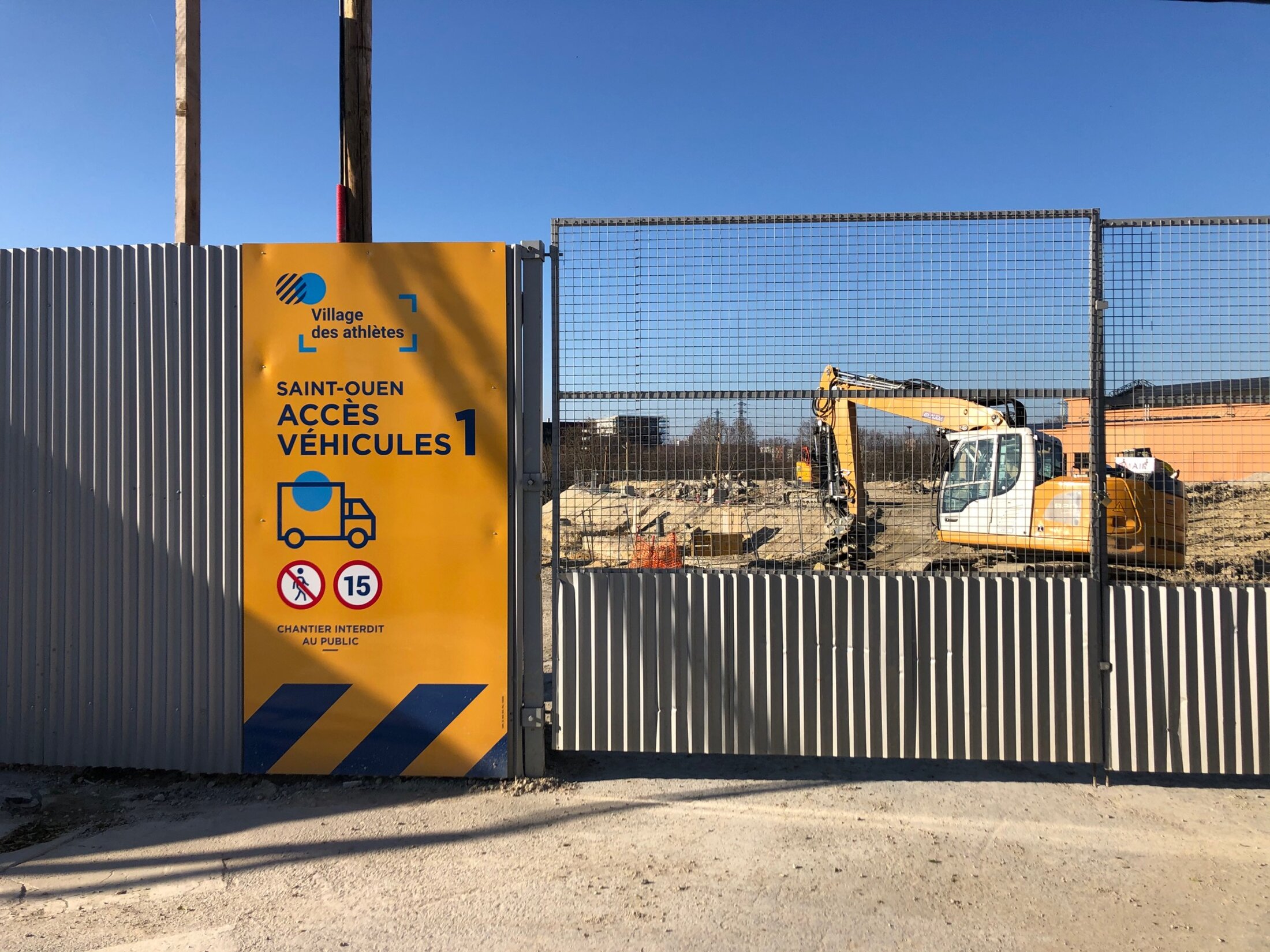
The organisation in question is called SOLIDEO, which is the public sector body tasked with “financing, supervising and delivering the Olympic facilities” to make sure all is ready for both spectators and athletes by the summer of 2024. It is this key body that will oversee the construction of swimming pools and the Olympic Village, mostly in the département or county of Seine-Saint-Denis. This département on the outskirts of the capital, home to many people from immigrant backgrounds, is one of the poorest in France. The hope is that the development of the Olympic facilitates will have a positive 'trickle down' effect on impoverished local communities.
SOLIDEO, which currently has around a hundred staff, is under the direct control of the French state via an Olympic and Paralympic Games inter-ministerial body called DIJOP. The chair of SOLIDEO is the capital's mayor, Anne Hidalgo. Yet despite this state and municipal oversight, for nearly three years there have been claims of discriminatory comments and behaviour by some staff within the organisation, as revealed in witness accounts and comments gathered by Mediapart.
When questioned by Mediapart, SOLIDEO admitted its concern over the issue. It stated that “the unjustifiable comments reported by Mediapart have absolutely no place in this establishment”. Even though it was already aware of much of the information, SOLIDEO responded to Mediapart's questions by announcing an “internal inquiry” carried out by an external “compliance officer” in order to “learn the truth of these new reported facts”.
Once this internal inquiry reports back, any “individual” measures that are required will be taken and “all lessons will be learnt in order to reinforce the set-up further”, said SOLIDEO. In the meantime some “protective measures have been taken, three employees have been suspended”, it said.
The issue is being closely watched at City Hall in Paris, where's the mayor's office was warned about some of the behaviour, and also by the prime minister's office; before being named France's premier in July 2020, Jean Castex was head of the inter-ministerial body DIJOP overseeing delivery of the Olympic and Paralympic Games.
Enlargement : Illustration 1
The internal problems that have been highlighted are mainly inside DRICS, the section of SOLIDEO which deals with institutional relations, public relations and security, even if they have inevitably spilled over into other parts of the organisation too. Indeed, until mid-2019 all SOLIDEO's staff worked together in one big open plan office.
“Everyone internally is bound to have heard talk about these comments concerning racialised people, women, and about a particular notion of Seine-Saint-Denis,” said one former employee, who spoke on condition of anonymity. Another former employee said: “There were 'jokes' about homosexuals, Blacks, Arabs and women all day long.”
For example, several witnesses said they had heard the following expressions used by a small group of male managers: “What are we doing helping the Blacks in Seine-Saint-Denis ?” And, in relation to the country's sports minister and former swimming champion Roxana Maracineanu: “Her brain's been damaged by the chlorine in the pools.” SOLIDEO declined to state whether its managers denied having made these comments. When contacted separately the staff in question did not respond to Mediapart.
Part of the issue dates back to January 2019 and the staging of a three-day residential works seminar at Valmorel in the French Alps which was – astonishingly – held in chalets rented from the family of one of the two financial controllers sent by the French Treasury to ensure the organisation was being run correctly (the financial controller did not respond to Mediapart's for a comment) . This event proved a tipping point within SOLIDEO.
A section of the 50 employees who went on the trip returned to Paris astonished by what they saw as inappropriate “jokes” made by the person in charge of institutional relations at SOLIDEO, Benoît Piguet. He is a civil servant who has in the past worked alongside the current head of police in Paris, Didier Lallement.
After the seminar two SOLIDEO employees referred the issue to the group's chief executive officer Nicolas Ferrand. Back in April 2018 he had already warned his team when Benoît Piguet was appointed. “Benoît has a certain nature. If he becomes a bit much, tell me straight away,” he told them. After the issue was raised following the January 2019 seminar, Nicolas Ferrand told the two employees that he was going to “tell Benoît to calm down”.
After a subsequent works council meeting, which brings together representatives from management and workforce, SOLIDEO's CEO and its secretary general restated in very general terms that they would not tolerate any discriminatory remarks within the organisation. Benoît Piguet did not respond to Mediapart's request for an interview.
SOLIDEO also declined to give details on how this matter was handled. The public body simply stated, without going into details, that “in the past, some of the comments raised by Mediapart have already been brought to the attention of [management]”. It said that on each occasion it had behaved in an “exemplary” manner by “informing, warning and punishing”. It also said that, while respecting employees' rights, it had handed out some “disciplinary sanctions” and reminded some staff as to their future conduct. In 2018 the organisation had also declined to employ an IT worker who used the expression “niakoué” - an offensive word broadly equivalent to “chink” - to refer to people of south-east Asian origin.
Enlargement : Illustration 2
According to several witnesses, the atmosphere inside the organisation began to calm down a little after the events at the Valmorel seminar. SOLIDEO also moved to new offices where staff were no longer all together in one large open space, and the DRICS unit had their own area. This reduced the spread of “jokes” to the rest of the workforce, even if other staff “still had to put up with at least one a week”, observed an employee in another section of the organisation.
But the very issue of moving office had already led to fresh tensions within the organisation. Several witnesses state that when the possibility of moving to Seine-Saint-Denis was raised, one manager said: “We're not going to Seine-Saint-Denis. The women couldn't go home in the evening without risking getting raped.” In the end the organisation stayed within the confines of the city limits, unlike the Organising Committee (known as COJO), which decided to move to Saint-Denis in Seine-Saint-Denis.
Indeed, such was the mistrust of Seine-Saint-Denis within SOLIDEO that at times it was almost discernible in the organisation's public stances. An example was October 15th 2020 when CEO Nicolas Ferrand was explaining at a press conference that if work on a new junction on the A 86 motorway in the Pleyel area of Saint-Denis had to be abandoned then it would cause a “difficult issue” in relation to the Paris Games. This infrastructure has been opposed by locals and parent teacher associations because the new motorway slip road will be just yards from a school complex for 700 pupils (see Mediapart's story here).
Nicolas Ferrand told the assembled journalists that at stake was an issue of “efficiency” about ensuring athletes “arrive on time at the competition”; this had to be distinguished from a “security issue” for high-profile delegations such as the Americans and Israelis “so there's no question of having a convoy that might stop at a red light”. It was as if the protection of athletes took priority over local residents, and as if the latter were in fact seen as a threat to the former. Inside the organisation there was mounting unease. “There was in fact a group of a few people who started off from the principle that there was a high-risk population in Seine-Saint-Denis. But that didn't at all represent what the operational teams thought,” said one employee.
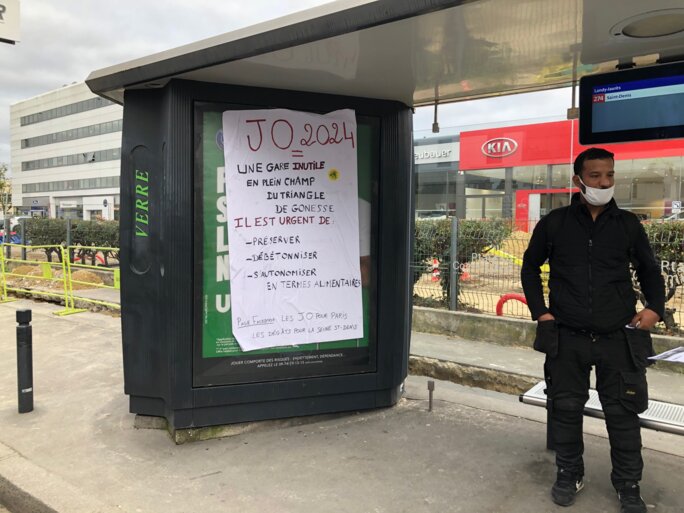
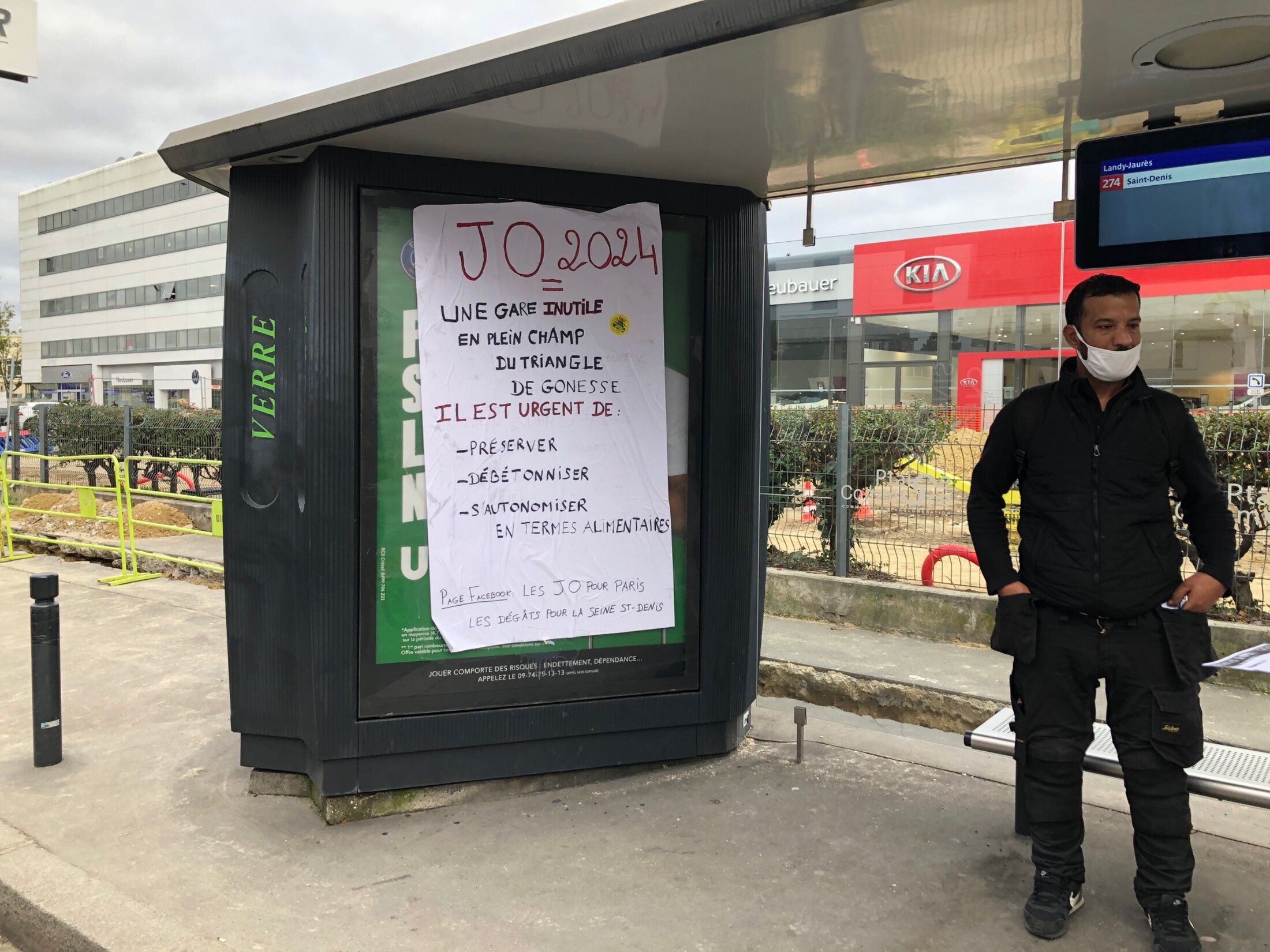
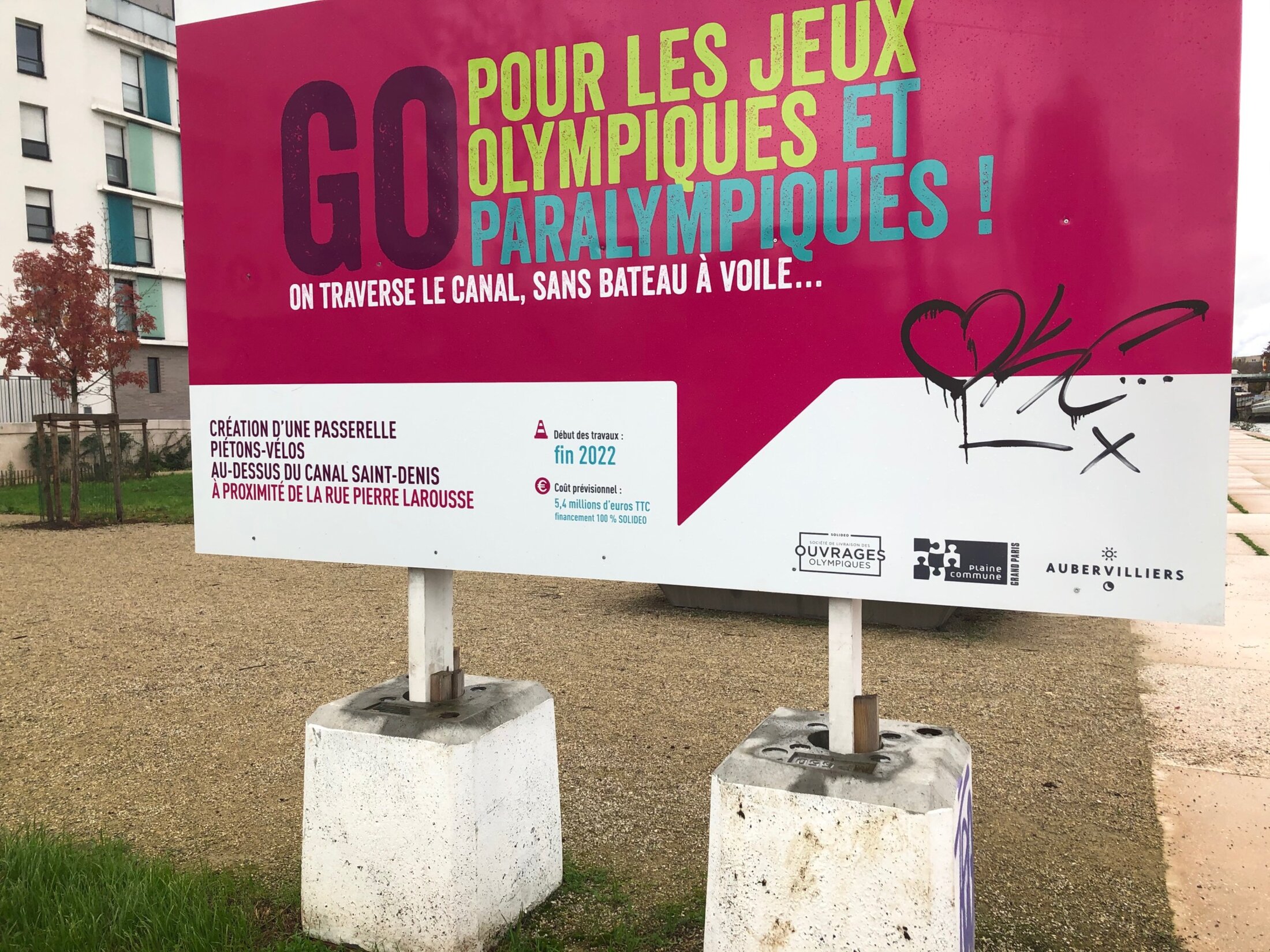
Close to 80% of the permanent structures being built for the 2024 Games – the Olympic pool, the athletes' village, the media village, the new junction and the training pool – are being built in Seine-Saint-Denis. The “legacy” of the Games in one of France's départements that has suffered an historic lack of public investment is both a promise to elected officials locally and a key element of the Olympic message.
Relations between the local authorities in Seine-Saint-Denis and SOLIDEO are thus both regular and sensitive. “Things are very good with them, they're a stakeholder who are very close to us,” the Seine-Saint-Denis département council told Mediapart. There are site meetings between the two parties every fortnight. And once a month SOLIDEO's Nicolas Ferrand meets Stéphane Troussel, the département's president, and Mathieu Hanotin, mayor of Saint-Denis. SOLIDEO's decision to keep its offices within the Paris city limits seems not to have offended the département's executive.
Enlargement : Illustration 3
Despite his position as director of institutional relations Benoît Piguet does not take part in these meetings. Indeed, when at the start of April the département wanted to contact SOLIDEO urgently – the courts had just ordered work to be suspended on the media village - Stéphane Troussel's office did not even know Piguet's mobile phone number.
Yet there is no shortage of sensitive matters for institutional stakeholders to discuss. One such issue has been the moving of 224 residents from an immigrant workers' residence to make way for an office block built by companies Eiffage and Nexity in the future athletes' village. It was the organisation's number two, Isabelle Vallentin, who handled the negotiations for SOLIDEO in the steering committee set up to organise the residents' move to modular accommodation. The residents to whom Mediapart spoke appreciated the way she communicated with them, even though they disagreed completely about the circumstance of their move.
The central aspect of the département's dealings with SOLIDEO involves the “social inclusiveness” of the Olympic worksites. A charter commits the public works organisation to sign 25% of its contracts with local small and medium-sized companies and to reserve 10% of available work for local people who have been out of the jobs market. Mediapart understands that by the end of February, with 150 million euros worth of deals already signed, some 30% of the small and medium-sized company objective had been reached, and 9% of the jobs commitment out of a total of 398 contracts signed.
But could these figures have been higher? Did SOLIDEO lack desire and commitment in this respect? The département of Seine-Saint-Denis said that on this issue the “objectives are on course and there is no delay. The dynamic is pretty good”. However., when it comes to the service sector – security, restaurants, cleaning, reception and greeting, and so on - most contracts have yet to be awarded.
SOLIDEO's boss Nicolas Ferrand usually started his meetings by counting the number of days before the deadline for delivering the scheduled works. At the request of the local authorities he has also now added to his introductory comments the number of jobs created, in order to highlight awareness of the employment issues at stake for the area and to maintain good relations with other stakeholders.
'She slept her way to that'
The residents of Seine-Saint-Denis and people of foreign origin are not the only targets of some of the staff at SOLIDEO. Witnesses state that when discussing the risk of protest camps on the Olympic worksites, police superintendent Jean-Marc Vidal, who is on secondment to look after security at DRICS, said that he feared the actions of “eco-jihadists”. Contacted by Mediapart, Jean-Marc Vidal did not want to comment because an internal inquiry was being conducted.
According to other witness accounts and documents, on January 21st 2020 another DRICS employee said of the female director of the Olympic task force on the inter-local authority body Plaine Commune that: “She slept her way to that.” Within the unit women are regularly referred to as “stupid” behind their backs and patronisingly referred to as “little one”. This language twice led to a manager at the Paris Organising Committee (COJO), whose relations with SOLIDEO are volatile, reporting to Nicolas Ferrand the behaviour of members of DRICS towards one of their female employees.
In fact, according to several witness accounts gathered by Mediapart, meetings with the director of institutional relations at SOLIDEO can be a tough experience for young women who are present. One of them, an employee of another organisation linked to the Olympic project, and who is on a lower management level than Benoît Piguet, recalled a conference call meeting where the latter ignored her questions and behaved as if she was not there.
On another occasion a woman in her thirties became the butt of jokes from a group of male colleagues at DRICS. And one woman described a scene in which the DRICS boss shouted at a female employee in a corridor. She said she had heard him utter sexist or misogynous comments on several occasions. It reached a point where - at her request - it was agreed that this woman should no longer have to attend meetings with Benoît Piguet. Meanwhile a manager at another organisation said his female staff were uneasy when they had to visit SOLIDEO.
In September and October 2019 a series of SMS messages among certain DRICS personnel revealed the unrestrained behaviour by some. An initial text message comparing the French president's wife Brigitte Macron to a monkey – at the time the far-right Brazilian president Jair Bolsonaro had been insulting Brigitte Macron's appearance – was shared with the seven people who made up the SMS group.
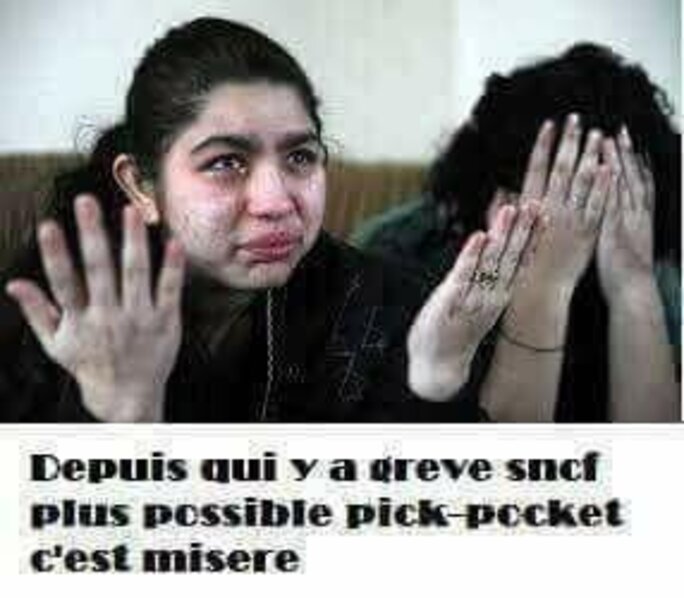
A second message targeted the Roma people; it was a photomontage which had circulated for months on far-right websites. It depicts Leonarda Dibrani - the 15-year-old Kosovan girl expelled from France with her family in 2013 during the presidency of François Hollande – in tears, accompanied by the words: “Since the SNCF strike [editor's note, rail strike] pick-pocketing has been impossible, it's awful.”
Superintendent Vidal, who sent the photomontage around the SMS group at DRICS, commented on it: “The poor things”. The comment was followed by four “LOL” emoticons.
On another occasion Jean-Marc Vidal chose to regal his DRICS colleagues at 3.07am one Wednesday morning with the photo of a stripper behind glasses of alcohol and the message: “Pink Paradise [editor's note, a club behind the Champs-Élysées in Paris] with my colleagues from the BRP [editor's note, the police vice squad]. Debriefing tomorrow.” This message sent in the early hours was accompanied by three winking emoticons.
A few days later, on October 28th 2019, the female director of public relations heard the following comment at a DRICS meeting when the issue of sending an Olympic delegation to Saudi Arabia came up: “I really want to go to this country to see some tarts there … veiled tarts.” A second DRICS colleague then replied: “They're sluts, it's a great country! The problem of queers is sorted there, they don't stay queer more than 24 hours because afterwards they bump them off!” A third said: “Yes, that's true.”
These details were regarded the following day in an incident report written by the public relations director, who has since left her job and did not want to talk to Mediapart. “I would like to point out to you that this is not the first time that misogynous, racist and homophobic comments have been made on a daily basis … creating an unhealthy climate and growing fear,” she said in her report. She went on to explain that these “repeated illegal comments, attitudes and actions make me uneasy, undermining working conditions and putting in danger my well-being at work as well as those colleagues who don't dare speak out about it”.
On January 3rd 2020 SOLIDEO's secretary general replied to the public relations director by email saying that he had “spoken to the CEO before the holidays”. He continued: “The issue is too worrying to be kept quiet and [we need to] come up with a modus operandi that stops something that has no place in the workplace and which other staff should not have to endure.”
Mediapart understands that a month later, on February 3rd 2020, the issue of sexist, racist and homophobic comments and messages was discussed at a management meeting at SOLIDEO. As a result of this the head of DRICS, Benoît Piguet, was summoned to a meeting with the secretary general on Friday February 7th.

Enlargement : Illustration 5
The formal outcome of this meeting is unknown, and SOLIDEO declined to tell Mediapart. But it is clear that this public body did not pursue its investigations very far. For example, management did not even try to access all the messages exchanged on the DRICS SMS group. An informed source told Mediapart that the organisation's management “did not want to make waves” as they had to “focus on the objective”, given that “we are very constrained by deadlines” in the building of the Olympic sites.
The case was buried but resurfaced a year later when the organisation's works council opened an investigation over suspicions of harassment of the public relation director who had written the report. During interviews that took place as part of this investigation another employee at DRICS said that they had witnessed “comments judged homophobic, degrading and racist in respect of employees or [project] partners”, according to the transcript of their interview that took place in November 2020. Once again, SOLIDEO declined to comment on the outcome of this process.
Inside SOLIDEO the discriminatory comments had disrupted teams who were already exhausted by the scale of the task facing them. “The operational teams are doing a remarkable job, they are respectful and devoted, but their work is sullied by the behaviour of a few,” said one former employee. Another former staff member thinks that what has taken place there was the result of the speed at which SOLIDEO had grown. It started from nothing in 2017 – the very first agents there worked on their personal computers – and the organisation was not subsequently given any specific support. “Add to that the excessive workload inherent in this type of project. On the operational side people are exhausted, it's just not possible,” he said.
In the autumn of 2020 the internal tensions at SOLIDEO spread and the situation in which the public organisation found itself came under the spotlight. It was scrutinised both by the inter-ministerial group DIJOP – where the prefect Michel Cadot had taken over as head from Jean Castex – and also at City Hall in Paris. In their discreet institutional way of doing things, each group reflected on the best way of getting out of the problem while causing the least damage to the image of the Paris Games. The result was that no one did anything.
At the most senior level the prime minister's office told Mediapart that Jean Castex – who, in his capacity as head of DIJOP had weekly discussions with Nicolas Ferrand right up until he was appointed premier in July 2020 – “never had any knowledge of the malfunctioning or the actions and behaviour as described by Mediapart”.
That is not the case at City Hall in Paris. It was warned about the problem in October 2020 and got hold of the report written by the head of public relations which had been written a year earlier. When questioned by Mediapart, City Hall confirmed that two separate sources had alerted them to the issue and that they had received the report written by the public relations director. But they explained they could not take the issue further as SOLIDEO is not a municipal body. “We received no formal referral [editor's note, from the person who had sent the report] despite our reminders,” said a spokesperson at City Hall. They insisted that mayor Anne Hidalgo, who is president of SOLIDEO, was not personally advised of the situation by her office.
During an interview with Mediapart in March 2019, Benoît Piguet had described SOLIDEO as a “public establishment of a fixed duration”. He said: “It doesn't exist anywhere else. It is a special feature.” The organisation was set up in 2017 and will disappear in 2025. At another meeting, in February 2021, Benoît Piguet pointed out that SOLIDEO had already gone past half of its planned existence. It was an organisation controlled by deadlines, with one sole objective, and which was up against the demands of a relentless countdown: to deliver the Olympic facilities on time.
The tempo is set to quicken even more from this summer when construction on the main sites for the 2024 Games gets under way. This will heap yet more stresses and strains on the workforce of this ephemeral organisation.
-------------------------
If you have information of public interest you would like to pass on to Mediapart for investigation you can contact us at this email address: enquete@mediapart.fr. If you wish to send us documents for our scrutiny via our highly secure platform please go to https://www.frenchleaks.fr/ which is presented in both English and French.
-------------------------
- The original French version of this article can be found here.
English version by Michael Streeter