


Immigration and issues of identity have been at the centre of intense political debate and controversy in France recently. First there was a debate over how the “bourgeois” middle classes were blind to the everyday realities experienced by the working classes. Then came a call for society to be “vigilant” in the fight against terrorism when faced with the “Islamist hydra”. There has also been the seemingly endless debate about the merits of the veil, which education minister Jean-Michel Blanquer has said is “undesirable in our society”. Now comes the vexed question of lists of election candidates which are based on faith communities, a phenomenon which local government minister Sébastien Lecornu has described as a “threat” and a “curse” which should be “prevented from flourishing”.
The controversy, which was initially sparked by the government, was ratcheted up on Sunday October 20th when Bruno Retailleau, the president of the right-wing opposition Les Républicain's group in France's Senate, unveiled a proposed bill to outlaw such faith group-based lists. The aim of the legislation, he said was to “counter what is a form of secession”. The senator told the Journal du Dimanche newspaper: “We propose banning any public funding of a [faith-based] movement, which would not respect the principles of national sovereignty and secularism and, under the supervision of administrative judges, prohibit [faith-based] candidacies and election propaganda.”
However, despite those words, Bruno Retailleau appears not to have set his sights on the movement founded in 2001 by politician Christine Boutin which became the Christian Democrat Party eight years later with the avowed aim of championing “Christian values loud and clear”. Instead, what has attracted the attention of the right-wing senator is a political party set up in 2012 by Nagib Azergui, under the name of Union des Démocrates Musulmans Français (UDMF). This 'French Muslim Democrats' party describes itself as centre-left and says on its website that it is “non-denominational, secular and profoundly Republican”. Yet the 28,469 votes it got at the European elections earlier this year – just 0.13% of the total vote and which contrasts with the 5 million who voted for the far-right Rassemblement National (RN) – have clearly unsettled some politicians.
This small party, which has 800 or so members, was also on the mind of another leading figure on the Right, Xavier Bertrand, president of the Hauts-de-France region in northern France, when last September he publicly called on President Emmanuel Macron to change policies in the face of “political Islam”. But one has to go back further to discover who the first person was to raise this issue in public debate and make it likely to be one of the key issues in the 2020 local elections – as if the rise of the far right against a backdrop of social crisis was not problem enough.

Enlargement : Illustration 1

That person is budget minister Gérald Darmanin, who hails from the Right originally but who is now firmly part of the Macron administration. It was in June 2019, just after the RN's victory in the European elections, that Darmanin, a former supporter of Nicolas Sarkozy who remains close to Xavier Bertrand, raised the alarm in Le Point magazine about votes cast on the basis of faith. He said: “At Maubeuge [editor's note, in northern France], for example, in the Les Écrivains district, there were 70 votes for the 'Muslim' list out of a total of 170 votes cast. It's very worrying because I recall that they [the voters] had to print their own voting slip,” said the minister, referring to the fact the UDMF had not printed enough voting slips for potential supporters in many areas, and voters were urged to print their own.
A few days later Darmanin, the former mayor of Tourcoing in northern France, who does not hide his ambition to be a candidate for the post again in 2020, suggested to journalists from L’Express and Les Échos that faith-based lists of candidates could be banned. Then, speaking on RTL radio about the UDMF, the minister talked of the party having a “manifesto against the Republic”. However this manifesto is in fact largely full of standard topics for local elections – debt, the environment, crime – with a few references to Islam such as the development of the halal market and the teaching of Arabic at school.
In August, after the summer break, the investigative weekly Le Canard Enchaîné reported that not only had Gérald Darmanin felt strongly enough about the subject that he expressed his concerns during a meeting of ministers, the interior minister Christophe Castaner had also alerted the country's regional prefects – state representatives – to the issue. His office wrote to each département or county asking prefects to respond with some urgency. “The office wants a rapid feedback about information on the ground about issues of sectarianism. We would like to know how sectarianism is manifesting itself in your territory,” states the leaked letter published by Le Canard Enchaîné. “Is there a risk of [faith-based] election lists in the towns in your département? … Can you come back to me by next Friday?”
Castaner had already broached the subject at the end of May on the CNews news channel when interviewer Jean-Pierre Elkabbach asked him about the results obtained by the UDMF in some parts of northern France in the European elections. “For example, in Maubeuge, I am told, Muslims lists achieved some considerable scores, more than 40%,” noted the journalist. The minister of the interior replied: “In Mauberge the [faith-based] list that was drawn up … I believe it got 6% not 40%, but that is a lot compared with its national result.”
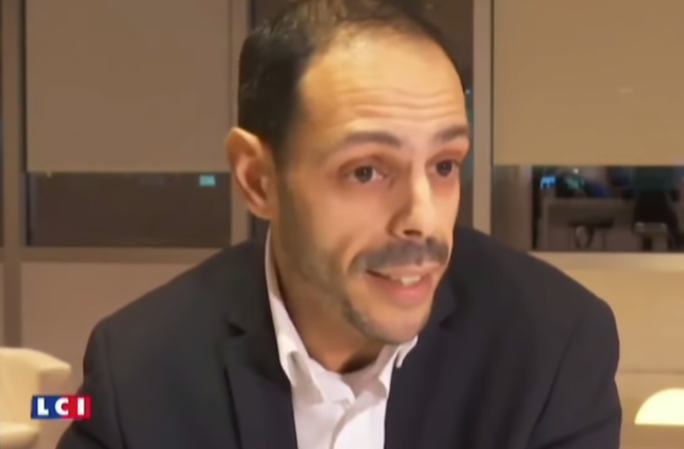
Christophe Castaner then went on to refer to the professions of some local people who he said might be standing as candidates in next year's local elections on a faith-based ticket. Among them was a local pharmacist, who responded to the interior minister's words in a letter to La Voix du Nord regional newspaper. The pharmacist wrote: “I am shocked by the comparison that was made and which suggests that my reflection [about possibly standing as a candidate] had something to do with my origins ...and the possibility of a religious community-based list.” The man, who came to France in 1981 to study pharmacy “as part of Franco-Moroccan co-operation”, ended his letter: “My only community is France and through that Maubeuge, because I believe in a common destiny.”
Maubeuge was also the town cited by Le Canard Enchaîné in its first article on the issue. The weekly wrote that the UDMF had “done brilliantly with more than 20%” of the vote in the European elections. Yet across the whole town this electoral group had come fifth behind the RN, the ruling La République en Marche (LREM), the radical-left La France Insoumise and the green Europe Écologie, and attracted just 440 votes.
Solciologist Vincent Tiberj told the press agency AFP that what he describes as a “micro phenomenon” should not be over exaggerated. “Such lists have been attempted since the European elections of 2004,” he said. “The results have been very low even when they have succeeded in getting candidates to stand.” Tiberj, an associate professor at Sciences-Po university in Bordeaux, pointed out that the UDMF had got 0.13% of votes in the 2019 European elections “out of a population of 4 million Muslims in France”. Moreover, he said, one had to be cautious about the very notion of a “Muslim vote”. Tiberj said Muslims mostly tended to “vote Left” as for them “the religious agenda is not the main one”.
'The government doesn't draw up the election lists'
The UDMF's founder, Nagib Azergui , told AFP that they have “around 50 lists” being prepared for the 2020 local elections. Back in 2014 the party announced that it would stand in just one town – the north-eastern Paris suburb of Bobigny – for the local elections, but pulled out even of this contest at the last minute to back the campaign of centrist UDI candidate Stéphane de Paoli, who was duly elected. Yet despite its low-key, discreet nature, the party has now become something of a national obsession.
The issue of faith-based electoral lists was even raised in the National Assembly on October 15th. “My policy is to fight against any slide towards sectarianism, including political, without being naïve about it,” prime minister Édouard Philippe told the Assembly. “I know that at the approaching municipal elections some candidates will drift towards sectarianism. We have to reflect on how it is possible to avoid this risk and this threat.” The spokesperson for the ruling LREM, Aurore Bergé, also said she was “very favourable” to the idea of banning lists which she considered “dangerous for the Republic”.
But the government's tone changed overnight. In an interview with Le Parisien on October 16th, the local government minister Sébastien Lecornu acknowledged that the issue not so straightforward as it seemed. “Everyone is rushing headlong towards a legal response. But six months before municipal elections, if the only question we are discussing is banning them then we have already lost the cultural battle,” he said. “The first battle to conduct is a political one. Even a democratic and cultural one, I'd suggest.”
This line was repeated by the government's official spokesperson, Sibeth Ndiay, after the cabinet meeting of government ministers on October 21st. “The prime minister took the opportunity to say that obviously we will examine all the options that are already there in law, and what we could do to supplement that,” she stated. “I think … that it's important to have a battle which is to begin with a political battle … We have a political battle to wage against all forms of sectarianism and in particular religious sectarianism.”
Enlargement : Illustration 2

In fact the government had quickly grasped that it was impossible to outlaw sectarian lists for several reasons. One was over the definition: what is a sectarian election list? Does this just refer to religions or other groups too? One could argue that the rural election list put together by the hunting and fishing lobby – the Chasse Pêche Nature et Tradition movement – is itself also a sectarian or community-based list.
The LREM MP Laetitia Avia believes that banning such lists is “at best populism and at worst demagoguery”. The Paris MP asked: “Are we going to consider a list to be 'sectarian' because it is made up of people from a diverse background? And conversely, when it comes to a list without any candidate from a diverse background – which is more frequent – will we say that that is a community-based list?” She added that such a ban would not in any case be constitutional.
However, the right-wing senator Bruno Retailleau disagrees and told Mediapart that “within a fortnight” he would be able to put forward a Parliamentary bill on the issue that conformed with the Constitution. He pointed to the constitutional principle of secularism and also article 3 of the 1958 Constitution which states that “national sovereignty shall vest in the people, who shall exercise it through their representatives and by means of referendum” and that “no section of the people nor any individual may arrogate to itself, or to himself, the exercise thereof”.
Yet the importance of universal suffrage in France means that the right to vote cannot be limited for any reason, including the nature of electoral lists. “What Bruno Retailleau is saying is waffle,” said the prime minister's office. “In France great importance is attached to the freedom of suffrage. The government doesn't draw up the election lists. A woman who wears a veil can still stand at an election.” All the political advisors and leaders that Mediapart spoke to were keen to add, however, that any party which breached the Republic's laws on racism, anti-Semitism or historical revisionism would obviously be prosecuted.
While that is clearly true, that is not the issue here. So why are these government advisors and politicians so keen to point it out? The reason is that the issue of sectarian, faith-based election lists is an intensely political issue. And the government is very keen to avoid being seen as lax or too accommodating when faced with a hard Right and far-right that are very similar and who have made immigration and French Muslims their particular hobby horses. It is also because the government is clearly considering other avenues and options, with prime minister Édouard Philippe's entourage speaking of “crossing swords politically” and “accepting responsibility for this political battle”.
One option in particular seems to dominate the government's thinking, one already raised by Gérald Darmanin when he spoke about so-called “clothing neutrality”. A source in the prime minister's office noted: “We could for example extend the neutrality that applies to civil servants [editor's note, who are banned from wearing religious symbols] to elected representatives.”
Local government minister Sébastien Lecornu had already hinted at this in his interview with Le Parisien. “Let's pose the question as to the spaces that must stay completely neutral religiously,” he said. “The school is one. Should municipal councils also be one such place? Shouldn't mayors and deputy mayors avoid showing any conspicuous religious symbols when they are acting as representatives of the state?” asked Lecornu. Senator Bruno Retailleau has also called for the law to be extended to elected representatives.
For the time being, though, only public servants are subject to a strict duty of respecting neutrality when carrying out their functions. As Nicolas Cadène, general rapporteur for the Observatoire de la Laïcité – the advisory body on secularism that reports to the prime minister – told Mediapart, it is “perfectly legitimate and logical that, when they are carrying out an act of public service [editor's note, for example a mayor presiding over a marriage], an elected representative is subject to neutrality. For in this precise case they are not simply exercising a mandate given to them by their voters, they are executing a public service which must guarantee equality for every user, whatever their convictions or beliefs”. Case law supports this view, even though the law itself is not explicit on the point.
However, a distinction must be made between those elected representatives who carry out an act of public service and those who express their convictions in the carrying out of their political mandate, particularly on local councils. There are numerous examples of this. There is the case of Father Pierre who wore his priest's cassock when he was an MP for the Meurthe-et-Moselle département or county in north-east France in the years following World War II. More recent is the example of Father Jean-Philippe Duval, a monk at Saint-Pierre Abbey at Solesmes in western central France, who sat in his cassock at town council meetings in Solesmes alongside Penelope Fillon, wife of the former conservative presidential candidate and ex-prime minister François Fillon.
In 2010 the criminal division of the country's highest appeal court, the Cour de Cassation, ruled that a mayor who had stopped a female councillor from speaking at a town council simply because she was wearing a cross had been guilty of discrimination. The court said that no existing law allowed the “mayor of a town or village, within the context of a council meeting, which is a place of debate where ideas come head-to-head, to ban elected representatives from showing their religious affiliation, in particular through the wearing of insignia”.
-------------------------------------------------------------------------------
- The French version of this article can be found here.
English version by Michael Streeter