


An advisor on European affairs to the French prime minister Édouard Philippe has resigned after it emerged that he had also worked as an advisor for the Maltese government while getting elected as a French member of the European Parliament.
Sandro Gozi, an Italian national who had previously been Italy's minister for European affairs, insisted that his work for the authorities in Malta stopped after he was elected as an MEP for President Emmanuel Macron's ruling La République en Marche (LREM) party in May 2019 and before he started working for the French prime minister on July 29th.
But the controversy over Gozi's different roles, revealed by Le Monde and The Times of Malta, forced him to resign on Wednesday October 23rd as it emerged that no one in the prime minster's team, in the LREM's election team or the French administrative authorities had known about the Italian's advisory work for a foreign government – Malta.
Gozi, one of five French MEPs who will take up their seats once Brexit is over and British MEPs leave the European Parliament, had at first stated that he worked for prime minister Édouard Philippe at the same time as he was working as an advisor for the government of Maltese prime minister Joseph Muscat in Valletta. However, he later changed his story and insisted that he had stopped working for Malta before he took up his post in the French prime minister's office.
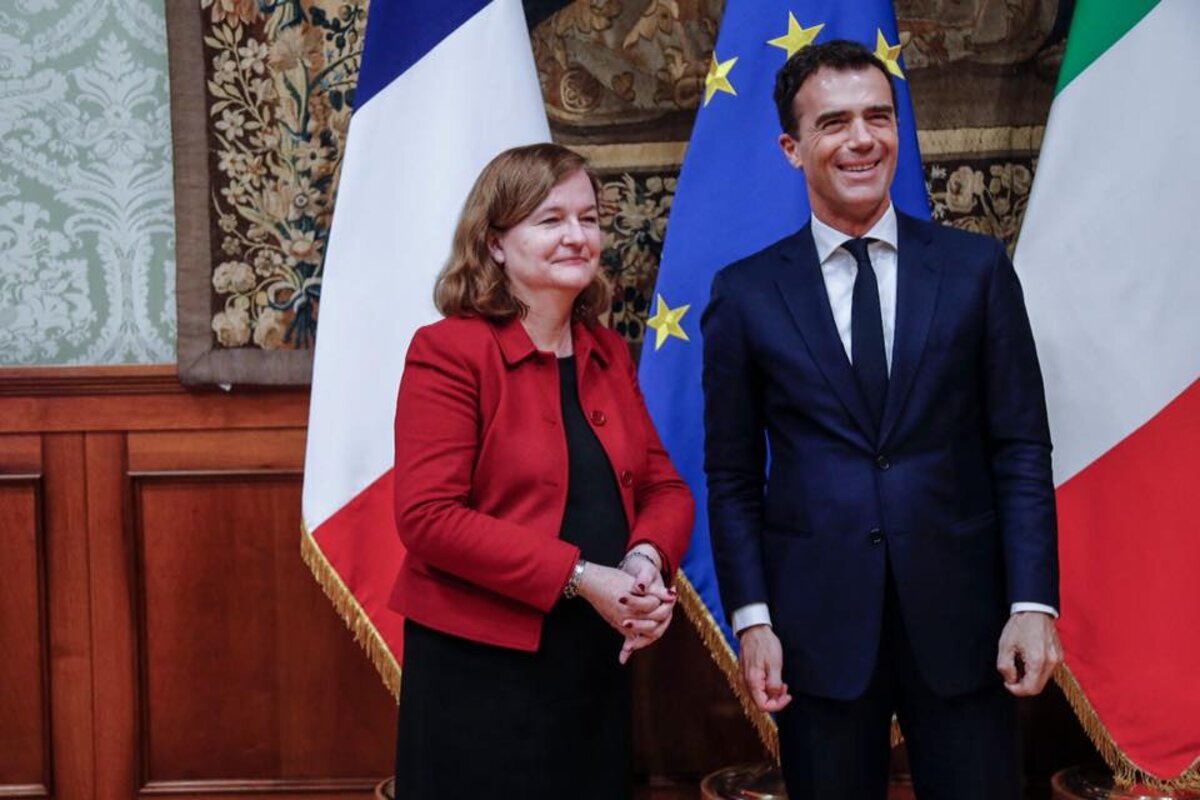
Enlargement : Illustration 1
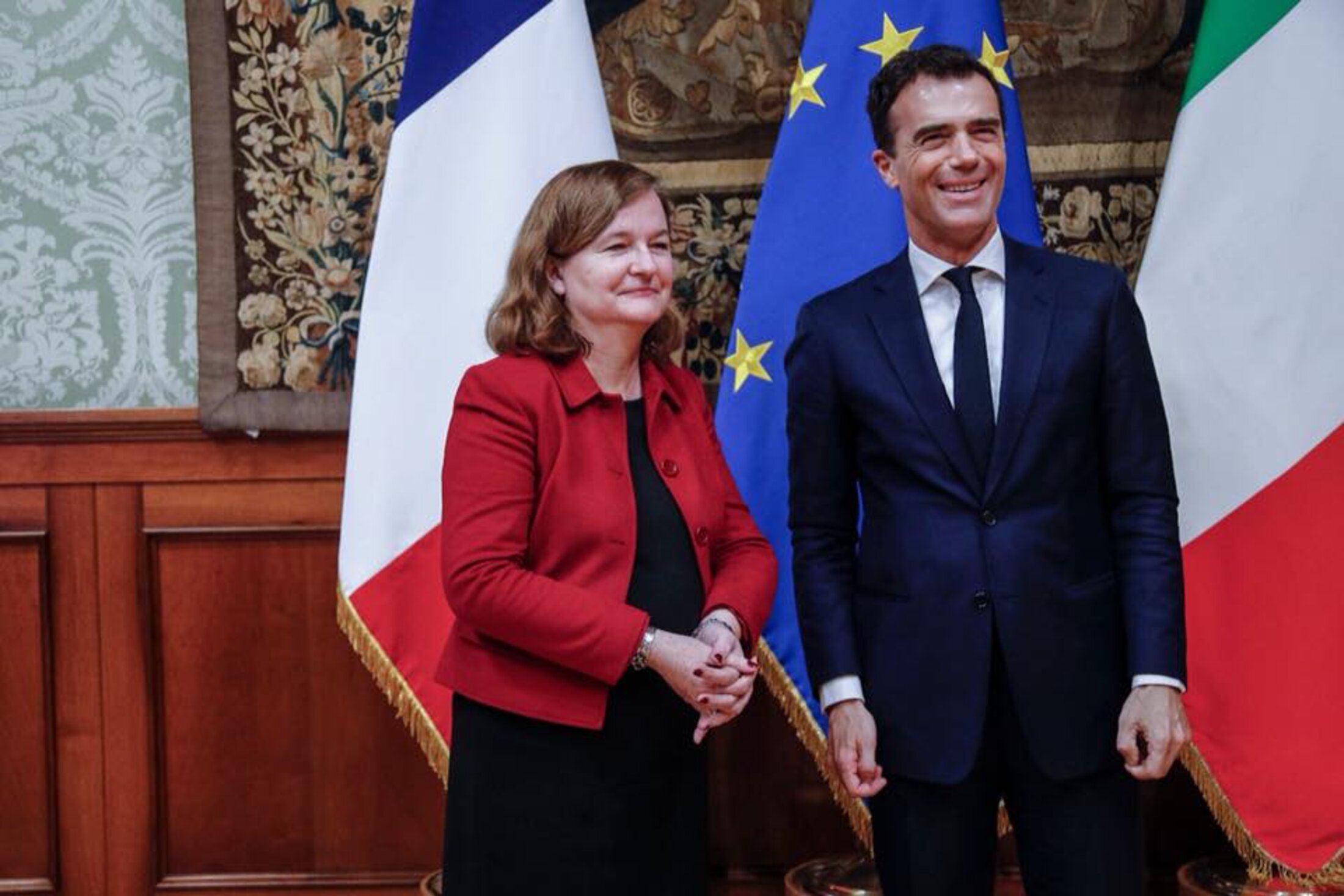
In a message written in English on his Facebook page, Sandro Gozi said: “...The Maltese contract mentioned in the press is legal for a consulting mission carried out as an external consultant to the Maltese authorities, which took place after my ministry function in Italy and stopped at my request after the result of the European elections in France as shown by the various elements brought by my care and the Maltese administration today.”
Beyond the issue of the precise dates he worked for his clients, Sandro Gozi's case is a bizarre one. This is a former Italian minister – he was in the Matteo Renzi government from 2014-2018 – who then campaigned and was elected as an MEP in another country – France – and who also worked for a third country, Malta, before joining the French prime minister's office.
It seems certain that these multiple roles across three countries would have raised the alarm had Gozi spoken about them. Or, indeed, if he had declared them in his declaration of interests which every member of a ministerial office must send to France's watchdog on transparency in public life the Haute Autorité pour la Transparence de la Vie Publique (HATVP) within two months of taking up their post. This declaration details all the advisor's professional work for the previous five years.
Under the 2013 law on transparency in public life, advisors must flag up any situations in which they have a conflict of interest or could find themselves potentially being drawn into a conflict of interest. This was the case with Thierry Aulagnon who was appointed as chief of staff to the then minister of economy and finances Michel Sapin in 2016, having previously worked for the bank Société Générale. In August 2016 Michel Sapin wrote to other members of his ministerial office asking them to “ignore” Thierry Aulagnon for all issues relating to Société Générale and also the companies Thales, BPCE, Air France-KLM, We Share Bonds and MAB Finances with whom the chief of staff had had links.
In Sandro Gozi's case it is clear that his work for the Maltese government was of a type that would have limited the scope of the work he could have done for the French prime minister's office, or even stopped him taking up the position altogether. But no one was aware of his other role. When he filled in his declaration to the HATVP upon joining the prime minister's office, Sandro Gozi made no mention of his work for Malta.
The former Italian minister says that was because he did not understand the French declaration system. “I had not understood the subtlety of the notion of public life [in the declaration]. In Italy you only have to declare institutional, political activities,” he told Le Parisien on the eve of his resignation. Sandro Gozi then “rectified” his declaration to add his professional duties since 2014.
He told Le Parisien that he made this second declaration in “mid-October”. In fact he did it on the evening of 21st October, just a few hours after the press had revealed the existence of his Maltese contract. The sequence of events matters. For if an advisor fails to declare some of their professional interests they are potentially punishable by a prison sentence of up to three years and a fine of up to 45,000 euros under article 26 of the law on transparency in public life.
Gozi said he was the victim of attacks seeking to undermine his professional career and his “political engagement” and told the newspaper he had done nothing wrong and that he only resigned to “protect Édouard Philippe”. The Italian adviser had been called in to explain himself to the prime minister's chief of staff Benoît Ribadeau-Dumas as soon as the press stories broke.
The story then took on a political dimension when on October 22nd prime minister Édouard Philippe was questioned about it in the National Assembly. A visibly irritated prime minister said he was waiting for “the documents that show the termination of Mr Gozi's work with the government of Malta at the time he was hired”, and pointed out that “everyone who has the honour of serving France should be defended by the head of government but [the government] demands perfect probity from them”.
For 24 hours “sources close” to the former Italian minister bombarded the press with comments seeking to clear his name even though they added little in the way of new evidence. These same sources suggested that the issue was sorted on Wednesday afternoon after a second interview with Benoît Ribadeau-Dumas and that Sandro Gozi had been kept on in his post. A few hours later, however, he announced he was quitting.
Gozi's other role as a Maltese government advisor was not just unknown to the French government, it also came as a surprise to his fellow LREM campaigners in the European elections in May. The ruling party held up the Italian as an example of how the party was bringing people of all backgrounds together; he was indeed the only foreign national on the list of European election candidates in France. Gozi was even used on several occasions in a warm-up role at political rallies.
Though Gozi had put several photos on his Instagram account which tend to indicate he was not hiding his closeness to the Maltese government, no one in the European election team had any idea that their fellow candidate was working for a foreign government while he was on the campaign trail. The fact that it was Malta is significant too, as the small Mediterranean country has earned a reputation as a notorious tax haven (see Mediapart's Malta Files here).
The country is also a destination of choice for oligarchs who want to establish a foothold in the European Union. In 2018 an investigation by the collective 'Forbidden Stories' showed how the country sold Maltese nationality for a million euros a time to wealthy Russians and Kazakhs. These passports then allow visa-less access to other EU states. Malta is also a gateway into Europe for foreign capital, even funds from dubious origins such as the money from the Azerbaijani dictatorship which for a long time passed through the Pilatus Bank in Valletta.
Malta is also still reeling after the murder of investigative journalist Daphne Caruana Galizia, who was killed on October 16th 2017 after criticizing the Labour government for having brought in a policy of selling passports in 2013. The journalist had also been relentless in her criticism of the corruption scandals in which some leading local politicians were implicated, some of them linked to people close to prime minister Joseph Muscat.
On October 16th 2019, exactly two years after her murder, and with those who ordered her killing still not identified, representatives from the Council of Europe and the Organization for Security and Co-operation in Europe (OSCE) and special rapporteurs from the United Nations issued a statement in which they asked: “When will justice be served?” They added: “The government of Malta owes an answer to Daphne, her family, Maltese society and all journalists around the world.” Meanwhile press freedom campaigners called for an end to “impunity” over the journalist's assassination.
--------------------------------------------------------------------------
- The French version of this article can be found here.
English version by Michael Streeter
.