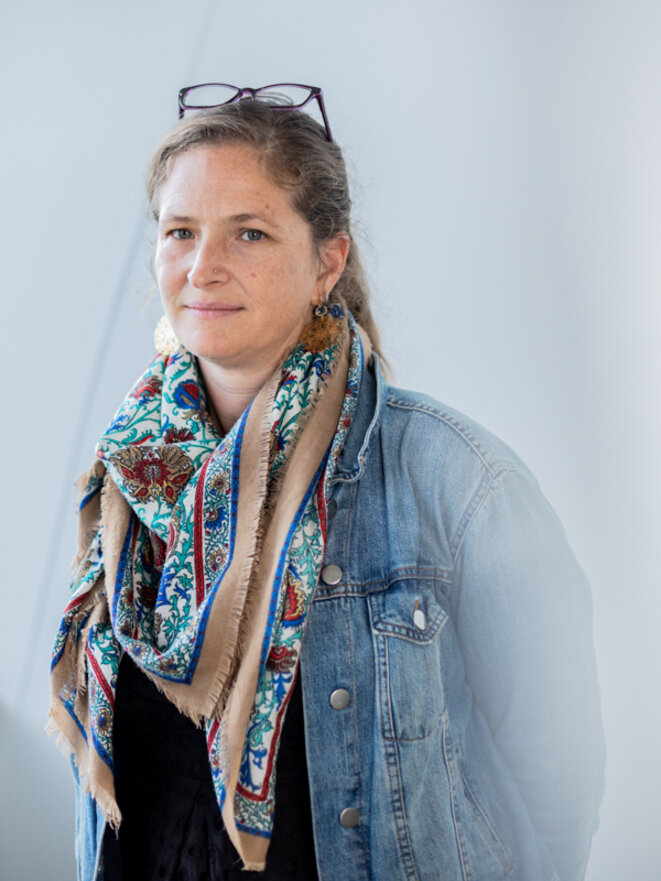
Journaliste à Mediapart depuis novembre 2010. J'ai longtemps écrit sur la politique française, avant de me consacrer aux enquêtes sur les violences sexistes et sexuelles. Je suis responsable éditoriale aux questions de genre depuis 2020. Et, depuis le 1er octobre 2023, je suis codirectrice éditoriale aux côtés de Valentine Oberti.
Avant, j'ai passé plusieurs années à m'occuper d'économie (à l'AFP) et de social (à l'Huma). Coauteure de Tunis Connection, enquête sur les réseaux franco-tunisiens sous Ben Ali (Seuil, 2012). J'ai aussi dirigé l’ouvrage collectif #MeToo, le combat continue (Seuil, 2023).
Declaration of interest
In the interest of transparency towards its readers, Mediapart’s journalists fill out and make public since 2018 a declaration of interests on the model of the one filled out by members of parliament and senior civil servants with the High Authority for Transparency and Public Life (HATVP), a body created in 2014 after Mediapart’s revelations on the Cahuzac affair.
The resignation of budget minister Jérôme Cahuzac after a full judicial investigation was launched over his Swiss bank account sent shock waves through the ruling Socialist Party. Many MPs refuse to believe that their colleague has lied over the affair. Others want to turn the page as quickly as possible and put the matter behind them. But as Mathieu Magnaudeix, Stéphane Alliès and Lénaïg Bredoux report, one thing that is certain is that the resignation has not improved the mood in the ruling party, where one MP likened the current situation to a football match in which his side is being hammered...
When he was a candidate for the presidency, François Hollande promised to create a French system of government that would be beyond reproach. Earlier this week the president took his first steps to achieve that with the announcement of four laws to change the French Constitution. Yet there has been as much attention on the measures left out of the reforms as on what has been included. For example, there is no end to the president's immunity from prosecution while in office. Lénaïg Bredoux and Michel Deléan explain that the president has only backed those laws he is sure will get passed.
The French government has revealed that it will almost certainly not be able to meet its objective of trimming the public spending deficit to 3% of GDP by 2013. But where did this slavishly-followed rule – now enshrined in European treaties - come from in the first place? And does it have any economic validity today? Lénaïg Bredoux explores how and why this crucial figure was first created and discovers it dates back more than 30 years...
French fighter jets began bombing missions over northern Mali on Sunday, where they are targeting Jihadist bases and supply depots, in the second - and what President François Hollande hopes will be the final – stage of France’s military campaign to oust the rebels from the West African country, and which began on January 11th. But while the war has so far been a political triumph for Hollande, the future is clouded by both the continuing delays in forming an adequate pan-African force to allow for a French withdrawal, and the new military challenges of fighting the rebels in mountainous terrain with which they are especially familiar. Lénaïg Bredoux reports.
During his election campaign and his first few weeks in office, François Hollande promised to take a different line in Europe, expressing the desire to “reshape” the European Union and promote growth to provide an alternative to German-imposed austerity and structural reforms. But since then the German agenda has re-emerged as the dominant force in the EU, threatening to leave France isolated. Lénaïg Bredoux and Ludovic Lamant wonder what happened to the president’s reformist zeal.
As a contender to be the Socialist Party's presidential candidate a year ago Arnaud Montebourg railed against high-finance and publicly backed deglobalisation and protectionism. But last week the man who is now France’s industrial recovery minister showered a report calling for sharp cuts in labour costs with fulsome praise. His friends insist there is no contradiction. However some wonder whether Montebourg has undergone a political conversion since becoming a government minister. Mediapart’s Lénaïg Bredoux reports.
French President François Hollande has ended more than 50 years of official silence over the massacre by Paris police of an estimated several hundred Algerians demonstrating for their country’s independence from France. “On October 17th 1961, Algerians demonstrating for the right to independence were killed during a bloody repression,” read a brief statement by Hollande. “France recognizes these events with lucidity. Fifty one years after this tragedy, I pay homage to the memory of the victims.” It was the first public recognition by a French president of the killings and was hailed by campaigners and historians who had lobbied for decades for France to assume what was the deadliest act of repression on its own soil since World War II. Lénaïg Bredoux reports.
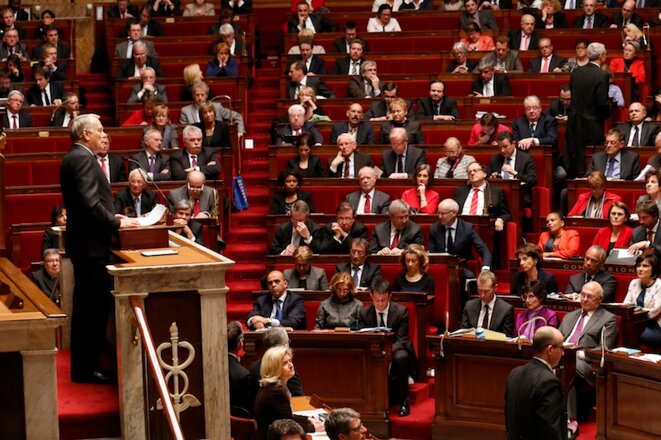
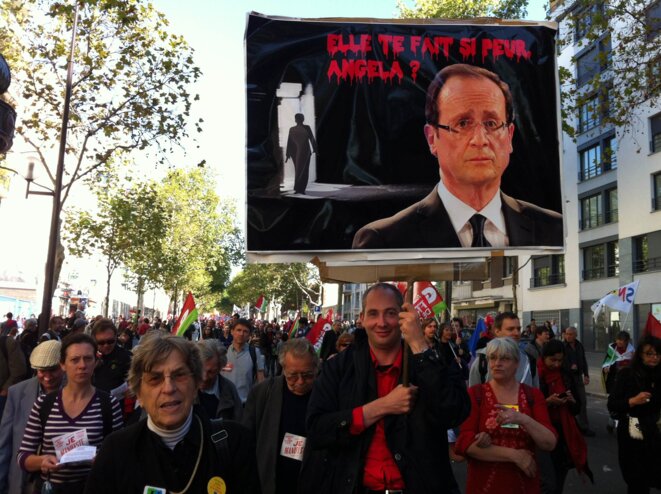
Just days ahead of a crucial vote on whether the European Treaty on Stability, Cooperation and Governance (TSCG), otherwise known as the Fiscal Pact, should be ratified, the French Left is deeply split on the issue. Socialist prime minister Jean-Marc Ayrault says that if the treaty is not ratified the very future of the euro would be at stake. But a number of MPs on the left of the Socialist Party and from the Greens and radical-left Front de Gauche are bitterly opposed to it, claiming it is simply a charter for permanent austerity. Already there has been a well-attended protest march against the treaty, with some demonstrators even accusing President François Hollande of 'betraying' them over the issue. Though the National Assembly is certain to back the ratification anyway because of support from the Right, the issue is seen as a major test of the prime minister’s and president’s authority. Lénaïg Bredoux and Mathieu Magnaudeix report on the political headaches the treaty is causing the government while Mathieu Magnaudeix and Liza Fabbian take the temperature from the street protests.
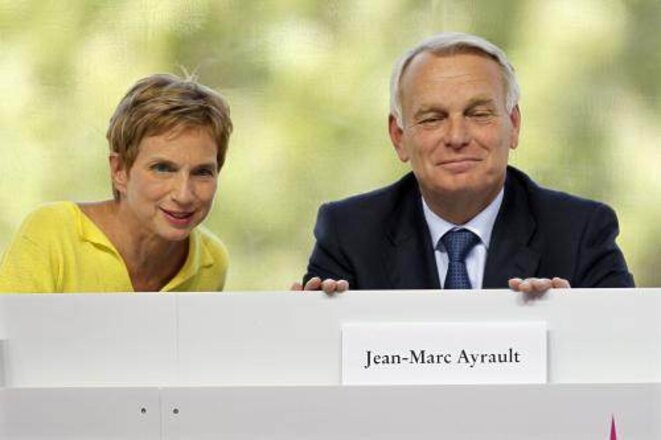
French socialist Prime Minister Jean-Marc Ayrault has finally presented the detail of his belt-tightening 2013 budget, designed to provide a deficit reduction of 30 billion euros, which was given a critical reception by both the austerity-rejecting Left and the anti-rich tax Right. Since President François Hollande appointed him as Prime Minister in May, Ayrault, struggling to reach a consensus among his own parliamentary majority, while keen not to alienate the business community, has been slammed in the media for a slowly-slowly approach to decision-making that can’t keep pace with the economic crisis. Dithering or quietly determined, bland or grand? Stéphane Alliès, Lénaïg Bredoux and Mathieu Magnaudeix have been collecting the divided and frank views from inside the corridors of power, including those of ministers and senior advisors.
In this second and final part of his exclusive interview with Mediapart, French Prime Minister Jean-Marc Ayrault answers the suggestion that he is railroading the democratic process with the adoption of the European Treaty on Stability, Cooperation and Governance (TSCG), sets out his position on the widespread use of tax havens by big banks and corporations, and for greater representation of national parliaments in EU decision-making. He also answers questions on recent domestic issues, including his government's decision to ban demonstrations in protest at the publication by a French magazine of cartoon caricatures of Prophet Mohammed, and the calling to book of his interior minister over his out-of-step comments on racial profiling and the right to vote of of non-EU nationals.
In this first part of a wide-ranging exclusive interview with Mediapart, French Prime Minister Jean-Marc pledges his government will do its all to keep the euro alive, argues that a delay should be given to Greece to meet its deficit target and answers mounting criticism that he and President François Hollande have capitulated their pro-growth policies with the adoption, without any compromise, of the austerity-promoting European Treaty on Stability, Cooperation and Governance, the TSCG. The French Prime Minister, in an interview conducted in French and translated here into English, calls on the treaty’s opponents to come clean that they want to leave the euro, and claims the election of President Hollande has announced a re-orientation of European policy-making. “I am convinced there has been an enormous degree of political weakness and lack of vision since the start of the crisis,” he comments, adding that European leaders are “beginning to be conscious of the major risks into which we will be plunged if Greece leaves the euro.”
Ahead of a vote in parliament next month, the French cabinet on Wednesday approved adoption of the European fiscal treaty, the TSCG, which will require governments to limit their public deficits to 0.5 percent of gross domestic product. To prepare to meet the target, French President François Hollande has pledged to reduce the country’s huge public deficit to 3% of gross domestic product (GDP) in 2013, with a raft of spending cuts and tax increases contained in a new public finances law to be presented before parliament on September 28th. It represents the most severe austerity programme to be introduced in France for 50 years. But a number of leading French economists, including several who publicly supported Hollande’s election campaign, now warn of the potentially catastrophic effects of the tough austerity programme. They argue that the policies will further starve economic growth and thereby simply worsen public finances, leading to a never-ending spiral of recession and austerity. Lénaïg Bredoux reports.
All his blog posts
The Mediapart Club
Join the discussion
Mediapart’s journalists also use their blogs, and participate in their own name to this space of debates, by confiding behind the scenes of investigations or reports, doubts or personal reactions to the news.
L’essayiste publie un nouvel ouvrage consacré à #MeToo dans lequel elle met gravement en cause le travail de Mediapart sur les violences sexistes et sexuelles. Au mépris des faits, et sans nous avoir contactés au préalable.
Plusieurs journalistes ou militants des droits humains, tous critiques du régime marocain, ont été graciés par le roi du Maroc. Pour Omar Radi, Soulaimane Raissouni, Taoufik Bouachrine, Imad Stitou, Hicham Mansouri, Maâti Monjib et Saïda El Alami, notre soulagement est immense.
Dans un long entretien complaisant au Journal du dimanche, paru le 11 juin, la réalisatrice et comédienne s’en prend, sans point de vue contradictoire, au travail de notre journal sur les violences sexistes et sexuelles, et croit pouvoir justifier ainsi l’agression du président de Mediapart. Nous ne sommes pas dupes.
Le célèbre youtubeur a dénoncé dans une vidéo diffusée le 19 novembre l’enquête que nous avons publiée le 23 juin à propos des violences sexistes, sexuelles et psychologiques qu’il aurait commises. Explications sur nos méthodes d’enquête, qui ont permis la publication d’un nouveau volet.
« Cot cot cot codec. » C’est le caquètement d’un député de droite contre une élue écologiste qui a suscité la création de notre « Machoscope » en 2013. Depuis, Mediapart, recense le sexisme subi par les femmes en politique. Après une décennie de bons et loyaux services, la formule disparaît. Pour mieux s’imposer dans nos pages.