Journaliste à Mediapart depuis novembre 2010. J'ai longtemps écrit sur la politique française, avant de me consacrer aux enquêtes sur les violences sexistes et sexuelles. Je suis responsable éditoriale aux questions de genre depuis 2020. Et, depuis le 1er octobre 2023, je suis codirectrice éditoriale aux côtés de Valentine Oberti.
Avant, j'ai passé plusieurs années à m'occuper d'économie (à l'AFP) et de social (à l'Huma). Coauteure de Tunis Connection, enquête sur les réseaux franco-tunisiens sous Ben Ali (Seuil, 2012). J'ai aussi dirigé l’ouvrage collectif #MeToo, le combat continue (Seuil, 2023).
Declaration of interest
In the interest of transparency towards its readers, Mediapart’s journalists fill out and make public since 2018 a declaration of interests on the model of the one filled out by members of parliament and senior civil servants with the High Authority for Transparency and Public Life (HATVP), a body created in 2014 after Mediapart’s revelations on the Cahuzac affair.
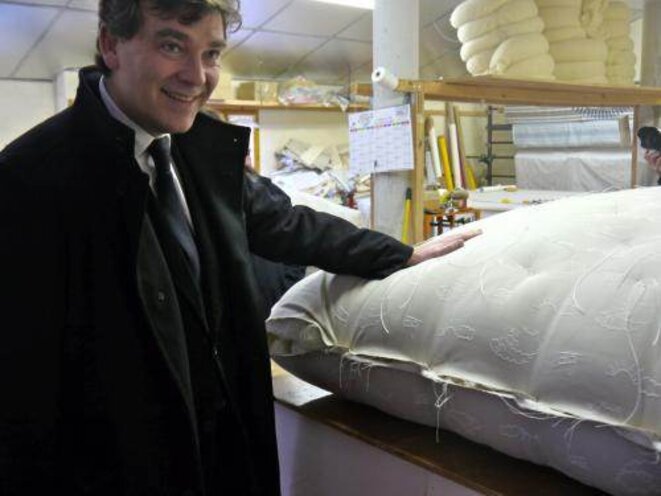
Arnaud Montebourg's feet have barely touched the ground since his appointment in May as France's Minister of Productive Recovery, a fancy title that corresponds broadly to the role of industry minister. This flamboyant and ambitious 49 year-old, a self-styled champion of antiglobalisation, who has worked hard at adopting a radical image on the Left of the Socialist Party, now faces his biggest political test in his ability to stem a mounting series of industrial plant closures and lay-offs, most notably carmaker PSA Peugeot Citroen's decision to cut 8,000 jobs. He sits between two chairs in a government whose approach is decidedly more moderate than his own, his brash and thunderous style drawing scorn from both the conservative opposition and many in his own socialist camp. Lénaïg Bredoux reports on the behind-the-scenes power battle surrounding this controversial figure who leaves few indifferent.
Following the recent parliamentary elections, President François Hollande and Prime Minister Jean-Marc Ayrault named a new government, as required by the country's constitution. Most ministers remained in the same post. But after just weeks in charge of the environment brief, Nicole Bricq was abruptly moved sideways to become trade minister. Some observers suspect she was reshuffled because of her decision to freeze drilling permits for oil giant Shell off French Guiana - a move later reversed by the prime minister. Stéphane Alliès, Lénaïg Bredoux and Jade Lindgaard report.
After what appeared to be a remarkably successful first month, the presidency of newly-elected François Hollande was this week rocked by its first crisis, and one which came from the least expected quarter. For, just days before France goes to the polls in the final round of voting in the two-round parliamentary elections in which the Left hopes to win its first majority in ten years, Valérie Trierweiler, French ‘First Lady’ but who refutes the term, embarassed the Socialist Party with a public attack via Twitter against a consituency bid by the president’s former companion Ségolène Royal. The unseemly controversy may have dented the party's chances of gaining an absolute parliamentary majority on its own in the June 17th polling, and raises further questions about the ambiguous role played by Trierweiler. Valentine Oberti and Lénaïg Bredoux report.
France’s newly-elected president François Hollande has promised he will seek a reform of European austerity policies, beginning with a re-negotiation of the so-called fiscal compact treaty, and the introduction of economic growth initiatives. But his programme faces stern opposition from Germany’s Chancellor Angela Merkel, who has ruled out any change to the fiscal compact. With a busy international agenda ahead, including summits of the G8 and NATO later this month, and crucial parliamentary elections in France in June, Hollande's room for negotiations before an EU summit on June 28th is uncomfortably tight. Meanwhile, the deepening political crisis in Greece continues to threaten an explosion of the eurozone. Lénaïg Bredoux and Ludovic Lamant report on the official and unofficial manouevering as the new French president prepares for his first major test in power.
The shooting of a rabbi and three young children at a Jewish school in Toulouse in south-west France and the earlier killing of three off-duty French soldiers have shocked the nation. These tragic events occurred as the presidential election entered its final month, forcing the candidates to reconsider their strategies. Some chose to suspend their campaign, others carried on electioneering. Lénaïg Bredoux, Ellen Salvi and Marine Turchi report.
Four days after delivering a rousing performance of lofty rhetoric in a keynote speech to supporters at Le Bourget last Sunday, Socialist Party presidential candidate François Hollande has finally presented his policy programme. At a sobre press conference on Thursday, the current frontrunner appeared more concerned about demonstrating his economic competence than with “battling the world of finance”, the promise he made to the cheering party faithful last weekend. Lénaïg Bredoux and Stéphane Alliès report.
François Hollande and Martine Aubry have emerged as the finalists in the first round of voting in the French Socialist Party primaries held to choose a candidate in next year's presidential elections. As the showdown between the two approaches in a final poll next weekend, the major upset for both was the unexpectedly high score reached by the party's radical candidate Arnaud Montebourg. Both candidates must reach out to his supporters, and the testing task promises some lively debate in the coming days. Stéphane Alliès and Lénaïg Bredoux report.
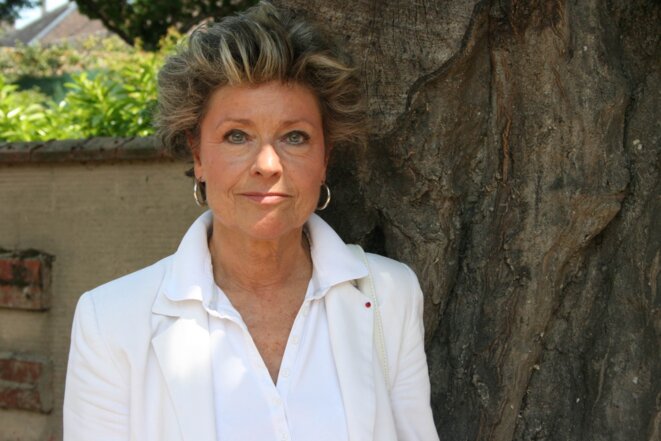
French Socialist Party leaders were informed about an alleged sexual assault by Dominique Strauss-Kahn upon 22 year-old journalist Tristane Banon in 2002 but failed to take action, her mother (photo) has told Mediapart. Socialist Party heavyweight Strauss-Kahn was expected to run as the party's candidate in next year's French presidential elections, which opinion polls widely forecast he would win until his arrest May 14th in New York on charges of sexually assaulting a hotel chambermaid.
The second and final round of partial regional elections across France on March 27th saw a clear victory for the parties of the left, which are now set to control 64 of the country's 100 départements, the administrative regions broadly equivalent to a county. But the elections, the last before next year's presidential poll, have also sounded a grave warning for the mainstream parties, with a strong show of support for the far-right Front National and a 55 percent abstention rate. Stéphane Alliès and Lénaïg Bredoux report.
An abstention rate of more than 55% and significant gains by the far-right Front National party were the key results of the first round of local elections held across France at the weekend. But while it was a severe defeat for President Nicolas Sarkozy's ruling UMP party, the left-wing opposition parties also had little to rejoice over. Stéphane Alliès and Lénaig Bredoux report.
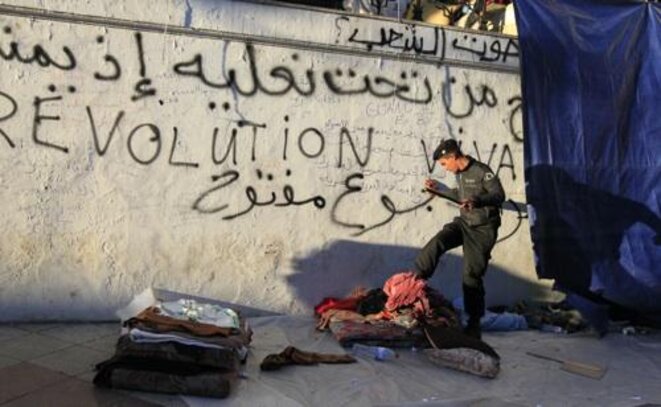
The fall of Egyptian President Hosni Mubarak followed directly the overthrow in January of Tunisian President Zine al-Abidine Ben Ali. The two strongmen had much in common, beginning with their secret police. Mediapart has obtained official documents seized during the strife in Tunisia which illustrate the extent of the Ben Ali regime's nationwide web of informers, ranging from taxi drivers to undercover agent 'activists'.
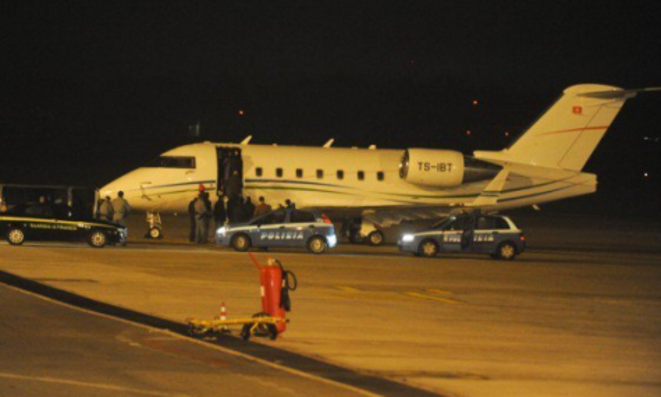
A private jet used by French foreign affairs minister Michèle Alliot-Marie while holidaying in strife-torn Tunisia for the New Year belonged to a company run by the reviled brother-in-law of deposed Tunisian President Zine al-Abidine Ben Ali, Mediapart can reveal (along with the aircraft's intriguing flight log).
All his blog posts
The Mediapart Club
Join the discussion
Mediapart’s journalists also use their blogs, and participate in their own name to this space of debates, by confiding behind the scenes of investigations or reports, doubts or personal reactions to the news.
L’essayiste publie un nouvel ouvrage consacré à #MeToo dans lequel elle met gravement en cause le travail de Mediapart sur les violences sexistes et sexuelles. Au mépris des faits, et sans nous avoir contactés au préalable.
Plusieurs journalistes ou militants des droits humains, tous critiques du régime marocain, ont été graciés par le roi du Maroc. Pour Omar Radi, Soulaimane Raissouni, Taoufik Bouachrine, Imad Stitou, Hicham Mansouri, Maâti Monjib et Saïda El Alami, notre soulagement est immense.
Dans un long entretien complaisant au Journal du dimanche, paru le 11 juin, la réalisatrice et comédienne s’en prend, sans point de vue contradictoire, au travail de notre journal sur les violences sexistes et sexuelles, et croit pouvoir justifier ainsi l’agression du président de Mediapart. Nous ne sommes pas dupes.
Le célèbre youtubeur a dénoncé dans une vidéo diffusée le 19 novembre l’enquête que nous avons publiée le 23 juin à propos des violences sexistes, sexuelles et psychologiques qu’il aurait commises. Explications sur nos méthodes d’enquête, qui ont permis la publication d’un nouveau volet.
« Cot cot cot codec. » C’est le caquètement d’un député de droite contre une élue écologiste qui a suscité la création de notre « Machoscope » en 2013. Depuis, Mediapart, recense le sexisme subi par les femmes en politique. Après une décennie de bons et loyaux services, la formule disparaît. Pour mieux s’imposer dans nos pages.