The French intelligence services are on the alert for saboteurs in the pay of Russia operating across European countries, including France, and who are said to be planning to intervene during forthcoming elections on the continent. The security agencies fear that their methods will not involve simply disinformation but more direct action. The next Kremlin target could be the Polish presidential election later this month. According to intelligence reports, these potential saboteurs have been trained in the Balkans, in particular by a Bulgarian neo-Nazi who is wanted by French prosecutors in connection with the painting of red handprints on the Shoah Memorial in Paris in 2024. Matthieu Suc reports.
On April 25th a young Muslim worshipper, Aboubakar Cissé, was stabbed to death in a mosque in the town of La Grand-Combe in the south of France. The suspect in the case was arrested after fleeing to Italy. Since the murder, the French government – criticised for its slow initial reaction to the killing - has struggled to offer any political response beyond formulaic references to “universalism” and Republican values. As Ilyes Ramdani reports, this is down to the failure by Emmanuel Macron and his allies over his two terms of office to grapple with the issues of racism and discrimination.
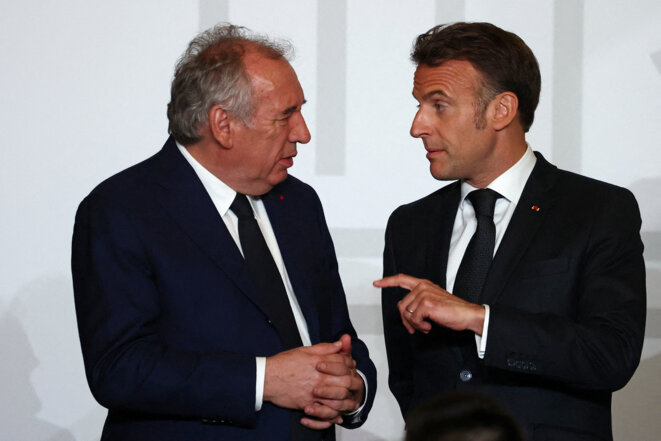
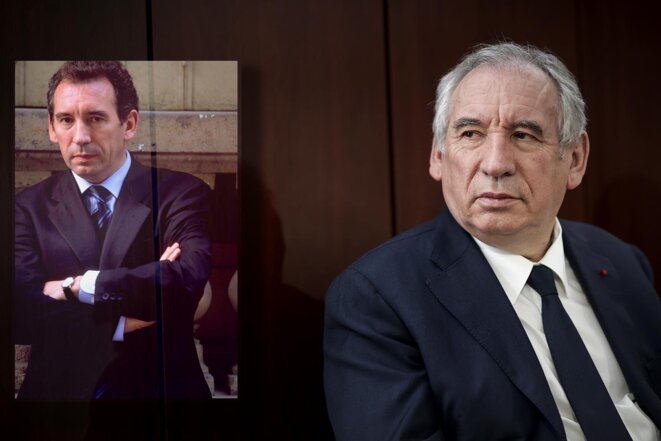
Prime minister François Bayrou may not have known everything about the abuses being committed at the private Catholic school at Bétharram in south-west France, but he knew enough while occupying various political posts over the years to at least have tried to take action. Yet he did nothing. On May 14th he is due to appear before a parliamentary inquiry into the unfolding scandal at the independent school. In this op-ed article, Mediapart's Fabrice Arfi wonders whether the head of the French government will continue to double down on his disastrous strategy of lying over the issue.
The latest data from the Ministry of the Interior and France's anti-corruption agency show there has been a sharp rise in the number of offences involving dishonesty or breaches of probity, across all categories of such crime. This leap has been driven in particular by the number of cases of corruption, which has almost doubled over that period. Yet despite these startling figures and recent high-profile corruption cases involving prominent figures, France's political leaders continue to ignore the issue, as Fabrice Arfi and Antton Rouget report.
Last Friday a Muslim worshipper was stabbed to death at a mosque in the small southern French town of La Grand-Combe. The suspect then fled but has since been arrested in Italy. The brutal killing of the young victim, Aboubakar Cissé, has caused deep grief, anger and political controversy. The government has been accused of being slow to react to the killing while a section of the French Left has attacked the mood of “Islamophobia” in France. In the wake of this stabbing Mediapart spoke to Abdallah Zekri, the rector of the Sud-Nîmes mosque in southern France and vice-president of the Muslim representative body the Conseil français du culte musulman (CFCM). He criticised the way Muslims in France are stigmatised and said he, too, was shocked by the slow response of the authorities after the young man's murder. He spoke to Mediapart's Yann Philippin.
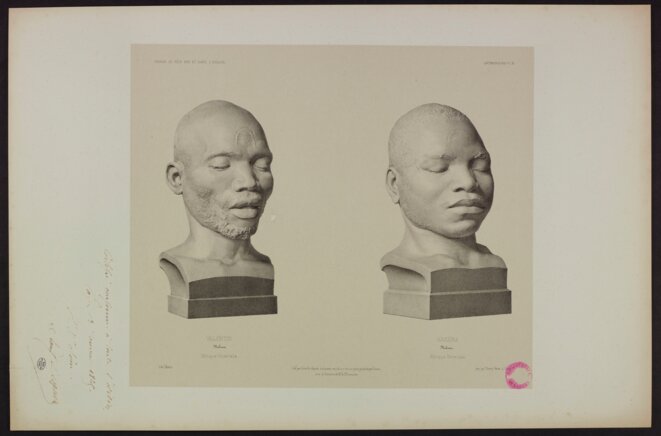
When Paris receives a request from a foreign country for the return of human remains held in France's public museum collections, such demands can be granted under recent legislation. But the French state argues that there is a legal vacuum when such claims instead come from French overseas territories such as French Guiana on the South American mainland and Réunion in the Indian Ocean, both of which are governed from Paris. Julien Sartre reports on attempts to change the law to allow remains held by metropolitan museums to be returned to these distant French territories.
The saga of the sexual abuse scandal at the Notre Dame de Bétharram private Catholic school in south-west France, and just what the current French prime minister François Bayrou knew about it at the time, has taken another twist. Speaking during a Mediapart broadcast, Bayrou's daughter Hélène Perlant, who was a pupil at the school, confirmed that her father had indeed gone to the home of Judge Christian Mirande back in 1998 to speak about an ongoing criminal investigation into rape allegations against the school's former headteacher. François Bayrou had hitherto denied doing so. But following his daughter's comments the prime minister's office formally acknowledged that a meeting did indeed take place at the time. An opposition Member of Parliament has now called on the prime minister to resign for “lying several times” over the case. Mathieu Magnaudeix, David Perrotin and Antton Rouget report.
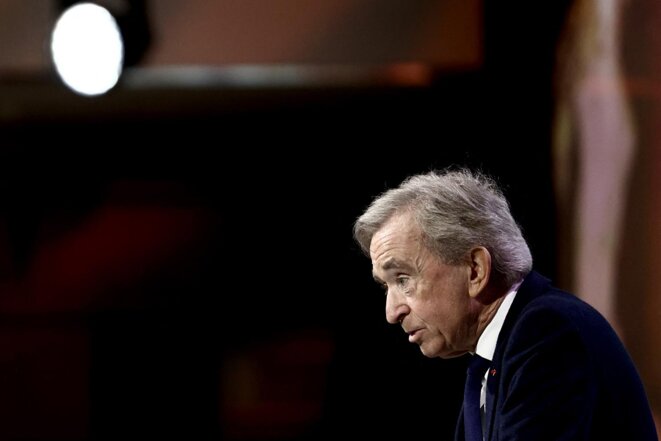
At the recent LVMH annual meeting in Paris, shareholders of the luxury goods group granted its 76-year-old billionaire boss Bernard Arnault the right to continue at the helm until the age of 85. The veteran businessman seized the opportunity to proclaim a stance that was anti-European and closely aligned with the position of US tech billionaire and Donald Trump ally Elon Musk. In particular, the group's boss described the European Union as a “bureaucratic” body devoted to “issuing regulations”. These comments by Arnault, one of the richest people on the planet, mark the culmination of a political evolution on his part, and come as the luxury empire begins to show signs of faltering. Romaric Godin reports.
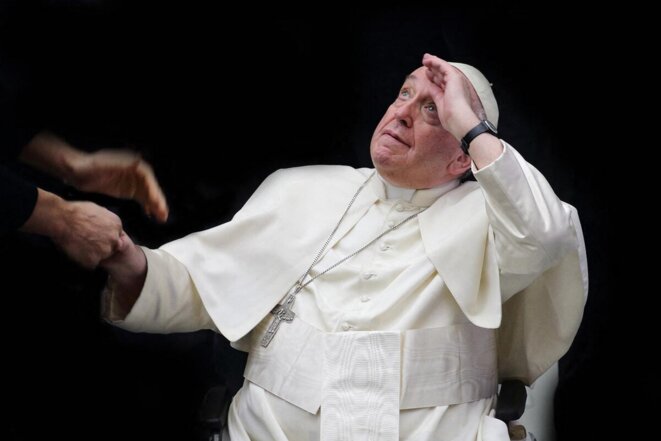
Pope Francis, the first ever South American pontiff who died on Monday aged 88, leaves behind him a mixed and contradictory legacy. He notably took up the cause of migrants, championed environmentalism and denounced the unfettered pursuit of wealth as the 'dung of the devil'. But he also fiercely opposed abortion, condemned homosexuality and leaves a controversial record on tackling sexual abuse by the clergy. Mediapart co-editor Lénaïg Bredoux looks back at the highs and lows of his 12 years as head of the Catholic Church.
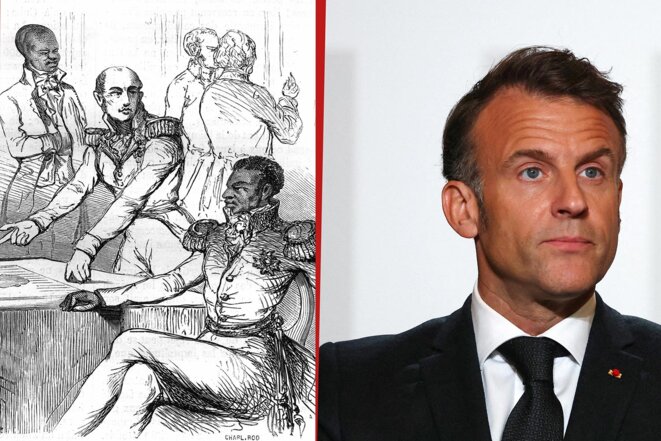
April 17th marked the bicentenary of France’s recognition of the independence of Haiti, its former colony that won freedom in a revolution led by slaves. In return, Paris imposed a crippling debt upon the new Caribbean nation in the form of an indemnity to be paid to former slave masters for their losses, notably plantations. Many historians argue that the huge debt payment stunted Haiti’s future development, leaving it today one of the poorest countries in the world. Emmanuel Macron last week announced the creation of a bi-lateral commission to look at this episode of history “in the face”, but the French President was careful to make no commitment to pay reparations to Haiti. Ludovic Lamant reports.