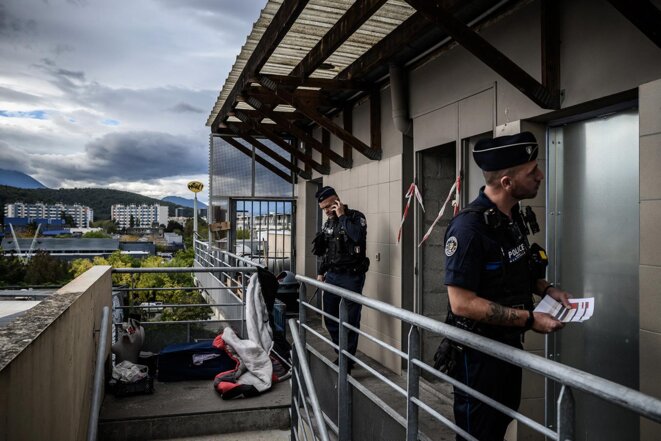
Last summer the town of Échirolles in south-east France witnessed a surge of violence as drug-related shootings left two people wounded. The town, which is in the suburbs of the city of Grenoble, is now trying to fight back and the mayor recently wrote to President Emanuel Macron pleading for more resources to be able to tackle the problem of drug dealing and its impact on local residents. As Yannis Angles reports from Échirolles, the town council is also taking its own initiatives, including moving people out of a building that is notorious as a hotspot for the illicit trade.
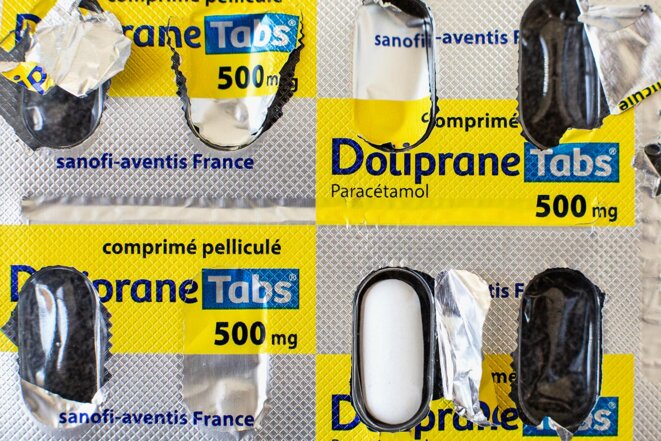
Doliprane, a brand name for paracetomol, is France's most popular medicine and has become part of the social fabric of the country. So when it was revealed recently that French pharmaceutical company Sanofi plans to sell the subsidiary that makes the medicine to a private equity firm from the United States, there was public outcry. Yet despite earlier pledges over the need for health and medicine security - and about the need to reindustrialise the country - the Élysée has supported the move on the grounds that it shows that France is an attractive place for investors. Martine Orange reports.
France's new government under prime minister Michel Barnier last week announced details of its proposed budget, which aims to make up to 60 billion euros in savings. Part of the plan involves cutting jobs in education. Here in this op-ed article, Mediapart's education correspondent Mathilde Goanec wonders how the government will try to persuade the public to accept the decision to axe another 4,000 teaching posts, especially after it promised to place education at the heart of its concerns. She says ministers will resort to a lot of clever PR and rely on the now well-worn line that fewer teachers are needed because of declining demographics. Even though this argument does not stand up to scrutiny.
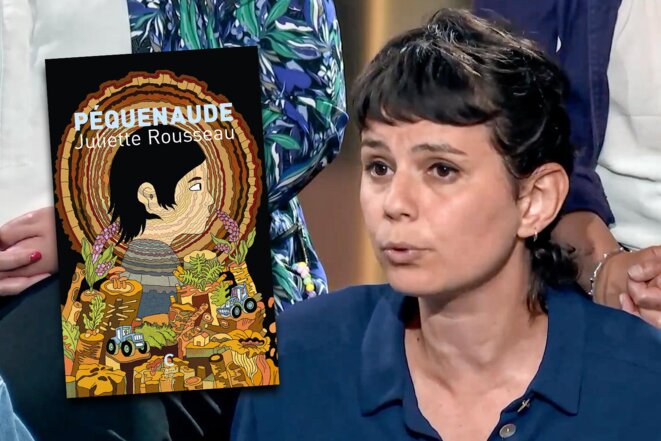
Novelist Juliette Rousseau's latest work 'Péquenaude' is a book that is hard to categorise. It is a poetic and political narrative, rooted in a countryside that has been disfigured by agribusiness. As Amélie Poinssot notes, the author - who has returned to her native Brittany in western France after many years living in Paris – has written a work based around a rural world that is loved and damaged in equal measure.
France's president Emmanuel Macron recently called for an embargo on the sale of any weapons to Israel that could be used in Gaza. His statement, aimed at the international community, has drawn criticism from within his own political camp, angered Israeli prime minister Benjamin Netanyahu, and led to him being booed during a tribute in Paris to the victims of October 7th. Politicians on the Left, meanwhile, have welcomed his words but are now expecting action. Justine Brabant and lyes Ramdani report.
Vidadi Isgandarli, a fierce critic of the regime in Baku and a refugee in France since 2017, was stabbed fifteen times at his home in Mulhouse last month and died of his injuries two days later. Despite this attack bearing the possible hallmarks of what might have been a political assassination on French soil ordered by a foreign power, the authorities in Paris have remained mysteriously quiet. However, as Justine Brabant reports, the French government will have to take a stance on the killing of the exiled blogger before next month's COP29 climate conference – which is being hosted by Azerbaijan.
Bruno Retailleau, the new French interior minister in Prime Minister Michel Barnier’s government, has, barely ten days into the job, prompted controversy over his outspoken views that “the sovereign people” should have primacy over the constitutional state which, he says, “is neither inviolable nor sacred”, while complaining that a “jungle of judicial regulations” prevent the authorities from being able to deal effectively with immigration. Jérôme Hourdeaux reports on the consternation of public law experts over Retailleau's comments.
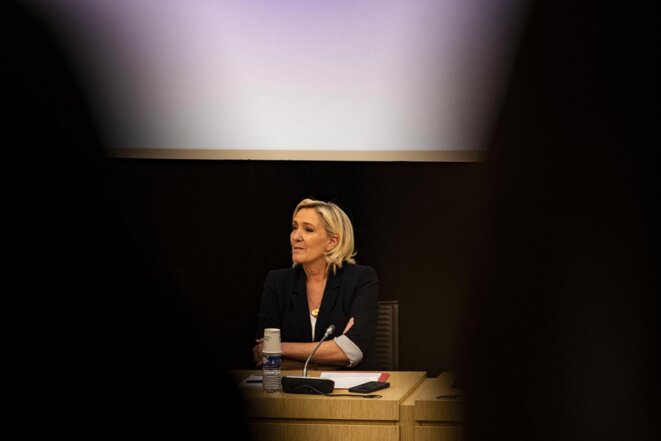
The trial of France’s far-right figurehead Marine Le Pen along with 24 others from her Rassemblement National party on charges of embezzling European Parliament funds opened in Paris on Monday, at the start of what is programmed to be two months of hearings. The defendants are accused of operating a fraudulent system by which full-time party workers in Paris were remunerated as parliamentary assistants to the party’s MEPs. If found guilty, Le Pen, who is identified by the prosecution of playing the central role in the alleged scam, could be barred from holding public office, which would scupper her expected bid for the presidency in 2027. Michel Deléan reports.
Chemicals used in pesticides that are banned in France, some of them outlawed 20 years ago, have continued to be produced in the country and are sold abroad where environmental and public health legislation is less strict, according to a joint investigation by French public broadcaster France Télévisions and Swiss NGO Public Eye. The practice is perfectly legal thanks to a loophole in legislation which is still in place despite a government pledge two years ago to remove it. Amélie Poinssot reports.
The composition of the new French government of Prime Minister Michel Barnier was decided during all-male meetings between political representatives of the conservative and centre-right parties. And it shows, write Mediapart’s co-editor Lénaïg Bredoux and political correspondent Ellen Salvi in this op-ed article. There are no women in charge of the most powerful ministries, namely those of the interior, defence, justice, economy and foreign affairs, while some members of Barnier’s government have opposed the inclusion of women’s right to abortion into the French Constitution, and are hostile towards LGBTQI+ rights. Meanwhile, the cause of promoting equality between men and women has been demoted from full-time ministerial status to that of a government department.