Amid galloping inflation, French Prime Minister Élisabeth Borne this week announced that households with the lowest incomes will be given a one-off financial payment at the end of the summer in emergency aid. The government is also to study the feasibility of implementing a regular payment to the neediest which will be specifically for the purchase of food, what has been dubbed a “food cheque”, although exactly what form this might take is unclear. Humanitarian associations have greeted the moves with caution, among them the Secours Catholique which likened the ‘cheque’ to “a tree that hides the forest” of the crisis. Faïza Zerouala reports.
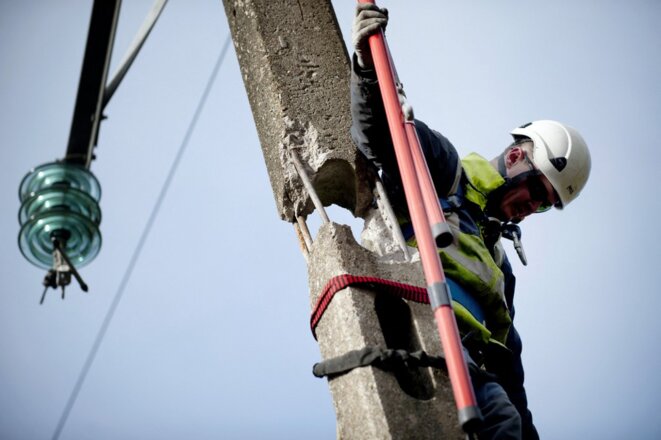
A number of European governments introduced detailed energy conservation plans in the spring to tackle the energy crisis. In contrast, the French government has been happy simply to talk about the need for 'restraint' combined with vague calls for people to cut energy use, argues Martine Orange in this op-ed article. She says it has now taken the country's electricity grid operator RTE to spell out just how urgent the situation is.
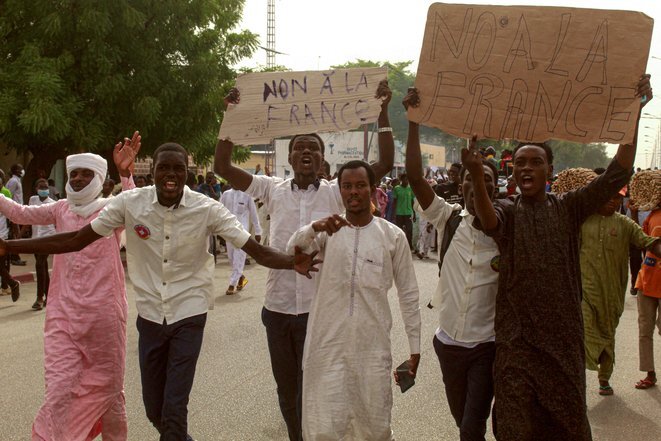
Anti-French sentiment is gaining ground across a number of West African countries, where the presence of the former colonial power, engaged in fighting armed jihadist insurgents across the Sahel, is challenged by growing Russian influence and popular anger against its history of support for strongman regimes. Protests against France’s military presence in the region have now spilled over into Chad, France’s key African ally, governed by a junta, where last month French nationals were targeted in the capital N’Djamena and petrol stations belonging to oil giant Total were ransacked. Rémi Carayol reports.
Candidates standing for Emmanuel Macron's La République en Marche (LREM) party in the 2017 Parliamentary elections could not get enough of the newly-elected president's name and image on their campaign literature. It is a very different story in this year's Parliamentary elections, which are to be held over two rounds on June 12th and June 19th. A number of candidates for the ruling party and its allies have decided to campaign under their own own name rather than that of the recently re-elected president. Some candidates facing a tough battle against the Left or far-right look upon campaign photos of Macron as a “red rag” to disgruntled voters. Ellen Salvi reports.
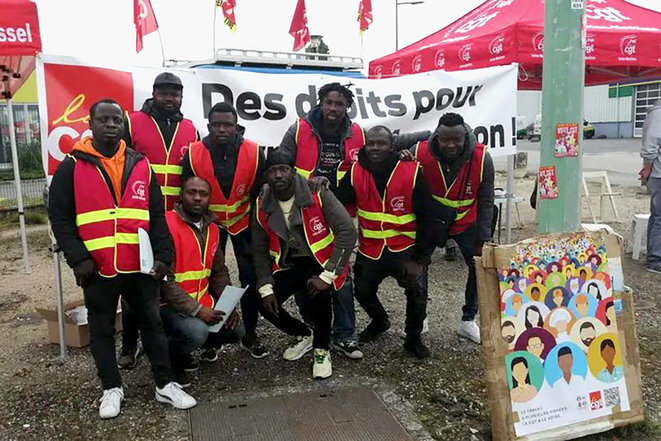
Seven workers originally from Africa were employed by a private delivery firm that worked for the giant American company in northern France from October 2021 until being laid off in February 2022. During that time they worked very long hours for low and often irregular pay. The workers insist that Amazon must have known that they were being exploited. The American group denies the workers' claims. Meanwhile the employees' case against the subcontractor is soon to be heard at an industrial tribunal. Dan Israel reports.
Mediapart has published a series of investigations into the circumstances of the 7.8-billion-euro sale by France to India of 36 Rafale fighter jets, which is clouded by suspicions of large-scale corruption. In this short video with English subtitles, Yann Philippin explains the key revelations and background of Mediapart’s investigations into this most complex story.
Widely acclaimed French-Swiss cinema director Jean-Luc Godard, regarded as one of the greatest filmmakers of his generation, and a major figure of France’s New Wave cinema movement, died in Switzerland on Tuesday in an assisted suicide at the age of 91. Late last year he gave a rare interview to Mediapart’s Ludovic Lamant and Jade Lindgaard, who travelled to meet him at his home in Switzerland, when nothing went quite as had been planned, and which we republish here.
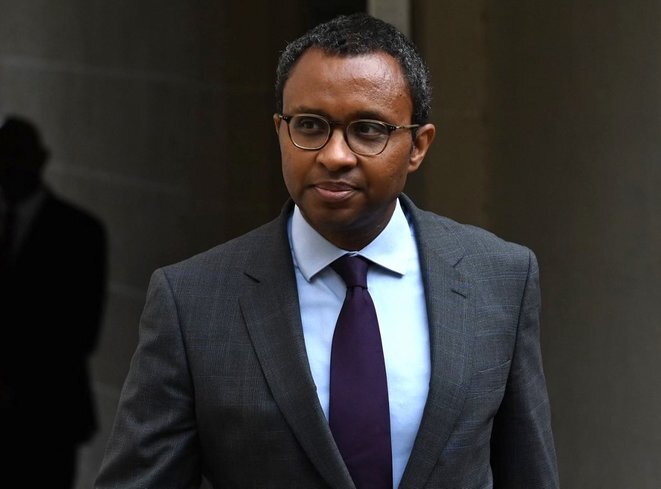
The appointment of black historian Pap Ndiaye as education minister in Emmanuel Macron's new government has quickly brought to the surface the structural racism of French society and its political class. In this opinion article, Mediapart's Ilyes Ramdani argues that the reaction of the government to this tide of racism, and above all the response of President Emmanuel Macron himself, will set the tone for his new presidential term.
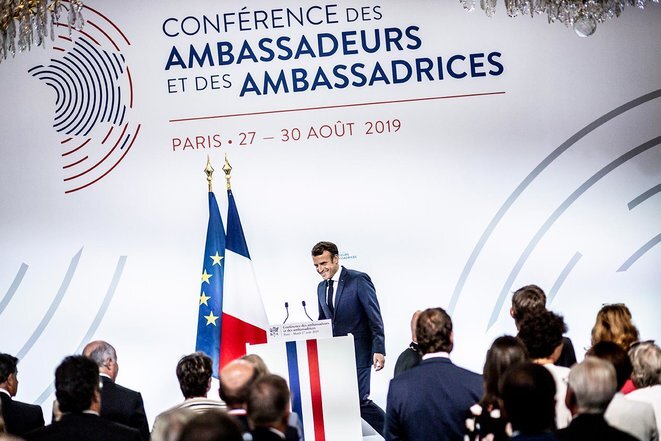
A reform promoting “internal mobility” has just been introduced at France's Ministry of Foreign Affairs. The ostensible aim of Emmanuel Macron's measure is to make the French senior civil service more flexible and less elitist. However, many diplomats see the American-style reforms at the ministry as a pretext to enable the head of state to appoint his political friends or business executives to plum diplomatic posts. They also think the president is settling scores with the diplomatic corps, whom the Élysée royally detests. The depth of feeling at the ministry is so strong that trade unions representing diplomats have called for a strike on June 2nd. René Backmann reports.
After a delay of 26 days, on Friday May 20th Emmanuel Macron finally appointed the 27 members of the new government under recently-installed prime minister Élisabeth Borne. As Ilyes Ramdani reports, its composition is strikingly similar to the old government and is still anchored firmly to the right. Historian Pap Ndiaye, who was a surprise appointment as minister of education, represents something of an anomaly alongside the rest of the ministerial team.