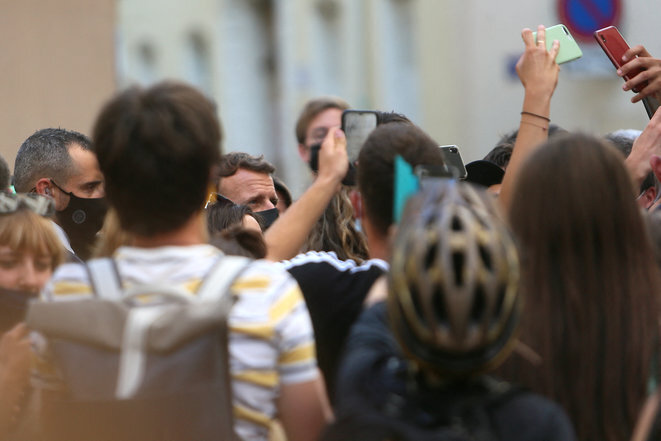
After he was slapped earlier this week in a town in south-east France by a man shouting a medieval royalist battle cry, President Emmanuel Macron described the assault as an “incident” that should be “relativised”, and that “all is well”. On the contrary, writes Mediapart publishing editor Edwy Plenel in this opinion article, all is going badly, and the slap illustrates the far-right violence that has been set loose by the cynicism and irresponsibility of the Macron presidency.
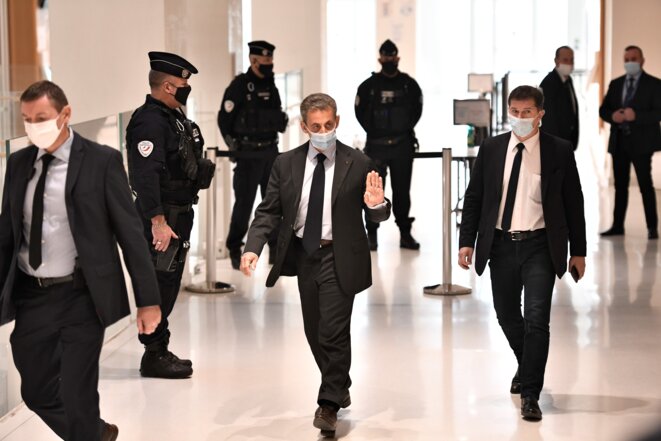
The high-profile trial of Nicolas Sarkozy, in which he is accused of trying to use his influence to find out confidential judicial information, is finally under way in Paris. But the case, the first in which a former French president has faced corruption charges, has been beset by a string of disruptions and by sometimes confusing legal disputes. The result so far, says Mediapart's legal affairs correspondent Michel Deléan, is a trial that has not yet done justice to the issues that are at stake.
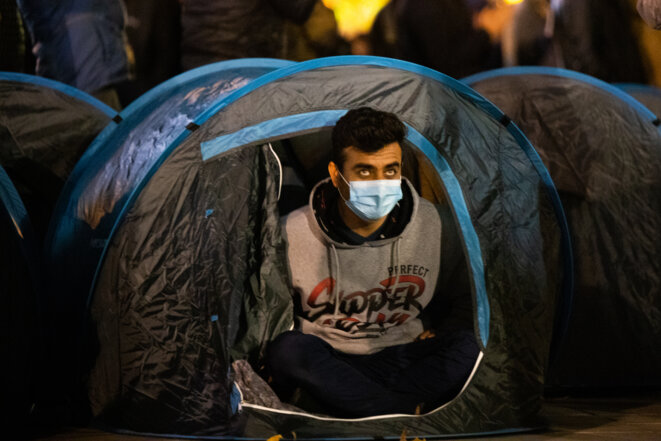
On Monday evening in central Paris, migrants and journalists were physically abused by police engaged in a brutal, manu militari evacuation of a makeshift camp set up on the Place de la République. The police violence was exposed in images circulating on social media and which would be banned if draft legislation currently before parliament is approved. In this joint op-ed article, Mediapart co-editor in chief Carine Fouteau and social affairs editor Mathilde Mathieu argue that the overnight events are a representation of the liberticidal drift of President Emmanuel Macron’s administration, and may prove to be a political turning point.
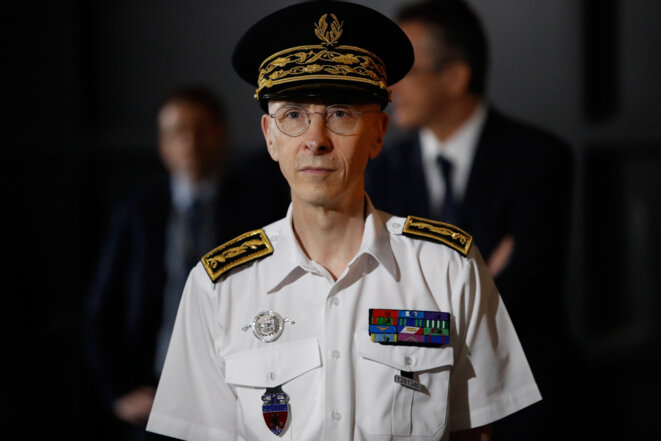
Paris police prefect Didier Lallement has courted controversy before and after his appointment last year as the capital’s law and order chief. Despite his rough-and-tough policing strategy, notably of demonstrations, and his insensitive public comments, this adept of pomp and high-handed authority has survived thanks to the backing of the executive. But, as Camille Polloni reports, following the public and political outrage over separate shocking incidents last week of police violence, he may now be facing the door.
The huge public transport operator for the Paris region, Régie Autonome des Transports Parisiens, better known by its initials RATP, faces claims over the way it handles allegations of sexual and sexist violence against its female staff. Pregnant employees say they have been badly treated, some women say that perpetrators of sexual violence against them have gone unpunished, while others say that the transport operator's internal procedures dealing with such allegations are not sufficiently clear. Célia Mebroukine investigates the allegations involving the world’s fourth largest public transport operator.
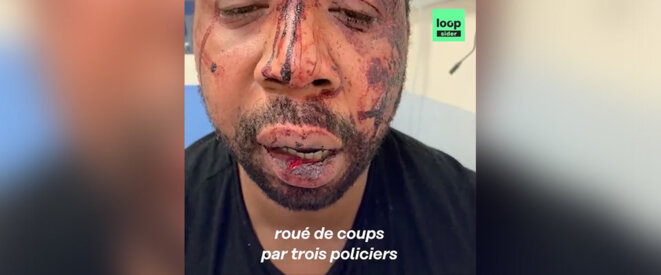
There has been widespread outrage in France after video footage emerged of three police officers apparently gratuitously beating a black music producer in Paris, who was left with serious injuries from punches, kicks, baton blows and the explosion of a tear gas grenade in his studio last weekend. François Bonnet argues here that the events highlight how interior minister Gérald Darmanin has made a policy of flattering the most extremist fringes of the police, creating disorder amid heightened police violence. It is high time, he writes, for Darmanin to go.
Lebanese author Charif Majdalani has put aside fiction to write an account of the profound economic and social crisis of his country, so tragically illustrated by the deadly mega-blast in the port of Beirut in August, with the publication in France this autumn of a diary, Beyrouth 2020; journal d’un effondrement (Beirut 2020; the diary of a collapse). Lucie Delaporte reviews this moving and nostalgic reflection on the demise of Lebanon, once dubbed “the Switzerland of the Middle East”, which nevertheless sees a spark of hope amid the rubble.
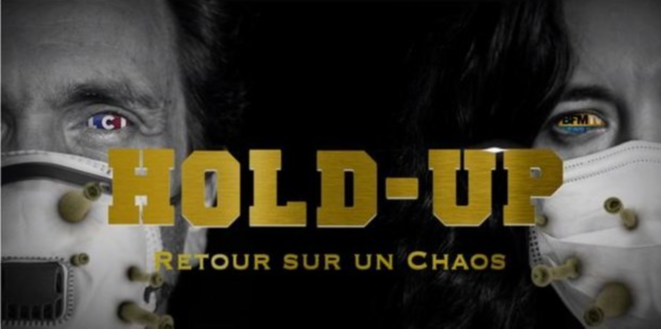
Released online earlier this month, Hold-Up is a French pseudo-documentary which promotes the conspiracy theory that Covid-19 was created in a plot by a group of powerful individuals to reshape the world in their interests. Despite the absurdity of the idea, and its inability to produce evidence to support its case, the film attracted an audience of more than three million in the first week of its appearance. Lucie Delaporte reports on an exercise in manipulation of the gullible.
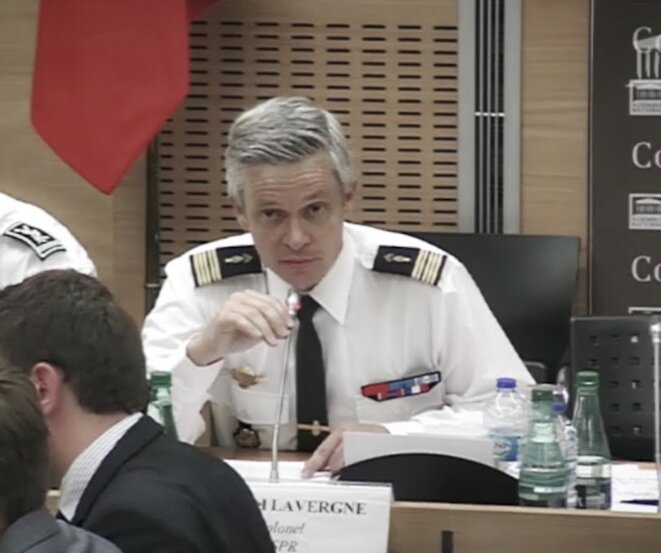
The name of senior gendarme officer Lionel Lavergne cropped up during an investigation into a Corsican 'mafia' godfather in 2014, Mediapart has learnt. Yet despite the astonishing contents of phone-taps in the case, that same year the gendarme was appointed number two in charge of protecting the president at the Élysée. When subsequently told by a senior official at the Élysée that he would not get promoted to the top post, Colonel Lavergne retorted: “You don't know who you are dealing with.” He later got the top post, working as head of Élysée security for presidents François Hollande and Emmanuel Macron from 2017 to 2019. Matthieu Suc and Brendan Kemmet report on the results of a Mediapart investigation that goes back five years.
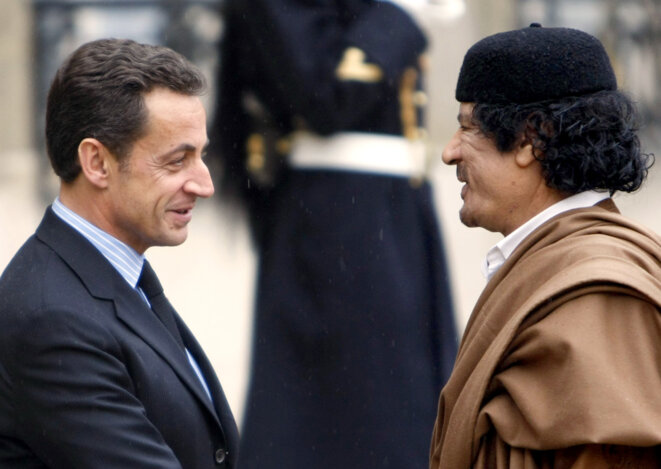
Ziad Takieddine, the ruined businessman who is on the run after being convicted in a separate political corruption case in France, has told Paris Match magazine and BFM-TV news channel that there was “no Libyan funding” of Nicolas Sarkozy's 2007 presidential campaign. This contradicts what he has previously told a judicial investigation into the affair and various media. But he maintains that he did hand over cash to Sarkozy's former chief of staff Claude Guéant. The former president himself immediately made clear his delight at Takieddine's retraction. Just a few days ago Sarkozy had described the middleman as a “madman” and a “manipulator”. Fabrice Arfi and Karl Laske report.