


It may well be the last time they are seen in France. The British Queen Elizabeth II, aged 88, and Prince Philip, who will be 93 next week, have been on French soil this week as part of the commemorations for the 70th anniversary of the D-Day landings. She with her fixed smile, a look filled with weary arrogance, her forehead etched with haughty concern, reigns and is an ever-present at the passage of history. Two paces behind, his hands often clasped behind his back, the prince simply follows his own destiny as consort. In other words, as nothing at all. Appalled at the idea that he was wanted by the Royal Family just for his “sperm”, as he is reported to have said more than 50 years ago, it has irked him that he was the only man in the United Kingdom who could not pass his surname onto his children.
A man with no name, no job, no family, no country and no home, the queen's spouse has shown himself to be a passionate creature - though he has always been quick to deny it; a romantic, though he conceals it; and, beneath that veneer of refinement, neurotic.
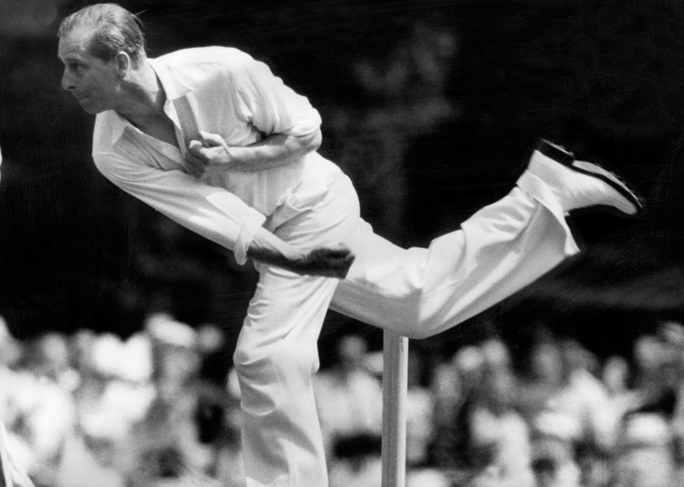
Enlargement : Illustration 2
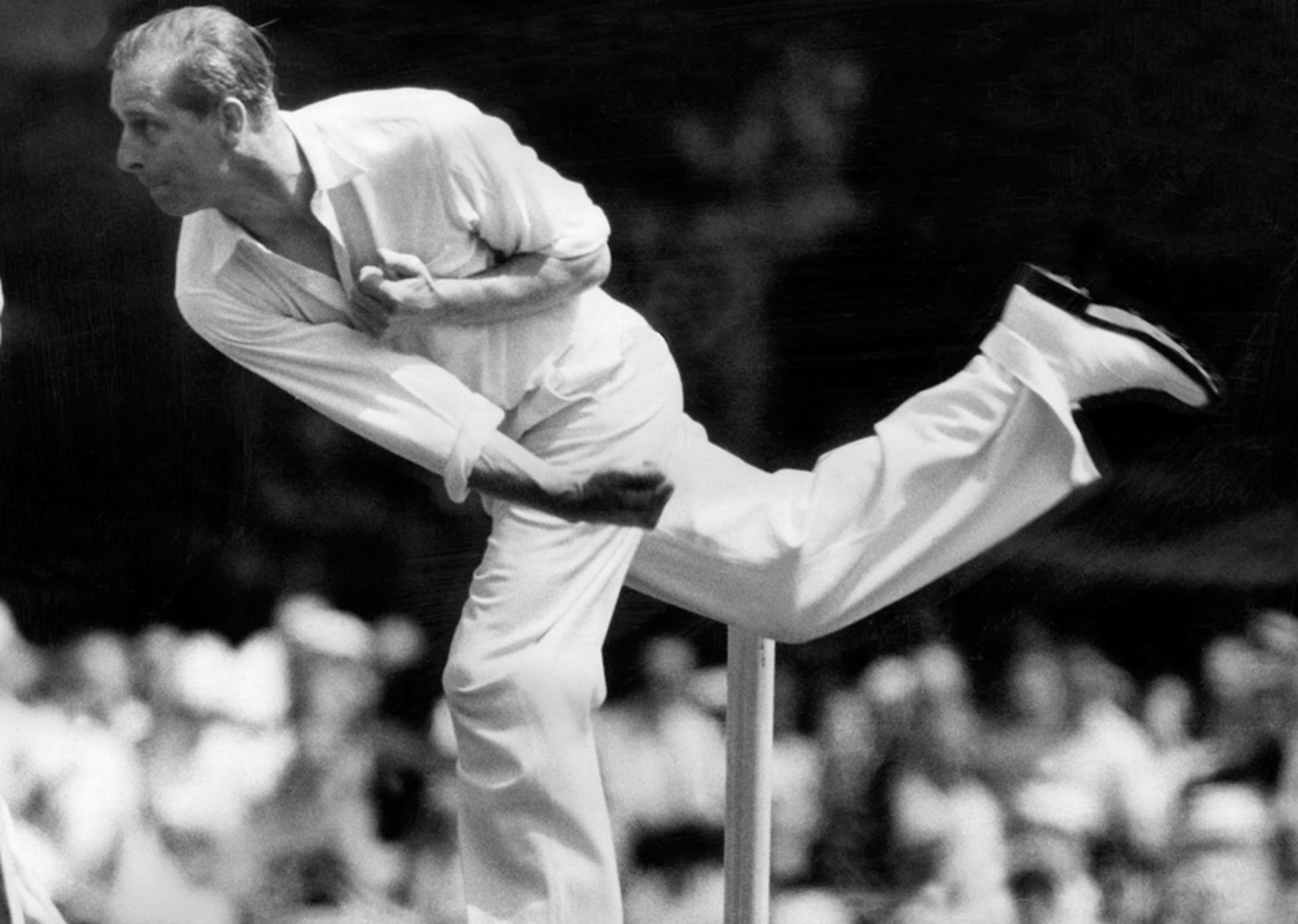
It is instructive to see how, in the video below, he skirts around the question when interviewer Fiona Bruce asks him about his Navy career which was interrupted when his wife acceded to the throne (22 minutes 51 seconds in). The last of an incredible breed, the Lord High Admiral of the Royal Navy – a title bestowed by his wife in 2011 when he turned 90 – almost deserves to be preserved in aspic. Here, then, is the audio-visual inside track on a mythological character (he is in fact revered as a god on Tanna, an island in the South Pacific archipelago of Vanuata, see video at 10 minutes 53 seconds in). This video also shows how in 2014 the British royal couple are completing a solemn routine first begun back in 1948 in Paris where they undertook their first joint trip abroad (1 minute 40 seconds).
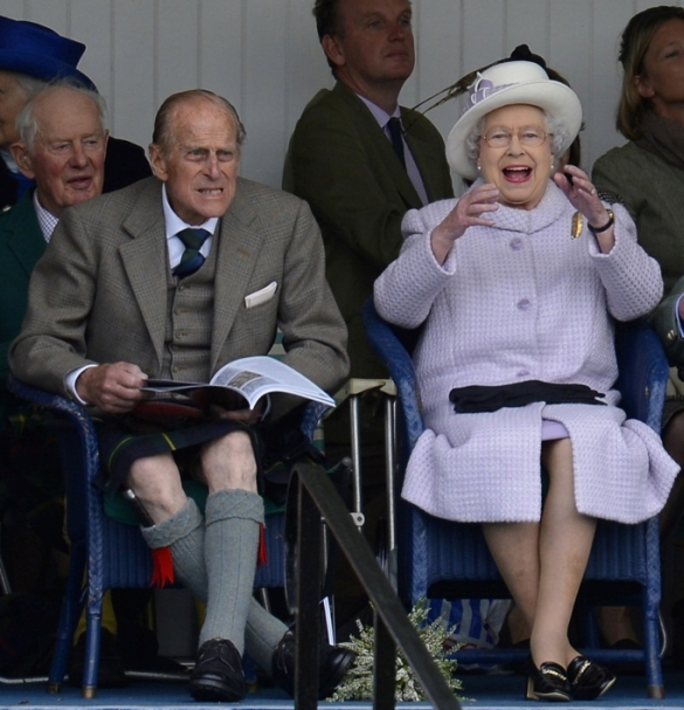
Enlargement : Illustration 3
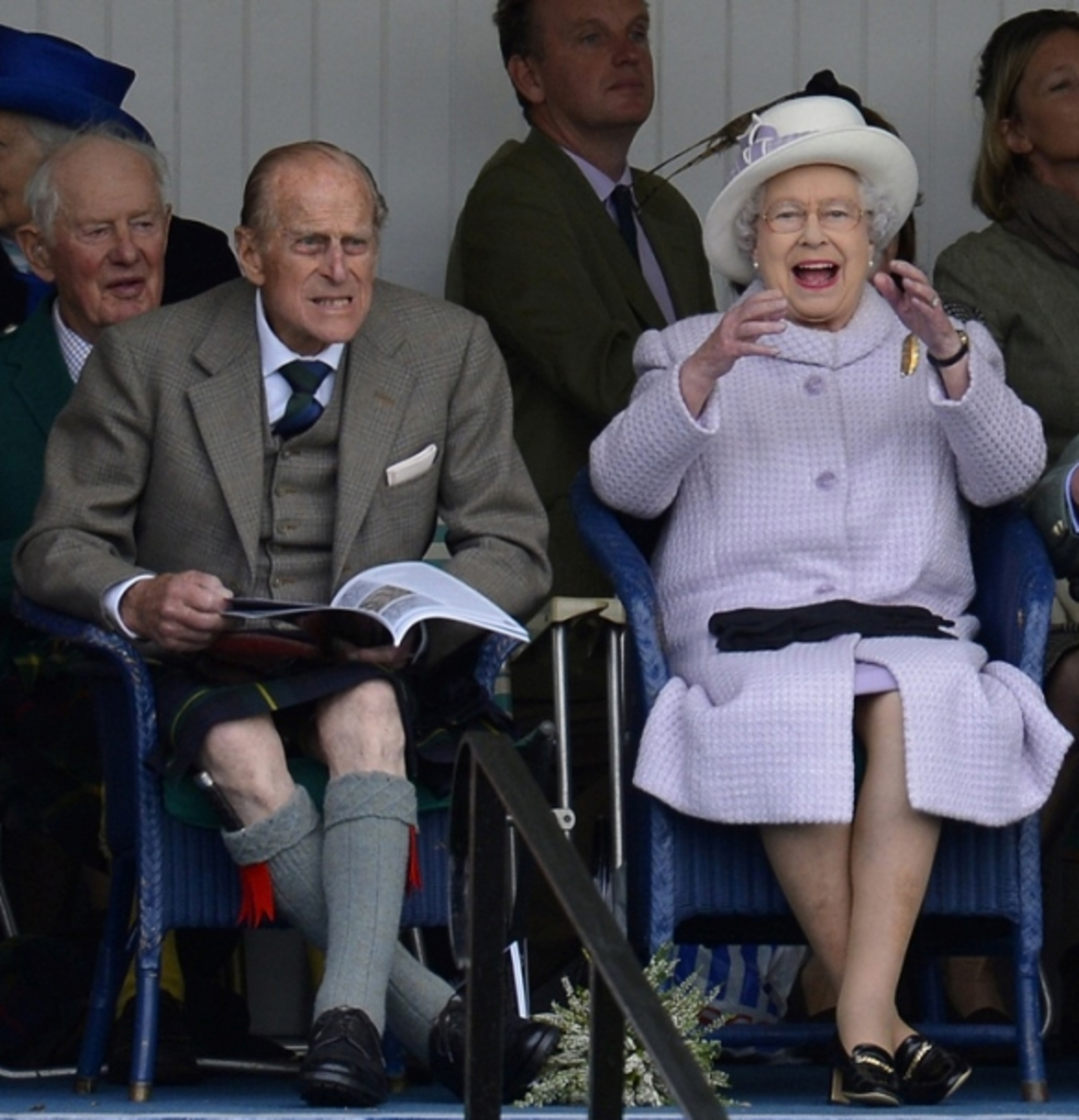
But above all, this video highlights a prince who is unrepentantly gaffe-prone (from 9 minutes 48 seconds on video). Perhaps this is not so surprising. In his childhood Philip and his exiled family fled to France and were taken in by Princess Marie Bonaparte - a translator, disciple and patient of Sigmund Freud. Indeed, the prince has, in spite of himself, come to personify the link that exists between the witty remark and the unconscious mind. For a long time the Duke of Edinburgh was suspected at the Windsor court of being too European, too German and thus too Nazi. As a result he transformed himself into a carbon copy of British royal conformity, to the point where he could produce an utterly inept son such as Prince Charles.
But as soon as he opens his mouth, Elizabeth's husband delivers comments that are seen as racist, yet which also betray his own protective disguise as well as his panic that he might be found out. This is how we should interpret his question to Barack Obama in 2009 about various international figures whom the American president was meeting: “Can you tell the difference between them?” (19 minutes and 25 seconds in). This is also the context in which we should view his 1986 comment to a 21-year-old Briton studying in Beijing: “If you stay here much longer, you will go home with slitty eyes.”.
Philip's hatred of journalists - “You have mosquitoes, I have the press” he once told a nurse in the Caribbean – can be explained by this dread of being found out. That is also what lies behind his 2010 remark to a female sea cadet who said she worked in a club. “Is it a strip club?” asked the queen's consort, who is obsessed with the idea of things being uncovered (18 minutes 43 second into the video). And the prince's obsession with revelation and disguise also lies behind his comments to the Nigerian president who was dressed in traditional costume: “You look like you’re ready for bed!” The psychological disorders of a crown-less monarch who has occupied the same position for 61 years sometimes produce bizarre comments worthy of Dadaism. Once, when talking to a blind woman with a guide dog, the prince said: “Do you know they have eating dogs for the anorexic now?”
The English accent in which the prince makes such pronouncements proclaims the utmost class-ridden scorn for the world: a regal echo that is in the process of disappearing. “I couldn't care less,” he said when asked if he thought he had been successful in his role. “Who cares what I think about it, I mean it's ridiculous.” (21 minutes, 58 seconds into the video).
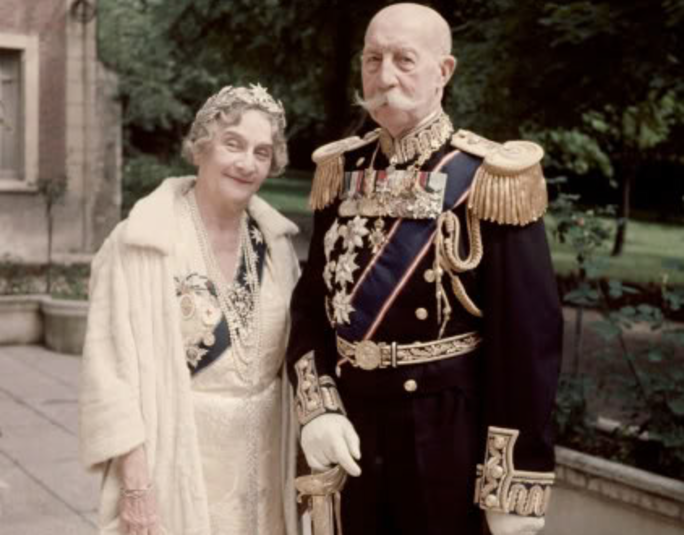
Philip was born Prince Philip of Greece and Denmark in Corfu on June 10th 1921. His father was Prince Andrew of Greece, the fourth son of King George I of Greece. George – Philip's grandfather – was Danish and had been born in Copenhagen. His family name was Schleswig-Holstein-Sonderburg-Glücksburg. But in 1863 he was elected as King of the Hellenes, or king of Greece, at the age of just 17. It was a position he held for 50 years until his assassination at Thessaloniki in 1913. He was succeeded by his eldest son Constantine, who was Philip's uncle. But after Greece's humiliating defeat at the hands of Turkey in 1922, Constantine abdicated and though he was briefly succeeded by his son George the monarchy soon fell. Philip's own father Prince Andrew was blamed for his role in the disastrous war and convicted by a military court; he and the family eventually fled Greece thanks to the intervention of a British cruiser HMS Calypso. Philip himself was still a baby at the time and left his native land in a makeshift travel cot made from an orange box.
This blue-blooded family had lost everything. They were taken in by relatives in Saint-Cloud, a well-heeled suburb of west Paris, who included Prince George of Greece, Philip's uncle. Though George, who had been born in Copenhagen, was apparently homosexual he had married Marie Bonaparte, a wealthy heiress. Bonaparte became a pioneer of psychoanalysis in France and made much of her own frigidity, which she attempted to overcome by consulting Freud himself, by having her clitoris operated on and by sleeping with Aristide Briand, who was eleven-times prime minister of France.
Repressing the past
Enlargement : Illustration 6
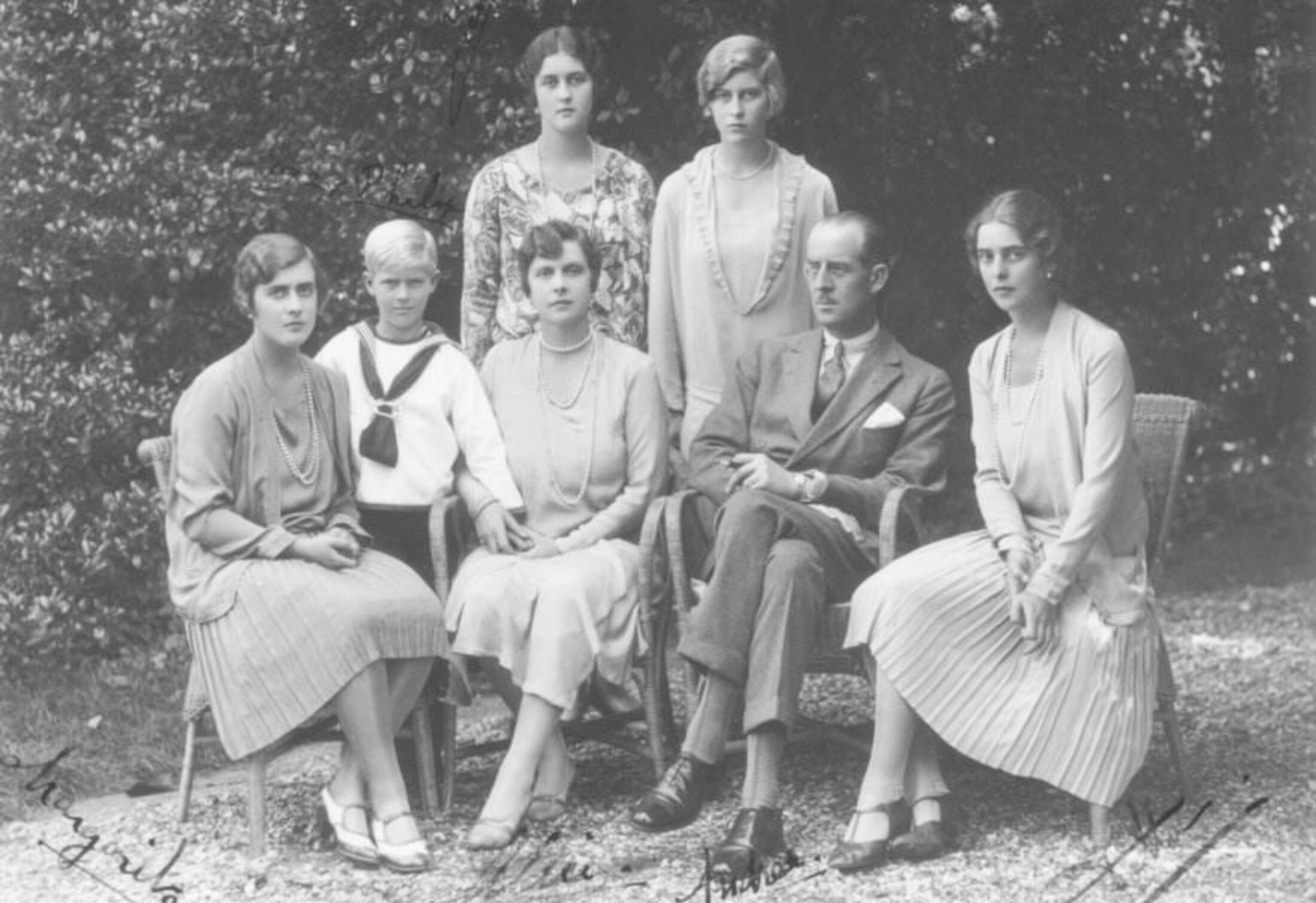
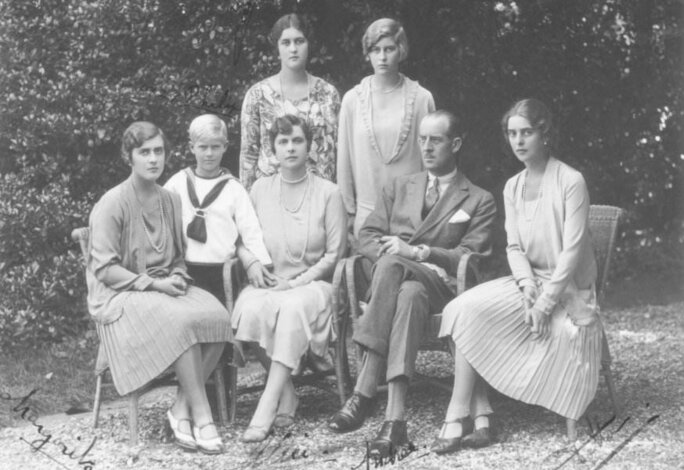
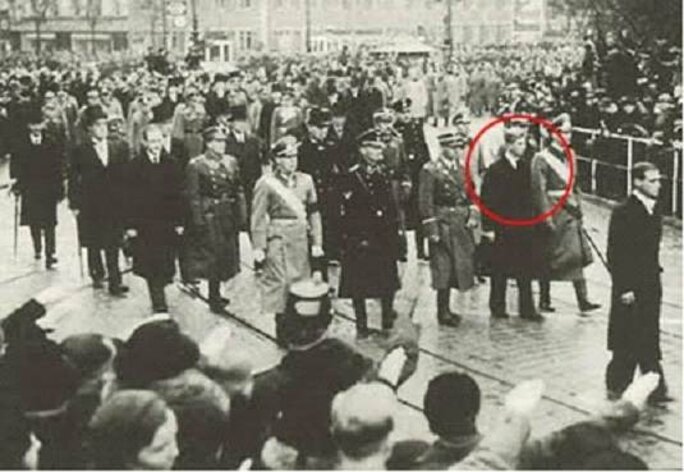
Parts of Philip's childhood were thus spent in the upper reaches of Parisian society. Those were the only years he spent at the heart of a family that was destined to break up. In due course his four elder sisters left, all marrying German princes who would, inevitably, become Nazis or Nazi sympathisers. In 1937 his eldest sister Cecilie, her husband and their two young children died in an air crash. Philip, who was 16 at the time, attended the funeral at Darmstadt in Germany, which was held in the presence of leading Nazi and head of the Luftwaffe Hermann Goering, and at which Nazi rituals were performed.
Once his daughters had left home, Prince Andrew promptly decamped to the south of France with his mistress, the waifish film actress Andrée Lafayette, who was the great-granddaughter of Valtesse de La Bigne, the supposed mistress of Napoleon III and at least three painters - Édouard Manet, Gustave Courbet and Eugène Boudin. After this Philip rarely saw his father again, the latter dying at Monte Carlo in December 1944.
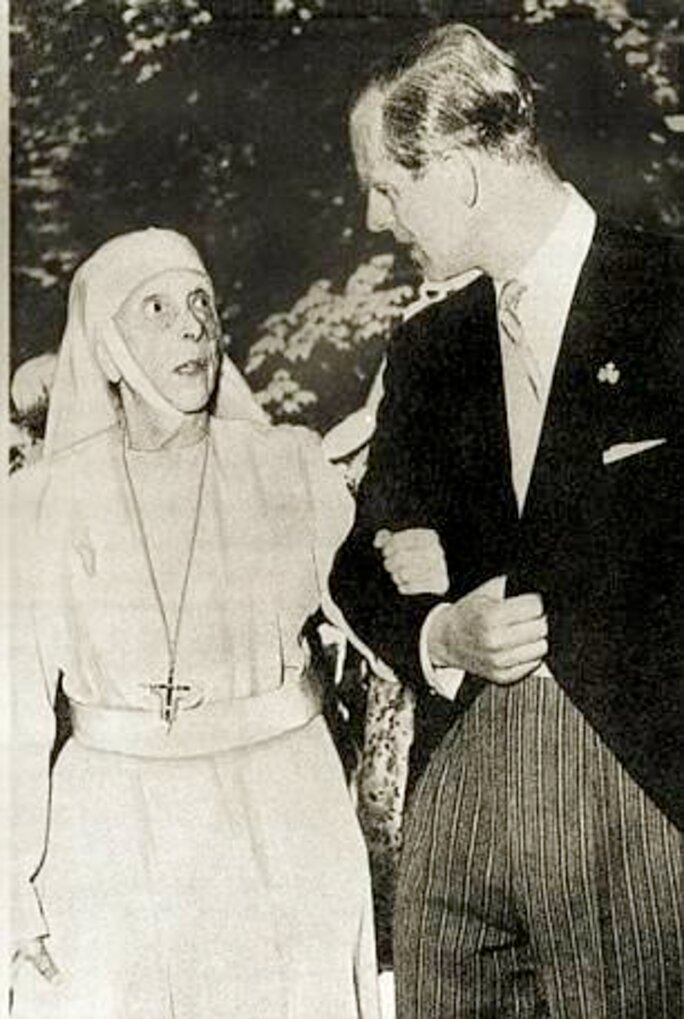
As for Philip's mother, Princess Alice of Battenberg (1), in 1930 she was declared schizophrenic and was committed to a sanatorium in Switzerland for two years. She was a great-granddaughter of the British monarch Queen Victoria and was born at Windsor Castle in 1885. Later, just after his marriage to the then Princess Elizabeth in 1947, this fact would give Philip the chance to put disdainful courtiers in their place when they showed him around the castle in an attempt to educate him about this important residence of the British royal family.
In 1928 Philip's mother had converted to the Greek Orthodox faith and she was also interested in mysticism and the occult. Later she founded an order of nuns and took to wearing a nun's habit herself. Just before the outbreak of World War II she returned to Greece, and lived in Athens where she worked for the Red Cross helping the poor. In 1943 she saved a Jewish widow and two of her children from being deported by the Gestapo, and 50 years later she was posthumously declared 'Righteous among the Nations' in Jerusalem for her war-time actions.
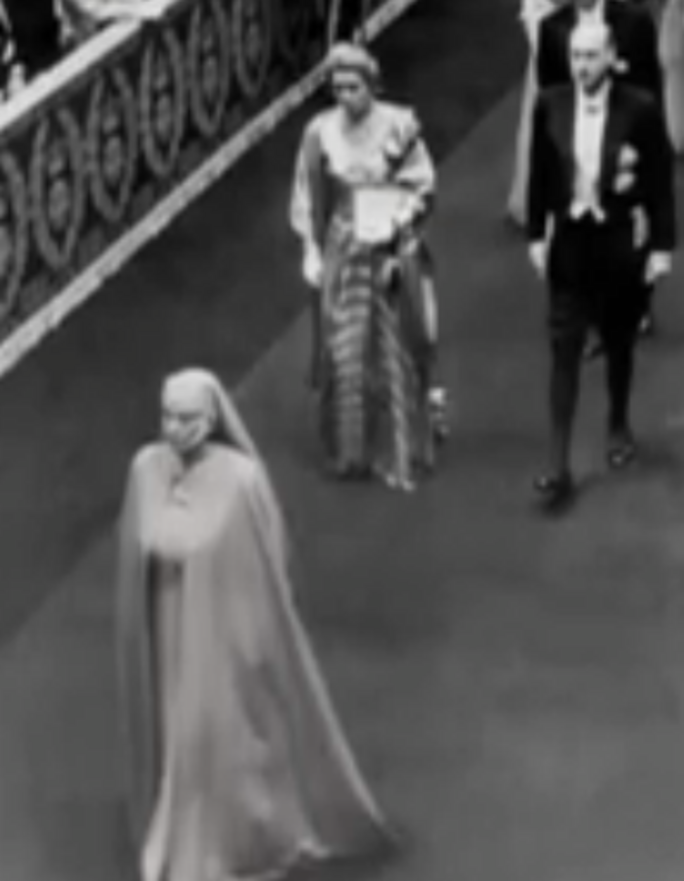
Alice of Battenberg made some strange appearances in her son's life. For example, at Queen Elizabeth's coronation in June 1953 Philip's mother turned up at Westminster Abbey wearing a two-tone grey dress plus wimple in the style of her own nun's habit. In 1967, at the time of the coup d’état by Greek colonels, Alice was flown to safety by a British plane, just as a British ship had taken her and her son from Corfu in 1922. From then on, until her death in 1969, Princess Alice lived with her son and daughter-in-law at Buckingham Palace. Here she haunted the corridors, with exotic Byzantine perfumes emanating from her bedroom.
During the 1930s, once his family had fallen apart, and after a brief period of education in Germany, Philip found refuge at Gordonstoun school in Scotland. This meant saying goodbye to Marie Bonaparte and his uncle, but also goodbye to his father, his mother and his sisters now settled in Germany. Instead he was looked after by his maternal grandmother Princess Victoria of Hesse and by Rhine. It was her youngest son, Louis de Mountbatten (1900 to 1979), who would become Viceroy of India and ultimately die at the hands of the IRA, who took his nephew under his wing. Philip was traumatised by his childhood, but had already learnt how to hide it.
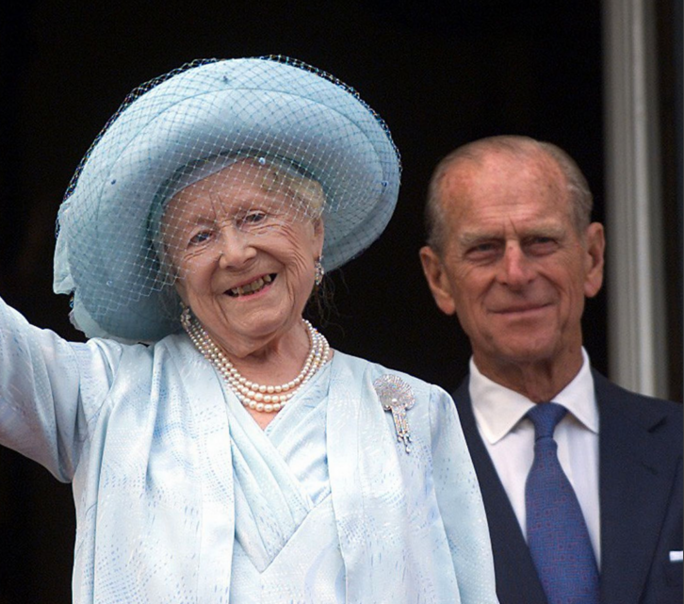
Under the guidance of Louis, who was a senior officer, Philip joined the British Royal Navy in 1939 and he served throughout the Second World War, both in the Mediterranean and the Pacific. The young man thought he had found his vocation in life. In 1947 he changed his name to Philip Mountbatten. But by then he was already secretly engaged to Princess Elizabeth, the future queen, whom he had first met back in 1939 when he was a naval cadet and she was just 13. At the time Philip was very much an archetypal European, a man who had travelled the world and who came from a mixture of different cultures and who spoke a number of languages. However, he tried to forget that side of himself to please the reactionary forces at the British court, chief among them his mother-in-law Queen Elizabeth, later known as Queen Elizabeth the Queen Mother, whom he would have to suffer until 2002 when she died aged 101.
Enlargement : Illustration 10
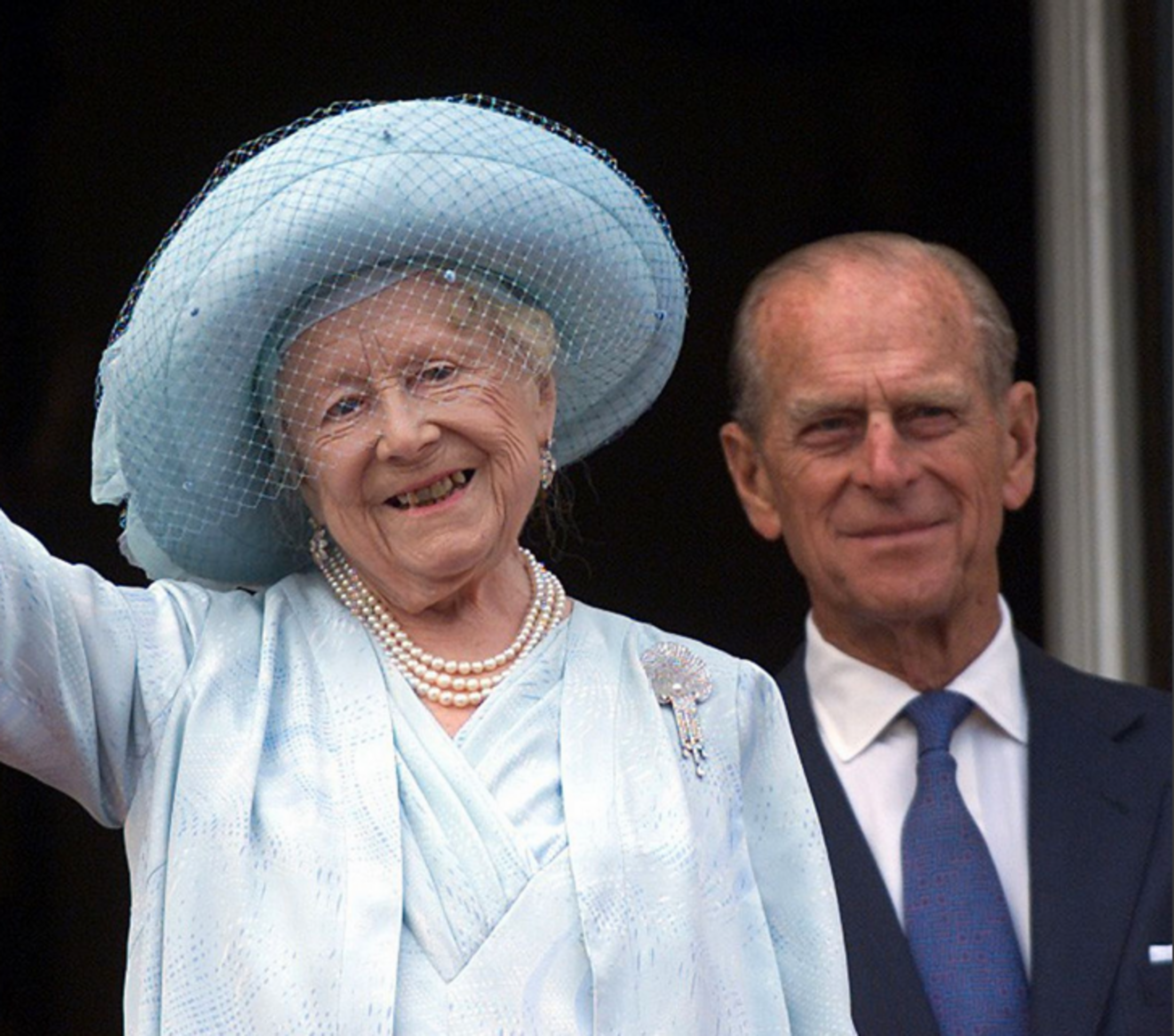
The Queen Mother, widow of British king George VI, was wary of this son-in-law with his many different roots. He reminded her of the major threat that had menaced the British monarchy in 1936 with the abdication of Edward VIII, a problem caused by the arrival of the destabilising outside influence of the American divorcee Wallis Simpson. Philip had to suffer humiliations from a strict matriarchy, whose influence was made even stronger in the first few years by the presence of his mother-in-law's own mother-in-law Queen Mary, who died in 1953.
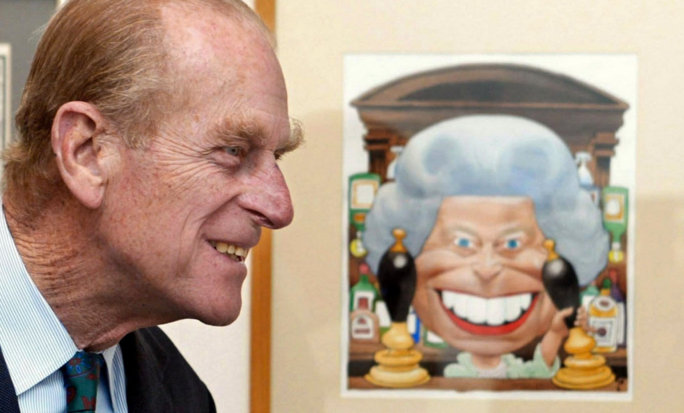
Enlargement : Illustration 11
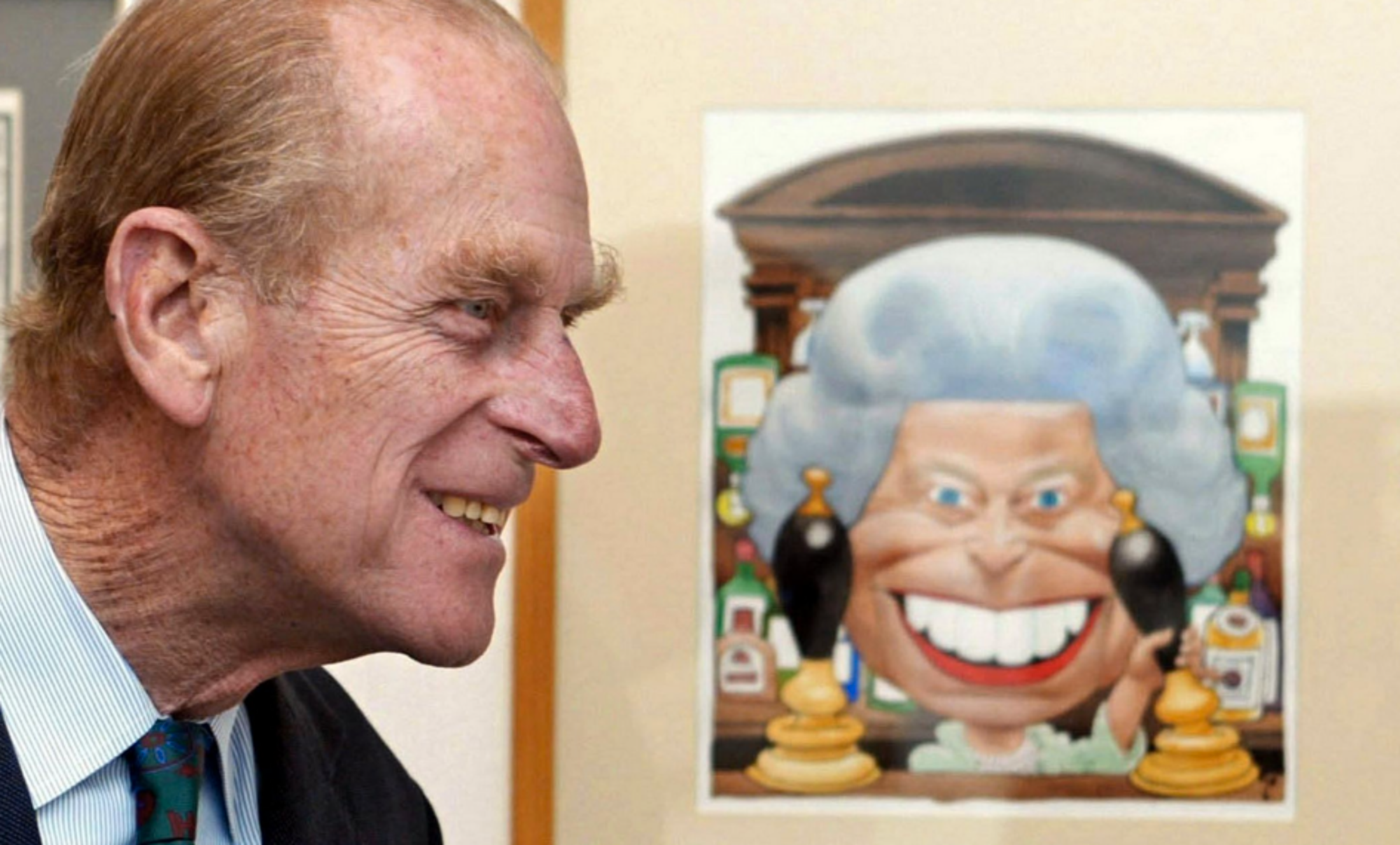
The young prince consort repressed all his Greek, Danish, German, French and other memories so he could mould himself into a typical example of the limited, cold and short-sighted tradition that is the hallmark of an England that is hopelessly insular and proud of its pride and of its prejudices. Today this old man of 93, this stuffy consort, has come to symbolise Europe itself, a continent full of adventurous spirit but which is sacrificing itself on the altar of parochial pettiness.
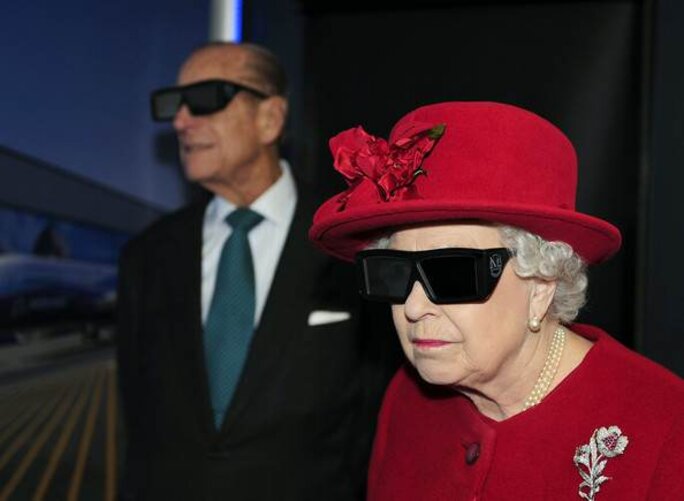
------------------------------------------------------------------
1. During World War I when anti-German sentiment reached its height, members of the Battenberg family in Britain changed their name to Mountbatten, in the same way that members of the Saxe-Coburg and Gotha dynasty in Britain – the Royal Family – changed their name to Windsor.
------------------------------------------------------------------
The French version of this article can be found here.
English version by Michael Streeter