


A few weeks before the 2024 Olympic and Paralympic Games in Paris, a senior member of France’s intelligence services spoke of his astonishment that, while anti-Semitic acts had increased in France since the October 7th 2023 Hamas attacks against Israel, and the subsequent Israeli offensive in Gaza, these involved mostly insults and threats and not violent action.
One and a half years on, things have changed. In France, as elsewhere in the West, the Jewish population is the target of numerous organisations and states which employ violence to fulfil their political aims.
- Jihadist terrorists
While France’s Jewish community were notably the first terrorism target in the country for the so-called Islamic State group (IS), notably demonstrated in the hostage-taking attack in January 2015 on the Hyper Cacher store on the outskirts of Paris, in which four hostages were murdered, no other IS attack against French Jews occurred over the following seven years.
As Mediapart has previously revealed, Rachid Kassim, the Iraq-based Franco-Algerian who acted as the jihadist group’s orgaiser of attacks and as a recruiter, warned terrorist volunteers to “not focalise on Jews” so as not to drive attention to the Israeli-Palestinian conflict to the detriment of the IS campaigns in Syria and Iraq. That has now changed since the group was militarily ousted from its self-proclaimed caliphate in Syria, beginning in 2017 and finally in 2019.
To recruit and mobilise would-be jihadists to commit terrorist acts, IS now has no hesitation in using the Palestinian cause. In September this year, the group’s newsletter Al-Naba referred to the situation in Gaza and called for terror attacks on targets in France, among other countries.
Enlargement : Illustration 1
Sources within the French intelligence services have told Mediapart that they see no link between those threats, issued by Sunni Muslim jihadists, and Shia pro-Palestinian organisations. According to the sources, Hamas demonstrates no intention of carrying out attacks against targets in Europe, but that for the IS, the Israeli-Palestinian conflict is a subject for mobilising those who it hopes to recruit.
Those same intelligence contacts say that since the October 7th 2023 Hamas attacks against Israel, around half of all the terrorist attacks carried out or thwarted in France have been in connection with the Israeli offensive in Gaza (whether that be the choice of targets or the claimed reasons for the attacks, or both). At the end of last month, two 16-year-old boys were placed under investigation in France (a legal move that is one step short of being charged) for conspiring to commit a terrorist act. The alert was raised after one of them, communicating with a WhatsApp group, declared that he intended to kill Jews within the following five days.
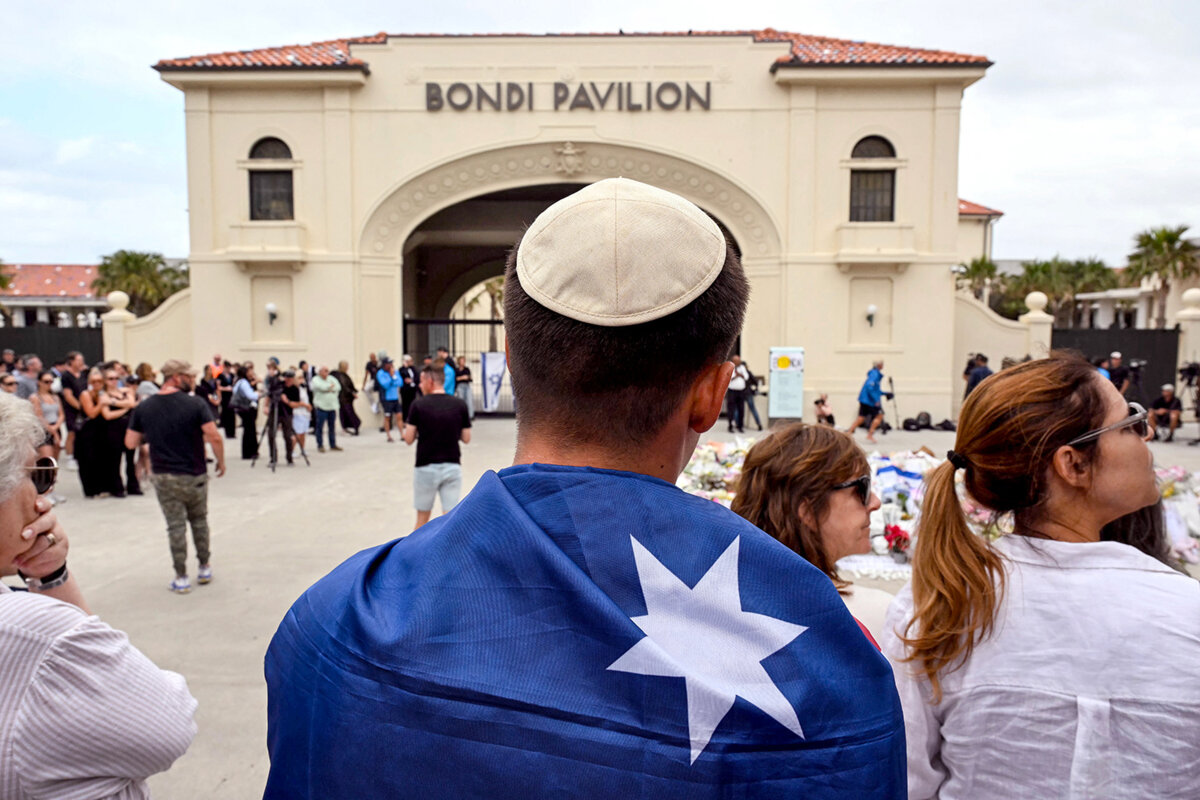
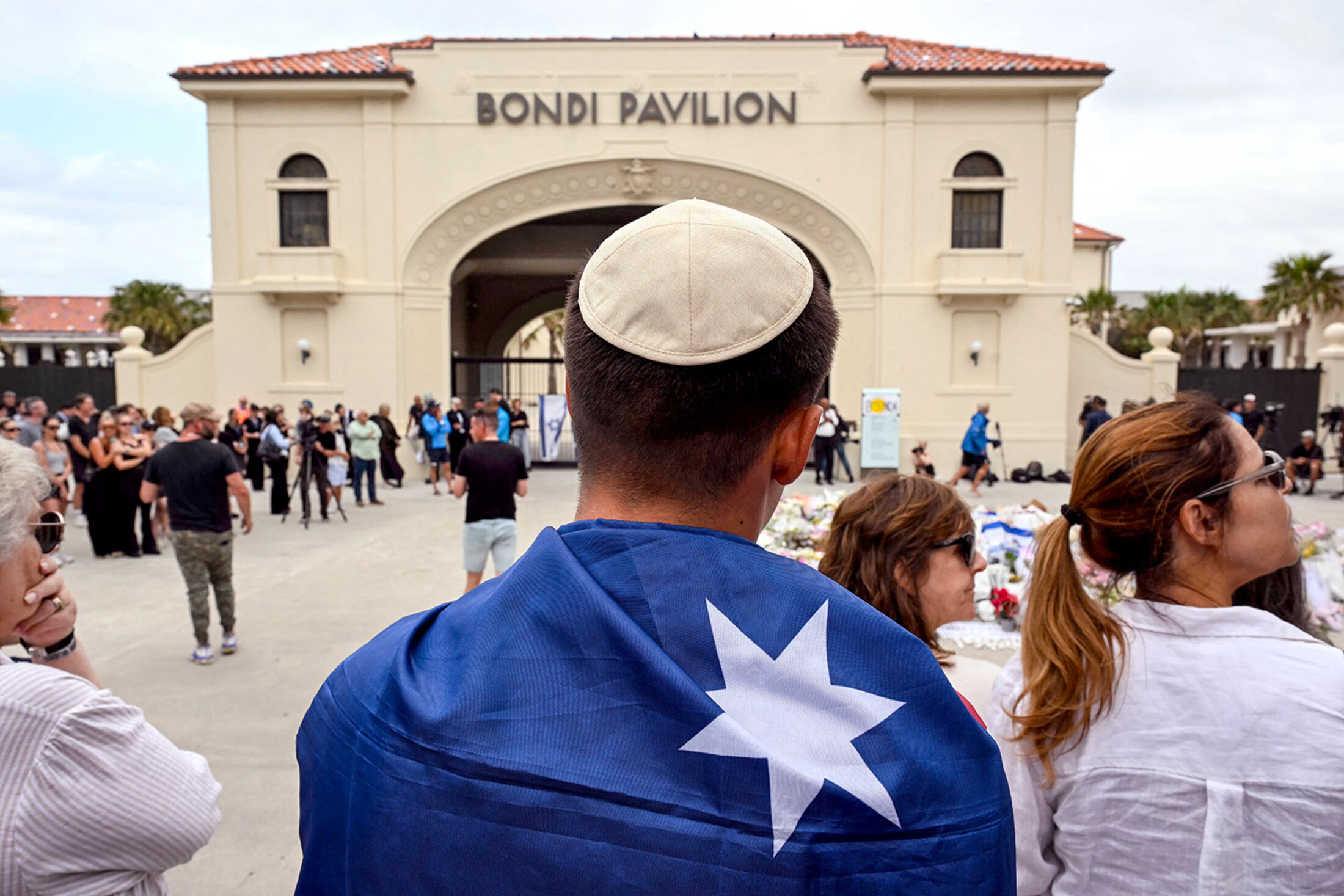
The shooting massacre of 15 people aged between ten and 87 at Bondi Beach in Sydney, Australia, on Sunday was carried out by a father and his son. Sajid Akram, 50, was shot dead by police, while Naveed Akram, 24, was seriously wounded. On Wednesday, Naveed Akram was charged with 15 counts of murder.
While investigations to establish the exact motive behind the attack on a gathering in celebration of the Jewish religious festival of Hanukkah, Australian Prime Minister Anthony Albanese told broadcaster ABC that “it would appear” that the gunmen were “motivated by Islamic State ideology”.
It has emerged that in November the pair travelled together to the Philippines where, it is speculated, they may have received training by Islamists to carry out the attack.
Albanese said Naveed Akram came to the attention of Australian domestic intelligence agency, the ASIO, in 2019. “He was examined on the basis of being associated with others, and the assessment was made that there was no indication of any ongoing threat or threat of him engaging in violence,” he said.
- Iran’s strategy of terrorism by proxy
Since the October 7th 2023 Hamas attacks, Iran has stepped up its strategy of organising attacks in the West against Israeli interests and members of Jewish communities.
In May last year, France’s domestic intelligence service, the DGSI, sent a report to the public prosecution services' anti-terrorism branch, in which it warned that Iran was recruiting “proxies from the world of organised crime for operational purposes on European soil and characteristic of Iranian state terrorism”. The object, detailed the report, was “to hit civil targets and to increase the feeling of insecurity among the [Iranian political] opposition, and the Jewish and/or Israeli community”.
In France, this included the so-called “Marco Polo affair”, revealed last year by Mediapart and shared for joint investigation with the journalistic consortium European Investigative Collaborations. The investigation showed how members of the underworld (notably those involved in drugs trafficking), hired by the Tehran regime, planned the assassinations early last year of Israeli nationals and members of the Jewish communities in France and Germany. While waiting for the appropriate moment to carry out the murders, they organised arson attacks in the south of France against the premises of companies believed to be owned by Israeli capital.
The Iranian services behind the “proxy” operations is the Quds Force, a branch of the Islamic Revolutionary Guards organisation (also called the Pasdaran), which specialises in unconventional warfare. The strategy is not new, with a number of cases of planned assassinations and violence in European countries officially linked to operations organised by Tehran. In December 2023, a court in the German city of Dusseldorf handed down a prison sentence of two years and nine months to a German-Iranian man found guilty of attacking a school with a petrol bomb in the nearby town of Bochum, in 2022. The intended target, the trial had heard, was a neighbouring synagogue.
The magistrates found that the 36-year-old had been recruited by Ramin Yektaparast, a former Hells Angel gang leader from Mönchengladbach of Iranian origins, wanted for various crimes, including murder, and who found exile in Iran in 2021. The judges concluded “the plan for the [synagogue] attack stems from an Iranian state institution,” which led to an official complaint made by Berlin to Tehran.
Yektaparast, who allegedly organised attacks in Germany from Iran using his criminal contacts, including a shooting attack on a rabbi’s home and a planned assassination of French philosopher and essayist Bernard-Henri Lévy, was named in a German federal court document as working for the Quds Force. He was shot dead in Tehran in 2024, in what was alleged to be an operation by the Israeli intelligence agency Mossad.
In 2024 there were arson and firearms attacks close to Israeli diplomatic missions in the Belgian capital Brussels, in the Danish capital Copenhagen, and in Sweden’s capital Stockholm. Other incidents last year included an arson attack on the home of the chairman of a Zionist association in Copenhagen, and an attack against an Israeli weapons firm in Sweden.
On June 26th this year in Denmark, police arrested a Danish national of Afghan origin, allegedly recruited by Tehran, accused of reconnoitring a kosher shop in Berlin and monitoring the movements of two leading members of the German Jewish community.
Western intelligence agencies believe that the Tehran regime now prioritises attacks against Jewish structures, such as synagogues or restaurants, considered easier targets than individuals. Before the Bondi Beach killings at the weekend, the Pasdaran were behind all the recent arson attacks on Jewish religious targets in Australia.
Mediapart understands that the various French intelligence services have intensified their coordination over recent months in face of the threat against the Jewish community and Israeli targets.
- The Kremlin’s destabilisation strategy
As Mediapart revealed earlier this month, French intelligence services obtained evidence that Russia's presidential office approved a plan to target both the Jewish and Muslim communities in France with the aim of sowing division and discord within French society.
Evidence of this strategy came to light when a French intelligence service recently obtained internal Kremlin documents. According to a summary, seen by Mediapart, these show how “[Russia's] presidential office is striving to heighten tensions between these two communities on [French] territory”.
In reports filed in a court case in 2024 and revealed by Mediapart, the French domestic intelligence agency, the DGSI, warned that France was a “favoured target for the Kremlin” and that in order to destabilise states “seen as enemies”, the Russian secret services identify “existing weak spots such as political or inter-community divisions”, which they exploit to “disorient people”.
The French counter-espionage service noted that there are “identifiable patterns” in the issues chosen for these Russian interference operations. These are “predominantly” themes linked to immigration, Islam, anti-Semitism, United States hegemony, and major institutions (European Union, NATO), among others.
Following the October 7th 2023 Hamas attacks against Israel, Russia’s initial aim to focus its efforts on Israel's fierce and genocidal offensive in Gaza was demonstrated through destabilisation operations that were aimed solely at the Jewish community. Three weeks after the Hamas attacks, more than 250 Stars of David were sprayed on the walls of several buildings in the Paris region.
Already, in May 2024, two weeks after some students at the prestigious Sciences Po political sciences school in Paris had daubed their hands red during pro-Palestine protests - a symbol that sparked a row because it recalled the killing of two Israeli soldiers in October 2000, at the start of the second Intifada - 35 red hands were painted on the Shoah Memorial in Paris, sprayed over the plaques listing the names of those who saved Jews during the Second World War.
A new Kremlin destabilisation strategy was applied between May and September 2025. The first phase of this involved “green paint” attacks. On the night of May 30th 2025 synagogues, a restaurant and - once again - the Shoah Memorial were vandalised when masked men sprayed walls with green paint. Three Serbian nationals were later detained as suspects in Antibes in the south of France as they tried to leave the country. According to the Paris public prosecutor’s office they were identified thanks to CCTV footage and phone records.
The second phase of the operation came three months later. On the night of September 8th 2025, around ten pigs’ heads - some of them daubed with the word “MACRON” in blue paint - were dumped outside nine Muslim places of worship in the Paris region. The following day the Paris prosecutor’s office denounced what it called a “clear desire to stir disorder within the country”.
- The far-right
While anti-Semitic abuse can be found on social media posts and in publications circulating among radical far-right circles in France, anti-Semitism is, in the words of a French intelligence officer, no longer “the major motivation” for the perpetration of violence. The preferred targets of the most dangerous militants among them are Arabs, Muslims, migrants and women.
In a 2024 report entitled “Terrorism in France – A panorama of radical movements in 2024,” Alexandre Rodde, an analyst with the anti-terrorism branch of the French gendarmerie, observed that elements of the far-right “remain divided over the Israel-Palestine conflict, some militants supporting Hamas and calling for an ‘intifada’ because of their anti-Semitism, while others declare they support ‘neither kippa nor keffiyeh’ and want to see a ‘Christian Jerusalem’”.
-------------------------
- The original French version of this report can be found here.
English version by Graham Tearse