


A nurse at a leading Paris hospital has been sanctioned a second time for allgedly breaching rules on secularism by wearing a surgical cap at work.
Majdouline B., who works at the well-known Pitié-Salpêtrière hospital in Paris, was initially sacked in October 2025 for continuing to wear the headgear during her shifts despite repeated reprimands from managers.
Earlier this year the experienced nurse, who has worked at the hospital since 2018, won an injunction suspending her dismissal, with the judge describing the punishment as “disproportionate”.
But now the nurse faces a fresh sanction for the same issue – an eight-month work ban.
The news of this second punishment arrived by registered post. Opening her mail just a few days ago, Majdouline B. learned that the Paris hospitals authority, Assistance publique-Hôpitaux de Paris (AP-HP), had decided to suspend her. The reason they cited was her repeated wearing of a head covering at work and her refusal to remove it, the same issues over which they had sacked her in October 2025 and permanently banned her from working in the public sector.
Majdouline B. fought back. She took her case to the administrative courts and on January 6th was granted a temporary injunction suspending the dismissal. A Paris court ruled that the sanction had been “disproportionate” in light of the nurse’s impeccable record and the allegations against her.
The ruling ordered the AP-HP to “reinstate Ms B. to her duties on a provisional basis, within one month”.
Enlargement : Illustration 1
“The reinstatement did not take place and the AP-HP has chosen to impose a new disciplinary measure,” says the nurse's lawyer Lionel Crusoé. “We therefore consider that the administrative court’s order has not been complied with.”
When contacted, the AP-HP acknowledged receipt of Mediapart's questions but was unable to respond within the publication deadline.
This new ban not only prevents the nurse from returning to work, but also now deprives her of any income. “I see this as persecution; they want to crush me,” Majdouline B. says angrily, pledging to challenge the authorities' actions in court once again. “I also think they want to intimidate others, so that they don't dare oppose them,” she adds.
Health workers from ethnic minorities feel targeted
In a statement published on January 30th, the Sud Santé union at Pitié-Salpêtrière where Majdouline B. works said that “not everyone at the hospital gets targeted: management targets women, on discriminatory grounds, assuming they are of the Muslim faith, and arrogating to itself the right to police what they have on their heads even though there is no religious display”.
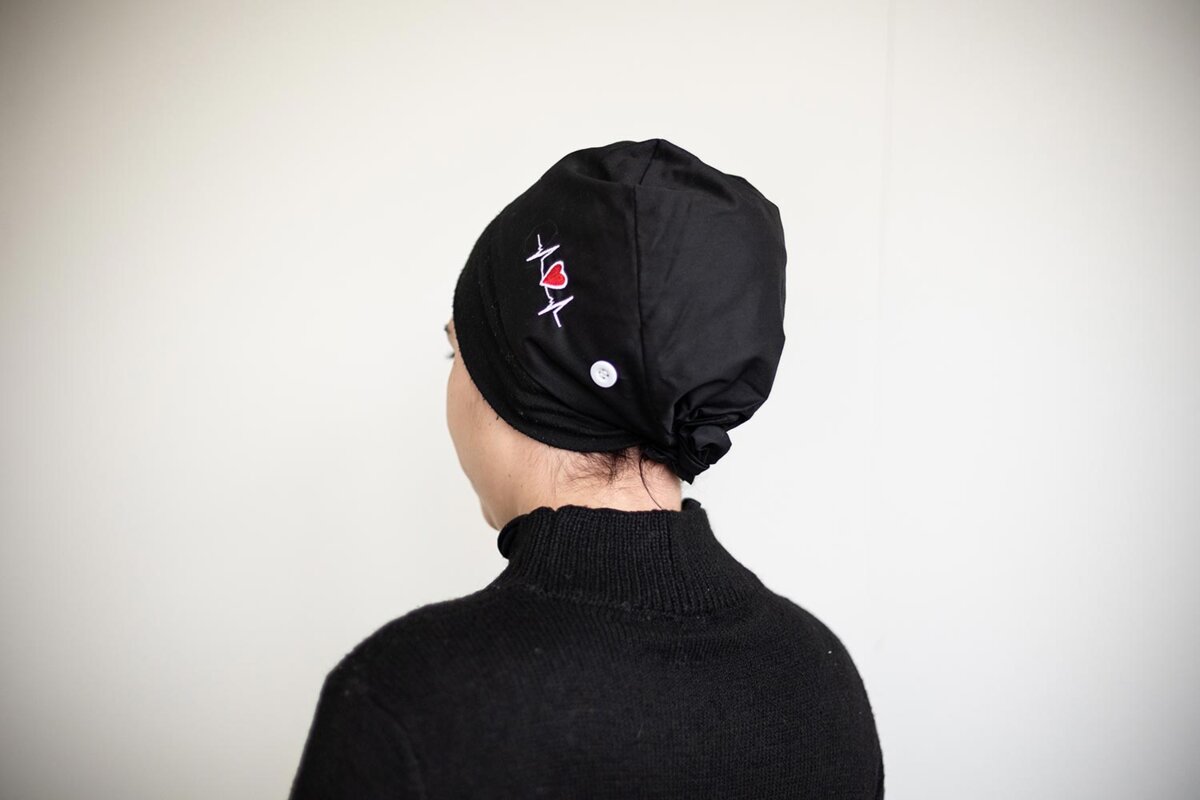
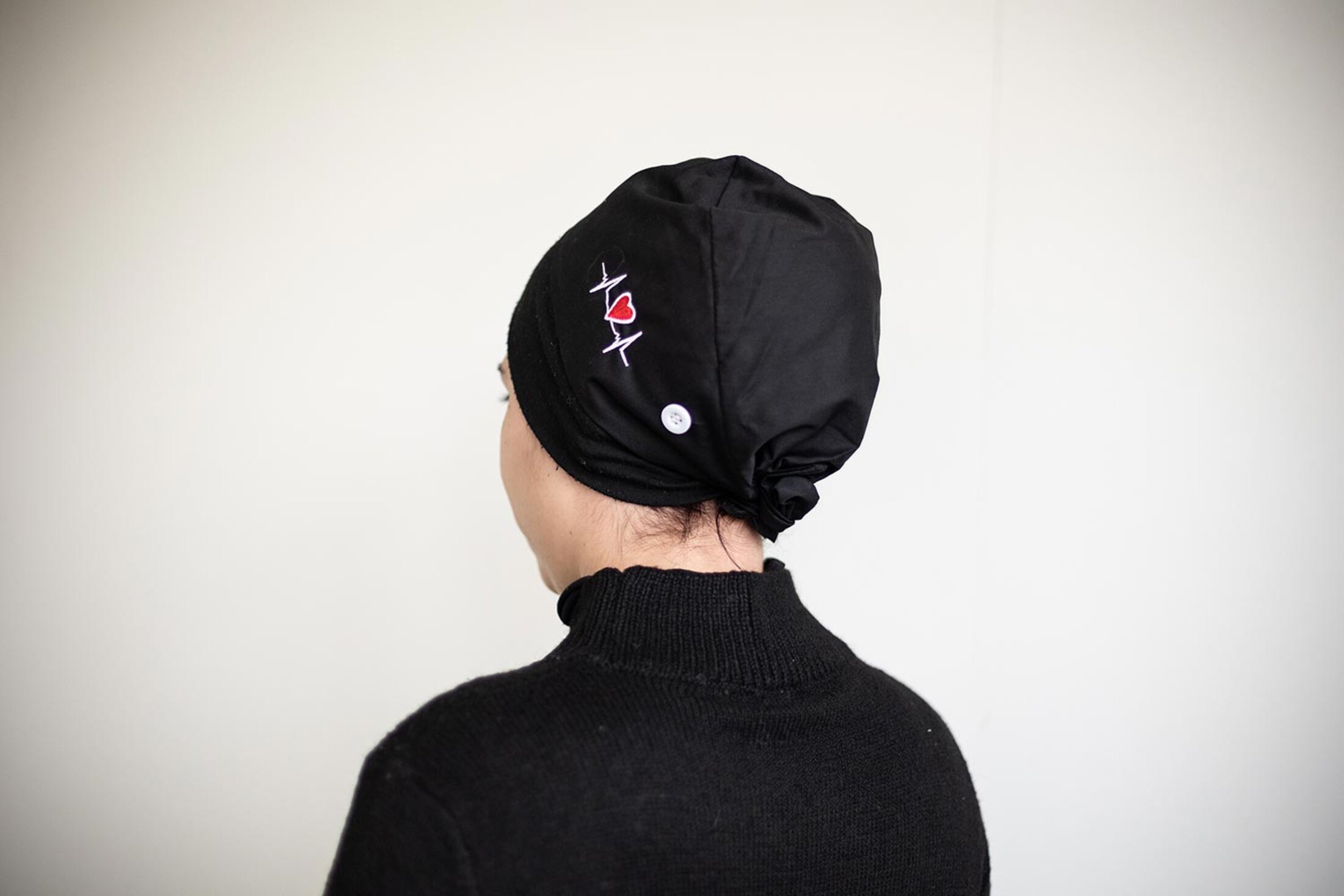
Majdouline B., who is from the Paris region and is of North African origin, faced reprimands for a year from her superiors, who reproached her for permanently wearing a surgical cap during her working hours. The complaints about her head covering began in December 2024, even though Majdouline had covered her hair ever since being employed in 2018, without any previous comment or criticism.
At first, managers invoked “secularism”, considering her cap as a religious sign and therefore forbidden for a public sector worker under France's secular laws. Majdouline herself has always refused to say why she wears this head covering.
Then AP-HP changed tack and began to raise the issue of hygiene to justify asking Majdouline B. to remove her head covering. The nurse has always replied that internal AP-HP regulations do not ban the wearing of a head covering. The institution responds by saying that these rules do not authorise it either.
An eight-month punishment is still very severe.
Issuing the temporary injunction on January 6th, the judge at the Paris administrative court ruled that the nurse’s dismissal was a disproportionate punishment “having regard to her length of service within the hospital, her professional skills, which are not disputed by her employer, and the fact that it is established that she long wore such a head covering without her managers making any comment”.
However, the court found that her repeated refusal to carry out an order from her superiors “constitutes misconduct of a type that could justify a disciplinary sanction”. This left the door open to some form of punishment being justified, an issue that will be debated at a later court hearing on the substantive merits of the case.
“In any event, an eight-month punishment is still very severe” says Lionel Crusoé of the new ban. “In the public sector, the case law precedents concern acts of physical or psychological aggression. Here we have an agent who is wearing a surgical cap… If you go to a hospital, you can see that this is common practice, as staff don't all remove their accessories.”
The lawyer also points out that the official AP-HP recruitment website displays on its homepage a photo of six healthcare workers, three of whom are wearing a cap similar to the one Majdouline B. has always worn.
Hospital group's boss challenged
The situation was raised on January 27th 2026 at the hospital group's medical establishment committee or CME, the body representing doctors across the AP-HP's 38 hospitals.
It was Dr Olivier Milleron, a cardiologist at Bichat hospital in Paris, who challenged the AP-HP director general, Nicolas Revel, on the issue. “I have been told about several problematic situations,” the doctor says. “For example, in my hospital, a healthcare assistant was challenged by a member of the human resources department because she was wearing a scarf. She replied that her hair was dirty and asked whether she was being questioned because she was Black.”
He adds: “We can't tolerate hospital staff being challenged like this in the public area of a hospital. All of this is part of a context of rising intolerance towards the Muslim religion.”
The cardiologist, who is also a member of the Collectif inter-hôpitaux which campaigns to support public hospitals, says he took it upon himself to “count the number of people wearing a cap” on his way to the CME meeting. “There were about ten of them, all white men, who work in operating theatres and do not want to take their cap off and put it back on ten times a day,” he notes.
It’s a witch hunt against non-white staff over their caps.
The doctor says he stands by the “principle of secularism in hospital, for everyone”, though this “must be applied with kindness and a great deal of respect”. He does not, however, defend “someone who acts for clearly religious reasons, by trying to push back against the secularisation of society”.
Also present at the CME meeting as a representative of non-medical staff, Yann Guittier, a CGT union official at Tenon hospital in Paris, believes that “doctors are uneasy over the issue, divided among themselves. Even within unions there can be disagreements”.
But he, too, considers that “what is happening today is a witch hunt against non-white staff over their caps, including women who wear a headband because their curly hair sticks out in all directions, or others who cover their heads because they have alopecia. Healthcare workers are leaving hospital for this reason”.
Like Majdouline B, several workers from different hospitals have told Mediapart they feel targeted because they are women from ethnic minorities and suspected of being Muslim – whether that is the case or not – and therefore suspected of wearing the cap as a religious sign.
Indeed, following Mediapart's earlier investigation into the nurse's case in December, the Sud trade union received a large number of accounts from women threatened by their management because of the fact they permanently wear a surgical cap.
Politicians have also voiced their concerns over what is happening in state hospitals. “She was dismissed on a completely spurious ground, under the pretext of secularism, with the idea that she would be perceived as Muslim,” commented Mathilde Panot, a member of parliament for the radical-left La France Insoumise (LFI) last year when news of Majdouline B.'s sacking was revealed. She said the decision was “very serious” and “discriminatory towards the people concerned”, as well as “putting our health system at risk”.
Meanwhile, a showdown between unions and management over the issue is now looming. “A broader union mobilisation is under way,” says Blandine Chauvel, a Sud Santé union staff representative, who has supported Majdouline B. from the outset. The CGT has called for a demonstration on February 13th at Tenon hospital in Paris to call for an “end to the misuse of secularism in hospital”.
-----------------------------------------------------------------------------------
- The original French version of this text can be found here.
English version by Michael Streeter