


French industry minister Sébastien Martin this week announced that France is suing British private equity firm Greybull Capital for damages of 95 million euros for failing to honour its pledged investment in a group of French steelworks it purchased in 2024, and which were closed one year later with the loss of more than 500 jobs.
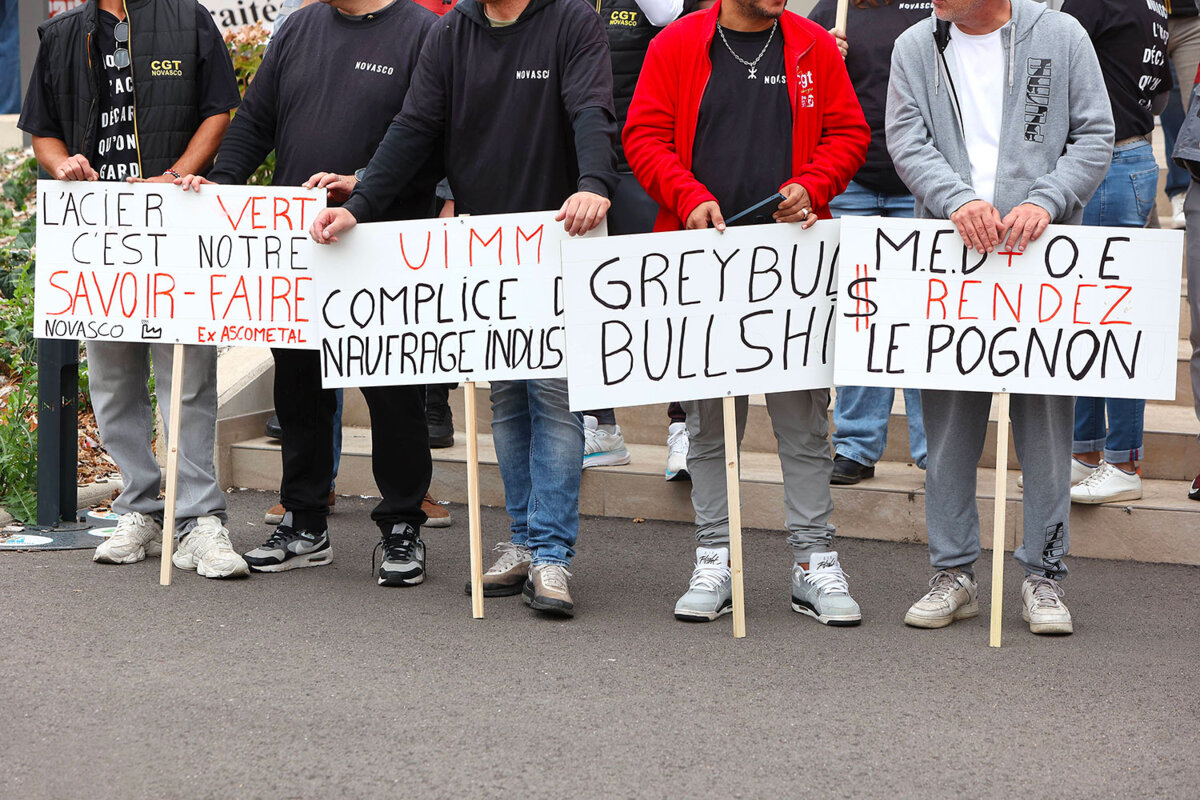
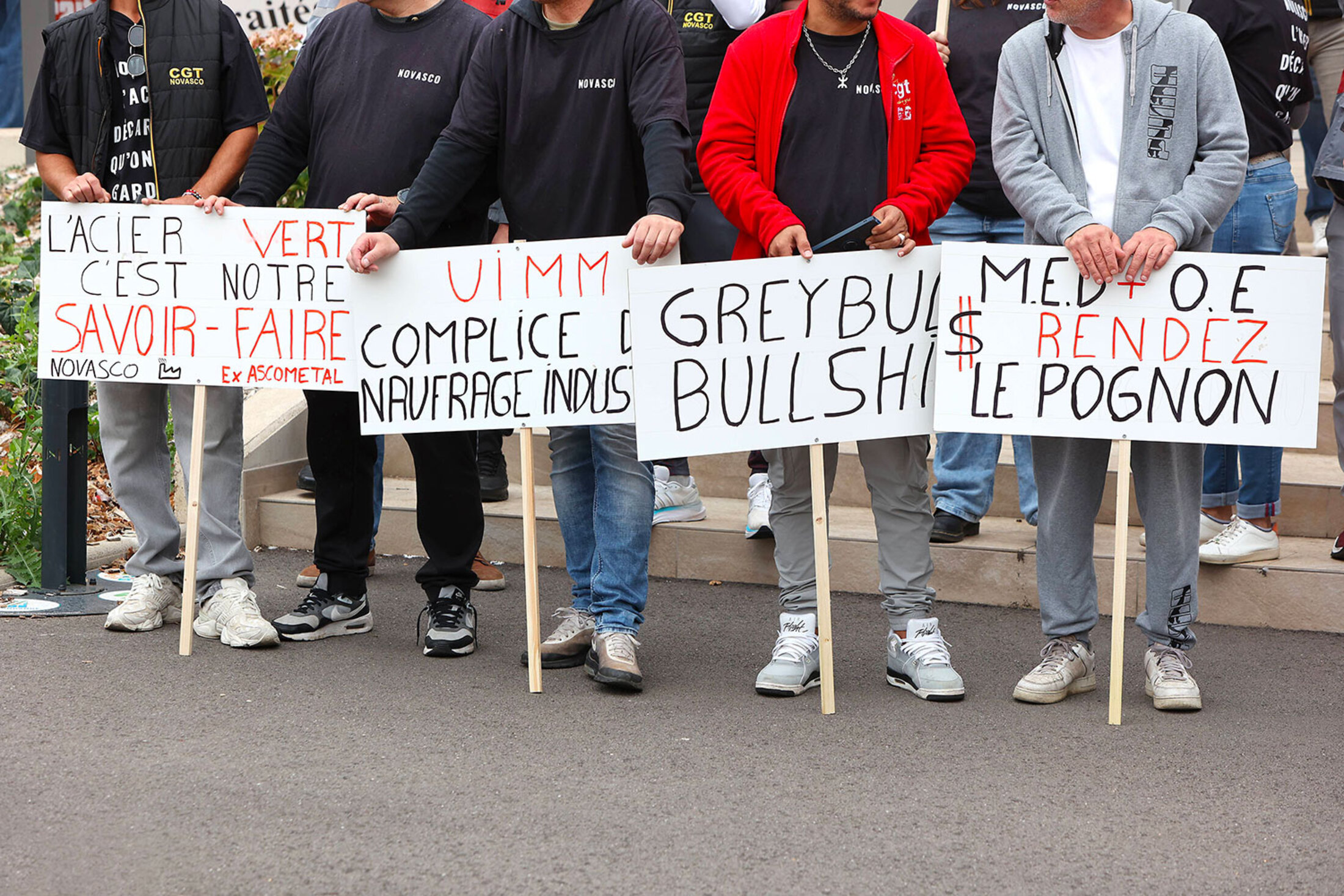
In parallel to the action now launched by the French state, a majority of those who were made redundant in the fiasco are taking joint legal action against the British firm to seek greater financial compensation after they received minimal redundancy payments.
It was in July 2024 when Greybull Capital acquired four steelworks that were sold as part of the dismantlement of the ailing former steelmaking group Ascométal, principally a supplier of the automotive industry but also the armaments sector.
At the time of the acquisition, Greybull committed itself to injecting 90 million euros into the business, while in parallel the French state ploughed 85 million euros into the project, which Greybull renamed Novasco.
But, in what the lawyer acting for the French state, Bernard Grelon, said were “acts that could be described as fraud”, Greybull stumped up only 1.5 million euros of the 90 million euros it had promised to invest in the business, and in August 2025, just 13 months after it was purchased by Greybull, the company went into administration.
Subsequently, one site was sold to a small French company while the remaining three – including the largest, a 115-year-old plant in Hagondange, north-east France – were closed. Out of a workforce of 696, a total of 531 people lost their jobs.
“There is a [French] state that honoured its commitments, [and] which recurrently asked the investor [Greybull] to keep those it had made, and the latter systematically lied,” said Martin at a press conference at the Paris court of economic activities, where the proceedings were launched on Monday, in the presence of lawyers for the former employees and also trades union officials.
The minister has accused Greybull’s management of “behaving like delinquents”, and said the French state “cannot accept that the community pays the price of the failings of this investment fund”.
Grelon, present at the press conference, said the legal action by the French state was to seek “reparations for the prejudice caused by contractual and quasi-criminal faults” on the part of Greybull, which he said had “deceived” the French state.
On top of the legal action for damages, Martin said he had also alerted the public prosecution services to the possibility that Greybull’s actions could be legally defined as fraud.
Enlargement : Illustration 1
Greybull, based in Knightsbridge in London, and whose co-founder and chief executive Marc Meyohas is French, has claimed that it was only after the acquisition that it discovered that the condition of the plants, and that of Hagondange in particular, was much worse than expected.
In a statement released last November when Novasco was wound down, it said: “We regret that our last-minute attempt to rescue Novasco could not succeed. Unfortunately, the actual condition of the company — particularly the state of the steel mill — was far worse than presented and to an extent far beyond what one typically encounters. This situation made it impossible for Novasco’s plans to be executed.” The firm added that it had “suffered losses in the process”.
Christophe Clerc, lawyer for the laid-off employees now suing Greybull for compensation, dismissed the private equity firm’s claim that it did not know the true condition of the plants. “It’s their job [to know],” said Clerc, speaking at Monday’s press conference. “To say ‘I didn’t know’ is to plead one’s own incompetence as a defence, that can’t work.” He said that if Greybull had been taken by surprise at the condition of the plants after the sale, it could have applied to a commercial court for the sale to be renegotiated. “But they didn’t do that, no doubt because they didn’t want to have to explain themselves before the commercial court,” said Clerc.
Greybull has previously caused outrage over the collapses of several companies it had bought up. Most notable among these was British airline company Monarch, which it bought in 2014 and which ceased trading in 2017, leaving more than 100,000 of its passengers stranded abroad, and who were repatriated at a significant cost out of public funds. In 2016, Greybull purchased Tata Steel’s struggling steelmaking business in Britain, “Long Products Europe”, for a symbolic pound, which went into liquidation three years later.
Given the complexity of the case, a decision on the substance [of the state’s claim] will take at least one year.
While the French industry minister’s launching of legal action this week was roundly applauded by those concerned by the collapse of Novasco, the government had shown little interest when concerns about Greybull’s ownership were first voiced by the company’s employees and union representatives as early as the summer of 2024, before Martin's appointment as minister.
“I will not allow it to be said that our services were not attentive to the situation in this case, and were not breathing down the neck of the buyer,” said Martin. “And I won’t let the responsibility be inversed. There are no doubt lessons to be learnt but, I repeat, they who did not keep their word are called Greybull, and not 'the state'.”
The question of nationalising the steel plants that were sold to Greybull has never been seriously studied, despite the fact that a clause in the contract Greybull signed in 2024 set out that the state would take back “all” of the business if Greybull did not honour its investment commitments. Mediapart understands that the CGT trades union had on several occasions called on the government to enact that clause. In November 2025, when the business was wound down, the economy and finance ministry failed to respond to repeated questions about its inaction over the clause, submitted by Mediapart. At the press conference earlier this week, the industry minister also avoided a clear answer to that issue, telling Mediapart that “we have always preferred to envisage the possibility of [another] buyer positioning themselves”.
Meanwhile, Martin warned that, “given the complexity of the case, a decision on the substance [of the state’s claim] will take at least one year”.
The legal action of the 476 former employees seeking greater redundancy compensation will run in parallel, when lawyers will pursue their claims in courts situated close to the four plants bought by Greybull.
Representing them at this week’s press conference, lawyer Christophe Clerc detailed their claims. “There is a moral prejudice – for some of them, it has been their fourth time [the business has been] in administration,” he began. “That uncertainty is heavy, and it is destructive in terms of a vison one can have for the future. The second prejudice is the loss of the chance to save one’s job. And the third prejudice is that the redundancy scheme was adopted with extremely limited funds, because the obligation [to add to the financial compensation] was not respected.”
The 531 who lost their jobs received the minimum legal amount of compensation, which prompted Yann Amadoro, the CGT trades union representative at Novasco, to comment that what they failed to gain in the initial redundancy payment negotiations “they count on obtaining from the legal battle”.
-------------------------
- The original French version of this report can be found here.
English version by Graham Tearse