


Amid the continuing political deadlock in France, with the minority centre-right government, handpicked by President Emmanuel Macron, at the mercy of a deeply divided hung parliament, Prime Minister Sébastien Lecornu on Monday announced he would, despite his previous assurances to the contrary, use a controversial article of the Constitution to force his 2026 budget bill through parliament and into legislation without a vote.
That process began on Tuesday afternoon, concerning the first stage of the draft budget legislation, centred on revenue.
Article 49, paragraph 3, (49.3), use of which is increasingly regarded by parliamentarians as undemocratic and an abuse of power by the executive, was included in the nearly 70-year-old constitution of France’s Fifth Republic as an exceptional tool to allow governments to override the opinion of parliament for what a prime minister considers to be indispensable legislation. It was notably used to push through centre-right President Emmanuel Macron’s widely unpopular pension rights reform in 2023.
The use of Article 49.3 triggers one or more votes of no-confidence in the government by Members of Parliament (MPs). If it loses the vote, the legislation is abandoned and the government overturned.
If Lecornu’s government survives the no-confidence votes, the budget, which the prime minister insists will bring down the current public spending deficit (5.4% of GDP in 2025) to no more than 5% of GDP, could be promulgated by the middle of February.
The French prime minister is relying on the Parti Socialiste (PS) and the conservative Les Républicains (LR) to refrain, in return for agreed concessions in the draft budget legislation, from voting the no-confidence motions that the far-right and radical-left have pledged to submit. Officials from both the PS and LR have made clear they will not support the motions, despite the fact that socialist leader Olivier Faure, during negotiations with Lecornu last autumn, had warned that any use of Article 49.3 would lead to the PS withdrawing its support of the budget bill.
Lecornu said that he had chosen to go back on his word with “regret” and “bitterness” but that he had no choice, blaming the “sabotage” of the overdue draft budget legislation by the radical-left La France Insoumise party (LFI) and the far-right Rassemblement National (RN). The French prime minister also laid blame on the Communists and the Greens, who he said had “deserted” the process of reaching a consensus over the draft legislation which, in accordance with pre-2024 parliamentary timetables, should have been voted through parliament by the end of December.
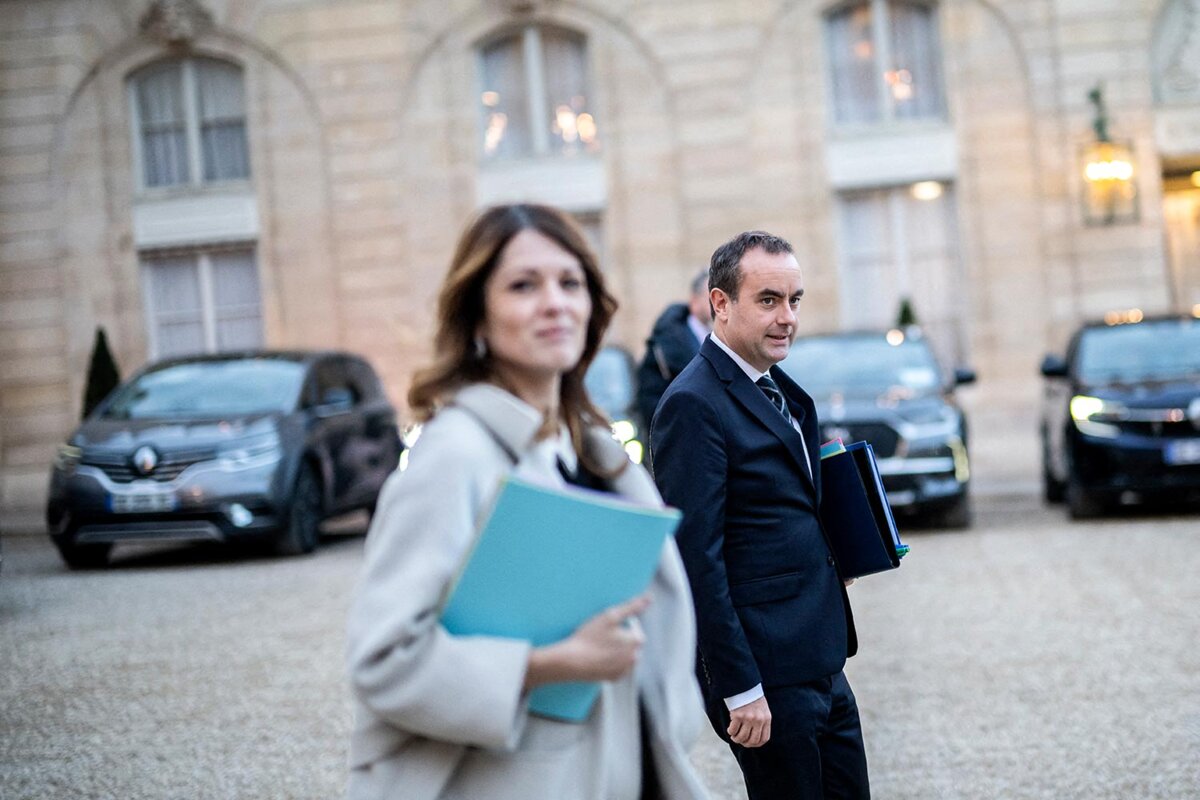
Enlargement : Illustration 1
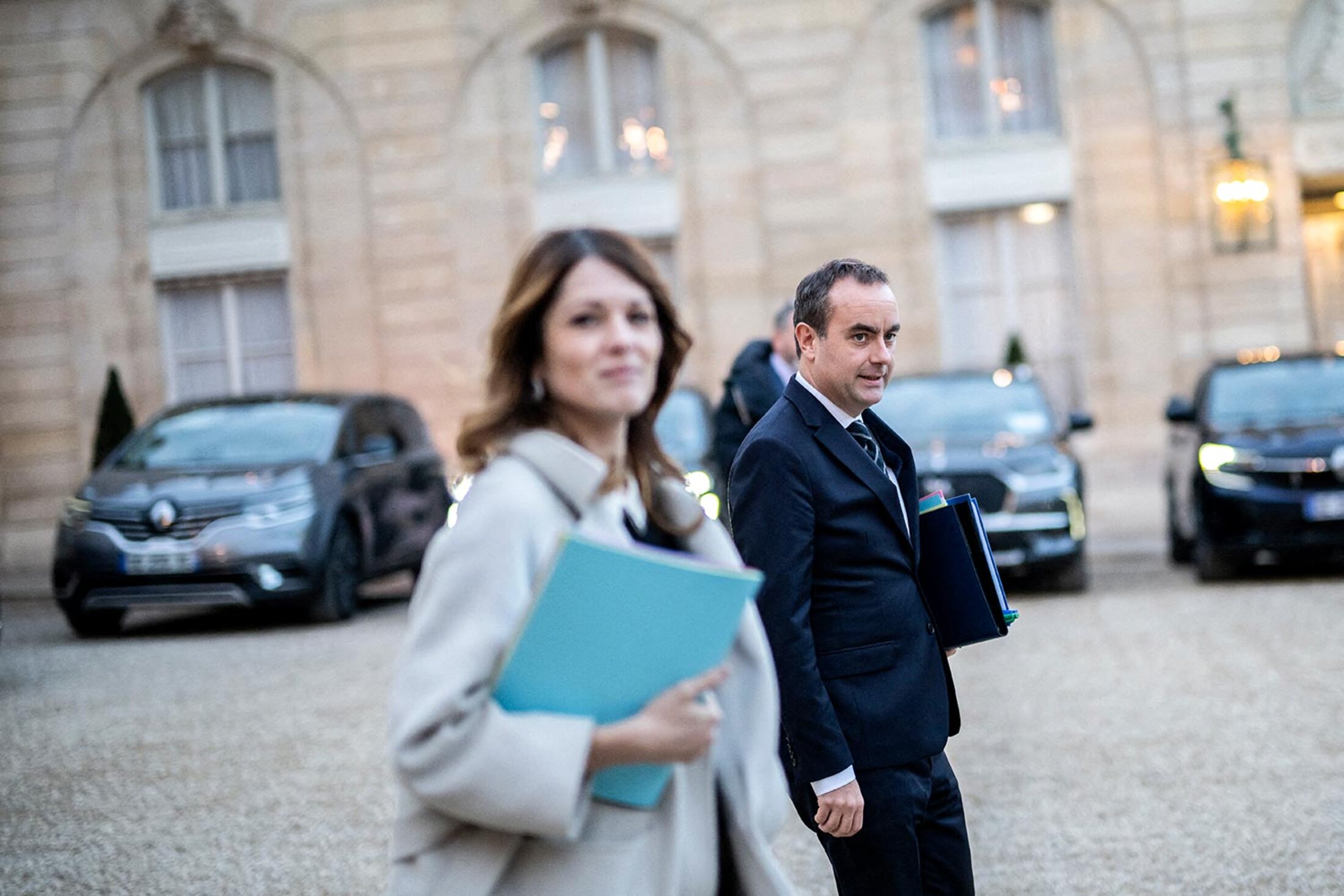
With its use by Lecornu, a 39-year-old Macron loyalist who began his fast-rising political career 20 years ago under the colours of the conservatives, Article 49.3 will have been employed six times by the successive coalition governments appointed by Emmanuel Macron since his miscalculated decision, in the summer of 2024, to call early parliamentary elections, which left his own party in a minority within a hung parliament.
A deadlock created by Emmanuel Macron
Macron dissolved parliament after the victory of the RN in France in European Parliament elections. The French president had hoped that, in the context of national elections, support for the far-right would collapse in favour of his and other rightwing parties – whereas not only did the RN garner the largest number of seats in parliament of any single party, the fortunes of the Left were revived and Macron’s once high-riding centre-right party, now renamed Renaissance, was left scalped and behind both.
In the 577-seat National Assembly, the powerful lower house, the far-right RN has 119 seats (not counting its allies), while the now increasingly divided leftwing alliance, the NFP, made up of the radical-left (70), the socialists (61), the Greens (38), and the communists (17), together form the largest group of allied MPs.
The conservative LR party, which initially joined Lecornu’s government, follow behind Macron’s third-placed Renaissance party.
Macron’s first two prime ministers in the now 18-month-old hung parliament, respectively Michel Barnier and François Bayrou, were both forced out of office by a no confidence vote. In Barnier’s case the vote was triggered by his use of Article 49.3, while Bayrou had voluntarily initiated the vote.
Since his appointment as prime minister in September last year, Lecornu’s strategy over the draft budget legislation has been to bargain behind closed doors with the socialists and the conservatives, agreeing concessions in exchange for surviving the no-confidence votes that regularly threatened his government’s survival. One of his concessions to the socialists was an assurance that, unlike his predecessors, he would not use Article 49.3. “The government will propose, we will debate, and you will vote,” he told the National Assembly on October 24th last year, adding that “without 49.3, without an absolute majority” it would be parliament which “will have the last word”.
He then assured MPs that “to renounce” the use of Article 49.3 was “the guarantee for the National Assembly that debate, notably on the budget, will live on, and continue to the end. To the vote”.
Bargaining with the socialists
But on Monday this week, after several weeks of speculation, Lecornu said that he will, after all, use the constitution’s Article 49.3 for the adoption of the budget, beginning with its first content, dealing with revenue, on Tuesday. He made the announcement after holding a special cabinet meeting for government members to give their approval to the process, as required by the constitution, which includes exposing the government to a no-confidence vote.
Lecornu said that he chose to go back on his word with “regret” and “bitterness” but that he had no choice, blaming the “sabotage” of the overdue draft budget legislation by the radical-left LFI and the far-right RN, both of which have since pledged to separately submit motions of no-confidence before parliament. The French prime minister also laid blame on the Communists and the Greens, who he said had “deserted” the process of reaching a consensus over the draft legislation.
Lecornu and the PS, who normally are unlikely bedfellows, were last week engaged in a series of intense negotiations ahead of the prime minister’s use of 49.3, and on Friday he announced the concessions made to the socialists. They include a rise of 50 euros on monthly benefits paid to lowest-income earners, the creation of an extra 2,000 jobs in the education sector, a 1-euro fixed price for meals served to students in higher education canteens, and a boost on supply of affordable housing. Lecornu argues that the cost of such concessions, in a budget aimed to cut public spending, will be met by a surtax on large corporations.
The major concession granted to the socialists and made earlier this autumn, was the suspension of the application of the 2023 pension rights reform.
While the Parti Socialiste (and notably its leader, Olivier Faure) is the target of fierce accusations of betrayal by LFI and, to a lesser extent, other partners within the leftwing NFP alliance, it believes its strategy of gaining concessions while adopting a posture of responsibility in staving off budgetary chaos will ultimately pay off with nationwide municipal elections due in March, and presidential and parliamentary elections due in the spring and early summer of 2027.
“We are at a point of equal balance between our values and budgetary realism, between our identity and responsibility,” said Socialist MP Laurent Baumel, a close ally of Olivier Faure. “This 49.3 is a manner of consecrating that compromise.”
“In the real world,” he added, “people couldn’t care less how the [draft legislation] was passed through. What is important is the content of the budget and the general reassurance that offers for the country.”
-------------------------
- The original French version of the article upon which much of this report is based can be found here.
English version, plus some additional reporting, by Graham Tearse