


It was moment of triumph on Saturday for Ursula von der Leyen, president of the European Commission, as she inked, on behalf of the 27 members of the European Union (EU), the free-trade deal between it and the South American trade bloc Mercosur. For years she has championed what she called a “historic” agreement which creates, as she announced in Asunción, the capital of the Paraguay where the signing ceremony took place, the world’s biggest free-trade zone with a population of 700 million.
It was also historic in that the deal was signed without the approval of one of the EU’s founding countries, France. In an about-turn on January 8th, two months after describing the agreement as “quite positive” during a visit to Mercosur member state Brazil, France’s president Emmanuel Macron announced that his government would vote against the adoption of the EU-Mercosur treaty. “The logic that presided for years was ‘we negotiate, we obtain a few things, and in the end we show we’re in agreement’,” commented one French minister, speaking on condition his name was withheld.
But that “logic” was blown away by the growing crisis in France of deep unrest among its farmers, a tinderbox of longstanding grievances, and which the government feared could spiral out of control. Initially sparked by anger in early December at the authorities’ strategy of culling whole herds of cattle to prevent the spread of Lumpy Skin Disease, the latest protests – with roadblocks across the country, including in Paris – were heightened by the imminence of the Mercosur deal, which a majority of French farmers oppose. They denounce what they regard as unfair competition from the agricultural produce of the Mercosur member countries, which has fewer environmental and public health regulatory constraints, notably concerning the use of pesticides and hormones.
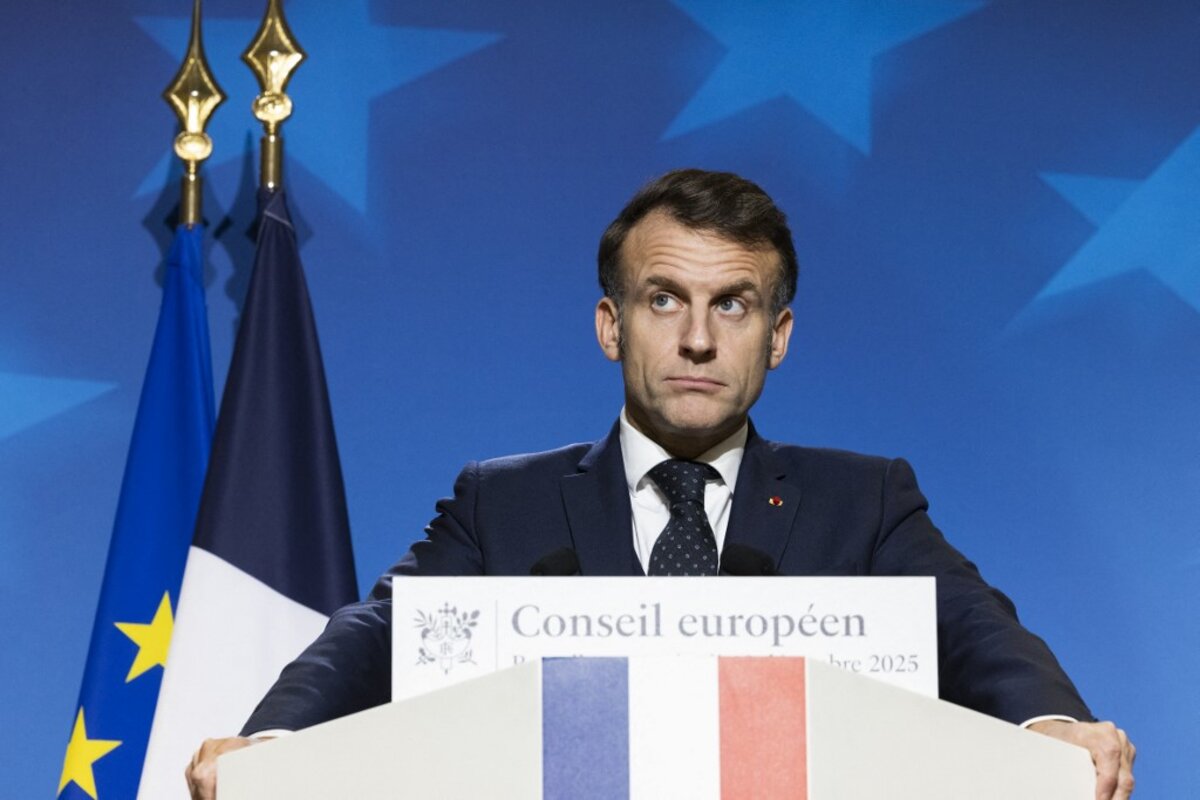
Enlargement : Illustration 1
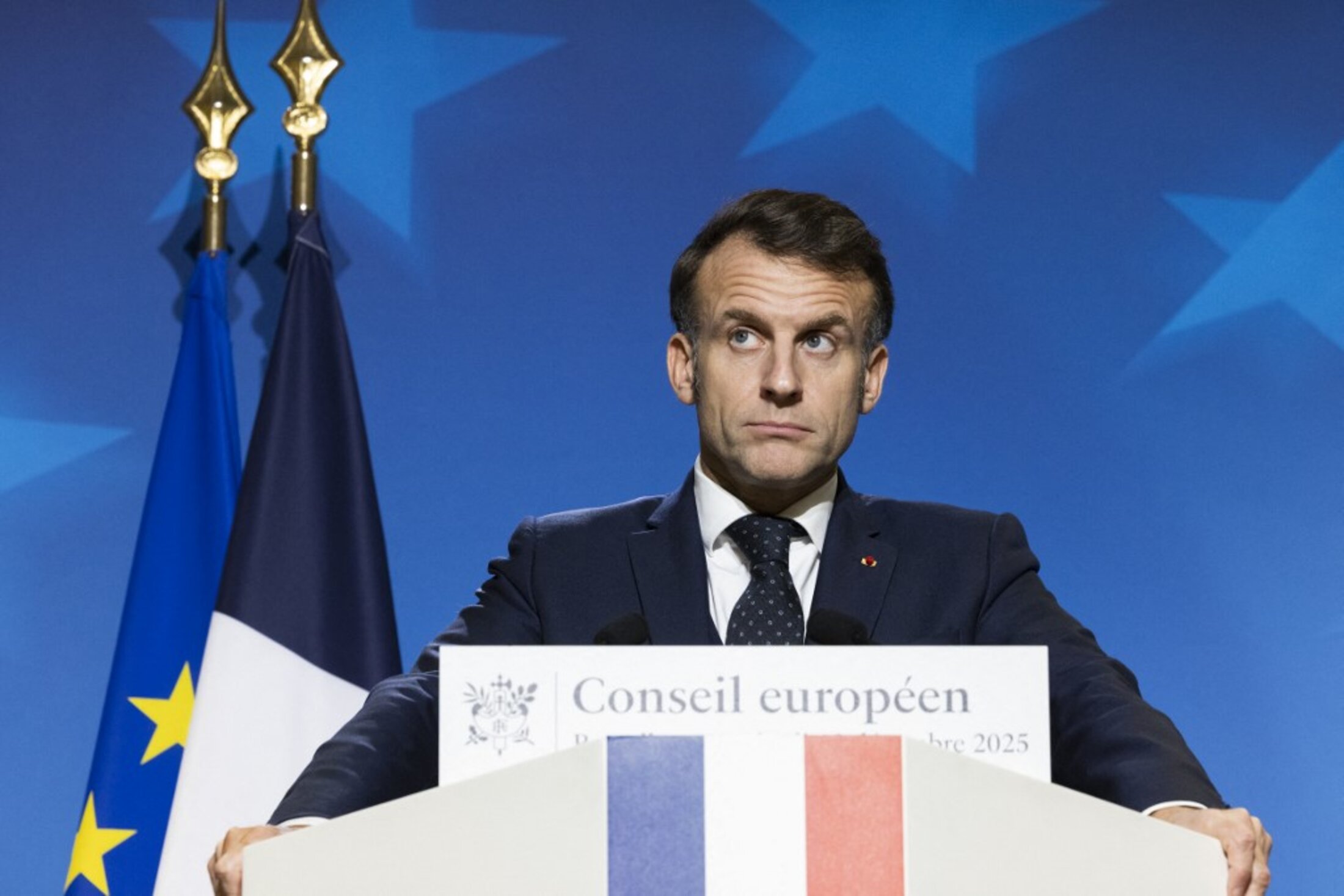
France, supposedly a leading driver of EU policy making, was revealed to be incapable of changing the bloc’s position on the Mercosur deal which, in a rare consensus, was opposed by all the major French political parties, as demonstrated by votes against the deal in the lower house, the National Assembly, as early as January 2025, and again in November.
That was not enough for Macron to be able to modify the EU’s approach, albeit in the final moments of two decades of negotiations. It was reminiscent of the trade and tariffs agreement signed between US President Donald Trump and Von der Leyen on July 27th last year, a deal opposed by Paris. Then French prime minister François Bayrou described the moment as a “dark day”, while his economy minister Éric Lombard described it as a “lose-lose” deal.
Céline Imart, a Member of the European Parliament (MEP) for France’s conservative party Les Républicains, said the Mercosur saga was “a failure” of what she called “La Macronie”, and which “has weakened us at a European level”, adding: “Emmanuel Macron’s position on the subject [of Mercosur] has never been clear, it has blurred the message.” French economist Maxime Combes, member of the alter-globalization association ATTAC and opposed to the Mercosur treaty, observed that Macron’s comments in Brazil in November “were considered to be a green light for the ratification”.
The extent of France’s influence within European institutions, the subject of never-ending debate in Paris and Brussels, has suffered from the political instability within the country. Since Macron’s first election victory in 2017, seven foreign trade ministers have succeeded each other, with all the limitations that creates for developing inter-personal relationships and for acquiring a thorough understanding of the Mercosur negotiations.
The nomination in December 2024 of then French foreign minister Stéphane Séjourné as EU commissioner for prosperity and industrial strategy also played a part in weakening France’s influence in the bloc. Several French ministerial and diplomatic sources agreed on describing Séjourné, a personal friend of Macron’s, as discreet. “We’re very far from Thierry Breton,” said one, referring to France’s outspoken former conservative economy minister who served from 2019 to 2024 as EU commissioner for the internal market, and who is known for his conflictual relationship with the Macron camp. “You don’t hear Séjourné,” the source added, “you don’t know what he does and he doesn’t have Von der Leyen’s ear.”
On top of that is the political discredit of the French president, notably emanating from his miscalculated dissolution of parliament in 2024, which resulted in a hung parliament and three successive governments largely incapable of legislating. Édouard Gaudot, a French historian, Green party militant and former political advisor to the European Parliament, speaks of “the extreme weakness of Emmanuel Macron since June 2024”, when he dissolved parliament. “The voice of France is weakened,” insists Gaudot, with considerable experience of the inside workings of the EU. “People in Brussels speak to the French like they would to the seriously injured, with a dose of commiseration.”
Around the table of the 27 EU member countries, France’s views carry less weight than those of Germany and Italy. In the last quarter of 2025, when some of his advisors and ministers were calling on him to seek a delay in the EU vote on the Mercosur deal, Macron was sceptical about the value of doing so because Von de Leyen was intent on finalising the agreement and which was strongly supported by Germany. In the end, it was the very temporary objections raised by Italy – and which were withdrawn after Rome obtained an EU funding package – which held up the signing of the agreement for a couple of weeks.
The perspective of Macron’s departure in 2027 (when he is bound by the constitution to step down after two terms in office) hardly helps the French cause. At the European Parliament, one of the leaders of the Macron camp’s MEPs, speaking on condition his name was withheld, commented: “On all of the structuring decisions, on all the middle-term projects, we are heard less. One increasingly hears the refrain that is ‘if it’s Bardella in 2027, why engage with France now?’”
That was a reference to Jordan Bardella, chairman of the far-right Rassemblement National party, running high in opinion polls, and who will be the party’s presidential candidate in the event that its figurehead Marine Le Pen is barred from running if she loses her appeal against a corruption conviction.
A serving French minister, also speaking on condition his name is withheld, told Mediapart that he sees France’s weakening status as the result of the approach of successive French governments. “What’s being played out, between the lines, is France’s relationship with Europe,” he said. “It becomes complicated to constantly trumpet the Franco-German ‘couple’ when we are the only one’s championing it. We don’t have a sufficiently combative attitude on the subject. With respect to Germany, which wants to create a strong Mitteleuropa, we have been too naïve. It is time to defend our interests.”
The French chairwoman of the centre-right Renew group within the European Parliament, to which Macron’s Renaissance party adheres, Valérie Hayer argues that there has been no significant diminishing of France’s influence. “The situation should be dedramatized,” said Hayer, who obtained a poor result in France as lead candidate for the centre-right party in European Parliament elections in 2024 (when the far-right garnered the largest slice – 31.31% – of votes cast, which prompted Macron’s dissolution of parliament). “We are not isolated. Five countries voted against [Mercosur] and Belgium abstained. And I note that there is little said about those moments of French influence – the application of the DSA [editor’s note, the 2022 Digital Services Act] on the digital [technology] giants, the tariffs on internal combustion cars produced in China, a position developed with Germany. There have been victories since 2022.”
Hayer also claims Macron has been successful on shaping European defence strategy. Indeed, the French president’s advisors and supporters constantly advance the argument that the support today for a strategic autonomy of the continent’s defence was initiated by Paris.
Yet what could have been a large feather in his cap may well prove to be the ultimate symbol of Macron’s weaknesses. Firstly, because strategic autonomy is difficult to put in place when the French government is struggling to pass through parliament its public spending budget and when the country’s defence industry is reluctant to follow through on the pledges of presidential speeches. Secondly, because promoting such autonomy sits awkwardly with the French president’s initial, apparently approving, reaction the US incursion into Venezuela, or when he appears to have abandoned any outspoken approach to the issue of the future of Gaza, now that he has recognised a fictitious state of Palestine.
The geopolitical context created by the aggressive behaviour of Donald Trump was one of the headwinds Macron faced over the Mercosur treaty. It prompted numerous EU member states to regard a deal with the five full members of the Mercosur bloc (Venezuela’s membership has been suspended since 2016), and its seven associate members, was a well-timed response to Trump’s tariffs war and his increasingly touted vision of a world divided into hemispheres.
“It’s a manner of showing that the EU remains an actor who counts, even in regions of other continents where, at first glance, it has little influence,” observed Édouard Gaudot.
-------------------------
- The original French version of this analysis article can be found here.
English version by Graham Tearse