


Get over the shock. And fast. By bombing Venezuela on the night of January 2nd and by capturing, without any lawful basis, Nicolás Maduro and his wife Cilia Flores, Donald Trump has enshrined the right of the strongest over the strength of the law and authorised the autocrats of this world to engage in the most depraved actions.
Whether the United States intervention is a military or a police action, it breaks international law. The corruption and violence of the Venezuelan regime changes nothing, nor does the way President Maduro was elected: only the Venezuelan people have the right to decide their own future. Approved neither by the US Congress in Washington nor by the United Nations Security Council, justified neither by legitimate self-defence nor by any real and imminent danger, the operation amounts de facto to an act of aggression, contrary to the peaceful settlement of disputes between states.
For that reason, it could in theory justify a military response from Venezuela, if it had the means, or from the Security Council, if it were not blocked by Washington’s veto.
But international law is dead, because the rules have changed.
Enlargement : Illustration 1
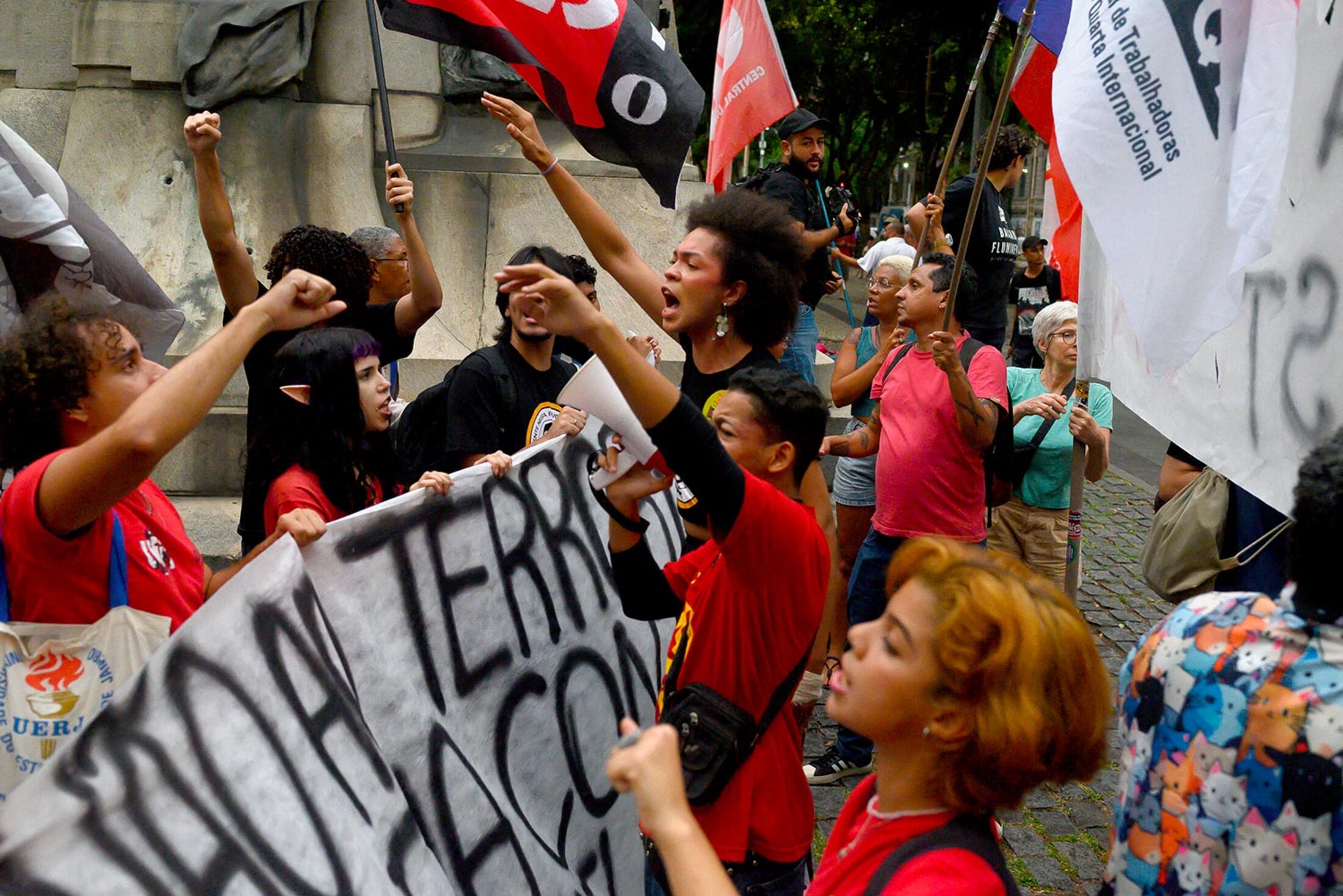
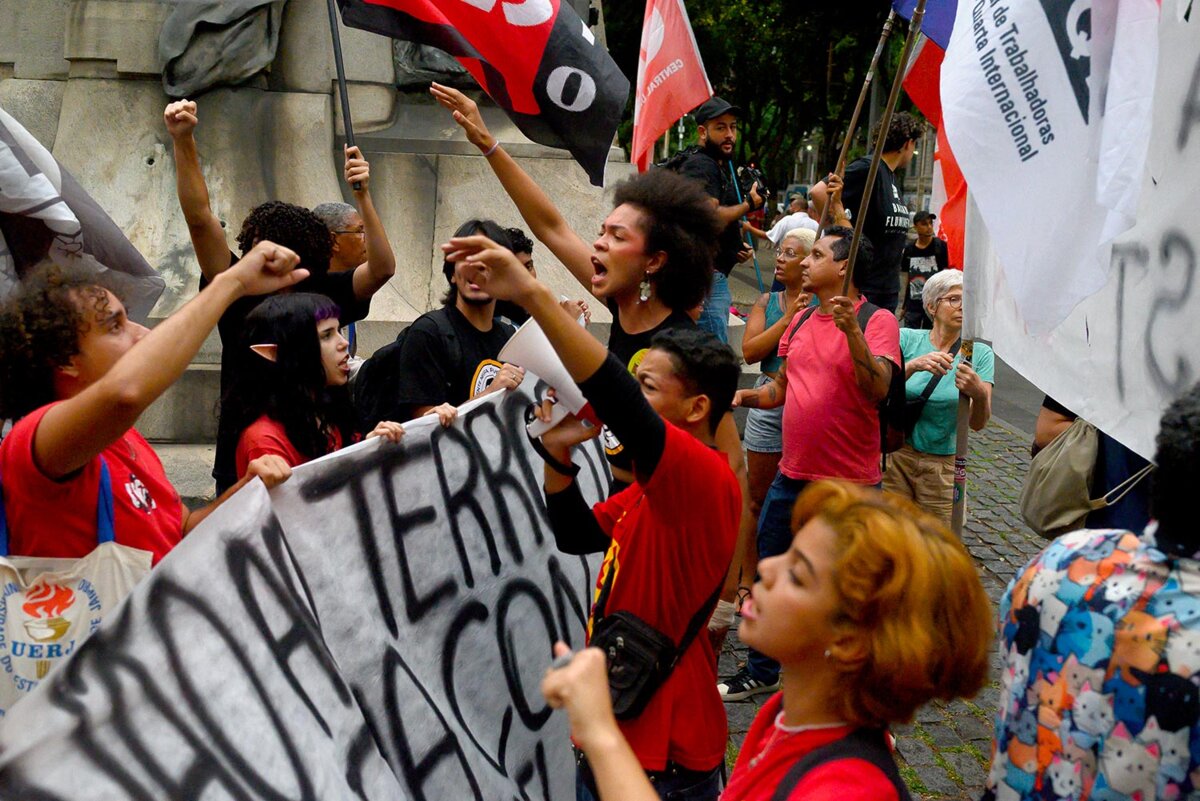
The equality of local populations before the law, their right to self-determination, the ban on threats or the use of force against the sovereignty, territorial integrity and political independence of any state: these foundations of the Charter of the United Nations, a guiding light built on the ashes of the Second World War, have been switched off.
Geopolitics of the Wild West
Donald Trump takes to its extreme that Society of Spectacle once described by French philosopher Guy Debord, with the aim of enriching his own circle. His geographical scope has no limits: he sees not only his country but the world itself as territory to be subjugated for his profit. His thirst for oil spurs him to grab Venezuela. Tomorrow, it could be Greenland, which he says the US “absolutely needs”.
Indeed, beyond its strategic location, the mineral resources and rare earths of that Danish territory, which has an association agreement with the European Union, are vital to his tech friends, who are busy with another form of extractivism - of the personal data of billions of people. This digital plundering, one of the most vast and invasive the world has yet known, is even more worrying because it concerns nothing less than our knowledge and our most intimate daily interactions.
This new geopolitics of the Wild West, based on an imperialist strategy of monopolisation, places the boss of the United States in a position to dominate the contest with Russia and China, or so he hopes.
Asked on January 4th about the presidential desire to run Caracas, the US Secretary of State Marco Rubio said explicitly: “You have to understand, why does China need [Venezuelan] oil? Why does Russia need their oil? Why does Iran need their oil? They’re not even in this continent. This is the Western Hemisphere. This is where we live, and we’re not going to allow the Western Hemisphere to be a base of operation for adversaries, competitors and rivals of the United States.”
The idea which held sway in the 20th century that Latin America was the United States' backyard is now once again openly asserted. But it does not stop there, as shown by the insistence on targeting the 'Western Hemisphere'. All European countries and NATO are now to be turned into vassals, geographically speaking, having benefited thanks to - and in Washington’s eyes for far too long - from US military protection.
Contrary to what some might think, territorial expansionism is not at odds with the “America first” slogan so dear to the MAGA or 'Make America Great Again' movement that helped elect Donald Trump. Indeed, it is said to be vital to defend the imaginary notion of a white nation that is closed to immigration and hostile to multiculturalism. According to its proponents, the West failed when it gave up its empires and colonies; and did even worse when, after World War II, it welcomed the citizens of its former dependencies.
According to this thesis Europe, in particular, is doomed to “civilizational erasure”. To counter this “danger”, which is seen as “existential” for the United States too, the solution is supposedly to (re)colonize new territories. This is to be done in the name of profit, without hiding behind the defence of human rights or democracy, as was the case hypocritically during the Iraq War.
Enlargement : Illustration 2
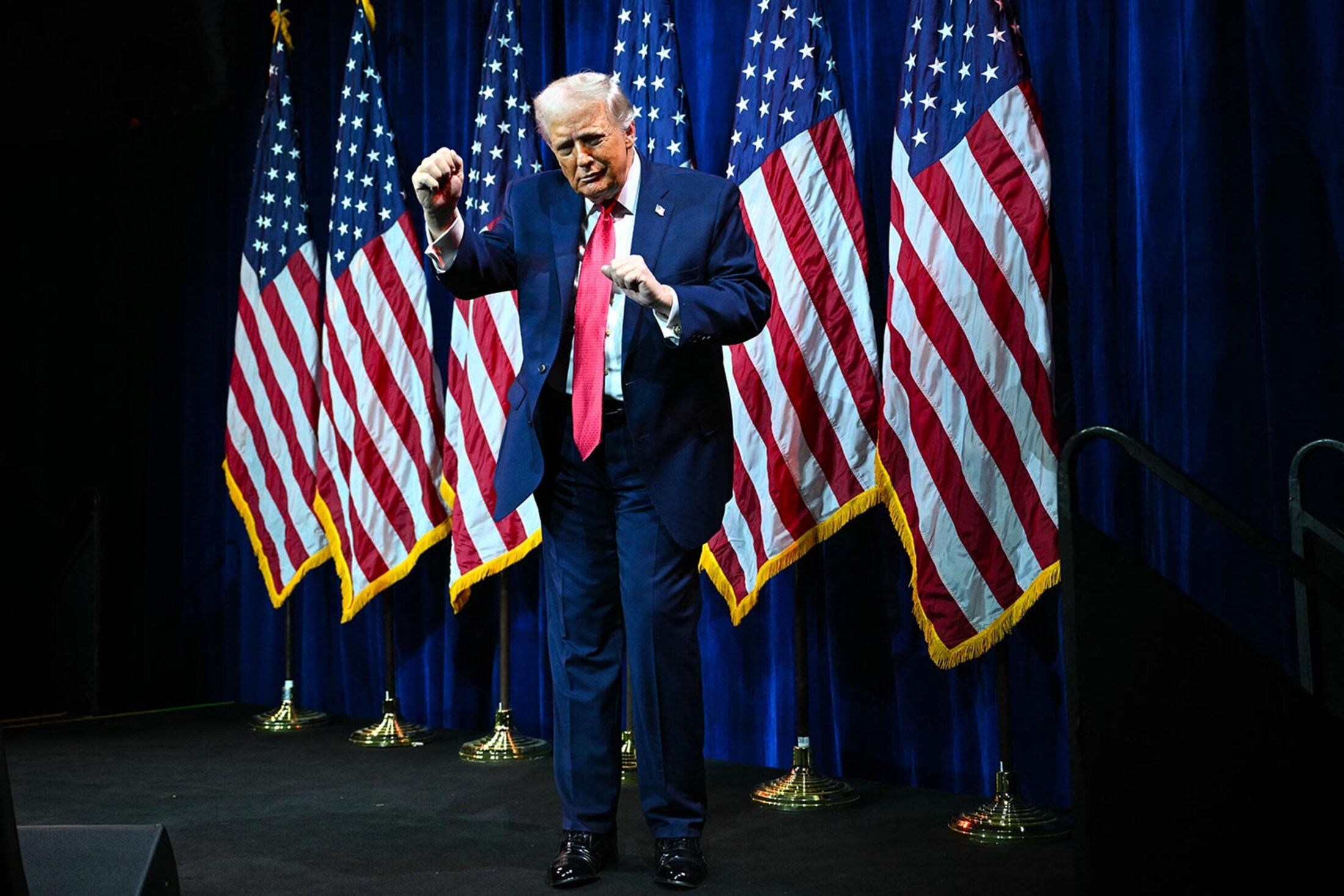
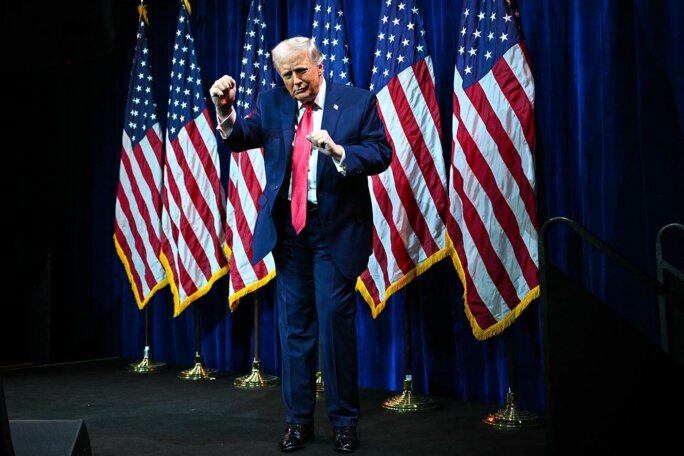
The rise of new slogans, such as 'Bring Back Colonialism' or 'Make Colonialism Great Again', highlight in a few punchy words Donald Trump’s obsession with the Gilded Age, the so-called golden period of the years 1870-1900. This was an era marked by the promotion of monopolies, the accelerating impoverishment of the working classes and the return of colonisation, which the United States itself practised in places such as Porto Rico and Hawaii.
While the digital giants are among the main beneficiaries of this economy of predation - one could say devouring - Elon Musk’s plans for Mars remind us that this revisited expansionism is no longer restricted to the Earth but extends to the Solar System.
Serving the wealthiest
Whether this tipping point signals a “capitalism of finitude”, as French economist and historian Arnaud Orain describes it, or “Crack-up capitalism”, according to the analysis of Canadian historian academic Quinn Slobodian, the outcome is the same: this new version of capitalism has discarded its liberal mask. It works in the open, in raw and brutal form, no longer bothered about anything that might slow it down.
Without any geographic limits, this system favours a handful of privileged people, to the detrment of the general interest. In a world where resources begin to run short, it enables them to preserve or boost their income by taking what belongs to others.
To gain or regain power - as seen in the recent US elections - they use racist policies that exclude targeted minorities to ostensibly benefit the country's 'nationals'. This helps them forge vertical alliances that shatter working-class solidarity. To the detriment of the common good, the separatism of the powerful - specifically white elites - is allowed to flourish. This is the phenomenon described in the book Zones, là où les riches font sécession ('Zones: Where the Rich Secede'), published on January 9th by Mediapart and Éditions Divergences.
The oldest democracy in the world has thus turned itself into a plutocracy. The assault orchestrated by Donald Trump is a power grab against the United States' citizens as much as against Venezuelans, as it reveals a policy that is bound to worsen contemporary social, democratic and ecological disasters.
Indeed, it is more than that; by seeking to impose a new social and racial order on the world, the new United States conception is an assault on all the peoples of the planet. For behind the colonialist impulses, this is what it is about: the imposition of societies that are unequal, anti-democratic, racist and destructive of the environment.
Waiting for Godot
Faced with such a disaster, the cowardice of European Union leaders, with Emmanuel Macron to the fore, is all the more culpable. Moscow has rightly lost no time in highlighting the equivocations of a West that claims to be at the forefront of human rights. “Their fake values are for sale,” Kirill Dmitriev, the boss of an investment fund close to Vladimir Putin and who is in charge of talks with Donald Trump, sneered on January 3rd. “Waiting for the scared vassals to speak is like waiting for Godot,” he mocked, in reference to Samuel Beckett’s famous play, the masterpiece of the theatre of the absurd.
By repeating the political and moral fault of double standards already seen over Gaza, European heads of state kill the credibility of their support for Ukraine and, more generally, for democratic values.
Their spineless rhetoric even weakens them in their ability to defend their own citizens, since the Trump corollary to the Monroe Doctrine, defined in the new United States national strategy, makes clear that the reassertion of the right of economic interference goes hand in hand with a will to interfere in European political affairs, by supporting through all means available – and especially online ones - the forces of the far-right.
The clear aim is to subjugate conquered countries both economically AND ideologically. Emmanuel Macron would do well to bear that in mind, given that this year municipal elections in France will serve as an indicator for the presidential election in 2027.
European societies must stop believing they are protected by their past glories, from the Enlightenment to democratic revolutions, which they like to think have organised their way of life for centuries.
They must stop seeing themselves as forever anchored at the centre of the world, safe behind the many declarations defending their fundamental rights, the dignity and worth of the human individual, the equality before the law of men and women, as well as of nations great and small.
These same European societies must also stop being cowed by the brutality of leaders running loose who openly defend their private interests against the general interest.
In the face of American hegemonic ambition, one can only hope that the people under attack - in both the North and the South - will take up the mantle from their feeble leaders. Against all forms of imperialism, including Chinese and Russian imperialism to which some sections of the European Left continue to remain tethered, only a strong, solid antifascist international movement, able to unite the lifeblood of nations across borders, can resist this steamroller that crushes citizens' rights.
From Indonesia to Peru, via Nepal, Madagascar, Morocco and Serbia, the young people of many countries, echoing the Arab Springs of 2011 and the uprisings of 2019, have in recent months stood up to defend their living conditions and fight corruption.
At the heart of the demands made by 'Gen Z', which has skilfully harnessed digital tools, is a call for a fairer distribution of wealth. Against the privatisation of the world for the profit of a few, it is vital that we not only hear their voices but that we amplify them as much as possible.
----------------------------------------------------------------------------
- The original French version of this op-ed can be found here.
English version by Michael Streeter