


French Prime Minister Jean Castex has announced that France will not sign up to the current terms of a proposed free trade deal between the European Union (EU) and the South American Mercosur economic bloc because of environmental and climate concerns and notably the deforestation of swathes of the Amazon region for the benefit of producers of beef, a key export for the Mercosur group, made up of made up of Argentina, Brazil, Paraguay and Uruguay.
For the trade deal to be enacted, all the EU member states must approve its terms.
The announcement by Castex last Friday that France opposes the deal “as it stands” came after he was presented with the conclusions of an independent report into the environmental and social consequences of such a free trade deal. That study, by an expert panel led by French economist specialised in climate and energy issues, Stefan Ambec and which was commissioned last year by Castex’s predecessor Edouard Philippe, described the draft agreement as “a missed opportunity for the EU to use its negotiating power to obtain solid guarantees” over environmental and health considerations and “societal” expectations of the bloc’s citizens.
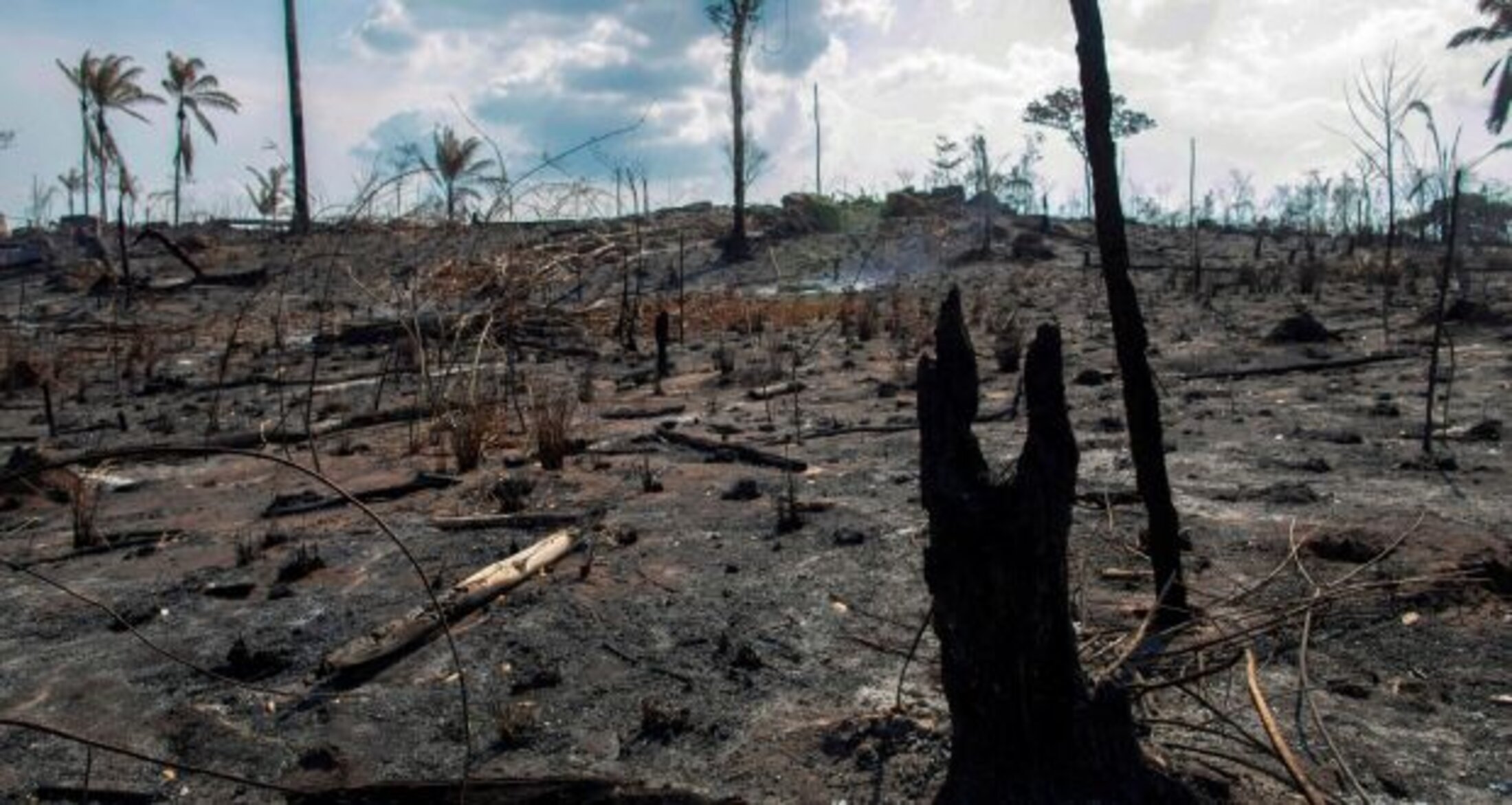
Ambec’s report was notably concerned by the likely surge of deforestation in Amazonia, which is largely practiced by setting fire to the forest, that would result from an increase in cattle farms because of the new opportunities for beef exports.
“Deforestation places biodiversity in peril and disrupts the climate,” commented the French prime minister in a statement posted on Twitter. “The report submitted by Stefan Ambec reinforces the position of France to oppose the EU-Mercosur project of agreement, as it stands.”

Enlargement : Illustration 1
Following that announcement, trade ministers from the EU’s 27 member states met over the weekend in Berlin, when further divisions over the deal emerged . The EU commissioner for the bloc’s internal market, Thierry Breton, admitted that “not everyone is aligned on this topic, and we will need definitely to have more discussions between us”.
It was in August 2019, as fires were raging out of control in the Amazon rainforest, when French President Emmanuel Macron, hosting a G7 conference in the town of Biarritz, threatened Brazil’s far-right president Jaïr Bolsonaro, accused of encouraging deforestation, with a French veto against the Mercosur free trade deal. At the time, Macron was mounting pressure on Bolsonaro, who has claimed that the description of the Amazon rainforest as the lungs of the world is a “misconception”, and that of it as a heritage of humanity a “fallacy”, to fall in line with the agreements of the UN’s 2015 Paris COP 21 convention to tackle climate change.
Samuel Leré, spokesman for the Fondation Nicolas Hulot Pour la Nature et l’Homme, an influential foundation created by former French environment minister and environmental activist Nicolas Hulot, welcomed the announcement by Castex last Friday. “In a certain manner it’s an advance, because the government, contrary to last year, recognises that it is the deal in itself, and not only the policies of Bolsonaro, which is problematic,” he told Mediapart. “But the big problem is that France, which has ratified all the latest free trade agreements, with the United States, Japan and Vietnam, does not detail the changes it wants for the deal to be an agreement of ‘just exchange’,” he said, adding that for the time being the announcement amounted to “a political posture”.
French economist Mathilde Dupré is a co-founder and co-director of Paris-based think tank the Veblen Institute for Economic Reforms, which is focused on developing policies adapted to ecological transition, and recently co-authored with Leré an essay on questions surrounding international trade amid environmental challenges of (Après le libre-échange. Quel commerce international face aux défis écologiques). In the interview below with Mediapart, she argues why the Mercosur deal should be thoroughly overhauled, and expresses scepticism as to whether the French government would, at the final stage, dare veto the deal.
-------------------------
Mediapart: Are you surprised, or even relieved, by the statement by Jean Castex about his reticence to sign up to the agreement “as it stands” between the European Union and Mercosur?
Mathilde Dupré: The [French] government has simply confirmed the position it expressed last year at the G7 meeting in Biarritz. For several months we have been trying to get them to make clear what “as it stands” means, and the strategy that France would take. A clear and outright rejections? A reopening of discussions on the detail of the agreement? Or, more problematic, a temporisation until [Jaïr] Bolsonaro is no longer president of Brazil?
We can also be fearful that the government will finish by opting for a solution along the lines that was found for the CETA [Editor’s note, the EU-Canada trade agreement], which consisted of simply producing an additional interpretive statement which did not aim to correct the most ‘climaticidal’ aspects of the deal. The study by the Ambec commission is unquestionable: the contents of the [EU-Mercosur] agreement must be profoundly modified if one wants to prevent it from having a catastrophic impact on the climate and biodiversity.
Mediapart: So, at the moment, it’s not clear whether the EU-Mercosur deal is buried or not?
Enlargement : Illustration 2
M.P.: It is certainly the most problematic agreement that has come about for years, and a number of signals indicate that it might result in failure. But at the same time, nothing has yet been decided, and the [French] government statement that came at the end the report remains very vague. To content oneself by hardening up the chapter concerning sustainable development would not be sufficient. The Ambec report recommends making the liberalisation of commercial exchanges which are the most problematic for the environment conditional to the respect of a certain number of strict environmental standards. That would mean modifying the contents of the agreement in a precise manner. For example, it should begin by imposing the same standards on cattle rearing and use of pesticides for imported goods as those which are produced within the EU.
I am also relatively pessimistic because the European Commission, and certain countries, like Spain, have strong economic interests in finalising the process. There are big stakes for the Germans concerning the exportation of cars or chemical products. Finally – and this is a central issue – what is the political weight that France wants to use in the European battle? For the moment, we have no idea. It’s one thing to say in Paris that the deal is not a good one, but will we be ready to take the risk of using our veto in Brussels?
Mediapart: What essentially poses problems in this deal?
M.P.: Let’s summarise: the deal provides for an increase in meat and other agricultural imports from the Mercosur [states], and in exchange to facilitate the exports of European cars, chemical products and machinery, and that without any precise environmental criteria.
For example, today, in Europe, a lot of pesticides which are prohibited for use within the EU are produced for export to the Mercosur [states], in particular Brazil, and customs duties will be further lowered to boost [trade] exchanges – without concern for the health of Mercosur producers and nearby populations, nor the impact on biodiversity. That’s without mentioning that we will then import South American agricultural goods which have been subjects to dangerous pesticides.
Even if it’s not detailed in the report, this is also a subject of concern for us. In this way, the very nature of these free trade agreements which consist of increasing trade without regard to the type of goods concerned is, in itself, problematic.
Then also, the Ambec report sheds new light on the ecological impact of the planned increase in Mercosur beef exports. It shows that if an extra 53,000 tonnes of meat is exported on top of the amount today, to produce that amount could lead to a further [land] deforestation of 3.6 million hectares [about 8.9 million acres]. In its summary, the report highlights an annual increase in deforestation of 5% over six years. But the impact could be much more serious still, because that figure corresponds only with the theoretical amount of deforestation necessary to produce the best parts of meat that will be imported into the EU. Whereas in reality, it’s whole animals and not 20% of them which will be reared. In this respect, the figure to note from the report is an annual increase of 25% in deforestation over six years.
Mediapart: Could the move by France to halt the agreement, even temporarily, have the consequence of halting all the free-trade deals between the EU and the rest of the world?
M.P.: I’m not at all certain of that. This particular deal is for sure the one which has prompted the most reaction from the EU member states – Austria and the Netherlands, concerning parliamentary reaction, and from the Irish and French governments, and to a lesser degree that of Germany – because the mandate for negotiations goes back to the 1990s, and since then the environmental stakes have taken on a lot of importance, notably the stakes in Amazonia. Furthermore, this deal has been presented for ratification at the very moment that the EU has announced a ‘Green Deal’ with relatively ambitious environmental targets.
It appears therefore to be out of step with the times. All the more so in that, politically, relations with Bolsonaro are execrable because of the massive harm done to the environment and human rights through the policies of his government.
From this point of view, the agreement could mark a turning point and be rejected by the European Council, which would be a first. Nevertheless, the French government remains favourable for the ratification of the CETA, whereas it presents the same flaws as the project for the deal with the Mercosur [states].
Otherwise put, it is not necessarily a halt, given also that there are a multitude of other deals in preparation, [such as with] the United States, Mexico, Indonesia, New Zealand etc. However, the fact is that if the European Council refuses to sign this new agreement it will be a strong signal sent to the European Commission, to require it to rethink, at least in part, its trade policies.
-------------------------
- The original French version of this article, and the interview with Mathilde Dupré conducted in French, can be found here.
English version by Graham Tearse