


French farmers have taken to the country's roads with their tractors and occupied roundabouts in protest against the free trade treaty between Europe and Mercosur countries that was finally backed by a majority of European Union member states on January 9th, despite Emmanuel Macron announcing Paris would be voting against it. However, there have been no climate marches on the streets of France’s major cities to attack an agreement that promises to liberalise almost all trade in goods and services between Brazil, Argentina, Uruguay, Paraguay and the European bloc.
This is despite the fact that the consequences of more intense flows of trade between the two continents can only worsen climate disruption and damage to ecosystems. It is, perhaps, another sign of the current anti-environmental backlash that this aspect of the trade deal has been so little discussed and debated in the public domain.
A variety of different issues arise from the trade deal that, together, create an environmentally-unfriendly outcome. To start with there is an issue of principle: increasing the level of imports and exports of goods over very long distances generates CO2 emissions.
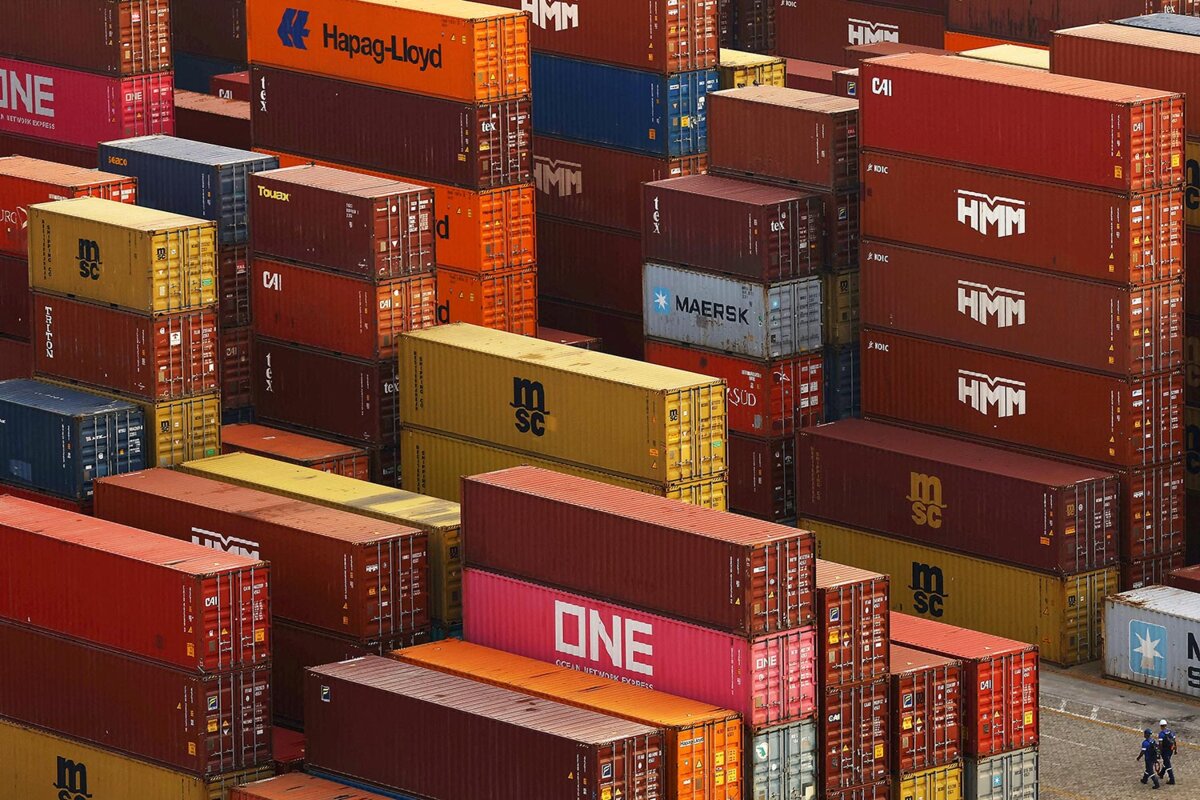
Maritime freight on its own emits more carbon than the aviation sector, at around 3% of global emissions. Like the triumphant container ship whose photograph adorns the cover of the report by the European Commission’s Directorate-General for Trade in support of the Mercosur trade deal, these gigantic transport vessels run on heavy fuel oil. This is a very polluting petroleum derivative, particularly in terms of sulphur emissions. You only have to look at any maritime traffic site tracking vessels across the Atlantic to see that this ocean is already clogged up with cargo ships plying their trade.
Pesticides, fertilisers, cars…
The prospect of adding even more trade, whether in the number of ships or the volume of goods carried, can only raise further alarm about the ecocidal impacts of the constant back and forth of pollution-emitting vessels. On top of this there is also the sometimes irreversible disruption of marine ecosystems that are living environments for a staggering number of animal and plant species.
But it does not stop there. In addition to the transport impact there are the greenhouse gas emissions and air pollutants linked to the usage of exported goods, starting with the combustion-engine cars that Europe wants to continue selling in South America. This is thanks to the removal of customs duties on 90% of goods, including cars, for fifteen years, even though they are a massive cause of climate destruction – even when running on agrofuels.
Enlargement : Illustration 1
The carbon footprint of transatlantic trade extends yet further. It also includes all greenhouse gases emitted by the manufacture, transport and spreading of pesticides and nitrogen fertilisers, which are derived from fossil fuels.
These chemical substances are also at the heart of the free trade treaty with Mercosur, which considers them “key offensive sectors”, and on which the deal accordingly abolishes 100 % of customs duties. And the - toxic - cherry on the commercial cake: pesticides banned for use in Europe because of their harmful effects on the environment and health will be able to flow freely into Mercosur markets.
The European Commission points to estimates suggesting the trade deal will have almost zero climate impact: that it will increase global CO2 emissions by only 0.0006 %, and that the consequences for deforestation will be “negligible”.
The Paris climate agreement changed nothing in the content of the Mercosur treaty.
But a report commissioned by the French government on the effects of the treaty “in terms of sustainable development” – using a vocabulary as dated as the drawn-out Mercosur negotiations themselves - makes a different calculation. It says the expansion of trade in poultry, beef, sugar, ethanol from sugar cane, rice, cheeses, skimmed milk powder and infant milk would increase annual CO2 emissions by 34% compared with today, an increase of around 8.7 million tonnes.
Its authors reproach the Commission for underestimating the environmental impact of the treaty by ignoring some major sources of greenhouse gases: changes in land use that strip land of its forested or natural character, the extraction of wood and biomass, emissions from international trade, and so on.
Enlargement : Illustration 2
Yet the 2015 Paris climate agreement asks states to reduce their CO2 emissions every year - France must cut its emissions by 5% a year - to limit the rise in global temperatures to below 2°C. This is a path that is incompatible with an increase in transcontinental trade, unless a treaty is framed to regulate that trade around the goal of protecting the climate.
This could be done, for example, by making lower tariffs conditional on compliance with environmental or social standards, as is the case with a trade treaty between the EU and South Korea, which seeks to ensure respect for workers’ rights.
Faced with such criticism, the European Commission notes in its various official communications that member states have signed the Paris agreement, and that this free trade treaty falls under its aegis. “But it changed nothing in the content of the Mercosur agreement's text [editor's note, on which negotiations began in 1999],” notes Stefan Ambec, an economist at French research body the Institut national de recherche pour l’agriculture, l’alimentation et l’environnement (INRAE), and chair of the commission that wrote the evaluation report for France.
A different kind of trade deal was possible
It was the European Commission’s Directorate-General for Trade that steered the negotiations with Mercosur, without bringing either the Directorate-General for Climate Action or the one responsible for agriculture into those talks. And even in the face of criticism of its disastrous environmental record, it made no new climate or biodiversity commitments. The only very small change was the creation of “dialogue meetings”, notably on “animal welfare” and concerning in particular the transport of animals sold.
Yet “some tariff barriers could favour greener products”, according to Stefan Ambec, who expects positive effects via technology transfers, for example on renewable energies and the opening of public procurement markets, in Argentina. This is a country where 30 % of electricity is still generated by coal.
Different ideas were in fact on the table. One recommendation of the French report was to set the specifications for anti-deforestation measures, another was to take into account the methods used for honey production. That said, any agreement founded on the objective of increasing trade in selling livestock and meat can only lead to greater exploitation of living creatures.
Will the chemical industry and pesticide manufacturers be the big winners of the agreement? Customs duties will be lowered between signatory countries on exports of chemical products, including those whose use is banned in Europe but which are exported, and in particular to Brazil, the world’s leading user.
These chemicals can therefore be used for the production of soya, cereals or fruit and vegetables whose entry into the European market will be made easier. This is why the French government announced that it will suspend imports of avocados, guavas and mangoes grown using fungicides and herbicides banned in Europe.
In an open letter to Emmanuel Macron and the government last October, several NGOs criticised the fact that the trade agreement “precludes any requirement for imported products to be produced using processes similar to those in Europe”.
This omission is compounded by the French executive’s first concession to angry farmers in France: the exclusion of fertilisers from the carbon border adjustment mechanism, which came into force on January 1st.
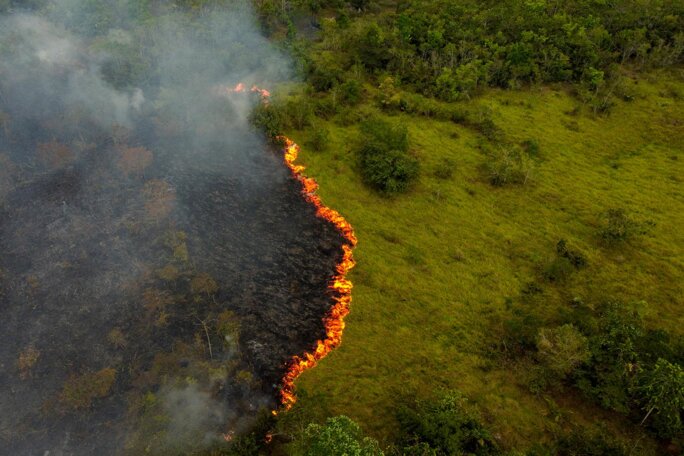
Finally, and this is one of the major points criticised by environmental associations and NGOs, the deforestation caused by the expansion of livestock farming areas in Brazil at the expense of the Amazon is also a source of CO2 emissions. And at the same time it seriously undermines the rights of indigenous peoples, whose environments have been taken over by mafioso agribusiness concerns. This has been documented by Brazilian journalist Eliane Brum in her book Banzeiro Òkòtó: The Amazon as the Centre of the World, published by The Indigo Press.
As a report by the Veblen Institute for Economic Reforms and the NGO Canopée has pointed out, Mercosur countries are already among those most affected by deforestation: in 2023, the loss of vegetation cover in these nations was estimated at 3.5 million hectares and is mainly linked to cattle farming and soya cultivation – part of which is exported to Europe to serve as animal feed. These agricultural activities are already the object of intensive transatlantic trade since Mercosur countries are the EU’s leading suppliers of beef, sending nearly 160 million tonnes in 2024.
Enlargement : Illustration 3
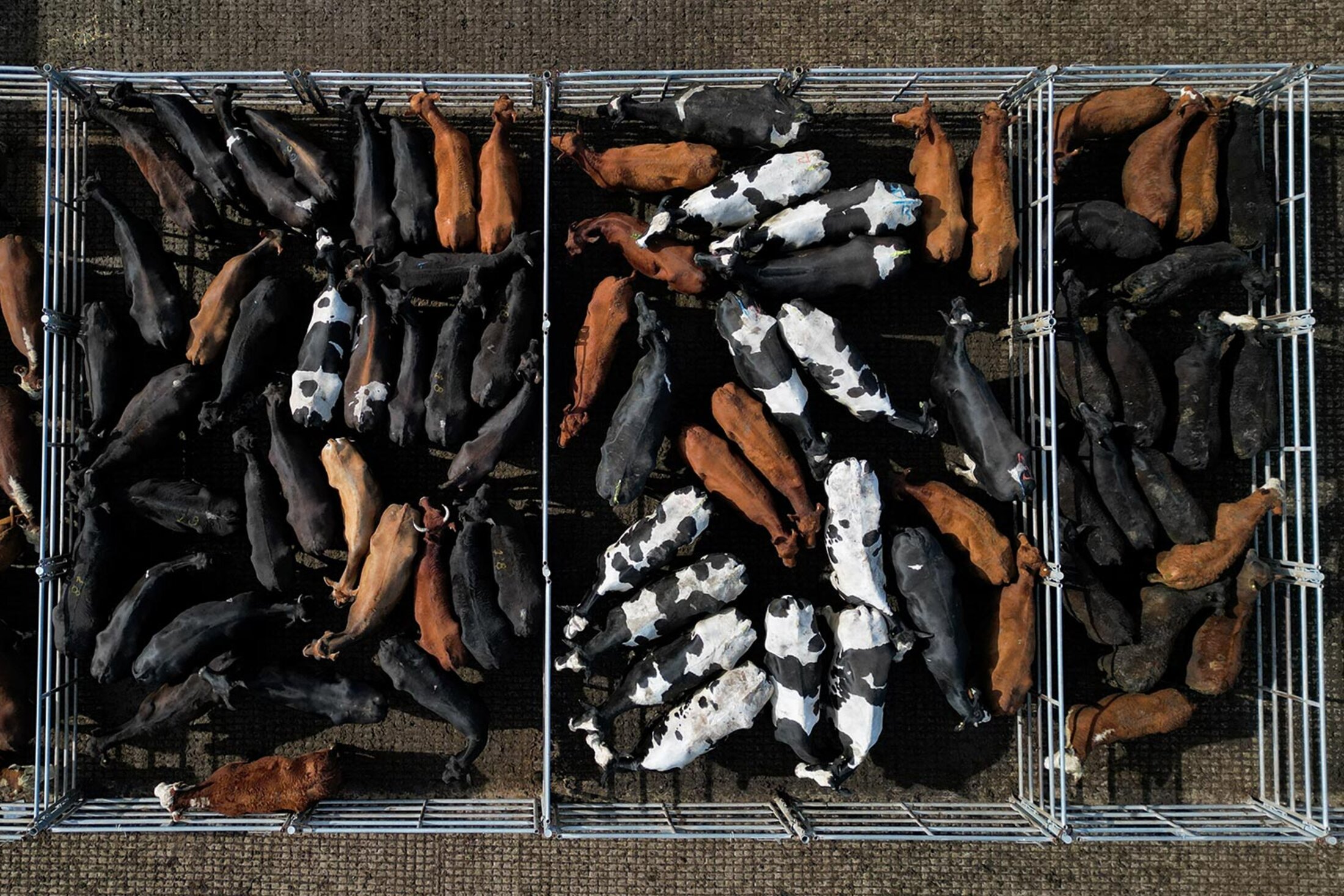
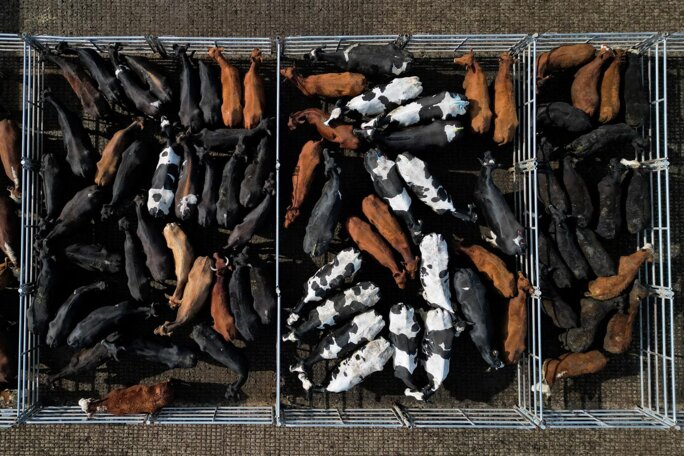
The free trade treaty specifically allows for a material increase in this business: an additional “quota” of 99,000 tonnes of carcass-weight equivalent (CWE) beef is to be exempted from customs duties, as well as other categories of meat. The result is that imports of CWE chilled and frozen beef into Europe could grow by 53,000 tonnes. This is admittedly not much when compared with the enormous volumes already circulating between the two continents.
But it would be enough, if the agreement were to enter into force, to increase deforestation by 700,000 hectares a year, according to the environmental assessment report commissioned by the French government. That represents a 5% increase every year. Even this probably underestimates the true figure, according to the Institut Veblen and Canopée, because one must also add the need for extra land to grow the feed required for these cattle, plus allow for land where the soil is degraded after being trampled by cattle hooves.
For its part, the impact study commissioned by the EU does not try to quantify the area of deforestation attributable to the treaty, preferring to bank on there being more intense food production and livestock farming, which would make it possible to avoid excessive deforestation. But while the experts at the Institut Veblen and Canopée accept that this hypothesis is “possible in theory”, it has been “largely contradicted” in practice for forty years. According to their estimate, some 77 % of new pastures created between 1985 and 2018 in Latin America were at the expense of natural vegetation.
In response to the many criticisms over this issue, the European Commission published new provisions as an annex to the agreement's text. These include in particular a commitment by the parties to “take measures” to stop deforestation from 2030.
Beyond the fact that promises bind only those who believe in them, this good intention could be stripped of its substance by another article of the treaty, concerning a “rebalancing” mechanism. Under this, a signatory country can ask for compensation if a measure taken by another signatory nation - for example against deforestation - negatively affects its trade.
If one adds to this picture the fact that it was decided at the end of 2025, on the eve of the Belém climate change conference in Brazil, to postpone the application of the European regulation against imported deforestation until December 2026, then it becomes clear that the protective shield for South American forests looks paper thin.
Finally, even if, through carbon offsetting, tree planting and fiddling with the life-cycle calculations of products, the signatory states managed to reduce the ecological footprint of their free trade treaty, it is the very philosophy - if one can call it that - of the agreement that poses a problem.
For everything it pushes and intensifies runs counter to what a policy to protect the climate and living environments requires, for both humans and other species alike.
-------------------------------------------------------------------------------
- The original French version of this article can be found here.
English version by Michael Streeter