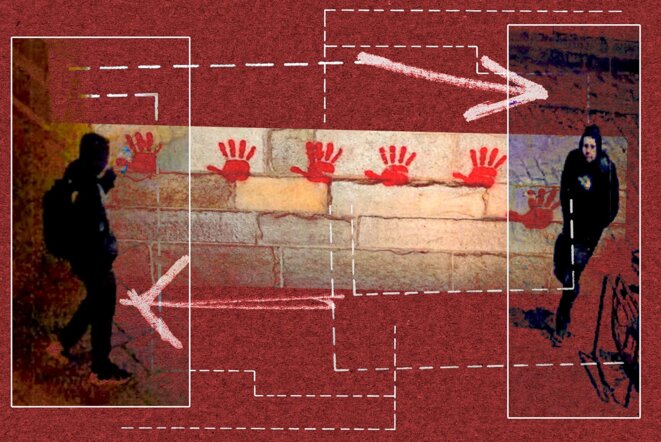
An attempt to exploit the impact of Operation 'Red Hands' – the painting of hand symbols on the Holocaust memorial in Paris in May 2024 - was made via a network of several thousand fake accounts on X. French analysts found that all these online bots - plus a curious French media outlet which tried to stir up controversy - were ultimately controlled by the Kremlin. Matthieu Suc reports in this third and concluding part of a Mediapart investigation into how France foiled a Russian destabilisation plot.
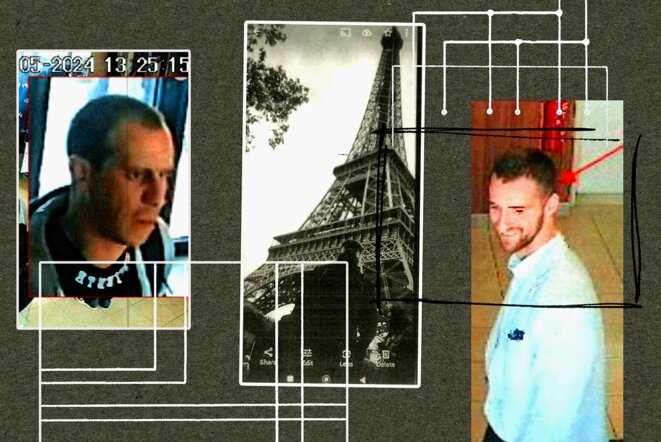
The team responsible for the red handprints that were painted on the Holocaust memorial in Paris in 2024 also planned the propaganda stunt that involved coffins being placed in front of the Eiffel Tower. The men arrested by the French authorities over these incidents claim to be working in the service of peace, but are in fact mainly known for their connections to Russian spies. Some clearly also have neo-Nazi sympathies. Matthieu Suc reports in this second part of a Mediapart investigation into how France foiled a Russian destabilisation plot.
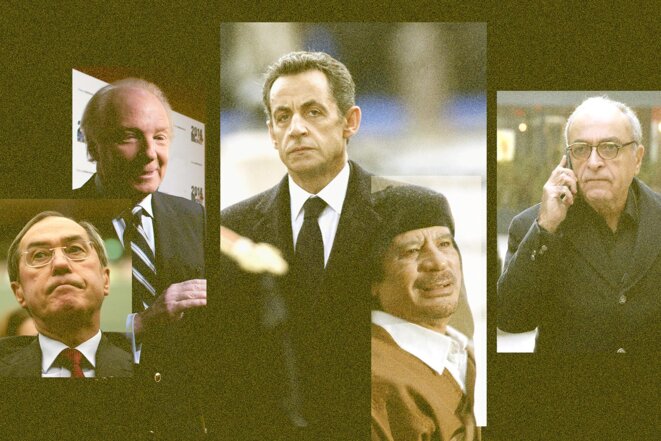
Nicolas Sarkozy and some of his former ministers go on trial this Monday over claims that the former French president's successful 2007 election campaign was funded by the Libyan regime of Colonel Muammar Gaddafi. In this, as in other criminal cases in which the former head of state has been implicated, his approach has been to disclaim any personal knowledge of events, even to the point of throwing his closest associates under the bus. In the current case the ex-head of state has had harsh words for his most loyal lieutenants, Brice Hortefeux and Claude Guéant. “I had no way of knowing what the reality of their lives was,” he told judges investigating the affair. Fabrice Arfi and Karl Laske report.
On January 6th Nicolas Sarkozy took centre stage at an historic trial in Paris. He and three former ministers face charges over claims that the former president's successful 2007 election campaign was part-funded by the Libyan regime of Colonel Muammar Gaddafi. And that the North African country – whose leader was one of the most notorious dictators on the planet – received favours in exchange. The marathon trial, unprecedented in both the nature of the charges and the profiles of the defendants, who number 13 in all, is expected to last until April 10th. It marks the culmination of a ten-year judicial investigation that, in the words of the judges carrying out the probe, has “revealed both payments and reciprocal benefits”. Fabrice Arfi and Karl Laske report on the background to this momentous court case.
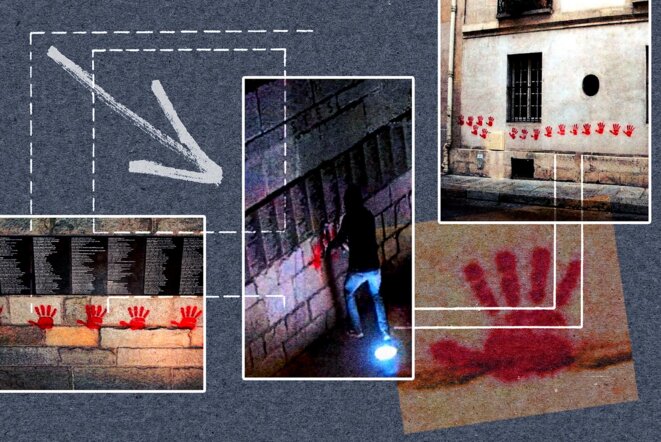
In May 2024 graffiti appeared on the walls of the Holocaust museum in Paris. The 35 spray-painted red hand symbols were quickly condemned by politicians as an act of anti-Semitism. But who was responsible? After a swift investigation, detectives tracked down those responsible for defacing the Mémorial de la Shoah. Matthieu Suc reports on how investigators then quickly discovered that the vandalism was in fact part of a wider Russian attempt to destabilise France.
Since the Covid-19 crisis, the use by patients of companies who provide telephone and online health consultations with doctors has soared in France. Financial groups are now investing in what has become a fast-growing sector. However, these services are becoming increasingly expensive for the state health insurance system, which has to reimburse the cost of them. Caroline Coq-Chodorge and Manuel Magrez report on the growing role of remote healthcare providers in the country.
In the summer of 2022, France's richest man Bernard Arnault was panicking at the prospect of an MP from the radical-left La France Insoumise (LFI) party taking charge of the Finance Committee at the National Assembly. The boss of the LVMH luxury goods group apparently feared that as chair of the influential committee the politician would be able to get access to his tax details. Representatives for the billionaire then requested that his personal tax records be classified as a state secret. But as Fabrice Arfi, Yann Philippin, Antton Rouget and Ellen Salvi report, the authorities balked at this extraordinary request and ultimately rejected it.
After launching an investigation into the Organized Crime and Corruption Reporting Project (OCCRP), and after subsequently inviting Mediapart and three other outlets to join the project, German public broadcaster NDR finally decided to shelve the report after senior editorial managers came under pressure from the OCCRP. Yann Philippin reports.
The OCCRP, the largest organised network of investigative media in the world, hid the extent of its links with the US government, this investigation can reveal. Washington supplies half of its budget, has a right to veto its senior staff, and funds investigations focussing on Russia and Venezuela. Yann Philippin and Stefan Candea report.
It is estimated that around 274,000 people in France suffer from Parkinson’s disease. The vast majority of them follow a treatment of dopaminergic drugs to compensate for their lack of the chemical messenger dopamine, a condition which causes many of the debilitating symptoms of the disease. But the drugs, and in particular dopamine agonists, can have alarming side effects, ranging from making compulsive purchases, daily gambling, the pursuit of sexual obsessions and, in one of the several cases detailed here, a murderous rampage against animals. As Rozenn Le Saint reports, some of the patients are unaware of the risks of the drugs, which can leave them and their families, the collateral victims, with huge debts and psycological trauma.