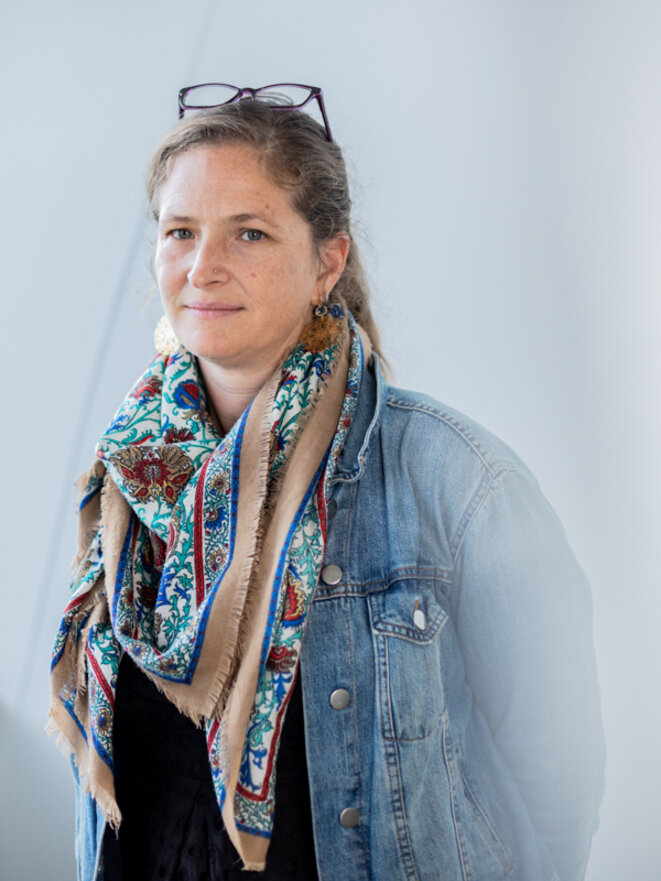
Journaliste à Mediapart depuis novembre 2010. J'ai longtemps écrit sur la politique française, avant de me consacrer aux enquêtes sur les violences sexistes et sexuelles. Je suis responsable éditoriale aux questions de genre depuis 2020. Et, depuis le 1er octobre 2023, je suis codirectrice éditoriale aux côtés de Valentine Oberti.
Avant, j'ai passé plusieurs années à m'occuper d'économie (à l'AFP) et de social (à l'Huma). Coauteure de Tunis Connection, enquête sur les réseaux franco-tunisiens sous Ben Ali (Seuil, 2012). J'ai aussi dirigé l’ouvrage collectif #MeToo, le combat continue (Seuil, 2023).
Declaration of interest
In the interest of transparency towards its readers, Mediapart’s journalists fill out and make public since 2018 a declaration of interests on the model of the one filled out by members of parliament and senior civil servants with the High Authority for Transparency and Public Life (HATVP), a body created in 2014 after Mediapart’s revelations on the Cahuzac affair.
French Member of Parliament Denis Baupin on Monday resigned from his role as deputy speaker of the lower house, the National Assembly, just hours after the publication of an investigation by Mediapart and France Inter radio in which several female colleagues, including a fellow MP, allege they were sexually harassed by him. Baupin, 53, who is married to housing minister Emmanuelle Coste, last month resigned from the EELV Green party to which all of his accusers belonged at the time of the alleged events. He denies the accusations, which include physical groping and other lewd behaviour and repeatedly sending sexually explicit phone text messages. Lénaïg Bredoux reports.
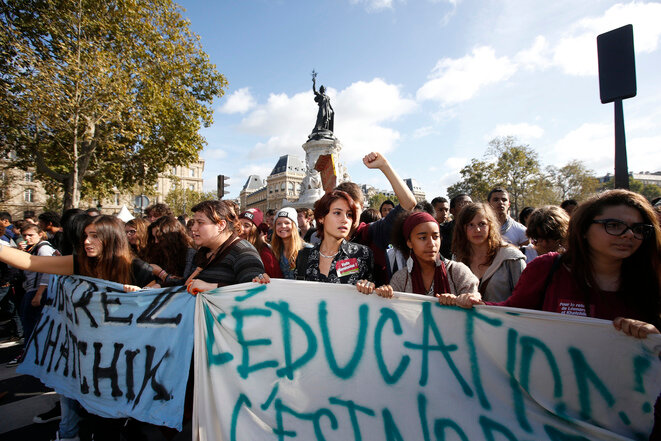
A total of 20 student and youth organisations have called for protests on Wednesday, March 9th against the government's proposed reforms of employment law. Though the formal presentation of the bill has now been postponed pending further discussions with trade unions, ministers still fear the spectre of widespread social mobilisation, of the kind seen ten years ago that sank plans for new workplace contracts. In particular, President François Hollande is afraid the final months of his presidency would be doomed if students take to the streets in large numbers. Lénaïg Bredoux and Faïza Zerouala report on the unpredictability of France's student protests.
On Monday February 29th the prime minister Manuel Valls announced that the government was postponing for two weeks the formal presentation of a new bill reforming employment law. This concession came after days of vociferous opposition to the bill from trade unions, students and many members of France's ruling Socialist Party itself who see the measure as an attack on workers' rights. Mediapart's Lénaïg Bredoux, Rachida El Azzouzi, Mathilde Goanec and Mathieu Magnaudeix analyse how what was intended to be a flagship government reform went so badly wrong.
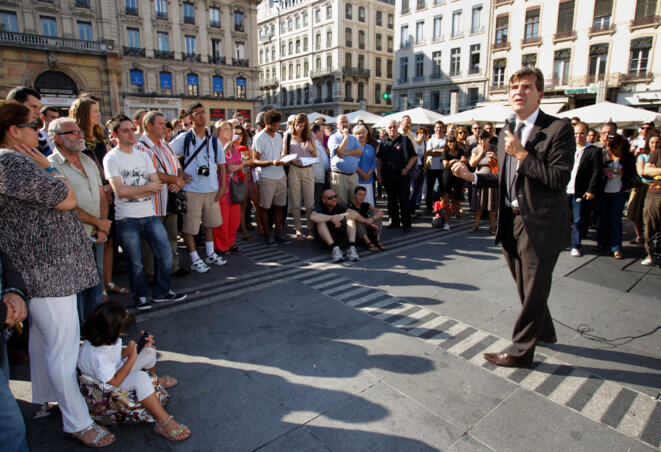
He remains one of the most fascinating and colourful figures in French politics. Arnaud Montebourg was a high-profile figure in the government of President François Hollande, who as economy minister had a very public spat with a US business boss. In August 2014 he quit after disagreeing with the government's policies and went off to work in commerce. In the last 18 months Montebourg has kept a low public profile but has been assiduously meeting key figures and thinkers on the French Left. So is he, as many believe, discreetly preparing a bid for the French presidency in 2017? Lénaïg Bredoux reports.
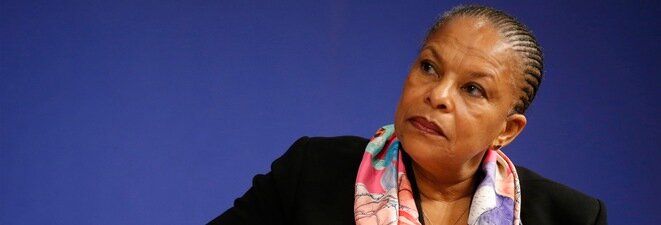
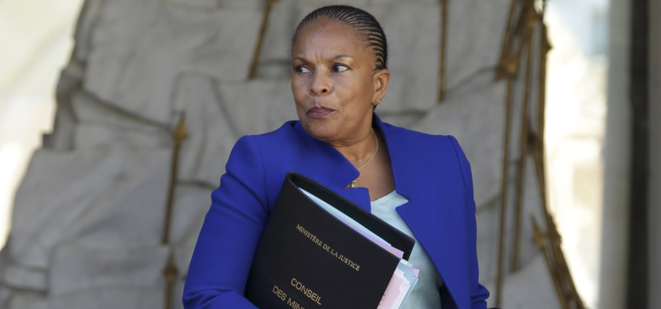
Justice minister Christiane Taubira quit the French government on Wednesday January 27th over her opposition to controversial plans to strip dual nationals of their French citizenship if they are convicted of terrorism. To the last this iconic figure on the left of French politics showed her flamboyance, Tweeting that “sometimes resisting means going” and later declaring: “I leave the government over a major political disagreement.” As Mediapart's political correspondent Lénaïg Bredoux reports, her replacement as justice minister by Jean-Jacques Urvoas, a close ally of prime minister Manuel Valls, is the final step by this government towards the liberal and security-based political line that President François Hollande has been seeking.
France’s justice minister Christiane Taubira this week publicly declared that her government’s new anti-terrorist legislation proposals will not include stripping French nationality from dual nationals found guilty of terrorist crimes. It posed, she said, a “key problem for the fundamental principle of national rights by birthplace, to which I am profoundly attached”. Within 24 hours Prime Minister Manuel Valls insisted that the proposal, pledged by President François Hollande after the November terrorist attacks in Paris, would go ahead. Adding to her humiliation, it is Taubira herself who will present the new bill of law before parliament early next year. Lénaïg Bredoux and Michel Deléan trace the transition of a once flamboyant icon of the Left into a passive objector.
After the Charlie Hebdo shootings in January this year President François Hollande's key focus was on pulling the nation together. Now, after the terror attacks that struck Paris on Friday November 13th, the French head of state has espoused the language of war to justify more air strikes by French jets in Syria and Iraq, stronger internal security measures, more police officers and, most notably, a change to the French constitution. In a rare address to French MPs and senators Hollande said on Monday: “France is at war.” As Lénaïg Bredoux and Martine Orange report, the mood in the French presidency is for tough talk and tough measures to combat jihadists – and also to stop the French Right from seizing the political initiative.
The election this month of veteran left-winger Jeremy Corbyn as leader of the British Labour Party has been greeted variously with both delight and despair among the French Left. While Socialist Party bigwigs look on aghast at the election of what a minister described to Mediapart as “an archaic dinosaur”, one of its minority leftist rebel MPs called the event “a breath of fresh air”. Lénaïg Bredoux has been seeking out the reactions.
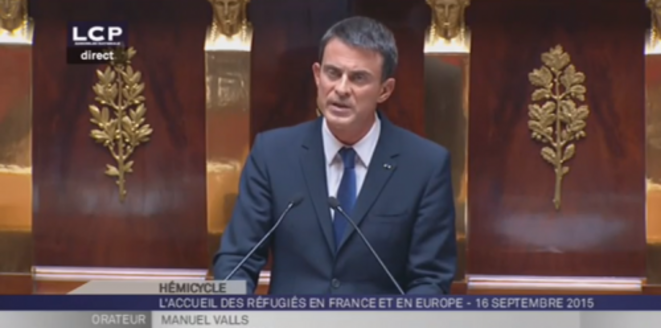
The French parliament on Wednesday held a debate on “the accommodation of refugees in France and Europe”, centred on the government’s pledge to receive an extra 24,000 refugees over the coming two years, on top of the existing numbers of asylum seekers. But, writes Mediapart political correspondent Lénaïg Bredoux, it was a missed opportunity for political courage, in which Prime Minister Manuel Valls tempered France’s announced welcome of refugees with the need to tighten border security, overshadowed by fears that the crisis is further fuelling support for the far-right Front National party.
While 61% of public service employees are women, they accounted for just 31% of senior civil service posts, from prefects to ambassadors, attributed in 2014. President François Hollande has made the issue of gender parity in the public sector a major policy plank of his five-year term in office, but the challenge to reach even a semblance of equity remains daunting. Lénaïg Bredoux reports.
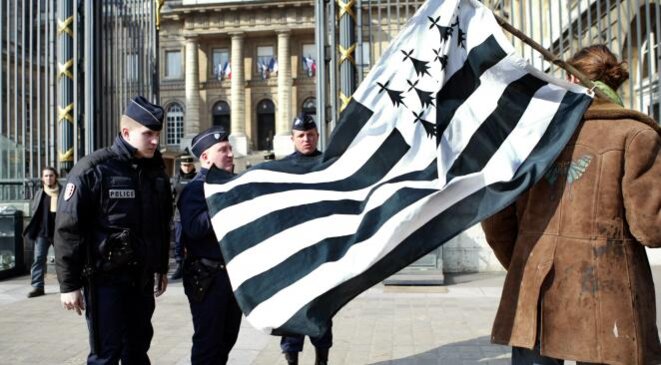
French is enshrined in the constitution as France's only official language. President François Hollande is now planning to change the law so the country can ratify the European charter on regional languages – of which France has 75. But as Lénaïg Bredoux reports, this modest step highlights just how few other constitutional reforms the socialist president has introduced since his election.
Following the European debacle of the Greek crisis, French President François Hollande has called for reforms to the eurozone that include giving it budgetary powers and a parliament, and will soon meet with European Central Bank president Mario Draghi to discuss the issue which he hopes to place on the agenda of a European leaders’ summit in October. Lénaïg Bredoux reports.
All his blog posts
The Mediapart Club
Join the discussion
Mediapart’s journalists also use their blogs, and participate in their own name to this space of debates, by confiding behind the scenes of investigations or reports, doubts or personal reactions to the news.
L’essayiste publie un nouvel ouvrage consacré à #MeToo dans lequel elle met gravement en cause le travail de Mediapart sur les violences sexistes et sexuelles. Au mépris des faits, et sans nous avoir contactés au préalable.
Plusieurs journalistes ou militants des droits humains, tous critiques du régime marocain, ont été graciés par le roi du Maroc. Pour Omar Radi, Soulaimane Raissouni, Taoufik Bouachrine, Imad Stitou, Hicham Mansouri, Maâti Monjib et Saïda El Alami, notre soulagement est immense.
Dans un long entretien complaisant au Journal du dimanche, paru le 11 juin, la réalisatrice et comédienne s’en prend, sans point de vue contradictoire, au travail de notre journal sur les violences sexistes et sexuelles, et croit pouvoir justifier ainsi l’agression du président de Mediapart. Nous ne sommes pas dupes.
Le célèbre youtubeur a dénoncé dans une vidéo diffusée le 19 novembre l’enquête que nous avons publiée le 23 juin à propos des violences sexistes, sexuelles et psychologiques qu’il aurait commises. Explications sur nos méthodes d’enquête, qui ont permis la publication d’un nouveau volet.
« Cot cot cot codec. » C’est le caquètement d’un député de droite contre une élue écologiste qui a suscité la création de notre « Machoscope » en 2013. Depuis, Mediapart, recense le sexisme subi par les femmes en politique. Après une décennie de bons et loyaux services, la formule disparaît. Pour mieux s’imposer dans nos pages.