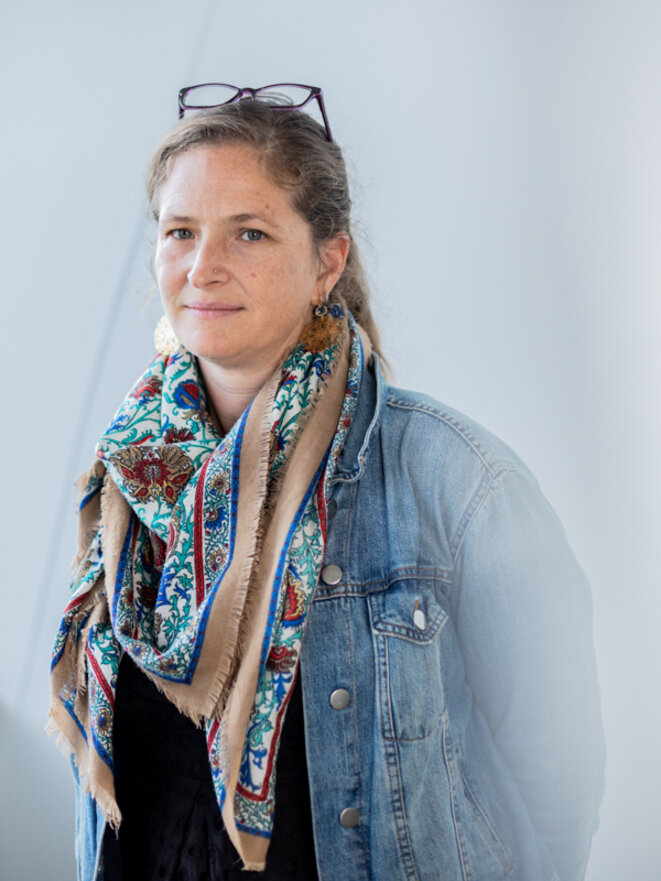
Journaliste à Mediapart depuis novembre 2010. J'ai longtemps écrit sur la politique française, avant de me consacrer aux enquêtes sur les violences sexistes et sexuelles. Je suis responsable éditoriale aux questions de genre depuis 2020. Et, depuis le 1er octobre 2023, je suis codirectrice éditoriale aux côtés de Valentine Oberti.
Avant, j'ai passé plusieurs années à m'occuper d'économie (à l'AFP) et de social (à l'Huma). Coauteure de Tunis Connection, enquête sur les réseaux franco-tunisiens sous Ben Ali (Seuil, 2012). J'ai aussi dirigé l’ouvrage collectif #MeToo, le combat continue (Seuil, 2023).
Declaration of interest
In the interest of transparency towards its readers, Mediapart’s journalists fill out and make public since 2018 a declaration of interests on the model of the one filled out by members of parliament and senior civil servants with the High Authority for Transparency and Public Life (HATVP), a body created in 2014 after Mediapart’s revelations on the Cahuzac affair.
Last Friday a minister insisted that the government's bill on the family was going ahead as planned. Then on Sunday a pro-family march by right-wingers attracted around 100,000 protesters and was hailed a success. By Monday morning the government had announced it would oppose any controversial amendments to the new bill – and in the afternoon it declared it was dropping the entire measure for at least a year. Lénaïg Bredoux and Mathieu Magnaudeix report on a retreat by the government in the face of protests.
A political row has erupted over the French government’s announcement this weekend that it had removed Jersey and Bermuda from its official blacklist of ‘uncooperative’ tax havens. The decision has infuriated leading figures among the socialist majority in parliament, while Green party anti-corruption campaigner and former examining magistrate Eva Joly denounced the “trembling hand” of a government that had buckled under “the pressure of big corporations”. Mediapart has learnt that French foreign affairs minister Laurent Fabius had advised that the move, decided by finance minister Pierre Moscovici, was “politically inopportune”. Lénaïg Bredoux reports.
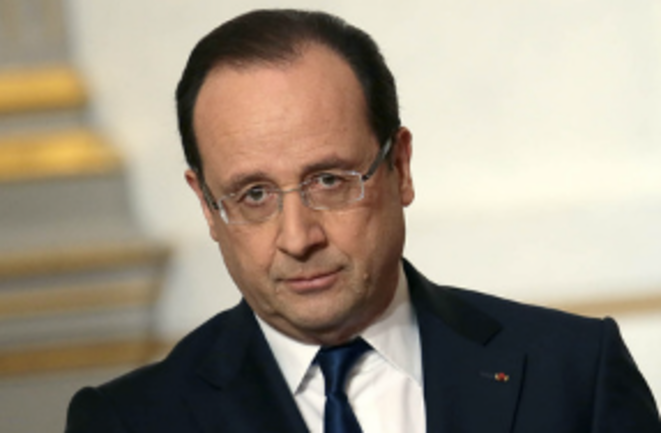
French President François Hollande has seen his popularity plummet over recent months, and not only because of the enduring economic and social hardships of the financial crisis; his government’s policies have come under attack as muddled and ill-thought out, and its recent U-turns highlight a perceived lack of clear and coherent political vision. For some of his critics, Hollande is paying the price of his longstanding reticence to develop policies in close consultation with expert academic researchers and thinkers. “Hollande as president reaps what he did not sow when he was First Secretary of the Socialist Party,” commented one academic. Lénaïg Bredoux and Joseph Confavreux report on how Hollande's approach to policy making, in stark contrast to some of his allies, has favoured pragmatism over intellectual theorizing.
The headteacher of a French secondary school in Doha has abruptly been flown back to Paris after a dispute with a fellow member of staff escalated into claims of discrimination. It is the second time in a year that the head of a French lycée in the Gulf state has had to leave in a hurry after falling out with the local authorities. As Lénaïg Bredoux reports, the case shows once more the difficulty of running an educational establishment in Qatar, given the French government's apparent reluctance to upset its relationship with the wealthy Arab state.
French president François Hollande has made clear that France will join the US in military strikes against the Syrian regime of Bashar al-Assad, dismissing calls for a vote of approval beforehand in parliament. As illustrated in yesterday’s heated debate in the lower house, the National Assembly, political and public opinion is deeply divided, both over the legality and consequences of the planned strikes. Lénaïg Bredoux and Caroline Donati have talked to senior French officials and experts close to the Syrian dossier, many of whom agreed to be interviewed on condition of anonymity, to find out why Hollande appears to have been finally wrongfooted amid a rushed and chaotic final denouement to a crisis of more than two years, and which one government advisor says is down to “a series of balls-ups”.
The fight against the far-right Front national was the central theme of the ruling Socialist Party's summer conference that took place at the weekend. Some on the Left fear that if they do not start campaigning now, Marine Le Pen's party could attract the largest share of the popular vote at next year’s European elections. However, as Lénaïg Bredoux reports, just what form the 'crusade' against extremism will take is still unclear.
The French parliament’s commission of enquiry into the government’s handling of the Jérôme Cahuzac affair – the budget minister who held a secret foreign bank account - was close to implosion Thursday after its sitting conservative MPs decided to suspend their participation. They are furious that socialist commission members blocked a move to summon Prime Minister Jean-Marc Ayrault to testify before it over a contested meeting in January between Cahuzac, Ayrault, President François Hollande and finance minister Pierre Moscovici. Lénaïg Bredoux and Stéphane Alliès report on the contradictory accounts that discredit the government’s claims of transparency over the affair.
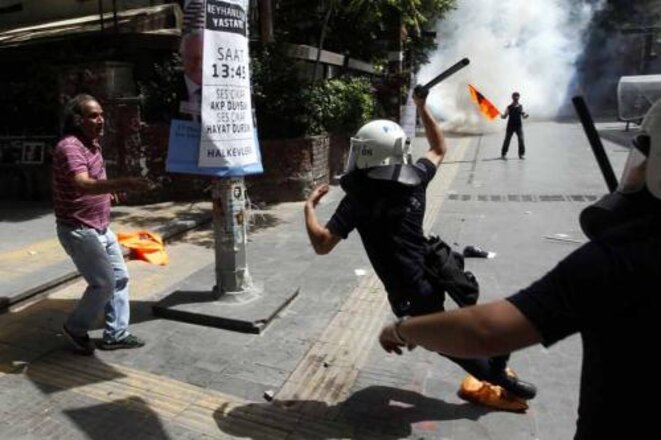
A French government cooperation agreement with Turkey on a range of internal security issues notably includes the export of French 'know-how' on crowd control. But the current protests and violent repression being seen on the streets of Istanbul (pictured) and Ankara have raised alarm among many on the Left who were already concerned about the ethics of the accord. As Lénaïg Bredoux reports, the agreement, which was signed under Nicolas Sarkozy and approved last year by President François Hollande, is remiscent of a similar offer once made to the now-deposed Tunisian despot Zine al-Abidine Ben Ali and is causing considerable unease within Hollande's parliamentary majority.
One year on, and the Hollande presidency is widely regarded as having almost completely failed. Right through the corridors of power the same question is being asked: why isn't it working? In a bid to find the answer, Mediapart provides a guided tour of each of the separate institutions that makes up the socialist administration which took office on 15th May 2012. Lénaïg Bredoux and Mathieu Magnaudeix report.
Every year the French education ministry sends a small number of teachers to begin work in Rabat. Their mission: to educate the heir to the Moroccan throne and a select handful of that country's elite. Lénaïg Bredoux reports on an exclusive college that is shrouded in mystery and which few in either France or Morocco are willing to talk about.
President François Hollande has announced tough new measures to help 'clean up' public life in France following the Cahuzac affair. There will be a new body to oversee politicians' financial assets, more staff to tackle tax fraud and a promised war on international tax havens. However, as Lénaïg Bredoux reports, the proposals have been met not just with predictable disapproval from the opposition, but with dismay from some sections of his own Socialist Party too.
First panic then a state of limbo overtook the French government after the shock confession of former budget minister Jérôme Cahuzac over his Swiss bank account. Now president François Hollande, under great pressure from all sides of the political debate and amid growing public disenchantment, looks set to announce major new measures in a bid to improve the 'morals' of French politics. Lénaïg Bredoux and Mathieu Magnaudeix report.
All his blog posts
The Mediapart Club
Join the discussion
Mediapart’s journalists also use their blogs, and participate in their own name to this space of debates, by confiding behind the scenes of investigations or reports, doubts or personal reactions to the news.
L’essayiste publie un nouvel ouvrage consacré à #MeToo dans lequel elle met gravement en cause le travail de Mediapart sur les violences sexistes et sexuelles. Au mépris des faits, et sans nous avoir contactés au préalable.
Plusieurs journalistes ou militants des droits humains, tous critiques du régime marocain, ont été graciés par le roi du Maroc. Pour Omar Radi, Soulaimane Raissouni, Taoufik Bouachrine, Imad Stitou, Hicham Mansouri, Maâti Monjib et Saïda El Alami, notre soulagement est immense.
Dans un long entretien complaisant au Journal du dimanche, paru le 11 juin, la réalisatrice et comédienne s’en prend, sans point de vue contradictoire, au travail de notre journal sur les violences sexistes et sexuelles, et croit pouvoir justifier ainsi l’agression du président de Mediapart. Nous ne sommes pas dupes.
Le célèbre youtubeur a dénoncé dans une vidéo diffusée le 19 novembre l’enquête que nous avons publiée le 23 juin à propos des violences sexistes, sexuelles et psychologiques qu’il aurait commises. Explications sur nos méthodes d’enquête, qui ont permis la publication d’un nouveau volet.
« Cot cot cot codec. » C’est le caquètement d’un député de droite contre une élue écologiste qui a suscité la création de notre « Machoscope » en 2013. Depuis, Mediapart, recense le sexisme subi par les femmes en politique. Après une décennie de bons et loyaux services, la formule disparaît. Pour mieux s’imposer dans nos pages.