48 ans. À la création de Mediapart, j'ai d’abord suivi le Parlement, puis j’ai rejoint le service Enquêtes. Mes sujets de prédilection pendant des années : l'argent des élus et des partis, la corruption, la transparence, les conflits d'intérêts... De 2018 à 2019, je me suis consacrée à des sujets sur les migrations. Puis j’ai intégré la direction éditoriale élargie, de 2019 à 2023, comme responsable du pôle Société. Désormais, je me penche sur les droits des enfants et les violences qui leur sont faites.
Pour m’écrire : mathilde.mathieu@mediapart.fr
Declaration of interest
In the interest of transparency towards its readers, Mediapart’s journalists fill out and make public since 2018 a declaration of interests on the model of the one filled out by members of parliament and senior civil servants with the High Authority for Transparency and Public Life (HATVP), a body created in 2014 after Mediapart’s revelations on the Cahuzac affair.
Late in June, after days of diplomatic wrangling, 234 migrants rescued off the Libyan coast while attempting to reach Europe in flimsy dinghies were finally allowed to disembark in Malta after several countries agreed to receive quotas from the group. Earlier this month, 51 of them arrived in France. Mediapart travelled to Toulouse, where some were given provisional accommodation, to listen to the harrowing stories of their experiences in Libya, where black Africans are subject to endemic racism and many become the prey and prisoner of vicious local militias. “If an Arab catches you, he sells you,” said one of the survivors. “When you are black, you are a commodity, you’re bought and sold on.” Mathilde Mathieu reports.
Earlier this month the body of a 20-year-old Nigerian woman was found floating in the river Durance, in the foothills of the French Alps. Blessing Matthew had crossed illegally into France from Italy along a treacherous route of mountain passes increasingly used by desperate migrants. From witness accounts, it appears likely that Blessing drowned in the icy waters of the Durance while attempting to escape from one of the frequent border patrols which local migrant support groups say employ dangerously heavy-handed methods. One week later, the body of a man believed to be a migrant was found on a nearby mountainside. Mathilde Mathieu reports from the Alpine region where it is feared the springtime thaw may reveal yet more fatalities.
The French government’s proposed legislation to reform immigration and asylum laws has begun its passage through parliament this week, to fierce attacks from opposition MPs of both the Left and the Right. The conservatives, whose policies under their new leader have veered towards the hard-right, claim the bill is little more than soft tinkering of current laws, while the Left denounce an unjustified clampdown on migrants’ rights, a view shared by some among President Macron’s ruling LREM party. Mathilde Mathieu was in parliament to witness the early exchanges of what promises to be a week of inflamed debate.
According to information seen by Mediapart an architect friend of senior politician Richard Ferrand won several public contracts from a local authority at the start of the 2000s just after the latter was elected to that council. Earlier this year Ferrand, a close ally of Emmanuel Macron and currently head of the president's La République en Marche party at the National Assembly, faced questions over a property deal by his partner involving a mutual health firm of which he was then managing director. The prosecution authorities later dropped their investigation. Mathilde Mathieu reports on the latest revelations.
When prosecutors announced in October 2017 that they were not pursuing an investigation into the financial allegations surrounding Richard Ferrand, who is now president of Emmanuel Macron's political party at the National Assembly, it seemed the end of the matter. However, an analysis of the preliminary investigation report by Mediapart shows that from start to finish Ferrand looked after his partner's interests in a property deal with a mutual health firm, even though he was managing director of that company at the time. Now anti-corruption groups are calling for an independent judge to re-open the case and investigate. Mathilde Mathieu reports.
The much-trumpeted law to improve morality in public life and restore public confidence in the nation's elected representatives has passed its key hurdle in the French Parliament. The two key measures voted for by Members of the National Assembly were the ban on MPs employing members of their own family, and an obligation to produce receipts for expenses. After 50 hours of sometimes lively debate and 800 amendments, MPs voted overwhelmingly in favour – even if some on the Right called it an act of “masochism”. Mathilde Mathieu reports.
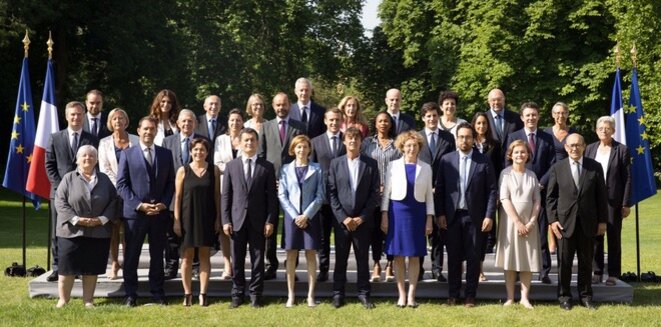
Following the recent Parliamentary elections President Emmanuel Macron has formed a new government under the same prime minister Édouard Philippe. However, what was supposed to be a minor technical change to the government has become rather larger in scale after the departure of four ministers in response to potential scandals. The result is a government that gives us a glimpse of how the new centrist president intends to balance his administration between the Left and the Right of the political spectrum. Stéphane Alliès, Christophe Gueugneau, Mathieu Magnaudeix and Mathilde Mathieu report.
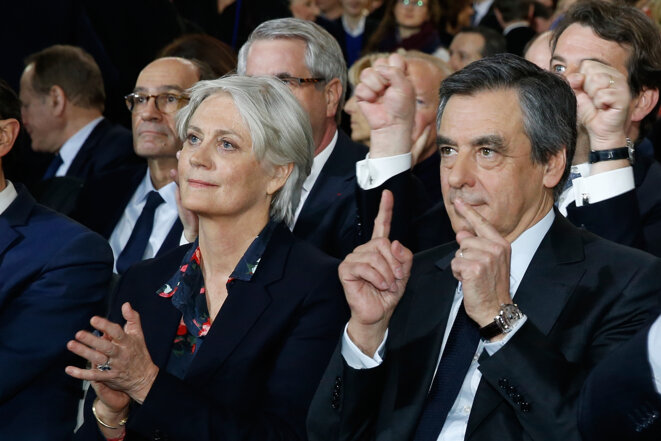
Former French prime minister François Fillon’s presidential election campaign nosedived after it was alleged that over several years he fraudulently employed his British-born wife Penelope as his parliamentary assistant for which she earned almost 700,000 euros paid out of public funds. While both Fillon, who was until then the lead candidate in the election, and his wife deny the fake job accusations they are currently placed under investigation in an ongoing judicial probe. The couple insist that if there is little evidence of Penelope Fillon’s presence in parliament it is because she was active in her husband’s constituency. Mediapart has carried out a detailed search through local newspaper archives to find trace of her work, and the result offers little support for their claim. Mathilde Mathieu and Antton Rouget report.
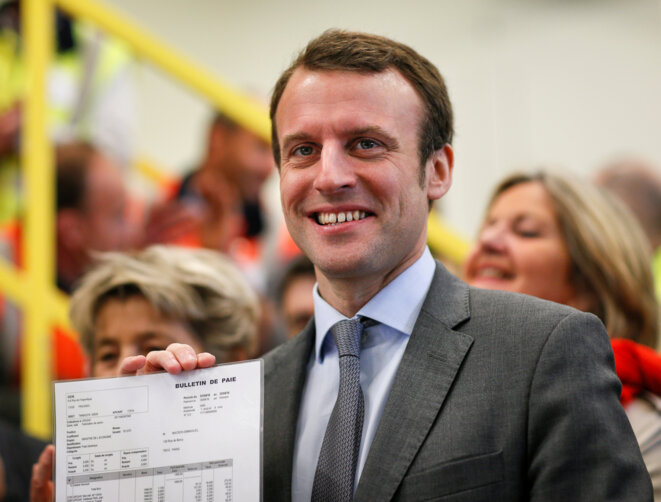
In order to finance his election campaign, Emmanuel Macron succeeded in raising almost 13 million euros in what was a remarkable achievement for his maverick centrist political movement En Marche ! created barely one year before his election as president. But contrary to the image put about by his campaign team that it was the result of a spontaneous surge of popular support, the funds were primarily sourced from a powerful network of bankers, financiers and businessmen, as information gathered from the massive leak of hacked En Marche ! internal documents and verified by Mediapart reveals.
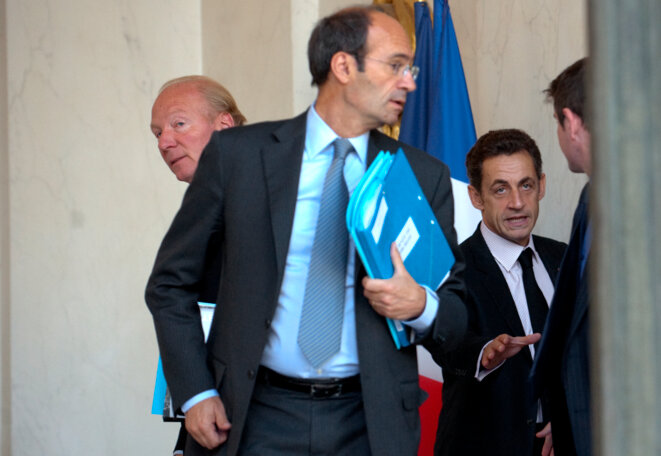
A French judicial investigation into the suspected illegal financing of Nicolas Sarkozy’s 2007 presidential election campaign by the regime of late Libyan dictator Muammar Gaddafi, opened after evidence of Tripoli’s agreement to make the payment was published by Mediapart, has in recent weeks stepped up questioning of suspects and witnesses in the case who have confirmed the abundant use of cash sums to pay campaign staff. Several former managers and secretaries of the campaign were placed in custody and questioned by police who also carried out searches of their homes. Fabrice Arfi, Karl Laske and Mathilde Mathieu report.
The independent centrist candidate Emmanuel Macron has no public money behind him to help his presidential campaign, as he has no established political party. Instead he is relying on donations both via the internet and from private gatherings with wealthy supporters. Opponents have raised questions over the former economy minister's links with the world of money and business, as well as the declarations of his personal assets which seem to suggest he spent large amounts of money while working as a merchant banker. Those rivals seek to paint him as a candidate for “global capitalism”. His entourage are irritated by such a depiction but, given his background in the world of finance, they have little choice but to accept it, report Mathieu Magnaudeix and Mathilde Mathieu.
Like many of leading French politicians, François Fillon has his own 'micro' party which is used to develop policy ideas and raise funds. But Mediapart can reveal that the micro party run by Fillon, whose candidacy for the French presidency has been rocked by the so-called “fake jobs” scandal involving his wife Penelope, is discreetly banking donations from members of the public supporting his official electoral campaign. “It's madness!” says one senior figure on the Right. Mathilde Mathieu reports.
All his blog posts
The Mediapart Club
Join the discussion
Mediapart’s journalists also use their blogs, and participate in their own name to this space of debates, by confiding behind the scenes of investigations or reports, doubts or personal reactions to the news.
Et de trois. Une fois de plus, Patrick Balkany et son ancien bras-droit, Jean-Pierre Aubry, tous les deux mis en examen pour « blanchiment de fraude fiscale » (entre autres) et soumis à un strict contrôle judiciaire qui leur interdit de se rencontrer, se retrouvent au même moment, au même endroit, sur la même photo. Par hasard, sans aucun doute.
Pour Pièces à conviction, le journaliste Stéphane Girard a fait le reportage que Mediapart aurait dû réaliser depuis cinq ans. Consacrée aux abus dans les coulisses de l’Assemblée nationale, son enquête, diffusée ce mercredi à 23h10 sur France 3, nous embarque à Londres pour une plongée dans le (contre)-modèle britannique.
Voilà déjà une semaine que le député UMP Dominique Tian a reconnu publiquement, contraint et forcé, avoir planqué un compte en Suisse pendant des années. Voilà déjà une semaine que ce pourfendeur patenté de la fraude sociale (celle des autres, celle des « gagne-petit » qui grugent le RSA ou les allocs) a confessé avoir soustrait plus de 1,5 million d’euros au fisc français, avant de profiter d’une circulaire indulgente pour rapatrier discrètement ses billes en 2014. Et rien ne se passe ou presque.
Mediapart ne lâchera rien. Les citoyens ont le droit de savoir comment le financement des campagnes électorales est contrôlé en France. Avec quelle ardeur, quelle légèreté ou quel aveuglement. Alors que les révélations se multiplient sur les trucages opérés lors de diverses présidentielles, les documents relatifs aux instructions menées par la Commission nationale des comptes de campagne (CNCCFP) sont toujours tenus au secret. En ce vendredi 13 mars, les choses pourraient basculer.
La fortune les abandonne. Hier, Patrick Balkany (mis en examen pour « corruption » et « blanchiment de fraude fiscale ») et son bras-droit Jean-Pierre Aubry (mis en examen pour « complicité de corruption » et « blanchiment de fraude fiscale ») ont manqué de chance : ils ont été repérés discutant devant L’Anjou, un restaurant de Levallois-Perret, alors que le contrôle judiciaire auquel est soumis le second lui interdit de rencontrer le premier –précisément pour éviter qu’ils n’échangent sur l’information judiciaire en cours, menée par les juges Renaud van Ruymbeke et Patricia Simon.