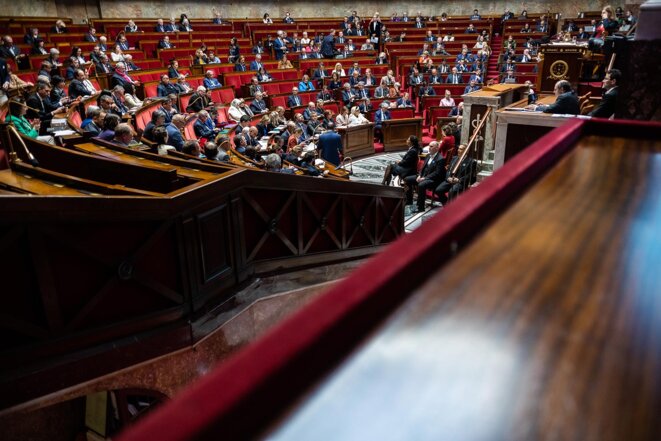
In June 2024 President Emmanuel Macron caught many by surprise when he dissolved the National Assembly and called snap parliamentary elections. His aim was to strengthen his hand in the Assembly where his party and its allies lacked an absolute majority. However, the ploy backfired and the outcome of the new elections left the Assembly more politically divided than before, with even less chance of being able to produce a stable government with a full legislative programme. So, deprived of influence over major legislation, MPs now paradoxically find themselves swamped with a flood of largely small-scale bills on diverse issues. Though amid the apparent chaos some new parliamentary habits are beginning to take root. Pauline Graulle reports.
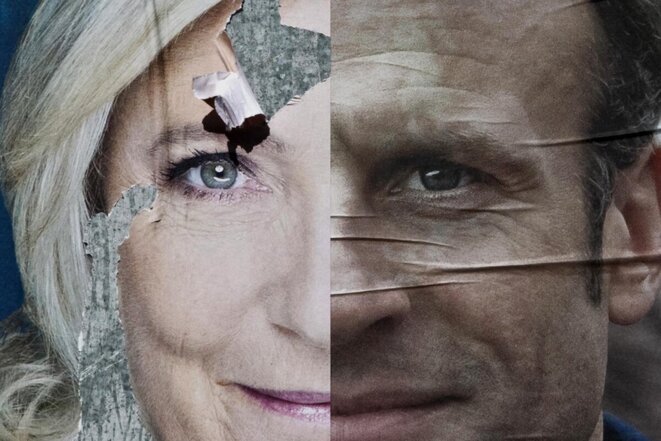
Emmanuel Macron and his principal opponent, far-right figurehead Marine Le Pen, recently found common ground when commenting on two judicial affairs. In the case of Le Pen, it was about her conviction for embezzlement and a sentence that bans her for five years from holding public office. In the case of Macron, it was his refusal to back calls to strip former president Nicolas Sarkozy of his Légion d’honneur award after his conviction for corruption. Both cited the electoral choice by “the sovereign people” as superior to the laws in place. In this op-ed article, Fabrice Arfi, co-head of Mediapart’s investigations unit, argues that this anti-judicial populism, a sort of French Trumpism, is the result of a political and moral collapse that is not limited to one political camp alone.
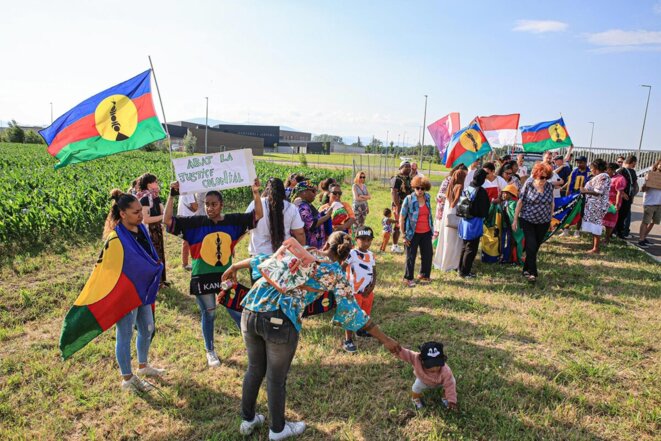
Following the unrest that took place in May 2024 in its Pacific Ocean territory of New Caledonia, the French state transferred seven high-profile activists accused of involvement in the disturbances to mainland France, amid much controversy. But at the same time the Paris authorities also secretly flew dozens of convicted criminals from their New Caledonian cells to serve in prisons around France, for reasons that still remain unclear. Some of these prisoners have since been released from jail, but now lack the financial means either to live in metropolitan France or to pay for the long flight back home. Rémi Carayol and Benoît Godin report on the fate of these abandoned “deportees”, most of whom are Kanaks, the indigenous people of New Caledonia.
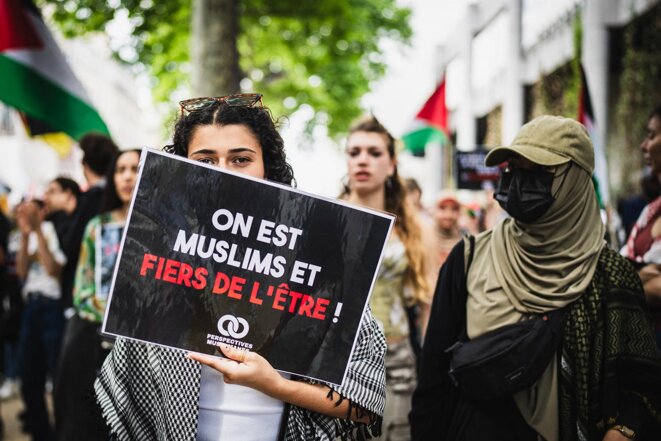
The government on Wednesday released a redacted version of a report on the infiltration of the Muslim Brotherhood movement in France. For weeks, political and media attention has been fixated on the issue, driven by interior minister Bruno Retailleau, who is aware of the political gain he might reap from it. The document - which was presented to France's Defence and National Security Council - immediately led to a call from President Emmanuel Macron for new measures to counter what the authors call a “threat to national cohesion”. One of the expert witnesses questioned for the report was researcher Frank Fregosi. In an interview with Mediapart's Lucie Delaporte, the academic voices his concern over the impact of the document and the widespread climate of mistrust facing practising Muslims in France.
In a landslide result, hardline French interior minister Bruno Retailleau was on Sunday elected as the new leader of the conservative party Les Républicains (LR), once a party of government but which has over recent years entered into a spiral of decline. Retailleau, 64, a senator largely unknown to the wider public before entering government last September, now has the task of rebuilding the party, with his eye on the presidential elections due in 2027. In this analysis of Retailleau’s prospects, Ilyes Ramdani considers the many scenarios for the LR’s future, including as kingmaker for the centre- or far-right in France’s increasingly fractured political landscape.
Following Mediapart’s publication on February 26th 2025 of an article entitled “The unlikely tale of a French 'spy' butler, a Russian oligarch and a UK intelligence company”, Jim Perrichon sent us this right of reply.
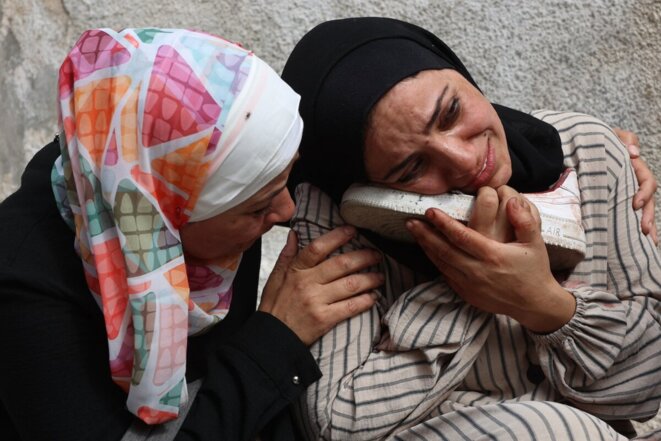
“It is shameful,” said Emmanuel Macron last week, commenting on Israel’s actions against the civilian population in Gaza, where children are increasingly affected by malnutrition, where famine looms and hospitals have collapsed, and where diseases are spreading. But, writes Mediapart co-founder and former publishing editor Edwy Plenel in this op-ed article, it is also shameful to do nothing concrete to bring an end to this ongoing genocide, and which the French president refuses to recognise as such. Meanwhile, the Hamas-controlled health ministry reported on Saturday that more than 300 people had died in Israeli strikes on Gaza since Wednesday.
French Prime Minister François Bayrou gave a laborious, muddled, misleading and aggressive presentation when he appeared before a parliamentary commission hearing on Wednesday into his role in the scandal of repeated sexual assaults and physical cruelty against pupils at a Catholic school in his political fiefdom in south-west France. He launched into attacks against the commission itself, against a whistle-blowing teacher, the media in general and Mediapart, which began revealing the depth of the scandal earlier this year, in particular. Mathilde Goanec, David Perrotin and Antton Rouget report.
The trial in north-west France of retired surgeon Joël Le Scouarnec, 74, on charges of raping and sexually assaulting 299 people, of whom 296 were his patients, most of them children, has been examining the horrific history of the surgeon’s vast catalogue of attacks, and how he was able to find employment caring for children despite a conviction for possession of child pornography. It has also been hearing the testimonies of the victims, nearly all now adults, some of who were joined on the witness stand by their parents. Their stories tell of how the consequences of sexual crimes can destroy family relationships. Hugo Lemonier was in court in Vannes to hear one very poignant case.
In this joint op-ed article for Mediapart, the winner of the 2022 Nobel Prize in Literature, Annie Ernaux, former French justice minister Christiane Taubira, French-Tunisian historian Sophie Bessis, and the Lebanese novelist Dominique Eddé, call on France and the European Union to “clearly and at last” take a stand against the Israeli government’s “policy of destruction” in Gaza and the Middle East.