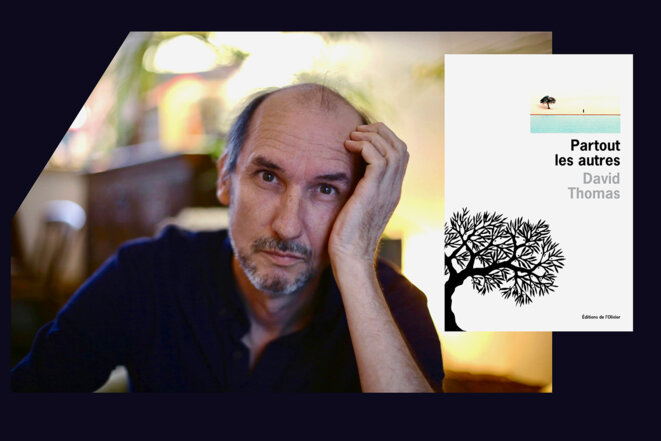
One of France’s most prestigious literary prizes, the Goncourt, is awarded each year to works published in French in five separate categories, from novels to poetry. This month, the 2023 Prix Goncourt for a book of short stories went to David Thomas for Partout les autres, a collection of quick-fire microfictions that mirror societal issues. In this review, Quentin Margne, from the French literary journal En attendant Nadeau, enthuses over Thomas’s mischievousness and wit, making fun of his contemporaries while raising profound questions, accomplished with art and subtlety.
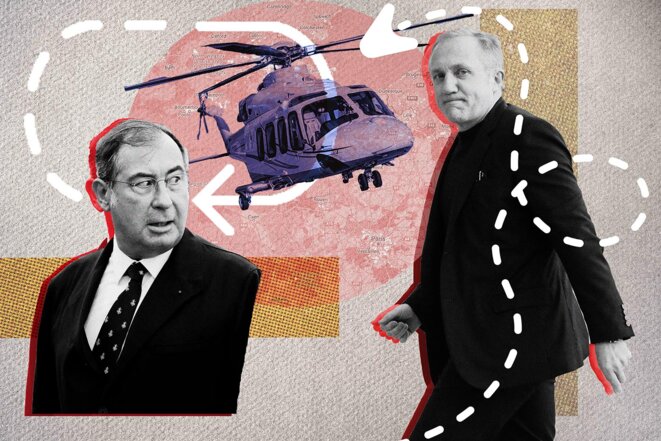
French billionaires François-Henri Pinault and Martin Bouygues share ownership of a high-end Agusta AW-139 helicopter, whose maker claims it “embodies the hallmarks of elegance, style and sophistication”. Mediapart and data collection collective Mémoire vive have traced the businessmen’s use of the aircraft over the past year, and found that many of its flights were for short hops to their different holiday homes, vineyards and to London. While Pinault’s luxury goods group Kering and Bouygues’ construction and telecoms group are keen to boast of reducing their carbon footprints, the total CO2 emissions of the 235 flights of their shared helicopter since September last year amount to 317 tonnes, which is equivalent to the average emissions of a person in France over a period of 32 years.
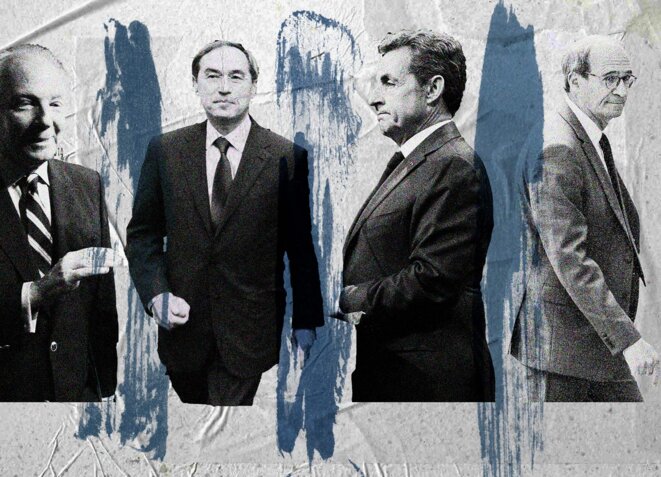
French prosecutors earlier this month recommended that former French president Nicolas Sarkozy, along with three of his former ministers and nine other individuals, stand trial for the alleged illegal funding of his 2007 election campaign by the regime of former Libyan dictator Muammar Gaddafi. Mediapart obtained access to the 425-page document in which the prosecutors detail the evidence and their conclusions. The Libyan financing arrangements could not have been carried out, they write, “without the consent and the perfect knowledge” of Sarkozy, for whom “the hoped-for advantage consisted of obtaining secret financial support for the 2007 electoral campaign”. Fabrice Arfi and Karl Laske report.
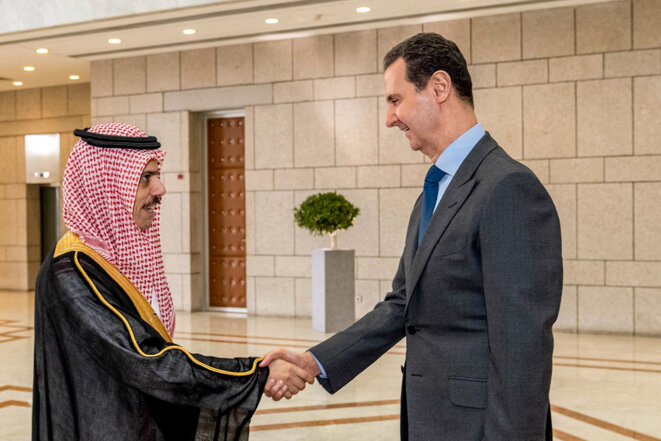
The pariah regime of Syrian dictator Bashar al-Assad, ostracised for its bloody repression of opponents in a civil war estimated to have caused the deaths of more than 300,000 civilians, was last weekend re-admitted, with the encouragement of Saudi Arabia and the UAE, to the Arab League. While the French government, like those of other Western countries, insists there will be no normalisation of its relations with the Assad regime, there are some in France’s economic circles who are openly keen to resume business dealings with Damascus. Elie Guckert reports.
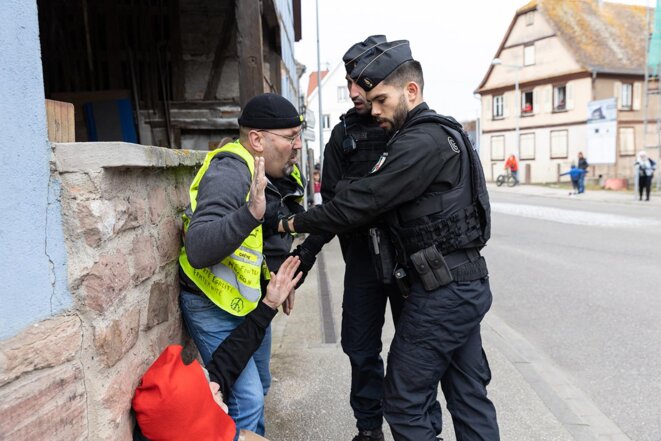
Since the start of the protest movement against the government's pension reforms, French police officers have been arresting more and more demonstrators over insults aimed at President Emmanuel Macron. This offence is commonly known as 'lèse-majesté' - or in this case 'lèse-Macron'. However, a decade ago the crime of insulting the president of the Republic was declared to be in contravention of the European Convention on Human Rights and was removed from French law. As Jérôme Hourdeaux reports, lawyers say they are worried that the government no longer appears to tolerate criticism.
The practice of using sheep rather than mowers to keep down the grass in green spaces has grown massively in popularity over the last decade in France. It is seen as environmentally-friendly, quieter - and more cost effective. But behind the scenes there is fierce competition for market share between some of the companies and individuals that oversee the sheep grazing, in what can be a lucrative business. And as Floriane Louison reports, there are fears this competition can come at the price of the animals' well-being, and broader concerns that eco-grazing may amount to little more than a form of 'greenwashing'.
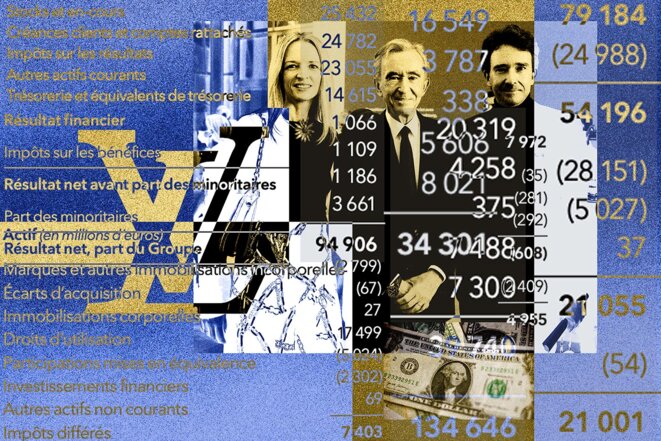
French businessman Bernard Arnault, the boss of the luxury goods group LVMH, has reached the peak of the Mount Everest of wealth. He is now firmly ensconced as the richest person in the world, far outstripping his rivals below. And his family's fortune just looks set to keep on growing. Every year the income from the family's capital stake in the group alone can be counted in the billions – vast sums which in turn generate yet more profits. Martine Orange examines the figures of this colossal money-making system.
Months after the 2020 murder of history and geographer teacher Samuel Paty by a radicalised youth, junior minister Marlène Schiappa set up the Fonds Marianne to counter extremism and 'defend Republican values'. This government-funded body has since paid out just over two million euros to 17 different associations. But investigations by the media, including Mediapart, have raised question marks over two of the associations who received large sums from the fund and over the way this money was used. One in particular, Reconstruire le Commun, went on to publish videos attacking opponents of President Emmanuel Macron during the 2022 elections. And Mediapart can reveal that there are fresh questions today over the profile of some of those who took part in that charity's videos. Meanwhile, opposition politicians are calling for a Parliamentary inquiry into the affair, which has also been referred to the prosecution authorities. Antton Rouget and Ellen Salvi report.
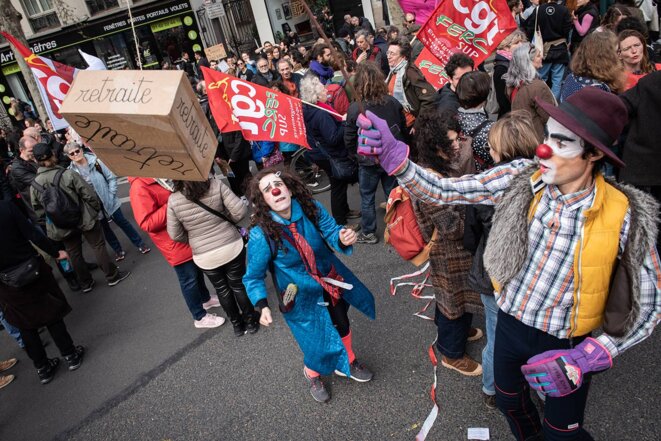
After its deeply-unpopular pension reform was forced into law, the government of President Emmanuel Macron set itself a target of 100 days to calm the country and reduce the level of protest. But instead the tone and style of the protests have simply changed; from outright anger to one of mockery. As Mathieu Dejean writes, the government is right to worry about the new derision it faces. For mockery and ridicule have triumphed over inflexible governments in the past.
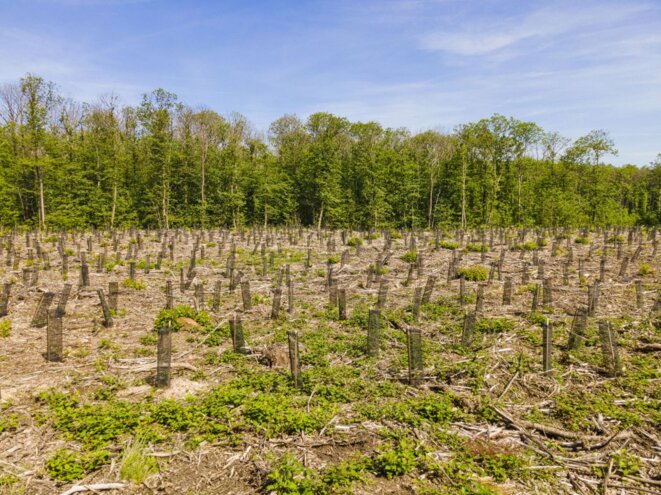
The French government is preparing a vast programme aimed at renewing the country’s more than 17 million hectares of forested land to meet the new realities of climate change, and which is to be presented in draft legislation before Parliament this autumn. It stems from the announcement by President Emmanuel Macron following wildfires last year that one billion new trees are to be planted over a ten-year period. But, as Floriane Louison reports, the plan has prompted serious concerns among scientists over its potentially negative consequences for the environment and the sustainability of the very forests it is supposed to protect.