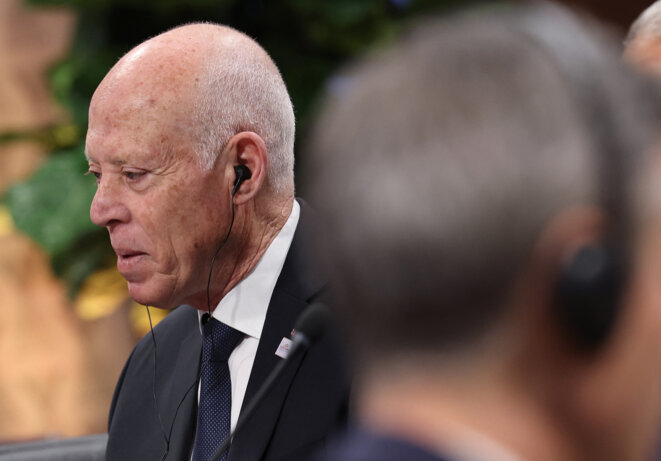
Comments from Tunisian president Kaïs Saïed over the presence of sub-Saharan migrants in the North African country and his talk of a “criminal plan” to change the nation's demographics have provoked a row. Students who come from sub-Saharan Africa now say they are living in fear and have been told to stay indoors to avoid being targeted. Meanwhile some migrant workers have been forcibly evicted from their homes. Lilia Blaise reports on a controversy in Tunisia which is also being exploited by France's far-right failed presidential candidate Éric Zemmour.
Access to ownership or rental of agricultural land for French farmers setting up an activity is proving increasingly difficult, in part because of the rising prices fuelled by private and agribusiness investors in mega-farms, and also because of the increasing fragmentation of smallholdings, according to two reports published this week. Both call for the swift introduction of measures to reverse a trend that threatens a profound change in French agriculture. Amélie Poinssot reports.
In July 1955, Ginette and Claude Bac were handed a two-year prison sentence for involuntarily causing the death through lack of care of their fourth child, eight-month-old Danielle. The tragedy of how Ginette Bac became lost in a deep depression after falling pregnant four times in as many years became a turning point in France for the campaign to legalise contraception, and led to the creation of the country’s family planning association. Mathilde Blézat reports.
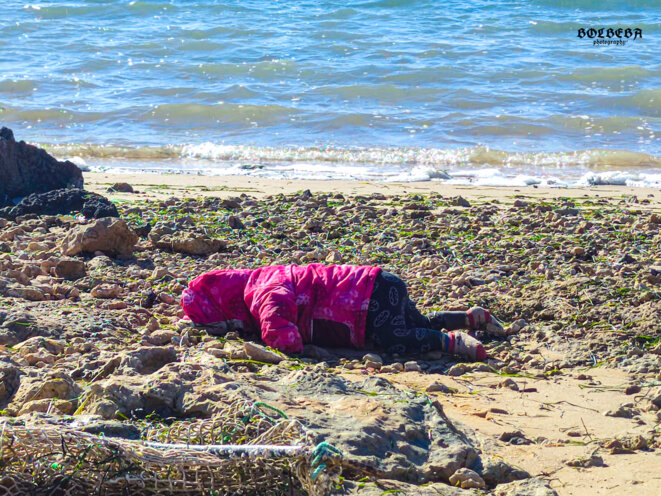
The washed-up corpse of an infant girl (photo) was found on December 24th on a beach in Tunisia’s Kerkennah Islands, in almost identical circumstances as that of three-year-old Alan Kurdi, found on a beach in Turkey in 2015. Both drowned during an attempted crossing of the Mediterranean Sea. But while the shocking photo of the little boy’s body made headlines around the world, that of the unidentified little girl has prompted no such interest, nor any political reaction, highlighting a creeping indifference towards such tragedies. Nejma Brahim reports from Tunisia, where she spoke with those who routinely face the horrors of the Mediterranean ‘graveyard’.
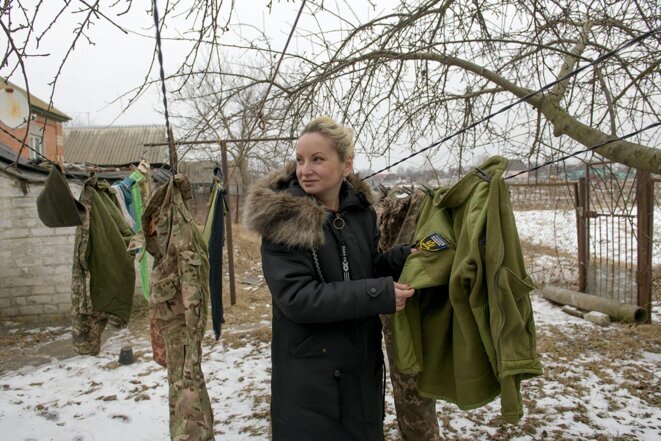
After the recapture by Ukraine last autumn of territories occupied by Russia since its invasion of the country in February 2022, there is a strong public demand that those who collaborated with the occupier should be brought to account before the courts. Beyond the most flagrant cases, the legal process of identifying collaboration can be both complicated and sensitive, with some having acted voluntarily, others under duress. The prosecution services, meanwhile, are under pressure to act swiftly. Carine Fouteau reports from the city of Kharkiv and its surrounds, liberated last September.
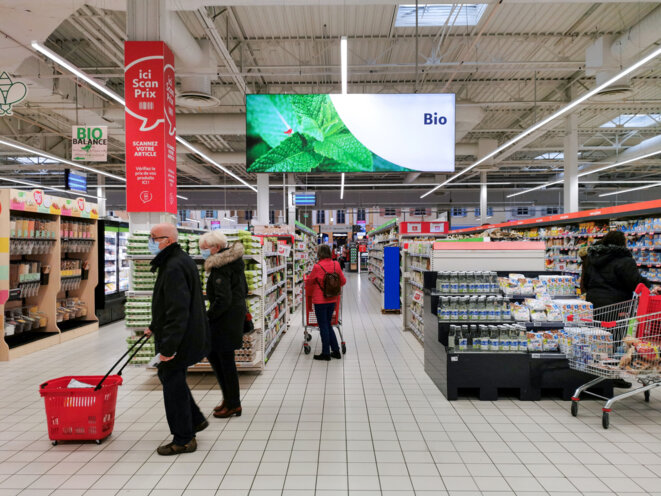
The food chain in France, from production to plate, is officially estimated to account for around 22% of the country’s greenhouse gas emissions, while supermarkets are estimated to account for about 70% of all food purchases. Réseau Climat Action (RCA), the French branch of the Climate Action Network, the umbrella group for hundreds of environmental protection NGOs, has completed a study of the practices of the major supermarket chains with regard to their contribution to gas emissions, and efforts to reduce them, and this month published its damning findings. Jade Bourgery reports.
German aerospace engineer Lutz Kayser was the first to develop, as of the 1970s, a technology for the private launching of satellite-carrying rockets at relatively low cost. But the dreams of the Nazi nostalgist would fall to earth with a bump when he became caught up in the geopolitical realities of the Cold War amid his attempts to set up his operations with the help of two African dictators. His story is the subject of Projet Wotan, a book recently published in France by the journalist Joëlle Stolz.
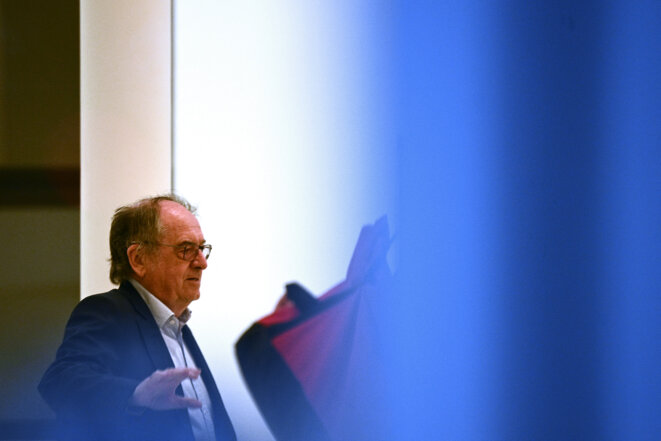
A report concluding a five-month administrative investigation into the management of the French Football Federation has found that its president, Noël Le Graët, repeatedly sent sexually explicit phone text messages to female staff, that his “offensive” comments “may be accentuated by the excessive consumption of alcohol,” and that he oversaw a “sexist and violent” atmosphere within the federation. Sports minister Amélie Oudéa-Castéra has called on the 81-year-old to resign amid the latest of several scandals that have rocked the world of sport in France. Youmni Kezzouf reports.
The current bitterly-opposed pension reforms proposed by the French government are purely designed to save money and have no broader social dimension. This means that President Emmanuel Macron and his supporters are now defending a reform measure which is diametrically opposed to the initial plan they had put forward back in 2017. This U-turn tells us a great deal about the flaws and limp nature of the government writes Ellen Salvi in this analysis of how and why the pension reform plan changed so radically during President Macron's time in office.
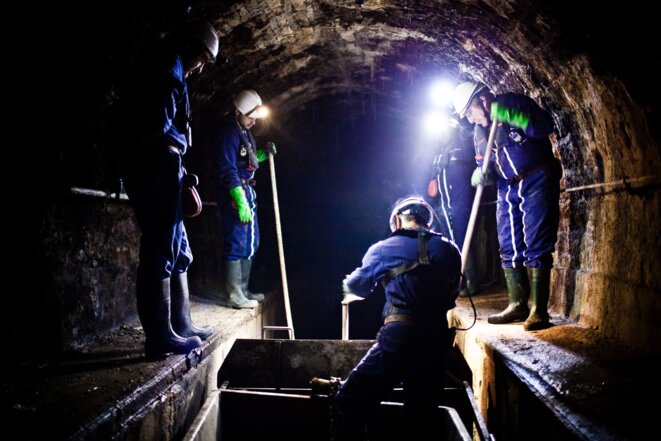
Unlike their counterparts in Paris, who can retire at the age of 52, sewer workers in Marseille are employed by a private company. This means they have to keep working until they reach 62 – and this will increase to 64 if the current pension reform plans are passed. These workers in the Mediterranean city are bitterly opposed to any extension of their retirement age and believe they should be able to end their careers earlier, not later. They described their cramped, smelly and hazardous subterranean working life to Khedidja Zerouali.