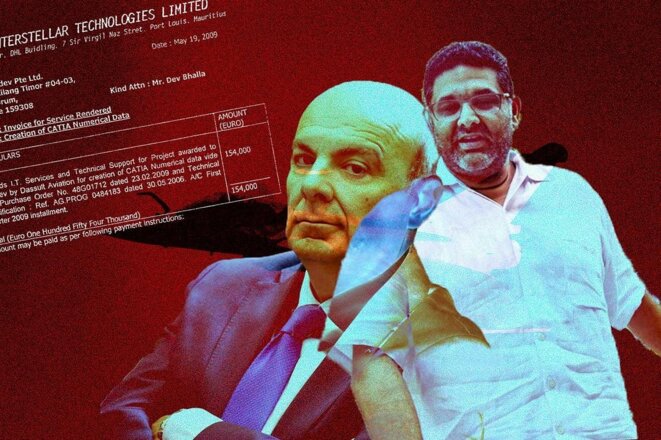
Mediapart is today publishing the alleged false invoices that enabled French aircraft manufacturer Dassault Aviation to pay at least 7.5 million euros in secret commissions to a middleman to help secure the sale of 36 Rafale fighter aircraft to India. Yet despite the existence of these documents, the Indian federal police has decided not to pursue the affair and has not begun an investigation. Yann Philippin reports.
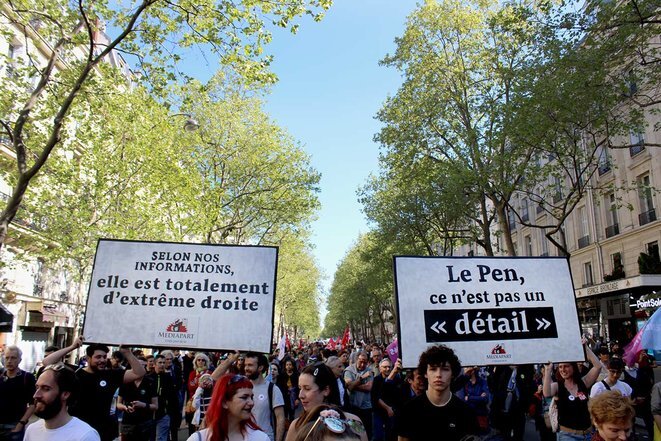
The far-right has never been so close to power. And given that it is the worst enemy of equality, rights and freedom, voting against its candidate on Sunday April 24th is the only anti-fascist option in the French presidential election, writes Mediapart’s publishing editor Edwy Plenel in this op-ed article. But, he says, it will be a painful act, because the other name on the ballot paper is that of the person who is chiefly responsible for this catastrophe: Emmanuel Macron.
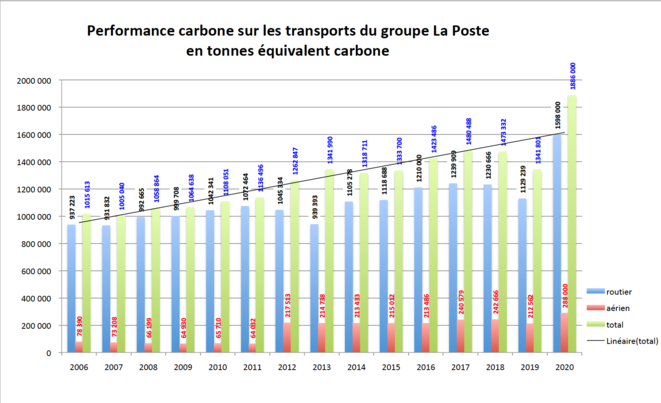
In its public utterances France's portal service La Poste makes great play of its “carbon neutrality”. Yet an analysis shows that over the last decade and a half the publicly-owned postal group has been emitting more and more carbon dioxide each year transporting letters and parcels. The reason for this is the operator's complete reliance on using the most polluting forms of transport – air and road – to carry the mail. Mediapart's environment correspondent Jade Lindgaard reports.
The results of the first round of France’s presidential elections on Sunday have demonstrated that the political earthquake of the elections in 2017, when Emmanuel Macron arrived in office, was no passing aberration. Instead, the voting last weekend confirmed the endurance of a new electoral landscape in France, with the old mainstream socialist and conservative parties of government left in tatters, replaced by a centre-right behind Macron, a strengthened far-right and a Left dominated by its ‘Green-and-red’ movements. This analysis by Fabien Escalona and Donatien Huet.
What do former supporters of Nicolas Sarkozy, the left-wing nationalist Jean-Pierre Chevènement, and the right-wing ex-minister Éric Woerth have in common? They are all supporting current president Emmanuel Macron in his bid for re-election. Backing for the incumbent from such disparate groups is a clear sign of how the old forces of government in France – the traditional Right and Left - have run out of steam. It also highlights the extent to which social democrats have effectively abandoned the political field. With the first round of the presidential election taking place on Sunday April 10th, Fabien Escalona looks at how Macron's 'big tent' politics has got even bigger, and examines some of the resulting dangers for French politics.
The trial of 20 individuals accused of variously perpetrating or helping to carry out the November 13th 2015 terrorist attacks in Paris continues. As part of its regular coverage of the hearings, Mediapart is publishing the first-hand reactions of seven victims of the massacres as they take part in, and follow, the court proceedings. Here, schoolteacher Christophe Naudin, who survived the shooting massacre at the Bataclan concert hall in which one of his closest friends died, reflects on the five weeks during which the civil parties have been giving evidence, and begins by recounting his own turn, last week, at taking to the witness stand.
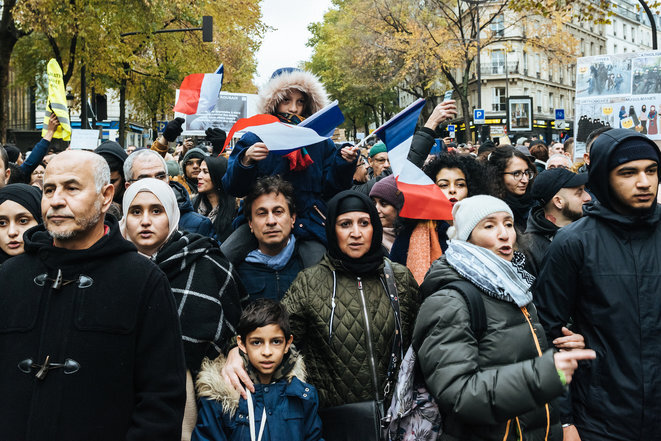
A number of Muslim organisations in France considered by the government to be linked to radical Islamic movements have been dissolved by decree since the gruesome October 2020 terrorist murder of school teacher Samuel Paty. While some of the dissolutions have been criticised as unjustified and counter to public freedoms, the broad French Left of political parties and civil society stands accused of shying away from an issue that is a political hot potato, instead choosing to observe what the head of one Muslim association called a “deafening silence”. Mathilde Goanec reports.
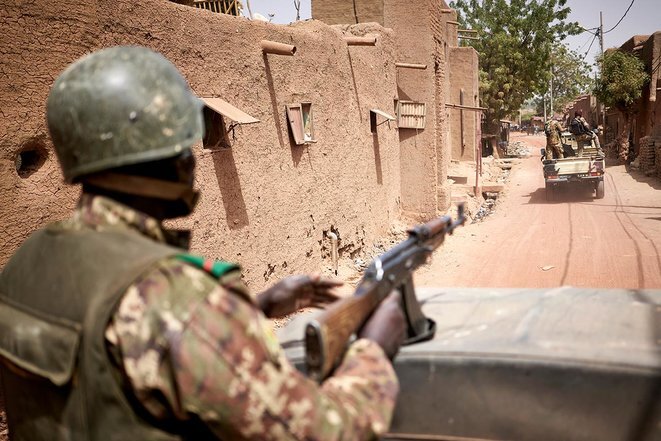
A Malian army unit accompanied by foreign mercenaries, who from witness accounts appear to be members of Russia's paramilitary Wagner Group, last week carried out summary executions of hundreds of people in the town of Moura, in the centre of Mali, in an operation officially described as a crackdown on jihadist insurgents, according to a report by NGO Human Rights Watch. Mediapart’s West Africa correspondent Rémi Carayol has spoken to survivors of the massacre and with various sources including local rights activists, who say the dead, variously estimated to number between 300 and 600, were mostly non-jihadist civilians.
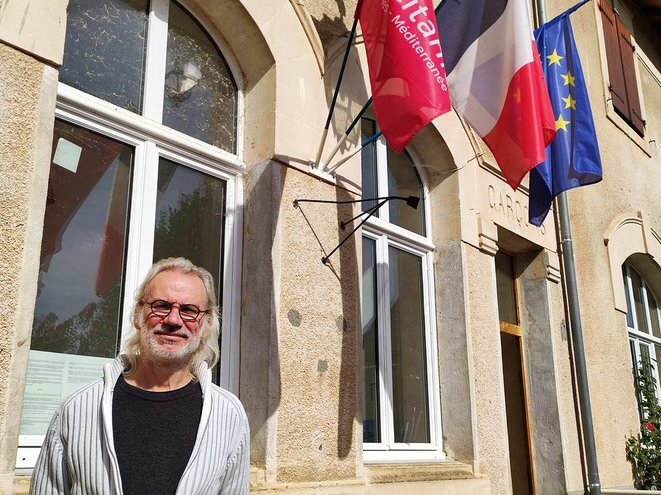
Introduced in France this summer, a “health pass” attesting that the holder is fully vaccinated against Covid-19, or has recently tested negative to the coronavirus, is required for gaining access to a wide range of public venues. This month, as the government moves to extend its power to impose the pass through to next summer, Mediapart took to the road to gather reactions to the restrictions in the lesser populated rural areas of central and south-west France, where local concerns contrast with those in crowded urban zones. Here, Nicolas Cheviron reports from the village of Corn, whose mayor, Dominique Legresy, a fervent opponent of the pass, confides how he tries “to allow things to happen” without breaking the law.
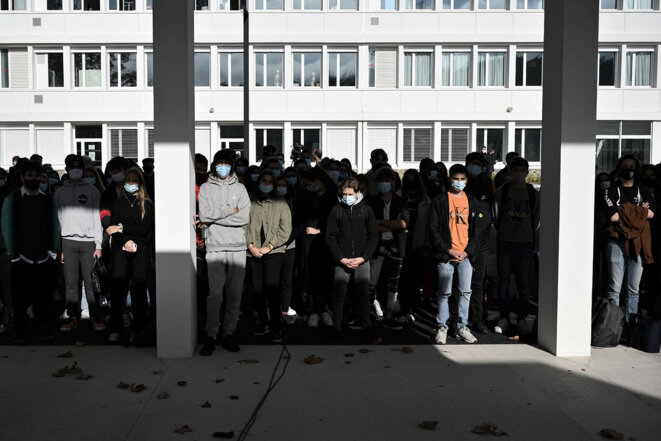
On October 16th 2020 history and geography teacher Samuel Paty was murdered near his school in the north-west suburbs of Paris where he had previously shown pupils caricatures of Muhammad as part of a lesson. A year later, Mediapart visited a similar-sized community at Alès in southern France to speak to teachers there about life in the classroom following a brutal killing that shocked the nation. They told Mediapart about their hopes, their fears and their complicated relations with pupils who they say are being drip fed with 'fake news'. Some also expressed their anger about an education system they consider to be too passive in the face of the current situation. Prisca Borrel reports.