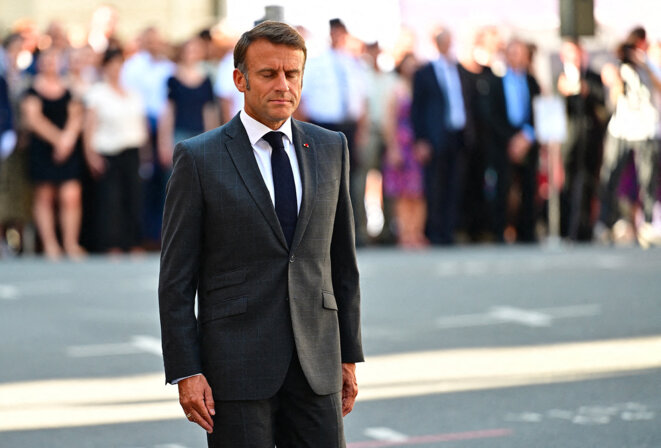
Critics say the French president is continuing to behave as if his political camp had not been defeated in last month's parliamentary elections and is still refusing to appoint the Left's candidate, Lucie Castets, as the country's new prime minister. As Macron's supporters battle to remain centre stage of the political scene, members of the Nouvelle Front Populaire, the leftwing alliance which has the largest number of MPs in the National Assembly, attack what they see as a denial of democracy on the part of the French head of state. Youmni Kezzouf reports.
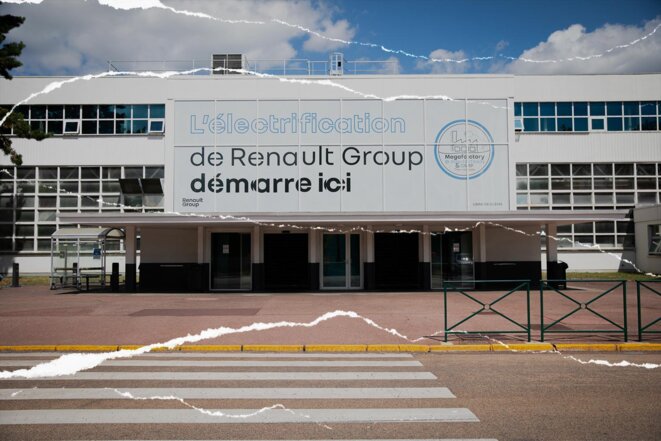
The Renault factory at Cléon in north-west France specialises in engines and engine components. However, it has been revealed that the engine for the upcoming electric Twingo car – a vehicle on which the giant manufacturer is pinning great hopes - is to be produced in China. Trade unions representing workers at the French factory are concerned that the recent decline in workforce numbers will become even worse as the group offshores ever more of its production. Manuel Sanson reports.
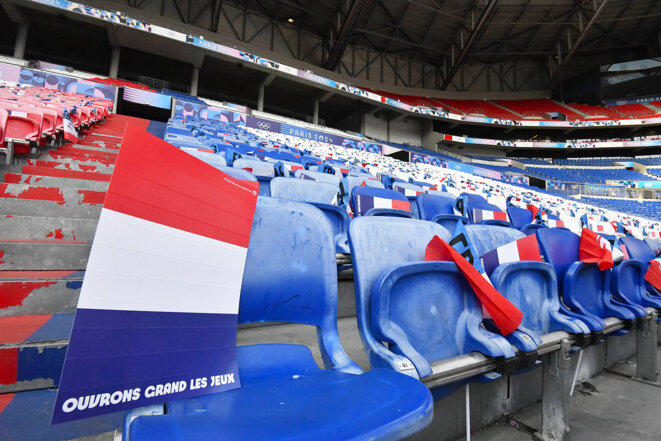
On Sunday evening the closing ceremony at the Stade de France brought the curtain down on the Paris Olympics, an event which has been widely praised both in France and abroad. President Emmanuel Macon claimed it showed the “true face of France”. However, in an interview with Mediapart, Sandrine Lemaire, the co-curator of a major Paris exhibition on Olympic history, places this “magical interlude” of the Paris Games in the context of the long history of the Olympiads, and against a backdrop of geopolitical conflicts, nationalism, and sporting achievements. Interview by François Bougon.
After expressing his intention of “personally” involving himself in seeking a solution to the crisis in France’s South Pacific territory of New Caledonia, where tensions were ignited earlier this year after a move by president Emmanuel Macron to reform the electoral register to the detriment of the pro-independence movement of the indigenous Kanak people, the new French prime minister, Michel Barnier, was forced into a U-turn by Macron, who doggedly refuses to recognise errors in his approach to the crisis, in which 13 people have died. Ellen Salvi reports.
Across Europe, temperatures have been soaring over recent days, and in France large swathes of the country were placed on heatwave alert at the weekend ahead of peaks of 38°C in many parts. For the scientific community, the recurrent heatwaves affecting France are characteristic of intensifying climate change and, as Mickaël Correia and Manuel Magrez report, the daunting prospects are highlighted by the incapacity of counter measures to keep pace with the mounting meteorological havoc.
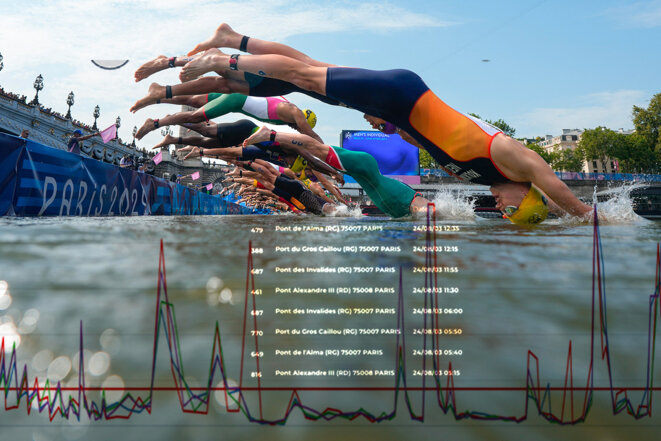
Several athletes who took part in swimming events in the River Seine during the Summer Olympics in Paris later fell ill with intestinal complaints, the latest among them being Irish swimmer Daniel Wiffen, who as a result missed Sunday’s closing ceremony where he was to be a flag bearer for Ireland. While no absolute proof indicates the cases of illness were due to the pollution in the river, the incidents will be of concern for those athletes taking part in the Summer Paralympics in Paris in two weeks time. Mediapart gained access to the results of the daily tests of the water which show that over a ten-day period during the Games, the amount of E. coli and intestinal Enterococcus bacteria in the water surpassed recommended levels. Jade Lindgaard, Pascale Pascariello and Antton Rouget report.
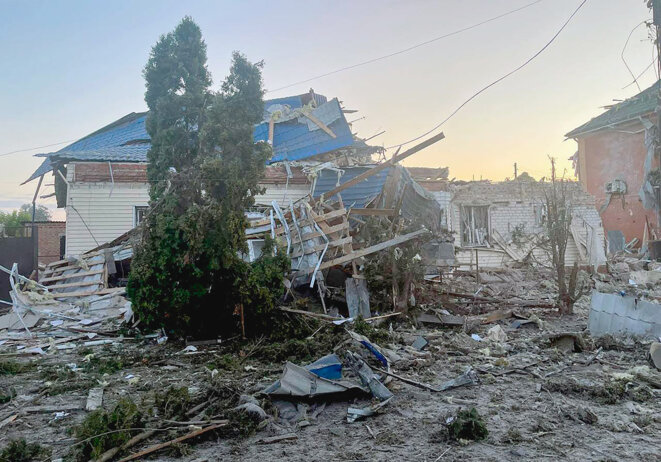
An incursion by Ukrainian military forces into Russia’s western Kursk province continued for a fifth day on Saturday, amid claims they have penetrated up to 15 kilometres into the country. Conflicting reports announce casualties on both sides, while photos and video circulating on Telegram channels show burnt-out houses and, latterly, the decimation of a Russian military truck convoy. Russia has declared a state of emergency in the region, where the precise aims of the Ukrainian attack remain unclear. In this article by Mediapart’s Ukrainian media partner, The Kyiv Independent, Francis Farrell reports on the unfolding events.
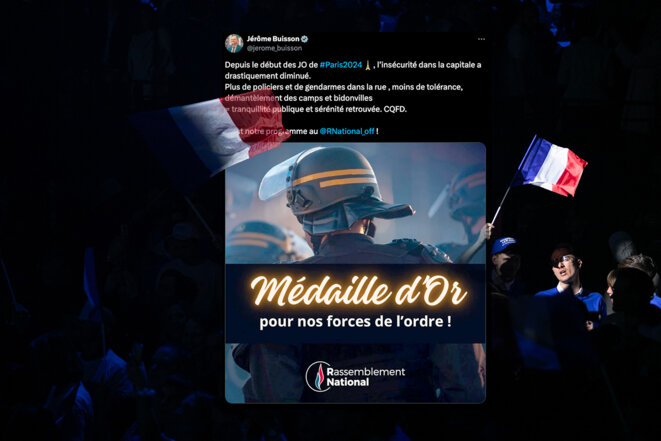
While numerous MPs and MEPs from France’s far-right Rassemblement National (RN) party were fiercely critical of the opening ceremony of the Paris Olympics, notably amid claims that it included a scene insulting Christianity, they have now settled down into virtually unanimous approval of the games themselves. Taking to social media to applaud the successes of French athletes, and in particular those from the police and armed forces, the RN representatives also express their delight at the flag-waving fervour of supporters and the massive police presence in the capital. All of which prompted one far-right MEP to comment that the games “very much resemble the France that we would like”. Youmni Kezzouf reports.
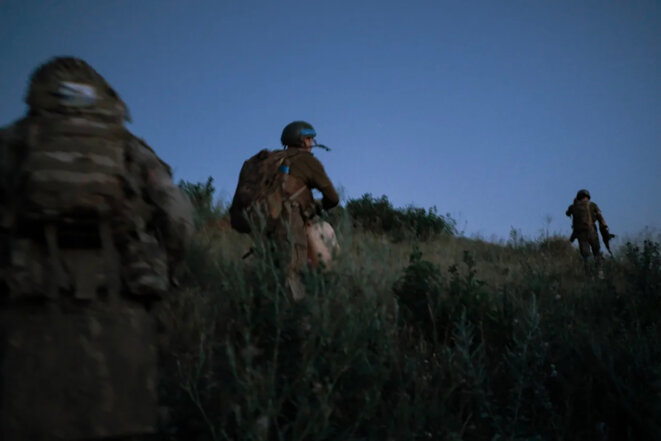
While Russia steps up its offensive operations in the eastern Ukrainian province of Donetsk Oblast, Ukraine is struggling to replace its military losses through mobilization, placing its foot soldiers under greater pressure than ever. In this gritty report by Mediapart’s Ukrainian media partner, The Kyiv Independent, Francis Farrell recounts the long day he spent with the infantry in the frontline trenches near the Donetsk Oblast mining town of Toretsk, where little more than a hundred metres separates them from Russian troops.
A report published this week by France’s national audit body, the Cour des comptes, sounds the alarm over a leap in spending by the country’s presidential office, which left a budget deficit in 2023 of 8 million euros. The auditors target the costs of lavish entertainment, state banquets and travel in France and abroad. Top of the list of eye-watering dinner bills was a banquet organised at Versailles Palace in honour of King Charles III last September, and which came to just over 474,000 euros. Ilyes Ramdani and Antton Rouget report.