


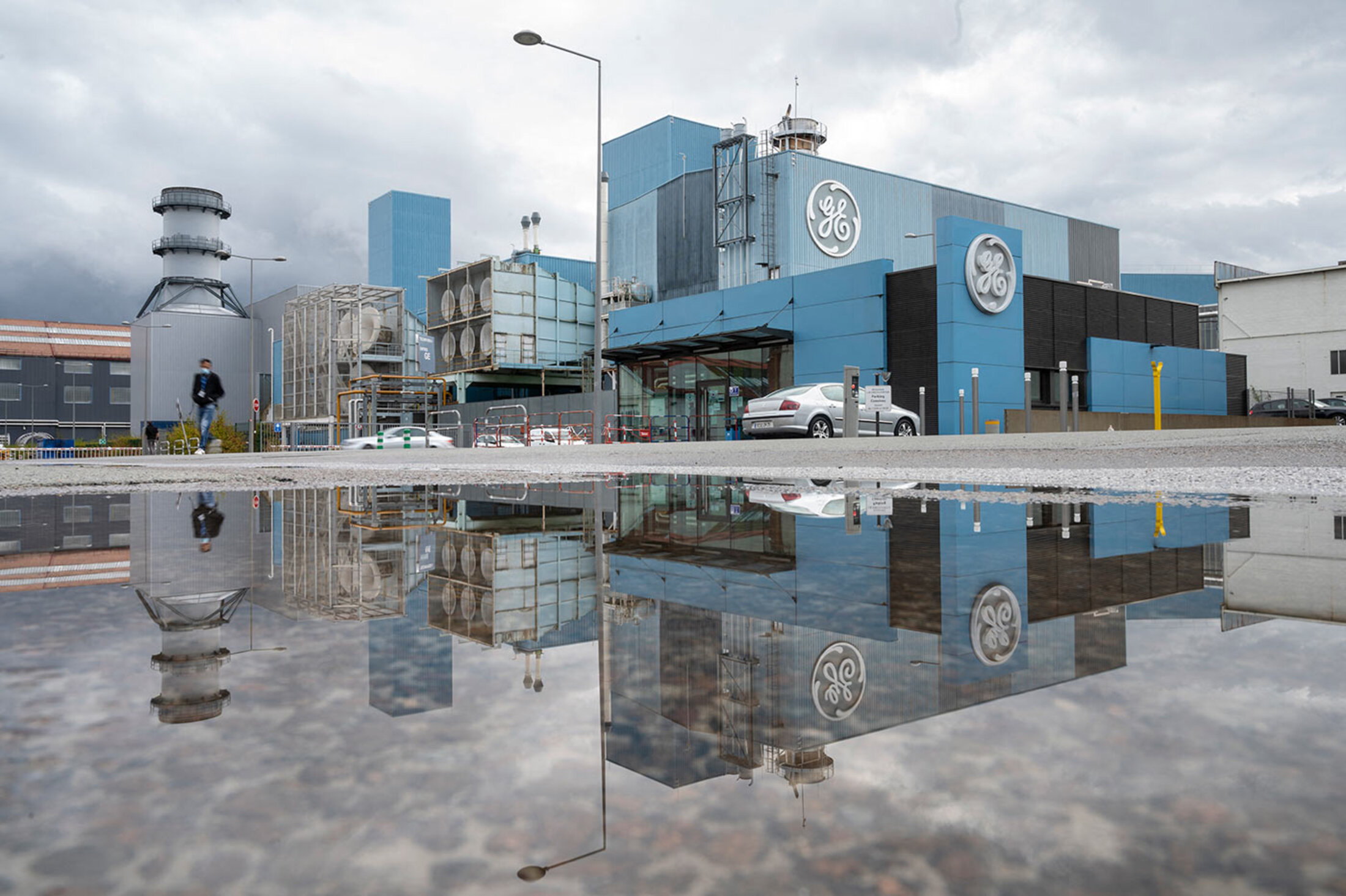
In November 2015, US conglomerate General Electric (GE) completed its purchase of the power and grid branch of engineering giant Alstom, once regarded as one of France’s industrial jewels. It was the start of what has become an industrial fiasco.
Alstom’s power branch, notably the production of gas turbines, was absorbed into GE France, and GE’s chief executive Jeff Immelt, in a statement released by the group immediately after the acquisition, confidently predicted that, “the complementary technology, global capability, installed base, and talent of Alstom will further our core industrial growth”.
But for the power branch’s workforce, the future was anything but rosy; over the seven years since the deal was inked, 5,000 jobs have been axed, including 1,400 at the company’s major plant in Belfort, north-east France, and the technological know-how built up under Alstom was depleted.
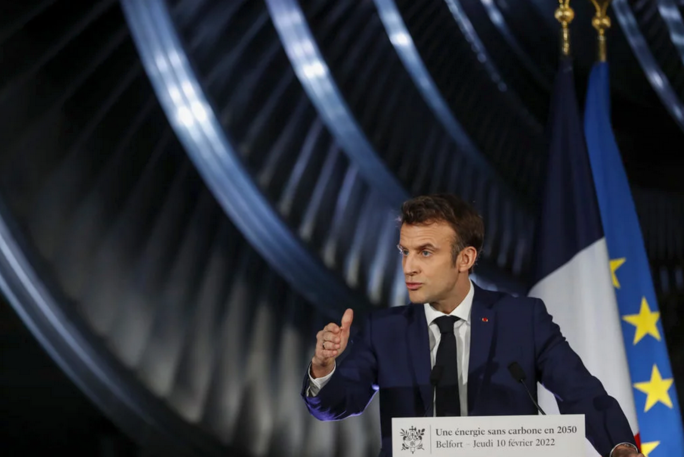
Meanwhile, in 2019, the general manager of GE France, Hugh Bailey, was targeted by an investigation by French public prosecution services for suspected ‘unlawful acquisition of an interest’, referring to his hiring by GE France in 2017. At the time, Baily had most recently worked as a civil servant advisor on industrial affairs to Emmanuel Macron when the latter was finance minister between 2014 and 2016. Macron had played a key role in the sale to GE of Alstom’s power arm.
Now the company is implicated in a tax avoidance scheme, detailed in this report by the investigative online newsroom Disclose, an editorial partner of Mediapart. According to the investigation by Disclose, which gained access to the contents of independent audit reports and internal accountancy documents from GE, the US multinational set up a secretive financial structure linking its Belfort-based General Electric Energy Products France (GEEPF) with subsidiaries registered in Switzerland and the US state of Delaware.

Enlargement : Illustration 1
The aim of the financial structure was to reduce the group’s tax liability in France by dissimulating profits from the sales of gas turbines produced at its Belfort plant. Disclose estimates that this resulted in the disappearance, between 2015 and 2020, of a total of more than 800 million euros from the accounts of GEEPF, representing a loss to the French tax authorities of between 150 and 300 million euros.
The tax avoidance began in 2015, when it transferred GEEPF’s commercial management to a company created especially for the task, General Electric Switzerland GmbH (GES), based in the Swiss town of Baden, close to Zurich.
In a contract signed with the French government in the runup to GE’s acquisition of Alstom’s power division, GE pledged that, over the ten years following the purchase, “the headquarters of its worldwide activity in steam turbines of the Power and Water activity be located in France” and that several other of GE’s activities would be situated in France, including “manufacturing strategy”, “product marketing and development”, the “supervision of commercial activities”, “supply chain strategy” and “research and development”.
But the transfer of commercial management to the Swiss subsidiary GES meant, according to an audit report seen by Disclose, that the Belfort plant was no longer a “manufacturer” but instead a “manufacturing unit”, working under the command of GES. The audit report noted that what it called a “restructuration” marked the “last profitable year” of the Belfort plant. The reason for that was that the profits from sales of the turbines and spare parts built at the French plant were transferred to GES.
An illustration of how the scheme worked is found in a 2019 internal contract agreed between GEEPF and GES for the sale of gas turbines worth a total of more than 350 million euros. While the turbines were made in France, the contract stipulated that GES was the “manufacturer” and the Belfort plant was a “distributor”. This allowed GE’s Swiss subsidiary to directly sell the turbines to the end client and thus pocket the profit.
In the framework of the contract, no less than 97% of the profits from the sales were paid into the subsidiary in Switzerland, where profits are taxed at a rate of between 17% and 22%, compared to a rate in France of 33%.
Contacted by Disclose, General Electric did not reply to the questions submitted to it.
A similar scheme involves the sales of spare parts for the turbines, which represent the largest single source of revenue for the Belfort plant.
Based on information contained in the GE group’s annual report, Disclose estimates that the scheme allowed for a total of 1.5 billion euros to be funnelled into its Swiss subsidiary GES between 2016 and 2019. What’s more, this was done with the blessing of France’s economy ministry.
According to sources, following its purchase of Alstom’s power business, GE reportedly benefited from a “relation of trust” agreement with the French tax authorities. A 2013 document from the French public finances directorate sets out that under such an agreement “the company provides all the details necessary for understanding its [tax] situation”. This would mean that GE submitted its tax scheme – the relationship between its subsidiaries – to the French finance ministry. In return, it was spared a tax inspection.
Contacted by Disclose, France’s economy and finance ministry failed to reply to questions submitted to it about its exact knowledge of the scheme put in place by GE.
Enlargement : Illustration 2
Three other GE subsidiaries that work with its French business are also domiciled at 8, Brown-Boveri Strasse in Baden. Two of these, General Electric Global Services GmbH and GE Global Parts and Products GmbH, are responsible for selling spare parts manufactured in Belfort. The third, General Electric Technology GmbH, is tasked with collecting patent rights payments concerning its gas turbines. According to one audit report seen by Disclose, foreign revenue from patents are subject to very little tax in Switzerland.
GE’s strategy includes yet another subsidiary, Monogram Licensing International LLC, based the US state of Delaware, which applies no tax on businesses. Disclose estimates that between 2014 and 2019, it received close to 80.9 million euros from GE France in payments for the right to use the GE brand name, its logo and advertising slogans. A contract between the two subsidiaries stipulates that GE France must pay Monogram Licensing International 1% of its annual turnover. In fact, that percentage was exceeded on several occasions. According to one audit report for the group, the reason for this was not explained.
The massive poaching of the wealth produced by the workforce in Belfort may contravene the terms of an OECD-led international convention on combating corporate tax avoidance, a practice called “base erosion and profit shifting” (or BEPS), which the OECD describes as “tax planning strategies used by multinational enterprises that exploit gaps and mismatches in tax rules to avoid paying tax”. France signed up to the convention and brought it into legal effect in 2019. The OECD notes that this provides countries with “the tools to ensure that profits are taxed where economic activities generating the profits are performed and where value is created”. By that logic, taxation on the income from sales of turbines built in Belfort should be paid in France and not in Switzerland.
While the transfer abroad of a total of around 800 million euros from the accounts General Electric Energy Products France saved GE millions in French taxes, it came at a cost for its workforce in France. A tax expert to who Disclose presented the financial reports of GE’s Belfort operations confirmed that the artificial reduction of profits between 2015 and 2019 mechanically deprived the local staff of several thousand euros they would otherwise have been paid in GEEPF’s profit sharing scheme.
Last December, the SUD Industrie trade union joined with the Belfort plant’s works council in filing a legal complaint against the company for “fraud” in connection with the “staff’s right” to profit sharing.
-------------------------
If you have information of public interest you would like to pass on to Mediapart for investigation you can contact us at this email address: enquete@mediapart.fr. If you wish to send us documents for our scrutiny via our highly secure platform please go to https://www.frenchleaks.fr/ which is presented in both English and French.
-------------------------
- The original French version of this report can be found here.
English version by Graham Tearse