


There was a time when the name Hersant made ministerial offices quake and was a powerful voice in the corridors of France's National Assembly. It was, after all, a colossal newspaper group whose daily titles operated across French territory in the Atlantic, Indian and Pacific oceans, and which was built up by former right-wing politician Robert Hersant. After the end of World War II he was convicted for collaboration with Nazi Germany, but by 1950 he had founded his first media title.
“Between the start of the 1970s and his death in 1996, Robert Hersant owned a good third of the daily regional press and a part of the national press,” says Patrick Eveno, media historian and author of 'Histoire de la Presse Française, de Théophraste Renaudot à la Révolution Numérique' ('History of the French Press from Théophraste Renaudot to the Digital Revolution'). “For around 20 years this man stood centre stage and around ten MPs, newspaper editors and executives in his group, were his employees. Which led some to say that he had a Parliamentary group.”
Today hardly any of that remains. The ruins that do still exist from the fallen Hersant empire are to be found first and foremost in Geneva in Switzerland. Robert Hersant's son Philippe, who inherited the group, took refuge there after the setbacks encountered by his businesses and his difficult relations with the banks, who pushed him to sell his assets. In Switzerland he still owns four local newspapers employing a total of around 300 employees. “We don't have access to the accounts, so it's difficult to be precise but from a distance his newspapers look profitable: the group's been going for ten years and has reached an equilibrium with the competition,” says Yves Sancey, spokesperson for the Swiss media trade union Syndicom. “There hasn't been any scandal recently apart from the closure of a printers which was aimed at producing economies of scale and against which our union protested because it makes us dependent on our competition to print the newspapers.”
So what remains of the Hersant group seems as far removed from the noisy scandals that accompanied its fall – five years ago during the sale of its regional press in France and its brief association with controversial tycoon Bernard Tapie – as it does from the power and political influence which was its hallmark for many years.
However, one should not think that the Hersant name has disappeared completely from the written French media. When he was in his pomp Robert Hersant – nicknamed 'Papivore' ('Paper-eater') because of his penchant for buying press titles – snapped up media outlets that were struggling, to a greater or lesser degree, in French Guiana, Polynesia, New Caledonia and on the island of La Réunion, all French overseas regions or territories. Those newspapers also served as a form of laboratory for an overseas press that was populist, political and commercially aggressive.
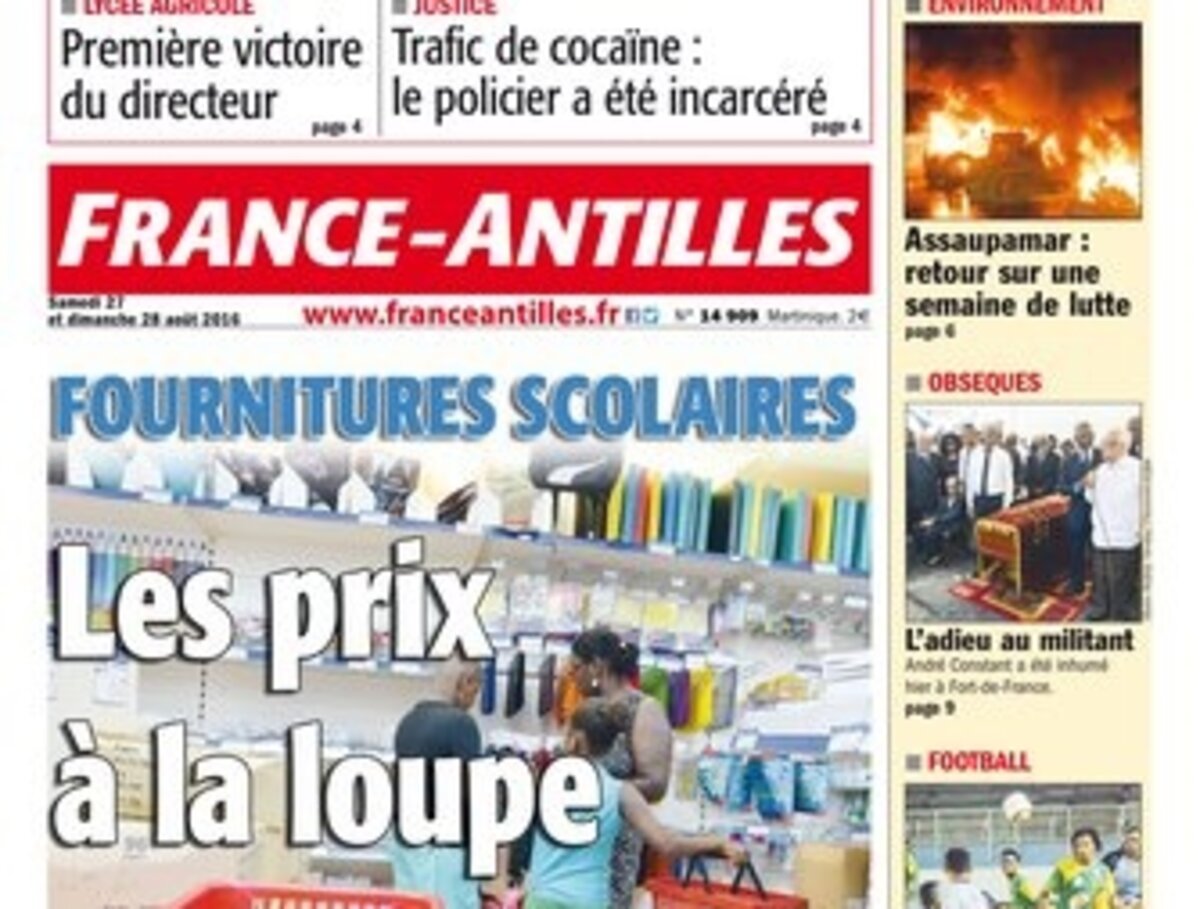
So while the old newspaper empire was dismembered, from L'Union in Reims in northern France to Les Nouvelles de Tahiti, Philippe Hersant still controls the France-Antilles dailies in the French Caribbean and France-Guyane. It is thus in these regions that one can still see the consequences of the implosion at a newspaper empire on which, in its heyday, the sun never set.
On La Réunion, the Indian Ocean island which is a French overseas département (similar to a county), staff at the Le Journal de l'île de La Réunion fear for the survival of their paper; their company is in receivership and the editorial team is about to undergo a redundancy plan which will remove a third of all employees – some 30 or so journalists. In Polynesia journalists are struggling to recover from the extremely brutal closure of Les Nouvelles de Tahiti. Finally, in the Caribbean, staff at France-Antilles are wondering what grisly fate awaits them: they are the last survivors of the Hersant family firm in France, but are in no less danger than that of their colleagues, all tied to the fate of the inglorious remains of this old newspaper empire.
- The island of La Réunion
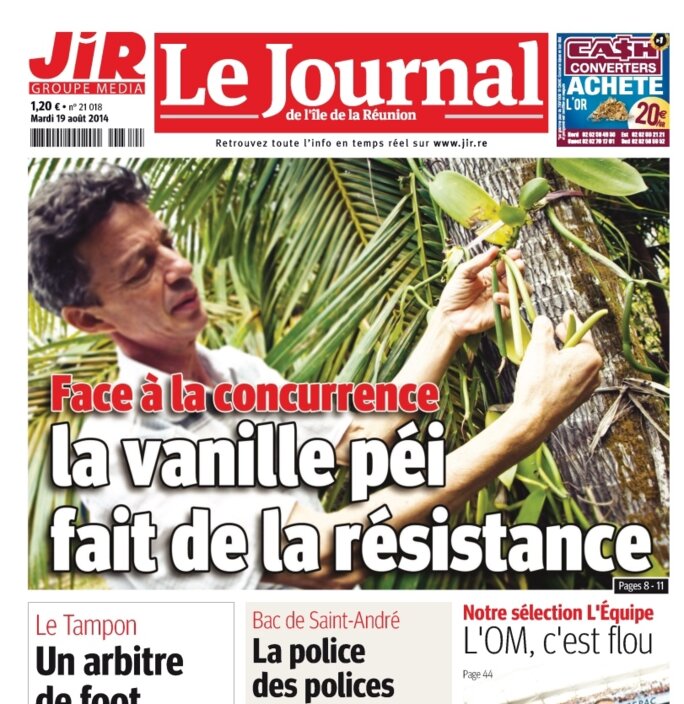
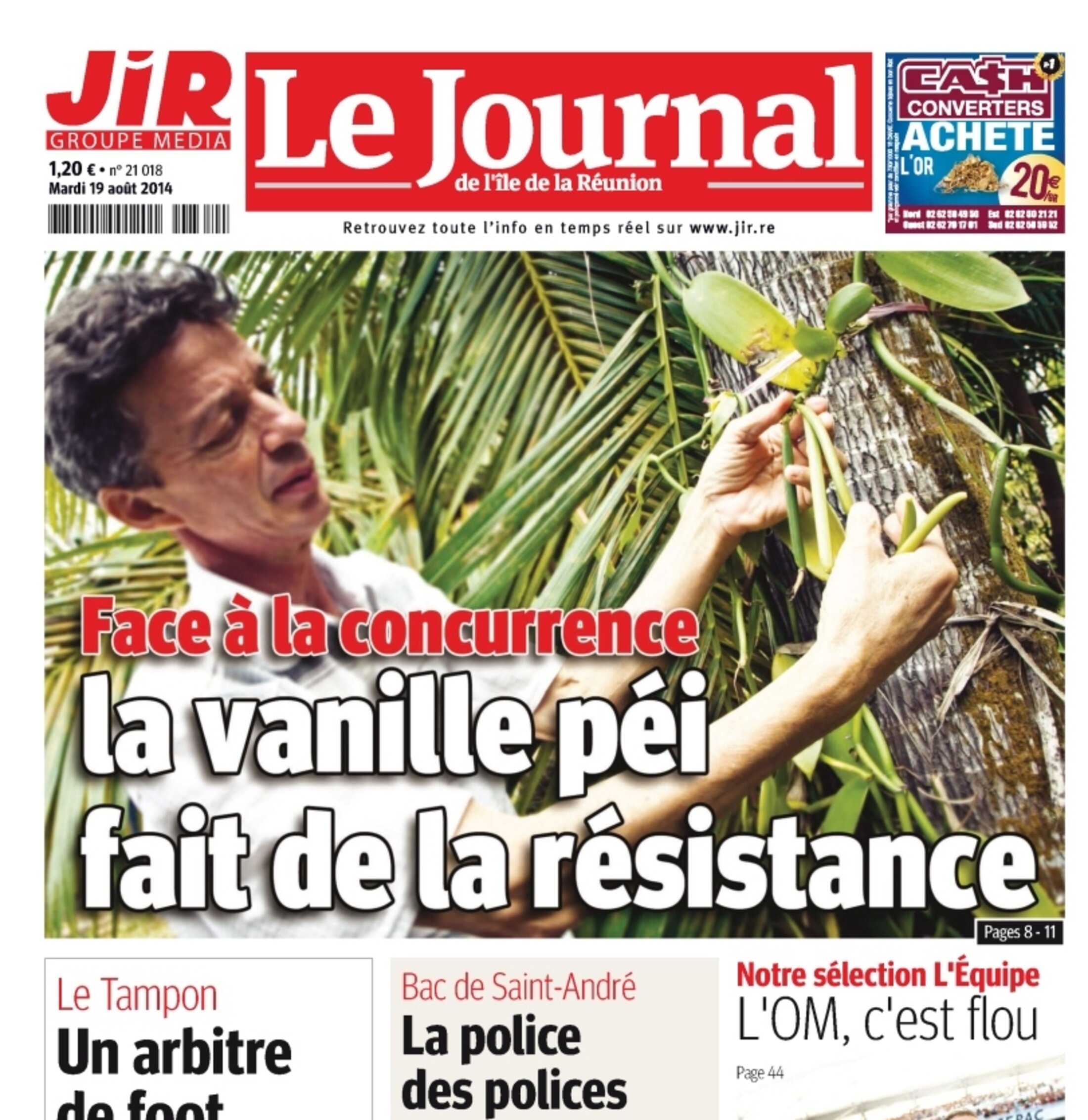
In June 2016 there was a dramatic turn of events at Le Journal de l'île de La Réunion (JIR): management announced a change at the head of the editorial team in the form of Jacques Tillier. Locally he is already well known, having carried out these duties for nearly 20 years from 1990 to 2008, during the entire period when the Hersant group owned this overseas title. However, there is a major difference today: the JIR no longer belongs to Hersant and has been in receivership for several months.
“When Jacques Tillier left [in 2008] we didn't know the JIR's situation, in fact we didn't even know that our business had just changed hands!” says journalist Véronique Hummel, a specialist in education issues and an active member of the journalist union the Syndicat National des Journalistes (SNJ). However in 2009 she thought it was worthwhile keeping an eye on the process which led to the JIR's exit from the France-Antilles group and its purchase by a local investor.
Enlargement : Illustration 2
The sale of Philippe Hersant's La Réunion assets was decided upon far away from the shores of the Indian Ocean island. At that time the group was heavily in debt; just two years before it had bought the Corsican and southern France titles La Provence, Corse-Matin, Nice-Matin, Var-Matin and Marseille Plus. It also had to struggle with ever-growing losses being racked up by the advertising free sheet ParaVendu, faced with competition from the internet that was growing more ferocious by the day.
On top of these problems, which affect a large part of the national and local written press, there was also the Hersant group's controversial reputation. Even before moving to Switzerland the press group was known for its love of secrecy and the opaque way in which the profits and losses of innumerable subsidiaries and many titles were offset against each other. Indeed, these practices were the object of a formal complaint by the inter-union body, the SNJ-CGT-CGC, at Nice-Matin in 2013. The prosecution authorities opened an investigation but according to Mediapart's information the probe was stopped in October 2015 with no further action being taken.
Jacques Tillier, meanwhile, who was Hersant's go-to man, had no less a controversial reputation than the group he worked for. In 1979 the former policeman who had become a journalist and worked for the right-wing publication Minute was a victim of the gangster Jacques Mesrine, resulting in the loss of use of one arm. “Each time Hersant was interested in a title he sent his reconnaissance man, in this case Jacques Tillier who had come from the Françafrique system [editor's note, the term used to describe France's close, some say neocolonial relations with its former African colonies], and spent several years in the Gabon and who had also advised some African heads of state,” says Bernard Idelson, media historian at the university of La Réunion and a specialist in Indian Ocean newspapers. “Tillier made his name with two-page publications which published anonymous attacks in a style that was very reminiscent of the Third Republic, with that period's characteristic gall.” After the sale of the JIR in 2008, Tillier pursued his career elsewhere in the Hersant group, as editor of L'Union newspaper at Reims in northern France, where as Mediapart has reported his tenure was also not without controversy.
His recent return to the JIR on La Réunion, almost at the same time as the redundancy of a third of the editorial staff was announced, has had a mixed reception among journalists. “The circumstances of Tillier's return have raised questions at the SNJ [union],” says Veronique Hummel, who nonetheless prefers to focus her attention on the newspaper's chances of survival.
“If the JIR disappeared, it was would a serious loss for media pluralism on La Réunion,” says Bernard Idelson. “La Réunion is one of the last départements with two daily press titles. The disappearance of one of these titles would confirm the fact that we're in a period of reorganisation, which implies changes in the public arena, in other words that news becomes more bland, with less desire to carry out professional journalism in the French or Anglo-Saxon sense of the term, to cross swords with the government.”
A total of 120 jobs cut in two years
- Caribbean and French Guiana
“Crossing swords with the government” is something that journalists at France-Antilles try to do regularly. Across the titles in Martinique, Guadeloupe and French Guiana, they are the last remaining news professionals employed by the Hersant group in France. If the group kept them on after selling all its other assets in France it is probably for what one might call sentimental reasons. “France-Antilles in Guadeloupe and Martinique was [Robert] Hersant's first daily newspaper, he created it from A to Z at a time when all he owned was the [motoring publication] Auto Journal,” says Gabriel Gallion, a political journalist in Martinique and a member of the SNJ union. “Later all the group's senior executives, including Philippe Hersant, worked at this title.”
The word 'sentimental', however must be used with caution when it comes to the Hersant newspaper empire. The three France-Antilles titles in Martinique, Guadeloupe and French Guiana, have between them lost no fewer than 120 staff in under two years. The plans to safeguard jobs have mushroomed and the Guadeloupe title is still in receivership since its insolvency at the start of 2015. The titles in Martinique and Guiana have just finished their mandatory period of observation following receivership.
“There's been lots of lurid stories about the supposed sale of our newspapers – particularly when [Bernard] Tapie arrived in the capital – but in reality there's never been any question of that,” insists Gabriel Gaillon. “If the redundancy programmes have been so hard (70 jobs out of 216 in Martinique) it's because we've faced the same problems as newspapers everywhere: reduced readership, a fall in advertising revenue and excessive print costs.” The group's frantic buying policy has not helped the Hersant titles in the Caribbean either.
Yet France-Antilles is still there and the role of these titles in public life in these overseas regions is still considerable. “A brand with such a reputation cannot disappear,” says a long-time observer of the regional political scene hopefully. “Until the 1980s the Hersant group was the voice of the prefecture [editor's note, meaning the state authorities] but that's no longer the case today. It's more the newspaper for the metropolitans [editor's note, people from mainland France] who have come to live in the overseas départements, titles which don't work on behalf of anyone but which call the shots in local politics.”
It is an influence that some local investors have their eyes on, as they wait cynically for the fall of a group whose survival is far from guaranteed. The main problem for France-Antilles is its own website, which competes with the newspaper for news without bringing in revenue. Even though his own job has never been threatened, Gabriel Gaillon is worried, despite the fact his own title has just escaped from liquidation. “The boat's afloat once again but for how long?” he asks. Meanwhile several executives, who wish to remain anonymous, claim: “You should perhaps look for the problem on the Swiss side. Lots of the staff would like to have a boss who was a bit closer to the Caribbean than the banks of Lake Geneva.”
- Polynesia
Different skies, same misgivings: the Hersant group has not left behind entirely good memories of its activities in the Pacific where its name is associated with the painful closure of Les Nouvelles de Tahiti. In 2012, when they were disengaging from this overseas territory, Hersant Media sold two newspapers, La Dépêche de Tahiti and Les Nouvelles de Tahiti.
Enlargement : Illustration 3
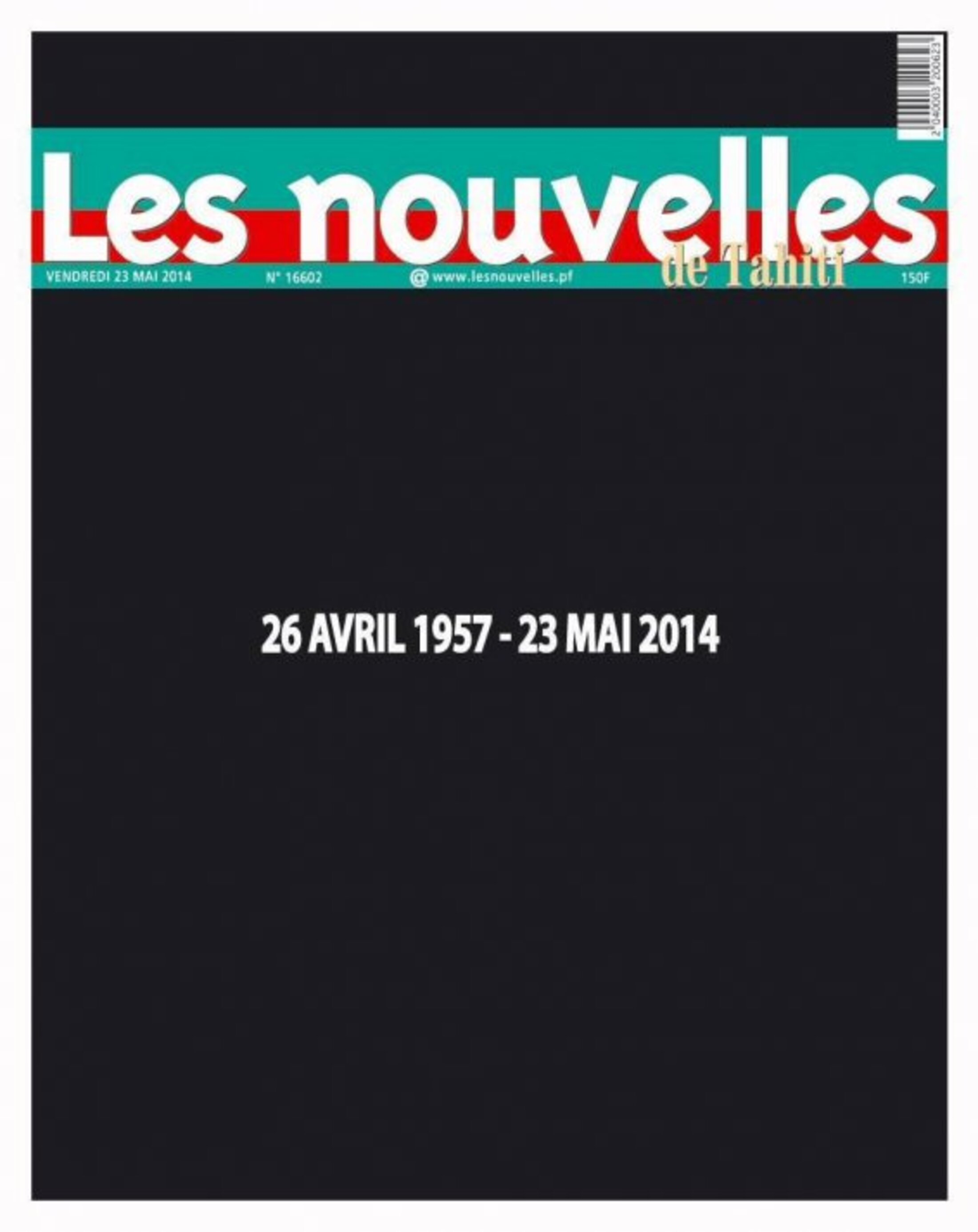
The new titles were complementary. The first brought in the money – it pulled in private and individual advertisers thanks to its consensual editorial line – while the second served as a thorn in the side of local politics and democracy. Les Nouvelles de Tahiti was often judged to be “anti-Flosse” in reference to Gaston Flosse who has been president of French Polynesia on five occasions, and the title was involved in investigating and unearthing a number of scandals. One of its editors was Jean-Pascal Couraud, known as JPK, who was bitterly opposed to Flosse, and who had to resign in 1988 following an article that caused a scandal. He continued to write and to investigate public affairs until in 1997 he was murdered in circumstances that remain unclear.
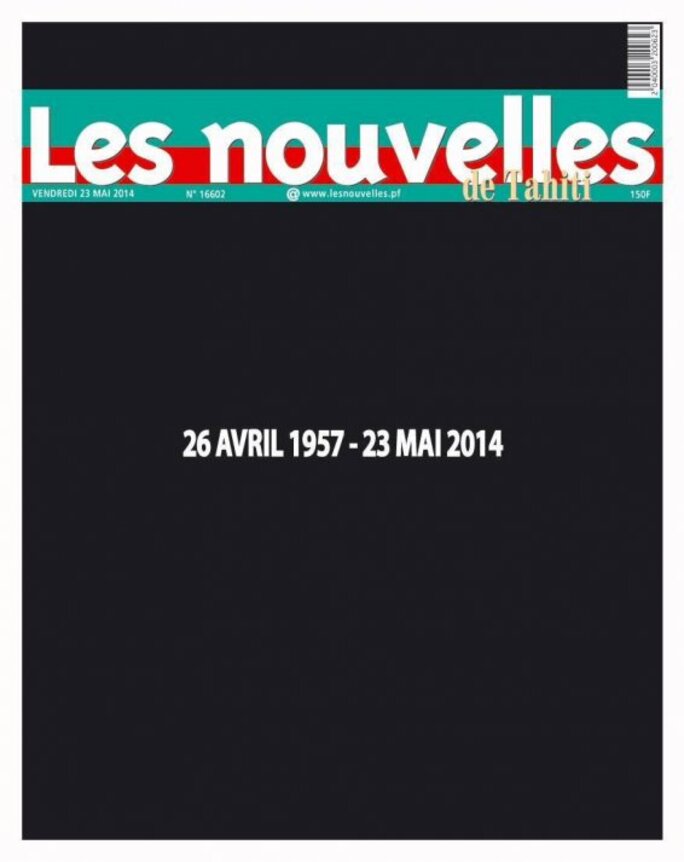
When the Hersant group, which was in the process of disintegrating, got rid of Les Nouvelles the journalists feared for their future. What subsequently happened showed they had had every reason to worry. “Just two years after the newspaper was sold we were informed that two local investors that we knew well because they regularly featured in alleged frauds in our general news section were manoeuvring to buy it all,” says a former journalist at Les Nouvelles who does not want to be named because he still works in the region. “One day these two wheeler-dealers arrived at our editorial conference and told us: we now own everything, we're going to close you down. And that's exactly what happened. They closed the newspaper ten years to the day after Flosse lost power for the first time against the pro-independence Oscar Temaru, May 23rd, 2014.”
The place once occupied by Les Nouvelles de Tahiti in Polynesian public life has still not been filled by any other outlet. It was the island's oldest newspaper and even if several news websites have appeared on the Polynesian media scene since then, none has moved out of the realm of local and functional news.
Back in 1984 the then-prime minister Pierre Mauroy brought in a new law in France to prevent the concentration of media ownership into too few hands. Though it did not name anyone, the law targeted the Hersant group which at the time owned close to 50% of the French press, local and national. The 'Paper-eater' thus had to split his group into two. But ultimately this 'anti-trust' law had little other notable impact on the group's policy of buying and absorbing other titles.
In 2011, more than 25 years later, some 1,650 employees lost their job during the liquidation of the Hersant group's Comareg, which owned the free advertising sheet ParaVendu. If one adds these to the redundancies carried out since in all the newspapers that belonged to the Hersant group, including the 120 staff at France-Antilles laid off in 2015 and the future redundancies at the JIR on La Réunion, one arrives at the figure of at least 3,000 people who have lost their jobs as the demise of the group continues to reverberate.
-----------------------------------------------------------------------------------
- The French version of this article can be found here.
English version by Michael Streeter