


It is the latest act in a Shakespearian drama linking the destinies of two men who were allies before becoming enemies. Sepp Blatter, now under investigation by the Swiss authorities, might have given the impression that he had laid down his weapons when he resigned as president of world football governing body FIFA in early June 2015 almost immediately after being re-elected for a fifth term of office. But in reality the 79-year-old FIFA veteran is still battling to stop his former close ally Michel Platini from obtaining the top job in world football. So it is that former French football star Platini finds himself ensnared in the antics of the man whom he has always dreamed of replacing.
The fate of Platini, the head of European football body UEFA who is often known by his nickname 'Platoche' in France, and his bid to be FIFA president now lie in the hands of that organisation's ethics committee. This body decided to open an inquiry after the Swiss juridical authorities announced last month that they were launching a criminal investigation into Blatter for “suspicion of criminal mismanagement and – alternatively – misappropriation”. This investigation is in parallel with a separate US-led probe into FIFA's activities. The Swiss authorities say that Platini, who announced his intention to stand as a candidate for the FIFA presidency over the summer, has been questioned over the affair under a status “between that of a witness and that of an accused”.
The verdict of this committee could remove Platini as a candidate for the top job in world football when Blatter steps down in 2016, or even see him suspended as UEFA boss. Observers say that the composition of the ethics committee suggests that Blatter still has great influence on it.
Enlargement : Illustration 1
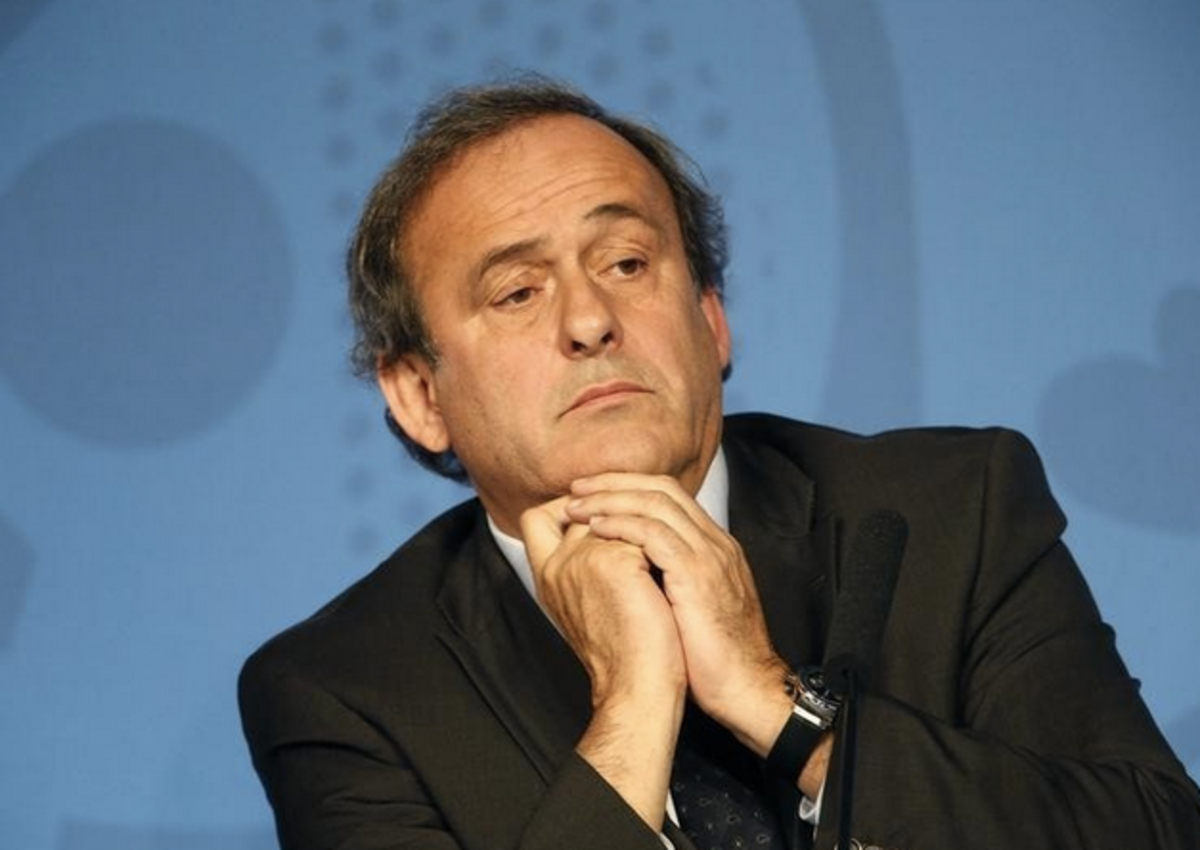
The difficulties facing the former French football captain have been mounting, as shown by the fact that government support in France, which up to now has been wholehearted, has become more measured in tone of late. Questioned on the issue on September 30th on France Info, France's sports minister Patrick Kanner was cautious. “What I take from this is that it's [Michel Platini] himself who asked to be heard by FIFA's ethics committee,” said the minister. “I hope that this will be able to remove all the doubts. It's up to him to defend himself.”
At the heart of the “Platini scandal” is his receipt of a cheque for 2 million Swiss francs – about 1.8 million euros – signed by Blatter in 2011. In his defence the UEFA president says that this cheque was deferred payment for four years of work carried out in the late 1990s and early 2000s as an “advisor” for Blatter, who had just been elected president of FIFA. According to Platini's allies the Frenchman was working in Paris at the time and only travelled occasionally to Zurich, where FIFA has its headquarters. His contract covered trips accompanying the FIFA boss, as well as specific tasks that Blatter wanted carried out, such as harmonizing the calendar of international competitions and looking into the possibility of staging a World Cup every two years. The two men never apparently managed to reach an agreement on Platini's remuneration.
Platini insists he has “fully declared this income to the authorities, in compliance with Swiss law” and notes that it was he who asked to be heard by the ethics committee to dispel “misunderstandings”. But he is also going to have to explain the nine-year delay between his work for Blatter and the payment. He says it was carelessness on his part and has sent a copy of the contract to the Swiss judicial authorities, but still has to convince investigators who have become suspicious over the timing of the payment, which was made in February 2011.
First of all, February 2011 was just three months after the vote by Michel Platini in favour of Qatar as the controversial choice to host the 2022 World Cup. Secondly, the payment was made just three months before Sepp Blatter's re-election as FIFA boss, with the support of Platini, even though the latter had at one point envisaged trying to take the older man's job.
It is hard today not to see the doubts being raised over Platini as a sign of vengeance on the part of his deposed former mentor; of Blatter choosing to take down with him a man with whom relations have gradually deteriorated over the course of time and after successive clashes.
Enlargement : Illustration 2
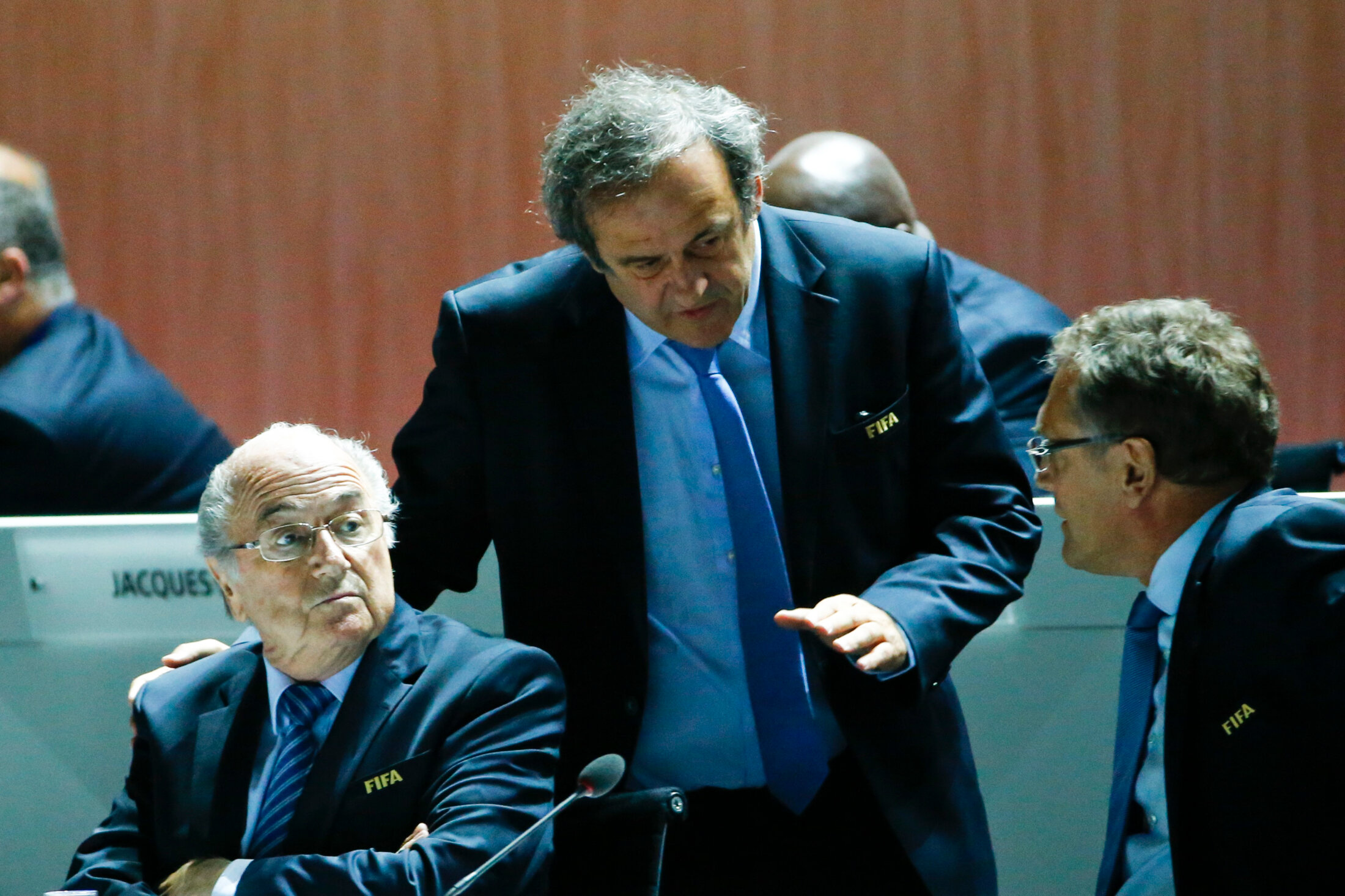
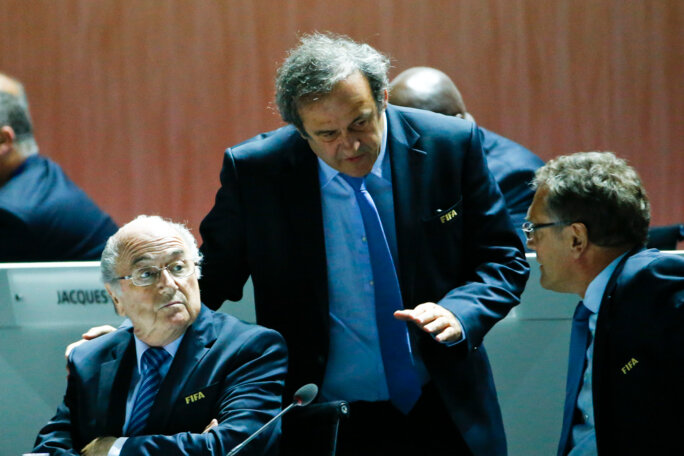
When, on May 28th, 2015, Platini and Blatter met in private in Zurich, the UEFA boss's demands were already very clear: he invited the FIFA president to resign following the arrests that had just been carried out by the FBI over alleged corruption in world football's ruling body. The two men, who had been so close at the end of the 1990s, had become entangled in constant confrontations with each other. And Platini had waited for 17 years to become head of FIFA.
Sepp Blatter, who had been secretary general of FIFA since 1981, had ended up becoming president in Paris on June 8th, 1998, two days before the start of the World Cup in France. At his side, offering his active and decisive support, was Michel Platini, who was to become Blatter's technical advisor. Over the following years Blatter nurtured the Frenchman, whom he saw as his successor.
In January 2012 Blatter told France Football magazine: “Michel Platini is ready, if he wants it. Of course he would be a good president. He will not be the same as me because each person is different, but he will make a good president.” Then on May 15th, 2013, Blatter told French sports newspaper L’Équipe: “Platini is my natural candidate.” But it was somewhat ambiguous support. For they disagreed on many subjects. Above all, and most problematic, and despite the fact that his only daughter wanted him to retire, Blatter finally stood for re-election on May 29th, 2015. Platini decided not to take on his former mentor in the contest, fearing the outcome. “Platini did not stand at the last election because he knew that he had absolutely no chance,” says a well-briefed observer with knowledge of relations between FIFA and UEFA.
The beginnings of a breakdown in relations
However, some years earlier Platini, who after an illustrious international playing career managed the French team, had already sought to become the head of FIFA. In Président Platini, published in May 2014 by Grasset, the book's authors – who include the current writer – told how Platini has coveted the top job in world football since 1998. “At the end of 1997 the Frenchman, the proud co-president of the organising committee of the World Cup in France, already saw himself as a candidate for the FIFA presidency,” the books states. “He had serious ambitions to challenge the Swede, Lennart Johansson, who headed UEFA, in order to take over from the ageing Brazilian João Havelange, in power for 24 years and who had at last decided to retire. At the end of January 1998, away from prying eyes in a Singapore hotel, [Platini] confided in Sepp Blatter, secretary general of FIFA and thus its number two. But the Swiss, who was also eyeing the position, caught him off-guard and stated with a conviction that did not leave any room for doubt: 'I want to become president of FIFA and I want you to be my football conscience.' Platini was trapped. Overly respectful, he complied. 'You're young, you've got time,' [Blatter] also basically told him.”
The alliance between the two men showed itself to be very effective. Blatter hit the jackpot and became president of FIFA. Even though he forgot to mention Platini in his acceptance speech, he made him his advisor, a role that the Frenchman occupied for just over three years and the payment for which is today the subject of suspicion. “At the time Platini seemed very close to Blatter and, in some ways, his heir apparent, or his godson,” says the former national secretary of the French Communist Party (PCF) Marie-George Buffet, who was sports minister from 1997 to 2002. “I kind of had the feeling that there was a certain level of collusion between them.” It was, in short, a win-win for both men. “Blatter used Platini for his accession at FIFA but Platini also used the Swiss to take power at the head of UEFA [editor's note, in 2007],” says Jean-François Lamour, France's minister of sport from 2002 to 2007.
However, rather than being fully committed to the Frenchman's campaign for the presidency of UEFA in the middle of the 2000s, Blatter played a slightly murky double game. Six months before the election Blatter held a meeting with the sitting UEFA boss - and Platini's rival - Lennart Johansson, and in a press statement issued a few hours later spoke about the need for stability when it came to sports governance. But in the end the FIFA boss 'handed back his jersey' and turned the balance in favour of his former protégé, expressing his “sympathy” for Platini during a press conference at the French football federation's new headquarters, which had been inaugurated the day before.
Enlargement : Illustration 3
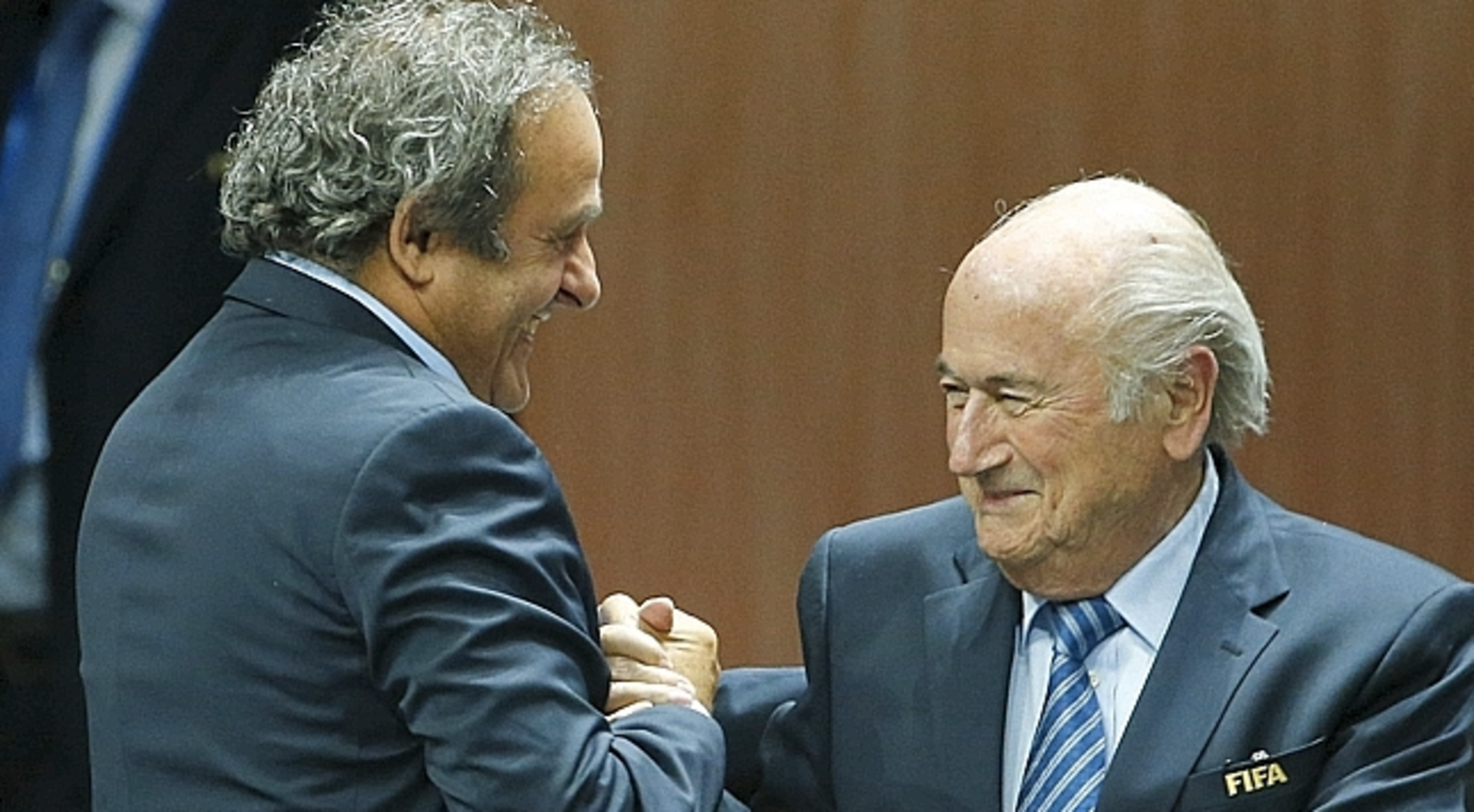
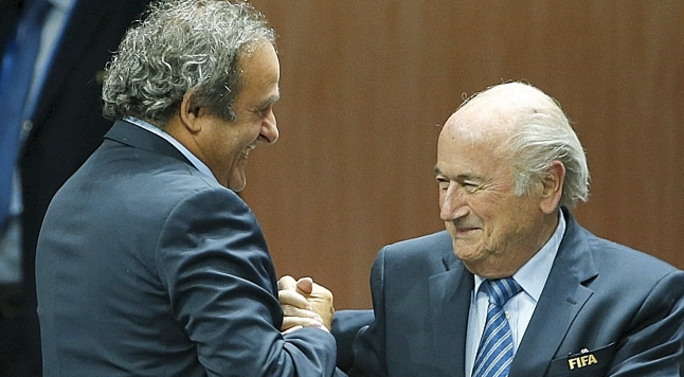
On January 27th, 2007, Platini was duly elected president of UEFA at Düsseldorf, but if Blatter was happy was about it, he had his own way of greeting the news. “He is lucky to come to power at a time when the coffers are full and when euros are raining down on UEFA. When I took on the presidency of FIFA the coffers were empty,” noted Blatter. The 2007 election in fact marked the first split between the two men, the beginnings of a painful breakdown in relations. On the very same evening Platini, who had not appreciated the belated nature of Blatter's support, apparently criticised his old mentor and even floated the idea of inviting African and South American countries into the European Championship to reduce FIFA's control, and to rival the World Cup. Blatter and his allies, who had after all made phone calls to the presidents of national football federations in Europe so that they would vote for Platini in the UEFA contest, were not exactly overjoyed about the idea.
Over the course of the following months Platini gained in assurance, and spoke with more freedom too. “We've been friends since the 1990 World Cup draw but we don't always have the same ideas, that's all,” said the Frenchman of Blatter. It was an understatement. Irritated, though always abiding by the rules, the FIFA president considered that his former advisor's views were sometimes naïve and romantic. The two men traded blows via the media. For example, in March 2013 the Swiss used the Spanish daily newspaper As to criticise Platini's comments on refereeing. The Frenchman was unshakably opposed to the use of video refereeing, which he felt would undermine the universal nature of the game. “He doesn't want it and he is the only one. If Platini doesn't want it, it's because he's made it a personal matter. But it's going to change,” said Blatter. Platini responded: “I prefer to be alone and faithful to my convictions rather than swimming with the tide.” Indeed, often it has been Blatter who fires the first salvo, receiving an immediate response from the Frenchman.
Yet the mood is not always antagonistic. Platini did say of Blatter's approach to video refereeing that “it's a total misreading of the issue, the proof that football does still not completely belong to footballers”. But in October 2013 Platini said on French subscription TV channel Canal +: “Sepp is my friend. We agree on 99% of things, after that there are a few points of difference.”
The two men were 'very, even too close'
Those differences grew over the hosting of the 2022 World Cup in Qatar. While Platini has always made clear that he voted for the Gulf state's bid, Blatter quickly admitted that FIFA had “perhaps committed an error” in opting for Doha, before going on to suggest that the choice was due to political influences. Though Blatter did not mention Platini's name, he was clearly targeting the latter when he spoke about a meeting that President Nicolas Sarkozy had held with Sheikh Tamim bin Hamad Al-Thani, the future Emir of Qatar, at the Elysée Palace on November 23rd, 2010, with Platini, shortly before the vote on the Gulf state's World Cup bid.
Platini and Blatter clashed over a large number of subjects – just about all of them – and in particular the issue of a very prestigious trophy. Created in 1956, the 'Ballon d'Or France Football' ('France Football Golden Ball') – often known in English as the European Footballer of the Year Award – was in 2010 combined with the FIFA player of the year award to become the 'Ballon d'Or FIFA France Football' usually known simply as the 'FIFA Ballon d'Or'. The owners of the Ballon d'Or title had been the French media group Amaury and Platini was never happy with Amaury's decision to sell the title to FIFA rather than UEFA. The deal was signed on July 5th, 2010, between Blatter and Marie-Odile Amaury, chairwoman of Amaury Sport Organisation (ASO), during the World Cup in South Africa. “If you want to grow you have to abandon something along the way, but football is the winner,” Blatter said with delight. Platini greeted the deal with silence. Having as a player won the Ballon d'Or three years in succession – from 1983 to 1985 – it would have been fitting for him to have handed the prize over each year to the best player in the world, but his lobbying had not been enough. Irritated, he later created a rival trophy, the UEFA Best Player in Europe Award.
The Blatter-Platini rivalry sometimes also extended to deeply symbolic subjects. In the summer of 2013 Platini and UEFA called for an age limit for senior FIFA executives. Blatter, who was 77 at the time, responded with humour, noting that “there are 70-year-olds who are young in their minds!”. In February 2014 he went further. On the eve of the Winter Olympics at Sochi in Russia, the FIFA president, who is also a member of the International Olympic Committee, spoke at an IOC plenary session. He called on colleagues to abolish the rule on age limits, which was set at 70 for members who had joined after 1999 and 80 for others.
Blatter said FIFA had carried out its own study on the issue. “We concluded that imposing an age limit is an act of discrimination. What needs to be changed can be done by a democratic way,” Blatter told the IOC session. “Simply don't elect a member, not because of age - but because they are not able to do the work,” the Swiss said, spelling out his point.
Egyptian journalist Osama el-Shekh, who has covered FIFA conferences for ten years, says Platini and Blatter were once “very, even too close”. He continues: “But fundamentally there was no friendship between them. Platini had tested the mood on the ground in June 2013 on Mauritius [editor's note, at the FIFA annual congress there], to see if he had a chance to become president. There was a distinctive atmosphere, with a pro-Blatter mood. The Swiss had absolutely no mercy for anyone.” In private, according to those close to him, the FIFA boss was not always very kind when talking about Platini. Questioned on the matter, former members of FIFA's executive committee said they “had nothing to say and didn't know anything”.

Enlargement : Illustration 4
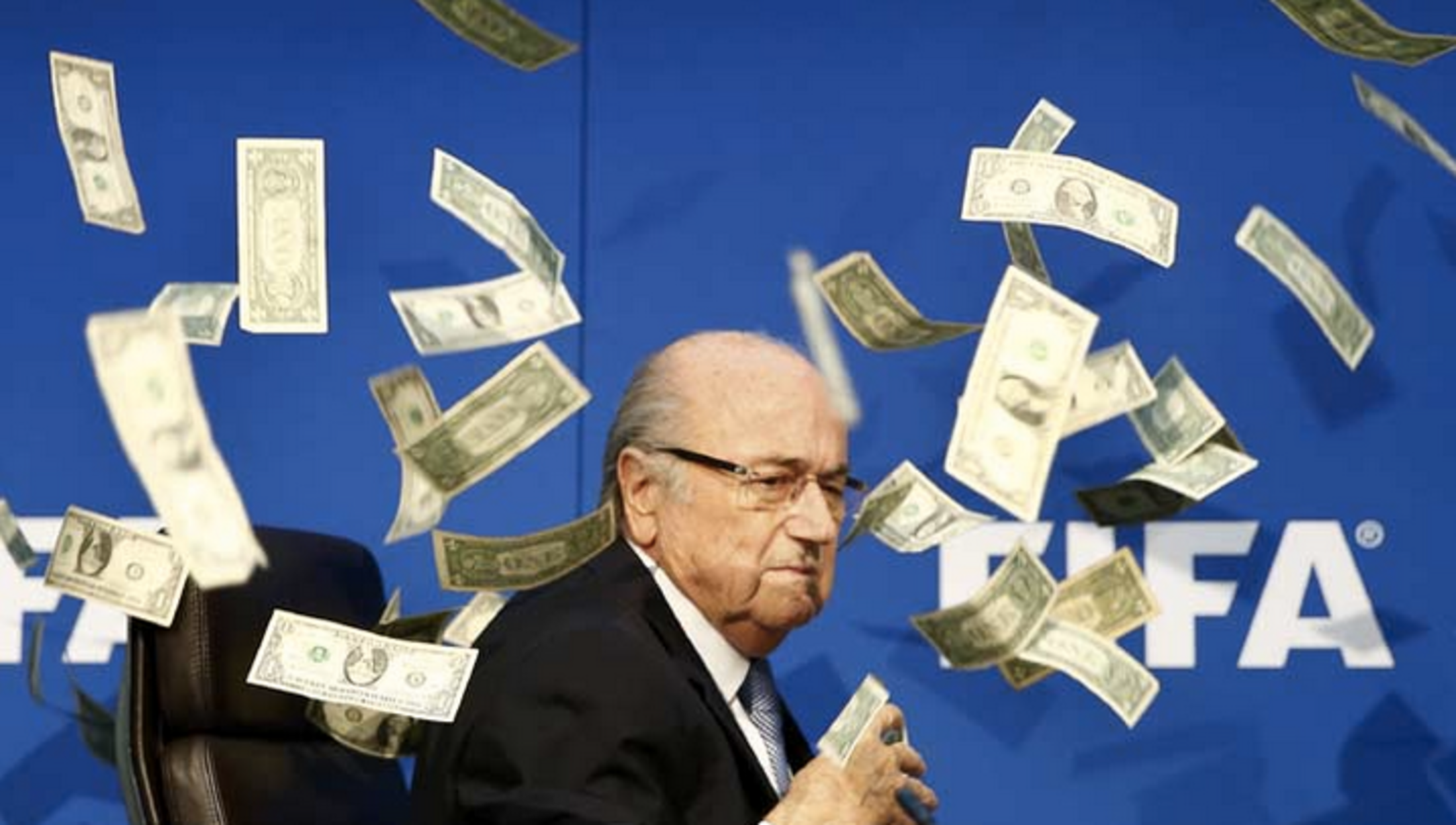
On the other hand, a former chairman of a major football federation revealed that “unfortunately, relations have dramatically deteriorated between them. Blatter considers that UEFA does not want to bear its responsibility in the affair over the awarding of the World Cup to Qatar, I believe that Platini has disappointed Blatter with regards relations between the two institutions.” In Le Monde, the Brazilian marketing advisor Guido Tognoni, who has deep inside knowledge of the machinations of world football, went even further, stating: “Since Blatter has governed FIFA he has said to the small [national football] federations: I am the only one who is protecting you from UEFA's ambition to run world football.”
The game seemed to be over at the last FIFA congress at Zurich in May 2015, which took place against a backdrop of arrests, searches and allegations of corruption as the US Department of Justice pursued its investigation. Initially, as the controversy unfolded, UEFA asked for the election of the new FIFA president to be postponed, with Platini hesitating about whether to engage in a power struggle with Blatter and rush in to take advantage of the breach made by the US investigation. His entourage apparently advised him against it and Prince Ali bin Hussein of Jordan, who had stood as a UEFA-backed candidate against Blatter, withdrew after the first round of voting. Blatter was thus elected for a fifth time with the support of many sections of world football. Platini seemed to have decided to wait until the next election in 2019. Then, 72 hours later, there was new drama when Blatter resigned. This followed fresh revelations concerning people close to Blatter, but also came after a series of secret meetings.
According to a report by SKY News Arabia on June 5th, 2015, Blatter met Platini, Jérôme Valcke, the French secretary general of FIFA, and executive committee member Sheikh Ahmad Al-Fahad Al-Sabah from Kuwait on the eve of his resignation. During the meeting Platini is once again said to have asked Blatter to resign. None of those involved has confirmed or denied this story. But according to Mediapart's information another meeting took place on the morning of Blatter's resignation, between the FIFA boss, his daughter Corinne, Jérôme Valcke and FIFA's spokesman Nicolas Maingot.
Under pressure from his daughter, who wields considerable influence and who is worried for her father's health, Blatter considered that he needed time to organize his defence and convinced himself he should resign. And to cooperate with the judicial authorities. FIFA is now due to hold an extraordinary congress on February 26, 2016, to elect a new president. The 'king' Blatter has officially abdicated, but he will only disappear when the time comes to hand over the reins to his successor.
On the evening that Blatter resigned, Platini stayed at home with his family. But today he once again runs the risk of finding himself alongside his old ally; this time as a companion in adversity.
-------------------------------------------------------------------------------
- The French version of this article can be found here.
English version by Michael Streeter