


A government document has revealed the extent to which France struggled to deal with the victims of the Covid epidemic in the spring. The report, seen by Mediapart, shows that in some cases cremations were imposed, funerals were banned and the bodies of the some of the deceased had to be sealed immediately in coffins.
The report by the Direction Générale des Collectivités Locales (DGCL), which liaises with local authorities, shows that the handling of the dead and their funeral arrangements during the peak of the epidemic in March and April was even worse than depicted at the time.
Yet the Ministry of Health has told Mediapart that it was only made aware of this report and its content in October. This raises fears about how the country will again tackle the sensitive issue of dealing with the deceased during the second wave of the virus.
Speaking on October 28th President Emmanuel Macron declared: “I want us to be able to continue to bury our dead with dignity.” But there is nothing in this government document to suggest this will be the case. Instead, it highlights a catalogue of failings.
Enlargement : Illustration 1
The report is called 'Feedback on the impacts of the lockdown following the COVID 19 epidemic'. In it the DGCL – which is part of France's Ministry of Regional Cohesion - summarises the information passed on from members of the national organisation the Conseil National des Opérations Funéraires (CNOF). This is a consultative body which reports to the Ministry of the Interior and whose members include the main undertaker federations, representatives from family organisations and members of consumer groups.
The document is dated September 2020 and pulls together the feedback that came from a CNOF meeting held on July 7th. It is an administrative document so the tone is measured but the information it has gathered makes grim reading. “Most of the family associations shared the same observation: that during the Covid epidemic ethical questions were relegated to a lower level of concern even though they relate to what society holds to be most precious, human dignity,” states the document.
The authors also refers to the different “obstacles to the freedom of funerals” that arose during that period. “Locally there were examples of funeral services being banned and bans on access to the crematorium or to the cemetery”. This was despite the fact that a decree issued on March 15th allowed such access, with a maximum of 20 people in cemeteries and even more in places of worship for services.
Even more worryingly, the document reports cases where families were forced to get their deceased loved one cremated, even though enforced cremation is a criminal offence punishable by six months imprisonment and a fine of 7,500 euros. The DGCL report says: “Strikingly, several sources revealed that at different sites cremation was occasionally made automatic, independent of the wishes of the deceased person or those qualified to provide funeral services.”
This was all done in great discretion. “This information, widely condemned by the funeral operator federations, was passed on only after the end of the lockdown, with these decisions having been made in a hurry, without explanation, because of the crisis.”
The document does not say how the authorities responded to this information that was passed on to them. Yet in a sign that the issue is still causing concern, on November 2nd the DGCL added to an otherwise standard note to funeral providers the phrase: “In no cases can a cremation be imposed.”
The DGCL report does not say in what circumstances the enforced cremations took place nor how many families were concerned. But it does not shirk from apportioning the state's own share of responsibility. “Clear and widely-shared information would equally have avoided situations where cremation was presented, illegally, as obligatory,” it states.
A lack of “consistency and flow of information” -flaws that have been highlighted many times in the French state's handling of the Covid crisis – are among other key points raised by the feedback report from CNOF members. Funeral staff and families often felt they were abandoned to their own devices.
The report notes how the rules kept changing, with six different official decrees published between March 27th and May 31st. In its notice issued on February 18th the public health body the Haut Conseil à la Santé Publique (HCSP) initially deemed it necessary for presumed Covid victims to be immediately covered and placed in a coffin. The HCSP then abruptly changed its mind on March 24th, at the height of the epidemic, and authorised the transport of bodies without coffins for presumed Covid victims, families to be able to see the deceased person's face in an open body sheet, and the usual washing of the body.
Then on April 2nd the public body changed its advice again, stating that bodies should be put into coffins immediately and banning the washing of the body. This followed a letter to the then-prime minister Édouard Philippe on March 27th from three undertaker federations who were worried about the safety of their workers.
This meant that those who had died from Covid had to be sorted from others. The document notes: “The idea of a deceased person who 'probably' had Sars-COV-2 has been particularly difficult to formulate, there is no tangible information that enables one to assess that, and to then provide a basis for the practices to adopt.”
It continues later: “The information passed on reveals that the practices of doctors certifying deaths - in particular at home - have been very variable. Some have automatically ticked the box indicating the immediate placing [of the body] in a coffin, others never do, leaving the funeral director to decide.”
An ethical challenge for which there were plans that were never used
The DGCL report does not give any figures on the number of grieving families who were unable to see their loved ones at the end even though they had not died from Covid. Nor does it state how many funeral parlour workers had been exposed to the virus by handling the body of someone whose death certificate had not been correctly completed. However, it does note that some employees are taking cases to industrial tribunals.
The statements of people to whom Mediapart has spoken broadly echo the findings of the report. Failures in the government's testing strategy, coupled with an absence of clear instructions when there was a shortage of protective equipment and the risks from the epidemic have all combined to fuel a feeing of panic. This even led some funeral staff to cross certain lines, such as breaching medical confidentiality. “In the end we opened the sections sealed by doctors on the death certificates to see if the people coming to us without any precautions had died from Covid,” said 'Christian' – not his real name – who works for a large undertaking firm in Paris.
“In care homes we had bodies presented by the doctors as non-Covid while the nurses were telling us 'Ah, but him on the other hand, he had the symptoms',” said Gautier Caton, spokesperson for the main employers' organisation in the funeral sector, the Confédération des Pompes Funèbres et de la Marbrerie (CPFM ).
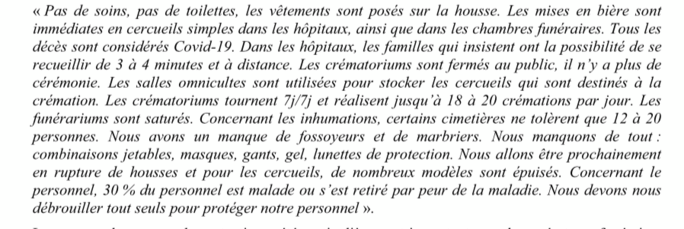
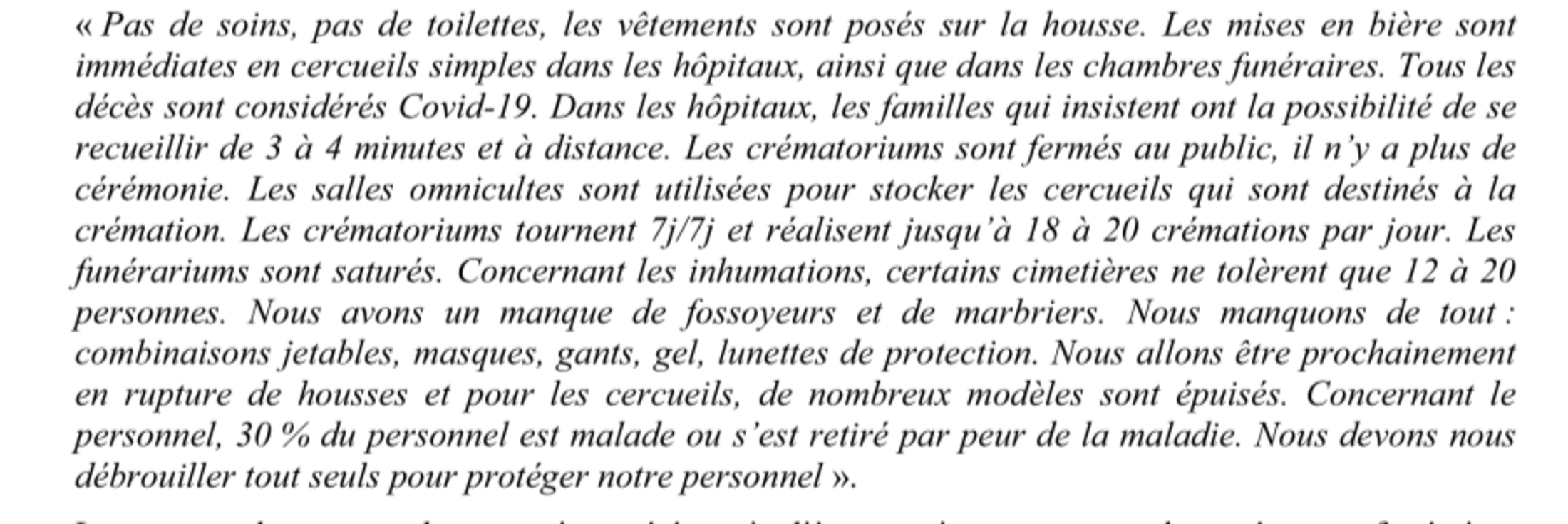
The DGCL report provides a chilling statement from the representative of a federation of undertakers in Mulhouse in north-east France, an area badly hit by the first wave, which helps depict the mood at the time. “No care, no cleaning, the clothes placed on top of the body sheet, the bodies immediately put in simple coffins in the hospitals … all deaths were considered to be Covid. … The families who insist can come and pay their respects for three to four minutes at a distance.”
Enlargement : Illustration 2
Unsurprisingly, the message coming from the people whom the DGCL spoke to - in common with other reports on the handling of the crisis – was that industry representatives should be more involved in the development of policies.
Such a move would, for example, have avoided the funeral sector being squeezed out by the Ministry of Health when it came to the provision of face masks. There are even concerns that the sector may have to requisition masks of its own again, as it did in the spring.
“Funeral companies were able to benefit from the state's national stock, as soon as that was possible,” insisted the Ministry of Health when contacted by Mediapart. It pointed out that the health executive the Direction Générale de la Santé (DGS) had sent a letter authorising the free distribution of surgical masks to the funeral sector. However, this letter was signed on June 22nd, nearly five months after the start of the epidemic.
This lack of response by the state appears to stem as much from general disinterest on the part of the ministry as it does from its organisational bandwidth. “Death is clearly the failure of medicine. All discussions with the Ministry of Health on this issue have always been difficult,” said François Michaud-Nérard, a writer and specialist in issues of grieving and the former head of funeral services at City Hall in Paris.
Yet the ethical questions involved are fundamental. This was highlighted by the communist senator from the Paris region, Pierre Ouzoulias, who told members of the French Senate's science and technology committee the Office Parlementaire d’Évaluation des Choix Scientifiques et Technologiques (OPECST) on July 2nd that during the epidemic the bodies of the victims had been “likened in the imagination to medical waste that one had to handle with caution so as not to contaminate the living”.
The senator, who was looking into the “funeral crisis during the Covid-19 situation”, recommended that the public authorities hold national tributes to staff from the sector. He also called for questions of death, grief and ethics to be placed at the heart of public debate. This view is also prevalent in the feedback in the DGCL document.
“With this crisis we have created a feeling of terror, distress, situations where families have felt their grief to be overwhelming,” said Emmanuel Hirsch, head of the ethics centre in the Paris region attached to the regional health authority, and editor of the book 'Pandémie 2020, éthique, société et politique', published by Cerf. “And yet we had the expertise, we had been prepared to manage all the ethical issues surrounding mass deaths for a long time. We had AIDS, the terrorist attacks, the 2003 heatwave, H1N1 [editor's note, swine flu]. All the plans for managing massive numbers of deaths are there! What has the government been doing?”
Like Emmanuel Hirsch, François Michaud-Nérard, who at the time was head of funeral services in Paris, had a front-row seat on events during the heatwave of 2003. The sweltering temperatures led to more than 690 deaths in three days in the French capital. As all the hospital morgues in Paris in general overflowed with bodies, the morgue at the Institut médico-légal (IML) in the capital's 12th arrondissement or district alone had 500 bodies in an advanced state of putrefaction.
François Michaud-Nérard's verdict at the time was deeply critical of the political handling of the crisis: there had been a lack of consultation with the operators on the ground and unilateral decisions had been taken by the Paris police authority. That analysis now feels very topical.
'There is a risk of anger during the second wave'
Enlargement : Illustration 3
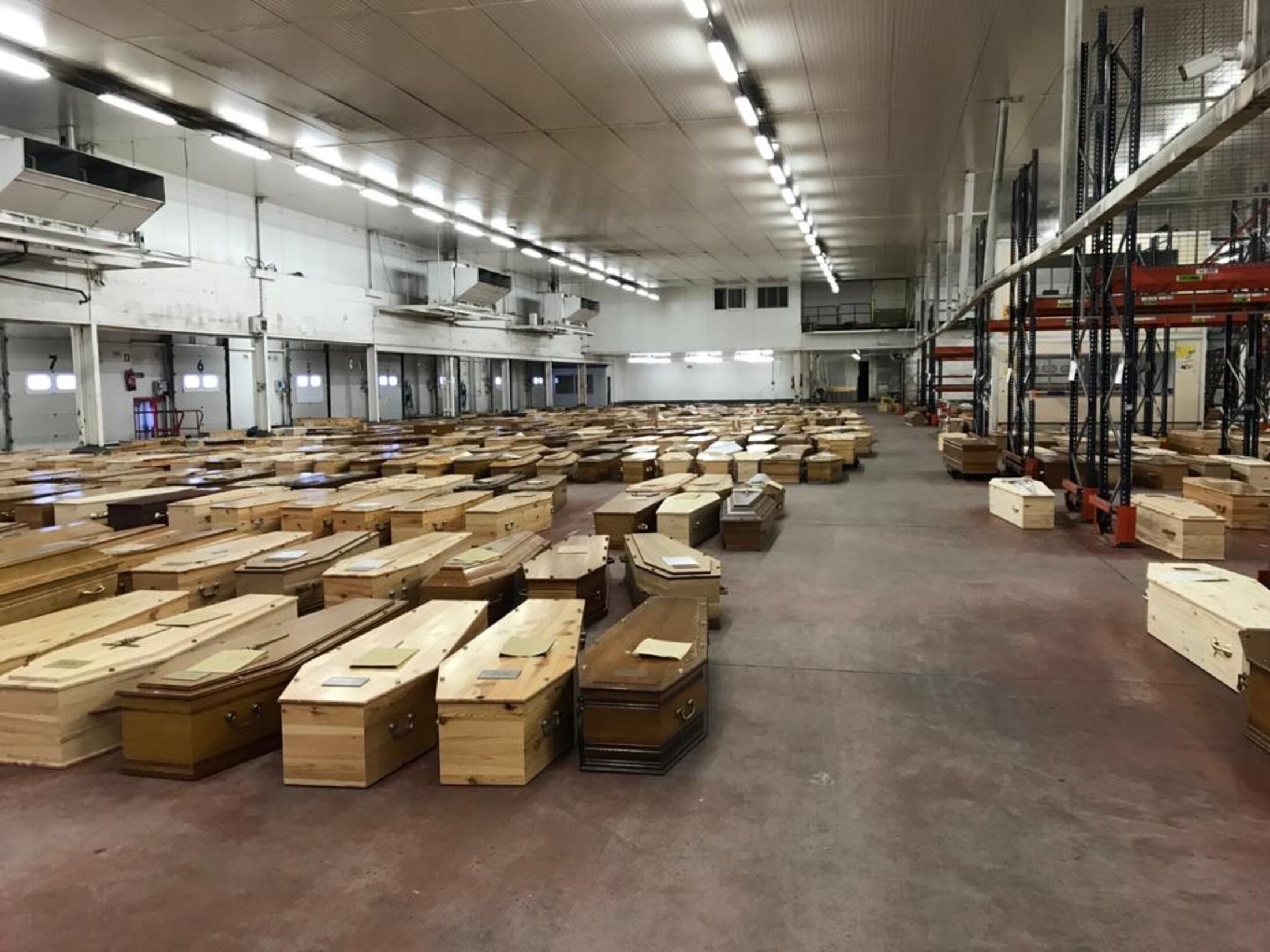
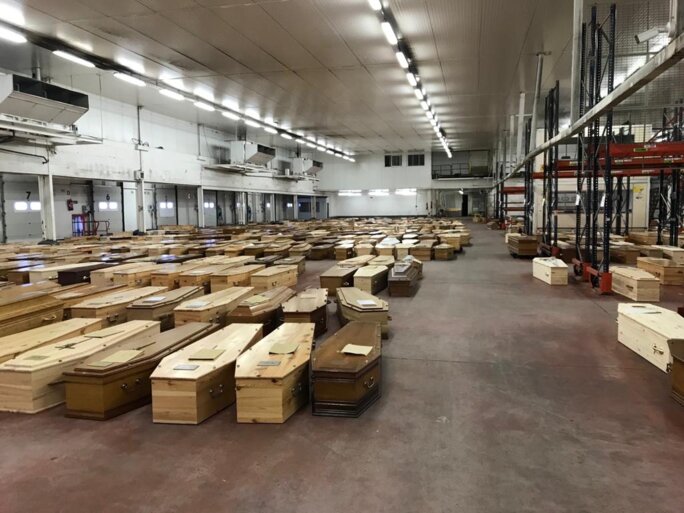
At that period, during which a warehouse at the famous Rungis food market was used to store the corpses, the government had justified its catastrophic handling of the issue by pointing to the sudden surge of deaths. François Michaud-Nérard rejects such an argument in relation to the current epidemic. “Work on the handling of massive numbers of deaths has been done since 2003, so the plans have been there for twenty years without ever being implemented. Perhaps because when the states requisitions, it has to spend money,” he said. “People are able to accept an enormous number of things, especially when they're convinced that there was no other way … But there is a risk of anger during the second wave.”
So have the lessons from the first wave been learned in time for this autumn when it comes to the funeral sector? Or will we have to wait for a repeat of some of the scenes from the spring before action is taken? Those scenes included refrigerated lorries parked behind hospitals to store the dead, lines of hearses stacked up in front of the fruit and vegetable warehouses that had been transformed by the authorities in 48 hours into giant morgues, such as happened at Rungis in Paris or Mulhouse, and corpses lying forgotten next to their coffins. The Ministry of Health told Mediapart that they had held a meeting with representatives of funeral companies on October 29th to discuss the failings during the first wave.
In preparation, hospitals from the major Paris region hospital group Assistance Publique-Hôpitaux de Paris (APHP) have already increased their morgue capacity by 19%. The private sector has made its preparations too; the funeral company OGF, which was requisitioned by the French state in the spring to manage the morgues at Rungis and also Wissous, south of Paris, has started a massive series of building works to enlarge its funeral parlours across France.
Meanwhile Mediapart understands that since October 30th the state authorities for the Paris region have begun consultations with the health authority, Paris City Hall and funeral companies with a view to the likely opening of one or more coffin storage areas in the Paris region. However, none of the authorities involved have confirmed where, when or how they will be set up. “It's a shambles,” said one participant at the meetings.
“It changes every day. For the time being the situation is still manageable but that can change very quickly,” said one senior figure at the funeral group OGF.
-------------------------
If you have information of public interest you would like to pass on to Mediapart for investigation you can contact us at this email address: enquete@mediapart.fr. If you wish to send us documents for our scrutiny via our highly secure platform please go to https://www.frenchleaks.fr/ which is presented in both English and French.
-------------------------
- The French version of this report can be found here.
English version by Michael Streeter