


Mediapart and around forty media organisations, unions and civil liberties groups are today launching an appeal against the decision by a French court to order Mediapart to remove all quotes and extracts from the so-called 'butler tapes' that sparked the Bettencourt affair.
The appeal, entitled 'We have the right to know', was officially launched at a press conference at the Paris headquarters of freedom of information campaigners Reporters without Borders at 11.30am on Thursday July 11th. The aim of this mass campaign is to make clear that the judgement by the court of appeal at Versailles delivered on Thursday July 4th crossed a line in respect of freedom of information, which is a fundamental right of all citizens.
Here is the full text of the appeal:
We have the right to know
“Freedom of information is not a privilege for journalists but a right for all citizens. In a healthy democracy the sovereign power of the people is based on the assumption that an informed public knows what is going on. To be free in one's choices and independent in one's decisions requires knowing what is in the public interest, in other words all that which determines and influences our lives in society.
“When it comes to public affairs, openness should be the rule and secrecy the exception. Making public that which is in the public interest is always legitimate, particularly when a secret is unjustifiably protecting injustices and crimes, attacks on the common good or abuses of human rights. In this way state security cannot be used as an excuse to stop revelations about breaches of individual freedoms, any more than protecting a person's privacy - a quite legitimate demand – can be used as an alibi for breaking the law.
“That is why it is important to support the right of professional journalists, sources of information and whistleblowers to reveal facts in the general interest that, without their work and courage, would remain unknown to the public. By supporting them we protect and extend a universal right to know, a sure way of strengthening world democracy during the digital revolution.
“For all these reasons, we declare our solidarity with Mediapart after the recent judgement ordering it to censor its stories on the Bettencourt affair three years after their publication. As a sign of protest, we now make those stories our stories. And we encourage the media, associations, elected representatives and citizens to get hold of them immediately and to spread them by all the democratic means in their possession.”
Sign up to the appeal here.
Read a list of signatories at the end of this article.
For as far as Mediapart is concerned there is no question of accepting last week's verdict, which held that L'Oréa'l heiress Liliane Bettencourt's right to privacy overrode any public interest defence in publishing those tapes. Many readers and subscribers have already contacted this news site offering their support and help, and a number have offered to host all the articles and recordings relating to the Bettencourt affair. Mediapart would like to thank them warmly for their support.

Enlargement : Illustration 1

In addition to readers and subscribers, Mediapart has also been contacted by other media organisations, professional bodies and civil liberties groups who are profoundly concerned by the implications of this ruling for the freedom of information. They are equally as concerned by the vagueness of the grounds for the judges' decision, which seem to be completely unaware of the dynamics of the internet, of the participative nature of Mediapart's site and the implications of the digital revolution.

Enlargement : Illustration 2

The appeal is also being backed by senior political figures and leaders, academics, artists and intellectuals. The Versailles judgement has caused consternation outside France, too. For example the UK-based National Union of Journalists, which has 30,000 members, has expressed its outrage at the court ruling. Chairman of the Paris NUJ James Overton said: “This decision prevents journalists from reporting issues that are clearly in the public interest. It has serious implications for press freedom in France.”
The aim is to collect as many signatories and as much support as possible to highlight the dangers of this judgement in respect of freedom of information and to ensure that the ruling is not enforced. Indeed, as soon as news of it dropped last week Mediapart's lawyers Jean-Pierre Mignard and Emmanuel Tordjman announced their intention of appealing against a judgement that leaves the news site facing “extremely heavy punishment both financially and in relation to freedom of expression”.
Specifically, it orders Mediapart and Le Point magazine – which to Mediapart's regret has chosen not to join in with this appeal - to remove all quotes and extracts from the secret recordings made by the Bettencourt family's butler, Pascal Bonnefoy, within eight days of the judgement being formally notified. Failure to comply will result in fines of 10,000 euros per day, per breach of the ruling. In addition, Mediapart has been ordered to pay 20,000 euros in damages and interest to Liliane Bettencourt, and 1,000 euros to her former wealth manager Patrice de Maistre, who had also joined in the action for breach of privacy.
Wealth manager decides to enforce judgement
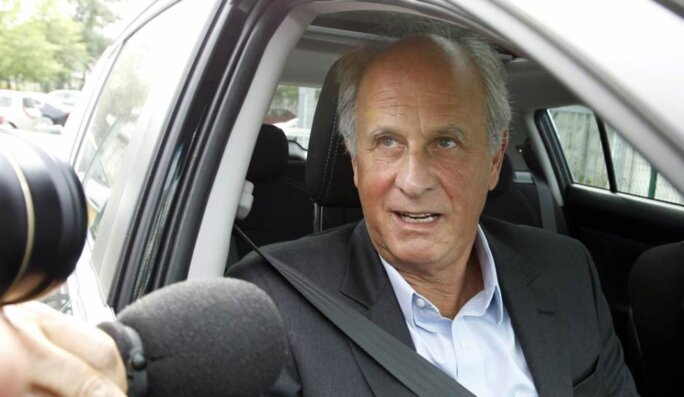
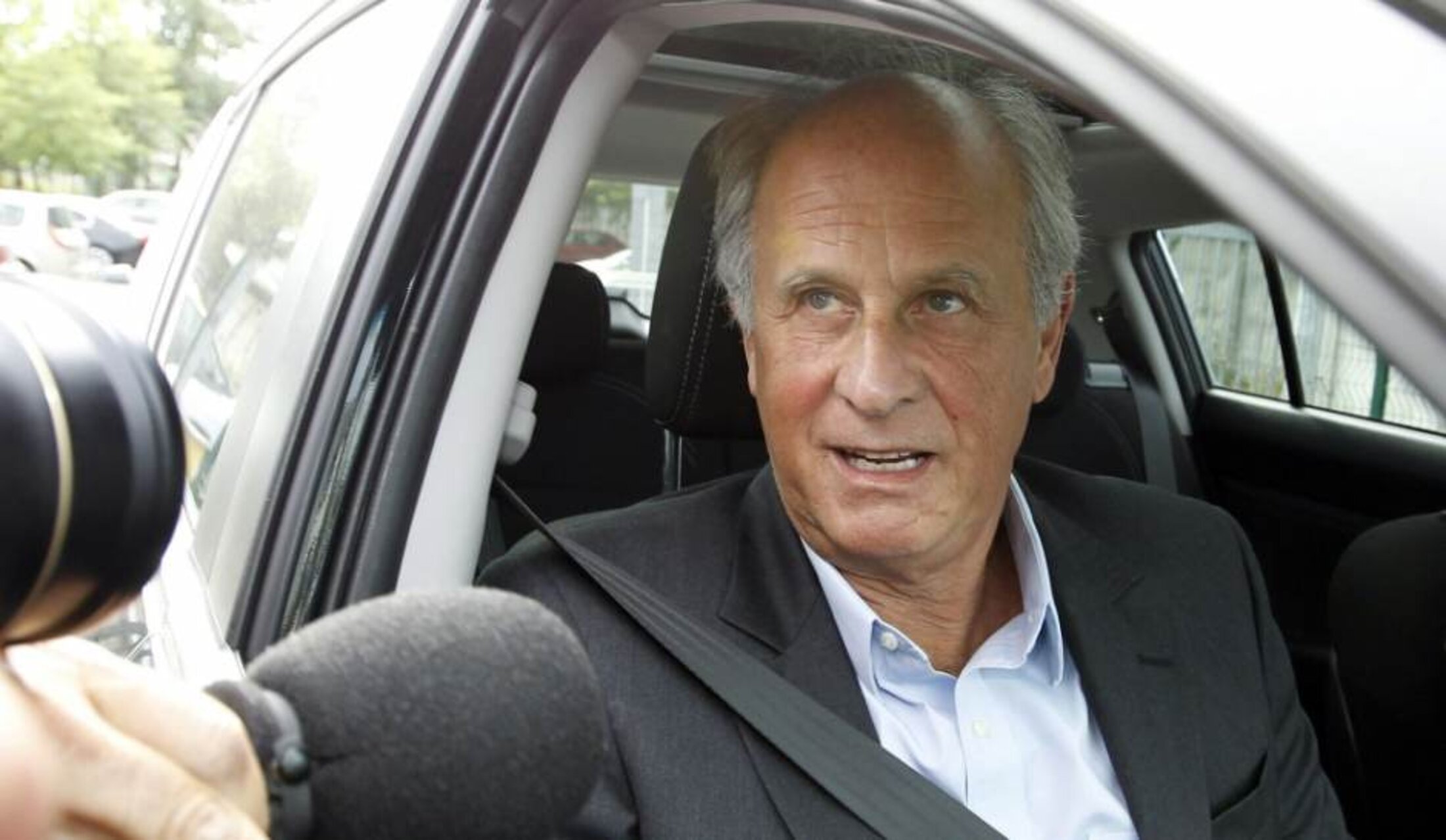
Over and above the severity of the financial punishment, Mediapart has also highlighted the dangerous lack of clarity that surrounds the exact circumstances of the judgement's enforcement. The legal deadline of eight days, after which time Mediapart must have removed all the relevant content, starts from the moment that the judgement is officially notified. This notification – which leads to the execution of the judgement – is not automatic. It is up to Olivier Pelat, Liliane Bettencourt's legal guardian, or to Patrice de Maistre to decide to trigger the process. In concrete terms it means a bailiff has to come to Mediapart's offices to deliver the court of appeal's judgement.
As of now, Patrice de Maistre has in fact decided – in contrast to the Bettencourt family – to start this process by carrying out the first step. This is known as a 'lawyer's notification', in which the other party's lawyers – in this case Mediapart's – are officially served the judgement. The judgement has not yet been notified to Mediapart's lawyers, meaning the eight-day countdown period has not yet begun. However, this could occur at any time.
Enlargement : Illustration 3
Mediapart's lawyer Emmnuel Tordjman says: “If Monsieur de Maistre does enforce the decision all the mechanisms will be put in operation to contest the circumstances of this judgement's execution.” His colleague Jean-Pierre Mignard says: “We will make each judge face up to their responsibilities. We are also going to formally ask Madame Bettencourt's family and her guardian not to enforce the court of appeal's judgement. We ask them to take note that if Mediapart had not made these recordings public, Madame Bettencourt, an elderly person, a psychologically frail person, would today still be in the hands of those who were frittering away part of her fortune for their sole benefit.”
The enforcement of this judgement comes up against many other difficulties,too. Does it involve all or part of the 800 Mediapart articles that make mention of the recordings? Does it also involve removing the nearly 2,000 blog entries written by the site's subscribers? Does it involve removing the tens of thousands of comments? At this stage the court of appeal judgement doesn't say, and there is considerable uncertainty over these questions. “The general nature of the obligation placed on Mediapart poses many legal questions that we intend to submit to the judges,” says Emmanuel Tordjman.
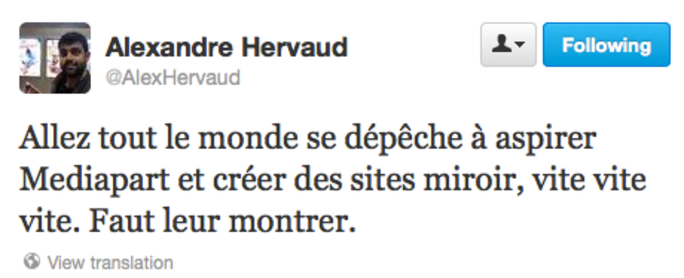
That is not the only absurdity of this judgement. For as Mediapart has already noted, the Bettencourt 'dossier' is now already hosted elsewhere on the web and available to internet users.
Has the president of the court of appeal at Versailles Marie-Gabrielle Magueur understood the full extent of the disproportionate nature and discrepancies of a judgement that has impinged upon our freedoms? That is also a key point that the signatories of the appeal 'We have the right to know' want to underline.
It is for all of the above reasons that Mediapart encourages you, the reader, to join the campaign and sign the appeal.
See Mediapart's coverage of the Bettencourt affair here.
Sign up to the appeal here.
Below is the list of media organisations, civil liberties groups and unions that have signed up so far:
Media:
Weekly print magazines : L'Express, Marianne, Le Nouvel Observateur, Les Inrockuptibles, Politis, Charlie Hebdo
Daily newspapers : Libération, L'Humanité, Le Soir (Belgium), Le Courrier (Geneva, Switzerland)
News websites : ArteRadio, Arrêt sur images, lexpress.fr, Mediapart, Rue89, Infolibre, site espagnol d'information, Marsactu, Electron Libre, Reflets, Aqui! Presse, Aqui.fr, Le Courrier des Balkans, Le Téléscope d’Amiens, Factuel.info, Basta !, Edito+Klartext (Switzerland).
Radio : Radio Nova
Monthlies or quarterlies : Regards, Terra Eco, Lyon Capitale, Polka Magazine, Causette, Mensuel le Ravi
Associations and unions:
Association Anticor, Association de la presse judiciaire, Attac, Déclaration de Berne, association pour un développement solidaire, Lausanne (Switzerland), Ligue des droits de l’Homme, The National Union of Journalists (Paris branch), Syndicat national des journalistes SNJ, Syndicat national des journalistes SNJ CGT, Syndicat de la presse indépendante d’information en ligne SPIIL, Syndicat de la magistrature, La Quadrature du Net, Reporters sans frontières.