


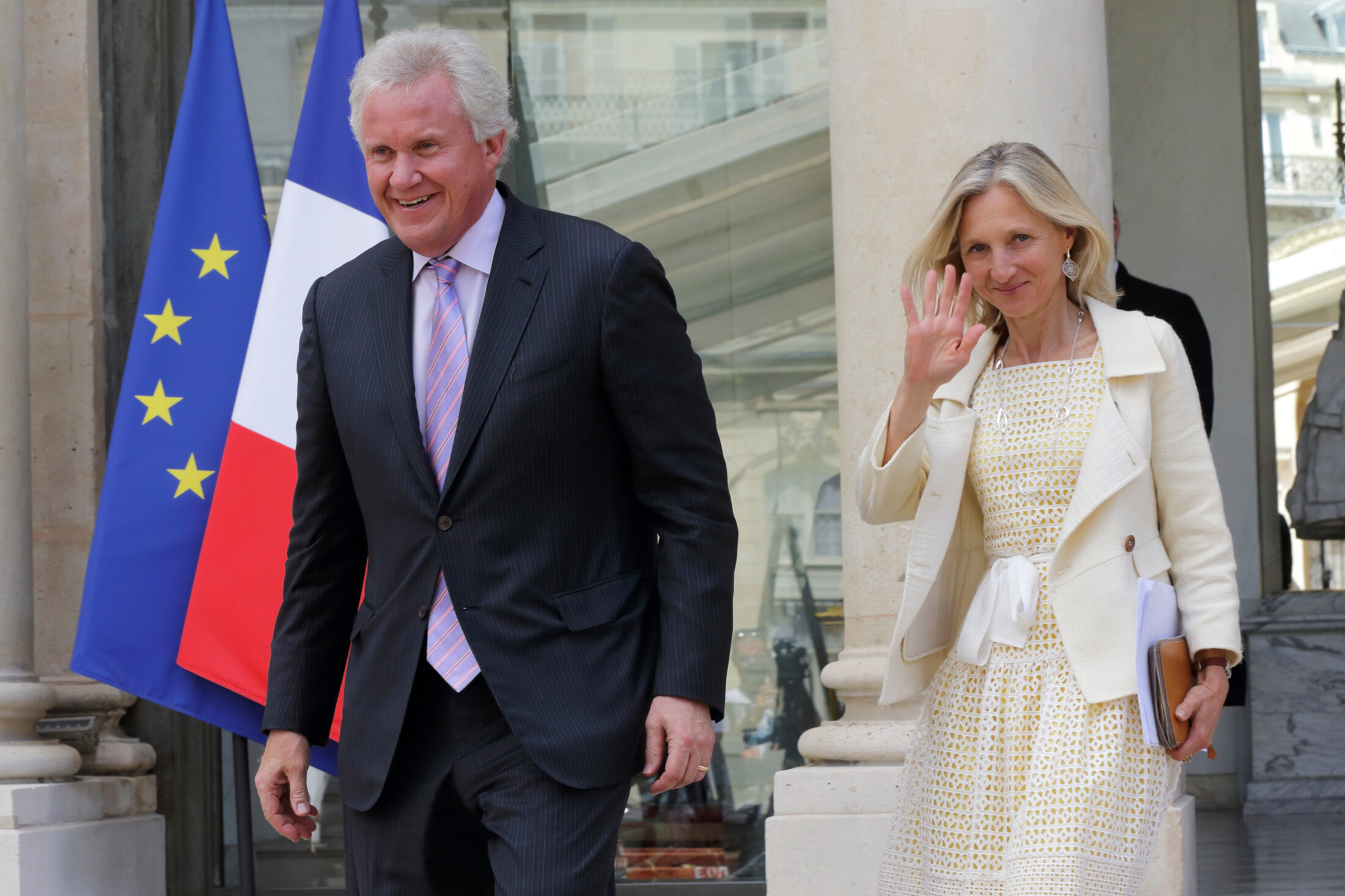
On May 28th, US group General Electric (GE) announced it is to axe 1,044 jobs from its energy branch in France, most of them at its site in Belfort, where it employs around 4,300 people. The job cull is expected to affect almost 800 of its staff in its gas turbine unit, out of a payroll of 1,900.
GE’s French energy arm is largely composed of the energy business once belonging to former French engineering giant Alstom, which was the biggest employer in Belfort, in an acquisition that was finalised in 2015. The negotiations began in earnest in 2014, when, in November that year, the French state signed a contract with GE, setting out the US conglomerate’s commitments to the business after taking control. At the time, the French government insisted that it would it would hold GE to account for the continued industrial activity of the business.
The contract detailing GE’s commitments was signed on November 4th 2014 and until now, just one of these was made known. This was the pledge by GE that it would create 1,000 full-time jobs in France over a period of three years following the acquisition of Alstom’s energy branch.
Enlargement : Illustration 1
The nature of the job creations was described in the French text of the contract as being, “essentially highly-skilled posts in design and engineering”. But earlier this year, after just 25 new jobs were created over the period, the French state fined GE 50 million euros for failing to honour its pledge.
The money was paid into French state-managed fund for industrial redevelopment. French economy and finance minister Bruno Le Maire, on a visit to the Belfort plant on June 3rd in the wake of the announcement of the job cuts, said the funds could be used to help create a new aeronautics plant there, which Le Maire suggested could be in the form of a joint venture between GE’s aviation arm and the French state, aimed at compensating the jobs lost in the gas turbine activity. Media reports have said the government was also in talks with French aero engine manufacturer Safran in a bid to create the new plant.
GE declared vast losses last year, exacerbated by the fall in earnings of its energy arm, GE Power, whose gas turbine power plant production has been hit by a recent downturn in demand. The major restructuration of its gas turbine activities in Europe have concerned France above all.
But in the agreement dated November 4th 2014, revealed here by Mediapart (see immediately below), GE signed up to several commitments, including the organisation of the group’s energy branch and the creation in France of management centres to be involved in decision-making for GE Power’s worldwide activities.
The agreement detailed the future of GE’s activities in France, notably in research and development, its steam turbine production, and its branches “Power and Water”, “Grid and Digital Energy” and “Hydro and Offshore Wind”. In an “Article 3” of the French text of the contract, translated here by Mediapart, it was clearly set out that, “GE agrees that the headquarters of its worldwide activity in steam turbines of the Power and Water activity be located in France”. It added that, “The current European headquarters of GE for large-sized 50 Hz gas turbines for industrial usage remains at Belfort”.
It was also agreed that global management of these and several other of GE’s activities would be situated in France, which the contract said “notably” included “manufacturing strategy”, “product marketing and development”, the “supervision of commercial activities”, “supply chain strategy” and “research and development”.
Finally, Article 3 of the contract stipulates that, “The commitments outlined in this Article 3 will remain in place for a period of ten years as of the date of the realisation of the operation”.
GE bought Alstom’s gas turbine branch in 1999, and since the group’s acquisition of the entire energy branch of Alstom in 2015, there is still no global management headquarters located in Belfort. Some activities previously based in the town have even since been transferred abroad. With the jobs cull announced last month, the continued existence of gas turbine production in the region is now under threat. According to French trades union representatives, 80% of engineering posts are part of the job losses, despite the contract stipulating that the US group would “maintain and develop research and development in France”.
GE also committed to providing the French government with “an indicative plan” detailing the means that GE planned to put in place to “uphold its pledges regarding employment”, and which would be complemented by a yearly update of these along with a dedicated pilot committee that was to meet at least once per year. Mediapart was unable to obtain a response from the French economy ministry or GE before first publication of this article in French, as to whether that plan had been respected.
In the negotiations for the sale of Alstom’s energy branch to GE, the French government succeeded in obtaining agreement that the post of head of the group’s subsidiary GE France would be a French national. That was already the case in 2014, when Clara Gaymard was general manager. She was succeeded in 2016 by compatriot Corinne de Bilbao, who had worked in various management positions at GE since the late 1980s, and in April this year she in turn was replaced by Hugh Bailey.
Enlargement : Illustration 3

Bailey, 39, a graduate of France’s elite ENA administration school, the alma mater of many the country’s senior civil servants and political elite, joined GE France as public affairs manager in 2017 after more than ten years in the civil service. Between 2013 and 2016 he was an advisor on industrial affairs and export financing with the French economy ministry, and notably when Emmanuel Macron was economy minister in the socialist government of François Hollande, between August 2014 and August 2016. Macron played a key role in the sale to GE of Alstom’s energy arm, a project he was already involved in during his previous post as deputy general secretary of the presidential office, the Élysée Palace.
Bailey’s past proximity with Macron caused controversy when he was appointed in April as GE France general manager (after serving for a second time at the French Treasury). News agency AFP reported that the French civil service deontology commission approved his recruitment by GE in November 2017, on condition that he “abstain, until September 1st 2019, from any professional relations with members of the cabinet of the ministry of the economy who were in their posts when he was himself [a member of the ministerial cabinet], and who still are, and also on condition that he abstains until November 1st 2020 from professional relations with the services of the Treasury directorate’s sub-directorate for business funding”.
The May 28th public announcement of the job cuts came just two days after voting in France in the European Parliament elections, when President Macron’s ruling LREM party was put to its first electoral test since he took power in 2017. The campaigning saw a tightly fought contest between Macron’s party and the far-right Rassemblement national, to which the LREM finally came a close second.
According to the November 2014 contract, certain conditions of the agreement could be renegotiated as long as these involved terms that were “as loyal as possible, and in an acceptable manner for both parties, to the initial intentions of the parties”. If there is disagreement, “the validity, interpretation and execution of the present agreement […] will be submitted before the exclusive competence of the French courts”. That clause clearly entitles the French state to take legal action to demand that GE meets its past pledges.
Contacted by Mediapart, neither the French economy ministry nor GE France replied to a request for comment on the issues raised in this report.
-------------------------
- The French version of this report can be found here.
English version with added reporting by Graham Tearse