


Facing the sea from a beach at Saint-Leu, a resort on the west coast of La Réunion island, the French overseas département (county) that lies just east of Madagascar, a dozen or so surfers were enjoying one of the planet’s best waves for their sport, a roller that just a few years ago was a venue in world surfing championships. But the picture-postcard scene was blotted by two things.
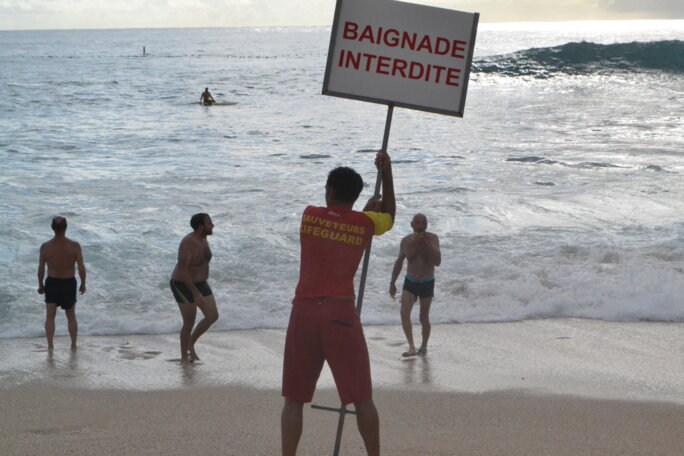
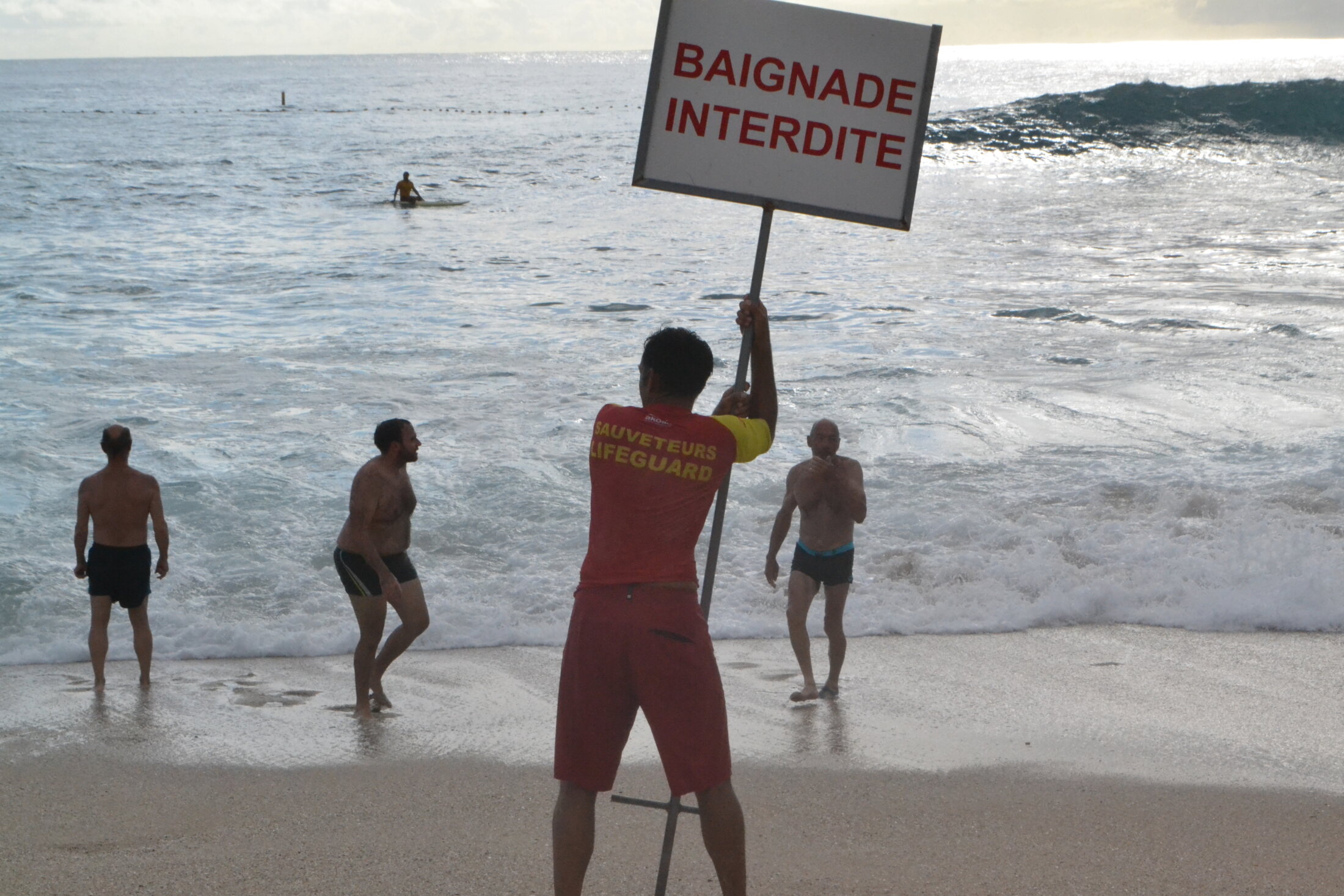
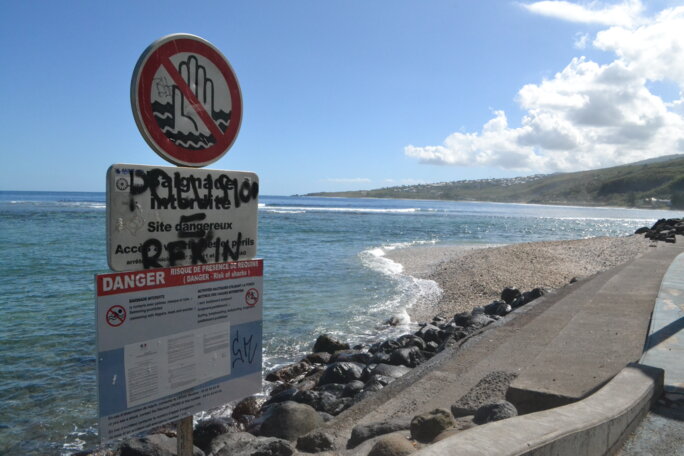
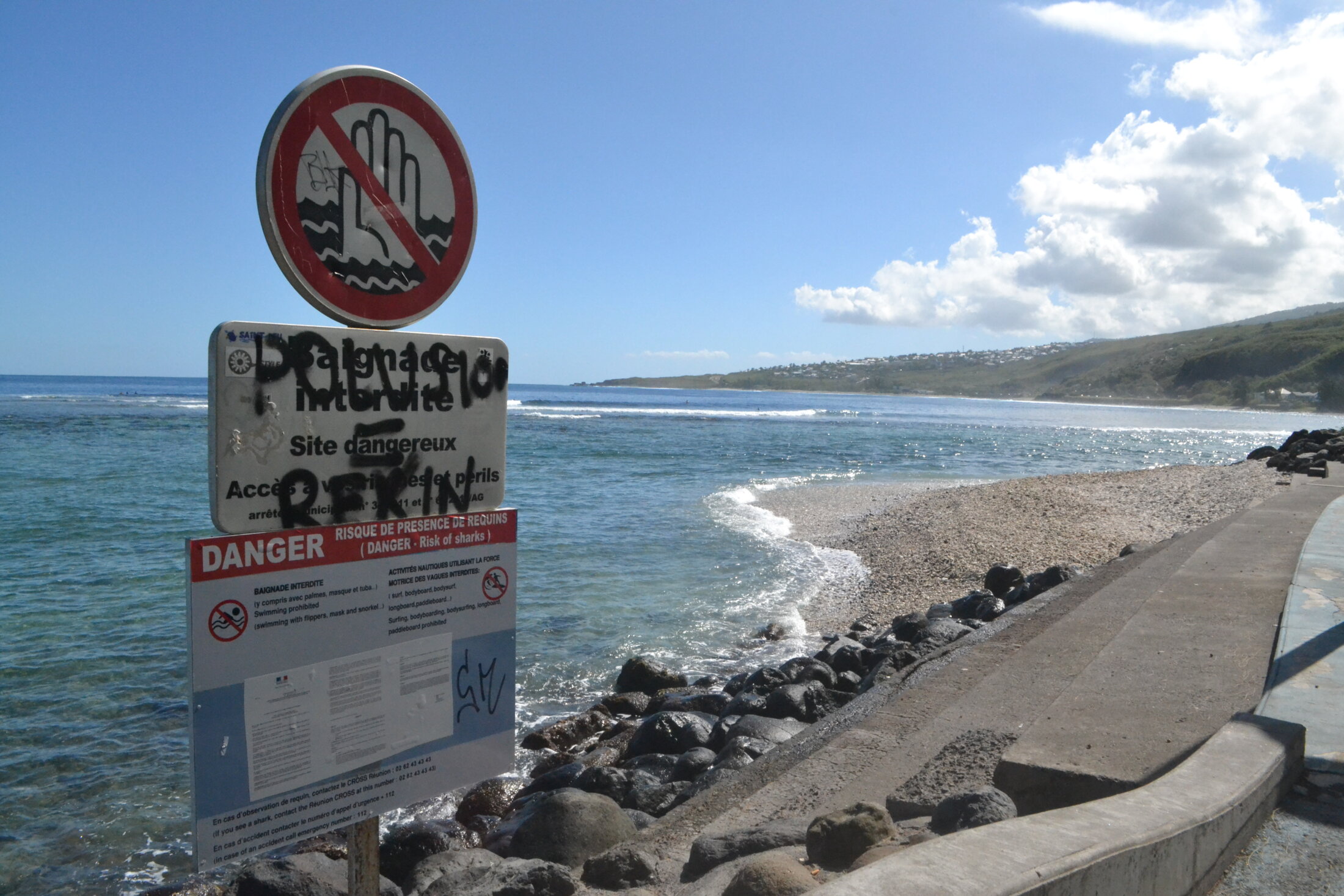
One is the large sign on the beach that, with quite explicit diagrams, warns that nautical activities here are forbidden due to the “risk of sharks”, and the ban, ordered by a decree from the local prefecture, carries a hefty fine for anyone ignoring it, like the surfers enjoying their passion further out to sea.
The other, more dramatic, was a man standing with another watching the scene, with a stump protruding from his right shoulder where once his arm had been. Rodolphe (last name withheld) lost it in 2015 when a shark attacked him close to where his friends were that day surfing the wave. He was not keen to talk about the crisis that has developed on the island over the increasing shark attacks, despite being a victim. “You can just write that I am happy about what happened to me because thanks to me just ten of you can go into the waters where, without the attacks, there’d be 100 people,” he said. “We’re alright now.”
Enlargement : Illustration 1
Rodolphe’s tetchy reaction is representative of the mounting tensions on the island surrounding the shark attacks along the west coast. La Réunion has become known the world over for the more than 20 shark attacks reported there since 2011, and which have caused nine fatalities. The number is considerable given the western coastline where they have occurred totals no more than 40 kilometres, and has had an adverse effect on tourism, traditionally the premier economic activity of the small island with a population of about 850,000. But a clear reason for the outbreak has not been found.
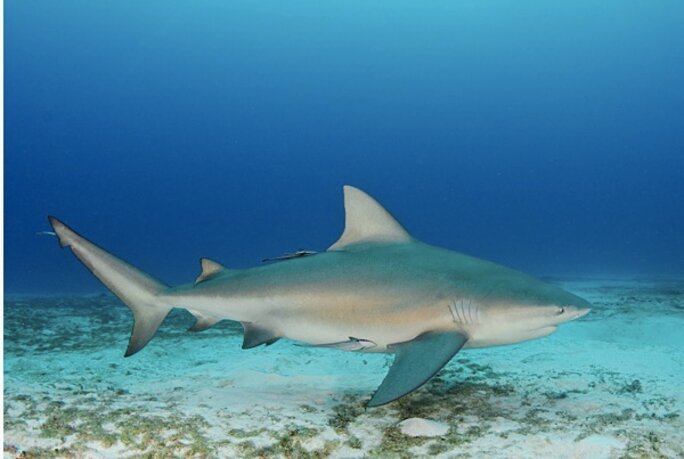
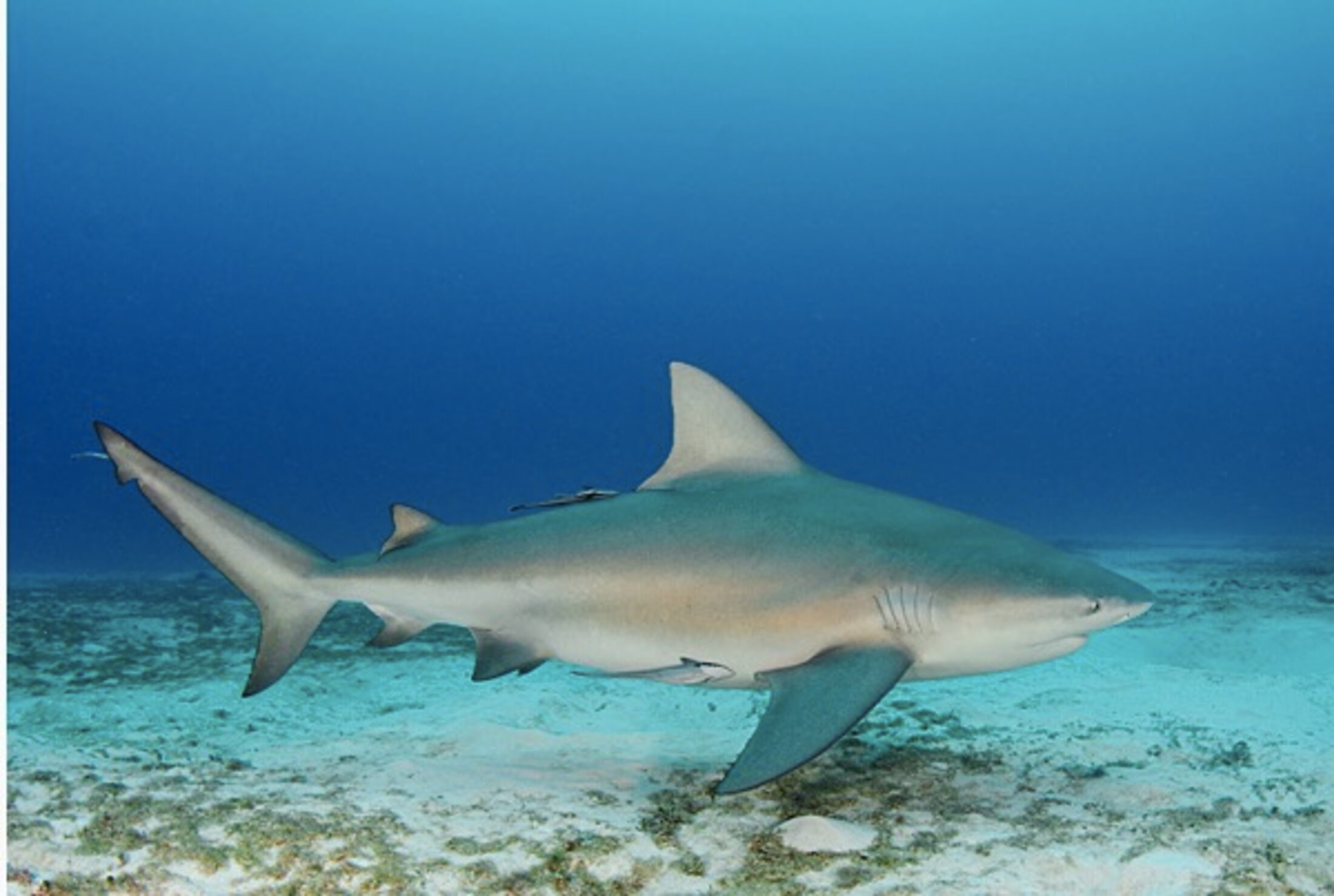
There are many theories of causes; the increase in the number of people visiting the beaches and a subsequent rise in nautical activities, pollution close to the coastline, the creation of fish farms and marine reserves, intensive fishing further out to sea, or even a mutation in shark behaviour. One of the more surprising was the suggestion that a bull shark in captivity in an aquarium at Saint-Gilles, a coastal resort north of Saint-Leu, sent telepathic cries for help from sharks at sea. But while so many hypotheses have been put forward, including by the local authorities and marine scientists, none has been convincingly proven. What is certain is that before 2011 attacks by sharks were a rare event and were unrecorded on the west coast which is the principal venue for swimming, surfing and bodyboarding.
Scientific studies have been led by the Institute for Research and Development, a French public body based in Marseille, and also by the marine reserve authorities and the University of La Réunion. But none has provided a satisfactory explanation of the problem, although they have ascertained that two of the species involved in the attacks on humans, the bull shark and the tiger shark, live and evolve both in coastal waters and the deep ocean. Furthermore, there are many sharks which travel long distances between the Indian Ocean islands of Mauritius, Madagascar and the Comoros, which was the subject of a research programme, Charc, launched in 2012 soon after the first series of attacks.
Enlargement : Illustration 2
“I don’t know how many sharks there are around La Réunion, nobody knows,” said Antonin Blaison, who heads the scientific studies arm of the local fisheries committee and who was one of the project leaders for the Charc programme. His words were echoed by Olivier Bielen, director of the Centre for Resources and Support (CRA), a structure backed by the French government, the island’s regional council and the local authorities of the west coast, and which is tasked with “reducing” the risk of shark attacks. “1,500? 1,000? Just 600? We don’t know the number of sharks,” he commented.
The CRA’s main strategy revolves around fishing the man-eaters. While no-one has a clear idea how many of them swim in and around the island’s waters, at least 130 have been caught off its coast since 2011 in an operation codenamed Cap Requins. The captured sharks are all killed, officially recorded as having been “harvested”.
The formal aim of the operation is to regulate the shark population, but Bielen admits to working with little information. “What we know is that we are fishing large sharks, of at least two metres,” he explained. “The regulating fishing only has a sense in its duration, and given that we only capture large individuals that suggests that the population is dynamic. The sharks responsible for attacks are systematically longer than two metres.” Which in effect means that the CRA director supervises the “regulation” of the shark population without being able to quantify their numbers.
That conclusion outrages environmental protection associations, who have denounced a “massacre” of sharks around the island. “To kill a tiger shark, or a bull shark, is equivalent to killing a tiger or a rhinoceros,” said Jean-Bernard Galvès, the local representative of the NGO Sea Shepherd. “These are animals whose existence, according to the UICN [editor’s note: the International Union for Conservation of Nature] is almost threatened and which are in constant decline.”
Galvès, a very active militant who is strongly opposed to the fishing of sharks, argues that the regulating operation in fact increases the risks to those practicing nautical activities. “One must realize what is currently going on the waters around La Réunion,” he said. “A long line is a fishing line with 25 hooks with bait dropped on the ocean floor next to coral. A drumline is a hook to which an average-sized fish is attached in order, once again, to attract a shark. Some drumlins are placed close to spots where there have been shark attacks. At the time, the Cap Requins scientific committee didn’t exist.”
'Before, we used to surf morning, afternoon and night'
What is certain is that fish are baited for capture close to the shore. What is less certain is whether this form of shark fishing creates a danger for humans. “The question of the attractiveness [of the bait for sharks] is indeed an issue, but for the moment there is no scientific publication which answers the question,” said Olivier Bielen.. “One of our structure’s missions is precisely that of obtaining detailed elements on this question, in order to produce a scientific paper. However, it should be understood that we don’t plaice bait at the same place several times, and that we place it at night. For the moment, there has not been an accident close to fishing material.”
The notion of “close to” is debatable, because a shark can travel several hundred metres with just a few flaps of fins. Several shark-fishing lines have been placed near to some of the most popular beaches on the island’s west coast, and attacks by sharks have been recorded on those beaches since Cap Requin operations began.
But that has caused little apparent concern amongst surfers, nor amongst those taking part in the shark fishing who fiercely oppose the environmental militants of Sea Shepherd and other associations. Jean-François Nativel, secretary of an association called Océan prévention Réunion, has become the spokesman for the pro-shark fishing lobby. He believes that the reason why the official campaigns to reduce the risk of shark attacks have shown little progress is that too few sharks are captured. “The debate on the issue is hysterical,” he argued. “With all the estuaries of fresh water that we have on La Réunion, it’s a true paradise for bull sharks. This species is comparable to rats, which reproduce as of [growing to a length of] 1.8 metres. Commercial fishing and the sale of sharks should be authorized, so that the people of the Réunion can eat them and that the biological balance returns to normal.”
Enlargement : Illustration 3
At the moment, the sale of sharks fished from the coastal waters is prohibited because of the risk of ciguatera, an illness caused by absorbing a toxin present in reef fish. The fishing of sharks under the “regulating” programme is funded by the authorities but the captured fish are then autopsied by scientists and their remains are afterwards incinerated.
Fishing sharks is as difficult as it is expensive. “Sharks are wary animals,” insisted Bertrand Baillif, president of La Réunion’s fisheries committee. “One can place 100 drumlines at a surfing spot, that won’t get rid of the danger of attacks.” The committee has for several years taken part in the state-subsidised shark fishing programme. “We’re caught between two flanks,” he said. “The nature protection associations call us bloodthirsty shark fishermen and the others accuse us of allowing surfers to be eaten. That leads to absurd situations such as when the authorities ask us to use bait that isn’t attractive.”
A fisherman who captures a bull shark is paid by the public authorities 10 euros per kilo while the capture of a tiger shark is worth 4 euros per kilo. The result is a shark capture is worth between 2,000 euros and 4,000 euros. The system has upset the economy of the traditional local fishing industry and raised questions over such use of public funds.
Mediapart has consulted a confidential audit commissioned by the fisheries committee into the practices of the Cap Requins programme, and its conclusions are close to identifying the misappropriation of funds. “The experimental programme “Cap Requins”, albeit that it is within the framework of an initiative in the public interest, cannot be considered as a mission of public service,” the auditors report. “The harvesting of sharks is not among the number of public service missions as defined by article L 912-3 of the rural law code.” Yet the subsidies and partnership agreements under the Cap Requins programme has seen the fisheries committee receive more than 1.2 million euros out of public funds. The third phase of the programme is due to begin this summer when the efforts to capture sharks is to be intensified, and logically the funding will increase.
The audit report denounces unjustified sub-contracting, the absence of competition and an opaque system for the attribution of fishing consignments. It also finds that up until at least 2015, the practice of shark fishing was carried out in an urgent series of operations, notably to reassure public opinion. Olivier Bielen, the official in charge of reducing the risk of shark attacks, admitted as much. “The post-attack fishing plan is aimed at avoiding further accidents and is also a communications marker,” he told Mediapart.
But shark fishing represents just part of the public funding that has been ploughed into the effort to contain the attacks. The “securing” of beaches using other means has cost the state and local authorities almost 11 million euros since the first attacks occurred in 2011. The most costly of these operations is the deployment of divers who act as scouts to check the waters for predators, and the positioning of safety nets around the two most popular beaches.
“We’ve seen everything,” said Olivier (last name withheld), a lifeguard at Boucan-Canot, one of the island’s best-known west coast resorts. “The tourist who gets eaten during his honeymoon, the Valentine Day attack, the surfer who goes to retrieve his dead friend from the water and who gets eaten a few days later, an attack inside the protection netting.”
“Before, we used to surf morning, afternoon and night, we asked ourselves no questions,” he added sadly, gazing out behind sunglasses at the rolling waves. “Now it’s chaos to go surfing, we feel deprived of the ocean. Inside the netting there are too many people and all the other places are dangerous and forbidden.”
Enlargement : Illustration 4
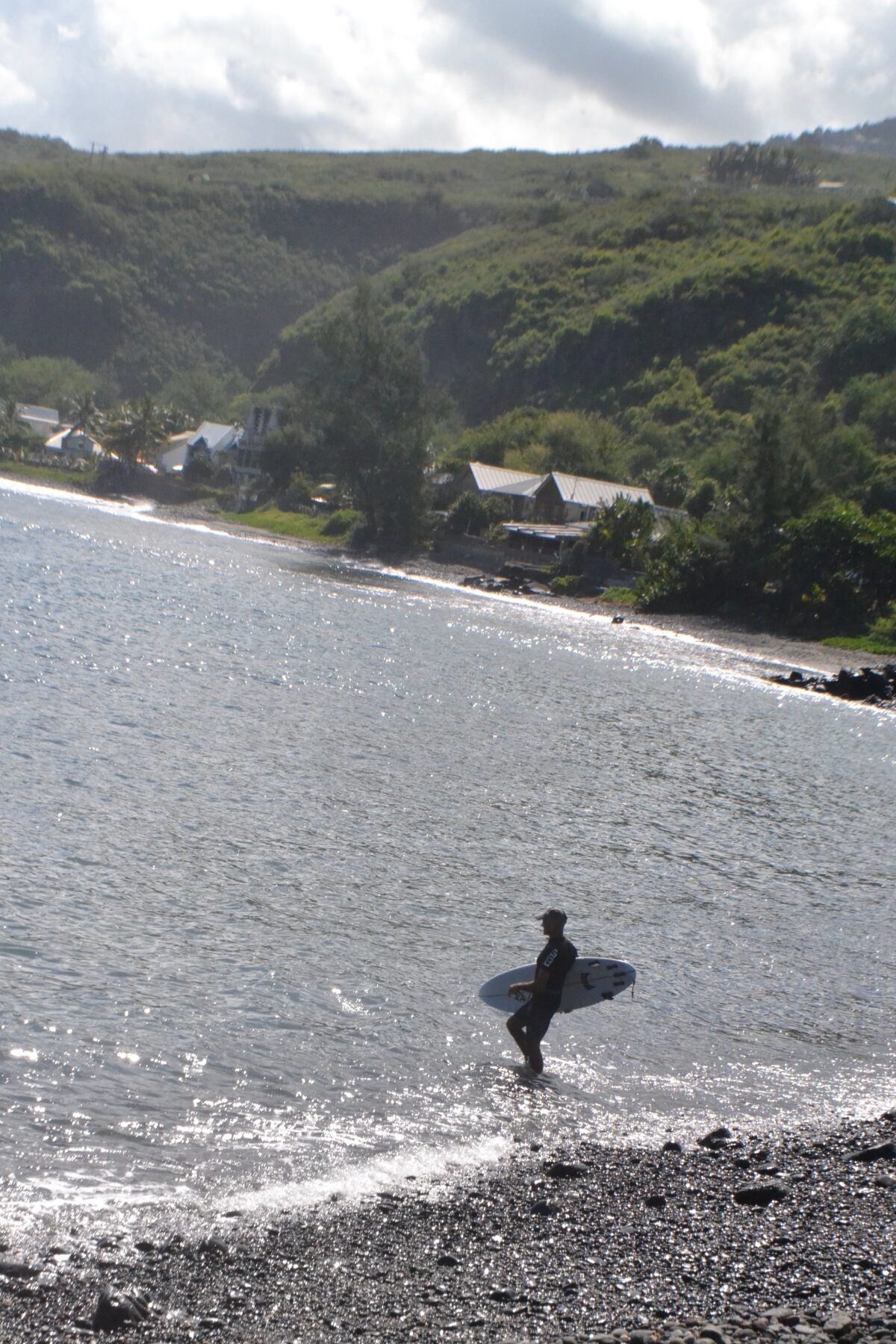
The ban is all the same a relatively respected one. The day after that conversation in Boucan-Canot, Mediapart came across Olivier on the celebrated wave known as “the Left of Saint-Leu”, which was one of the international surfing championship venues up until all major surfing competitions stopped on La Réunion.
Olivier came out of the water after riding the wave. With an awkward grin, he explained that he uses a diving mask to check the water for sharks. The day before, a bull shark estimated at three metres long was seen there. The last shark attack on La Réunion was in June and in April a bodyboarder died from his injuries after he was attacked by a shark in Saint-Leu.
-------------------------
- The French version of this article can be found here.
English version by Graham Tearse